Why in News?
Oil marketing companies (OMCs) increased the price of a 19-kg commercial LPG cylinder by ₹9.50 on September 1, 2026, taking the Delhi price to ₹2,747.50, while domestic cylinder prices remained unchanged.
The immediate increase is small, but it highlights the larger challenge of managing imported energy costs while protecting household affordability.
| UPSC Relevance: GS-3 Economy: Inflation, energy security and public finance. Prelims: LPG; Import dependence on LPG |
Basics of LPG:
- Composition: Liquefied Petroleum Gas consists mainly of propane and butane; it is obtained from petroleum refining and natural-gas processing.
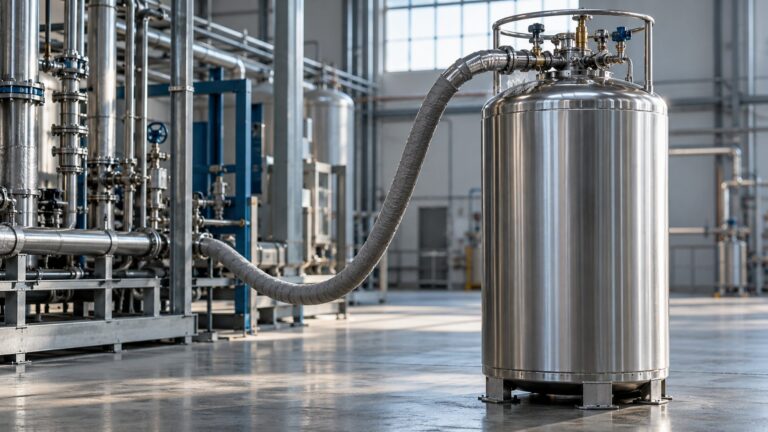
- Storage: LPG is liquefied through pressure and/or refrigeration.
- Safety: It is naturally colourless and odourless; an odorant such as ethyl mercaptan helps detect leaks. LPG vapour is heavier than air and can accumulate in low-lying spaces.
- LPG versus PNG: LPG is primarily propane-butane supplied in cylinders or bulk tanks; piped natural gas (PNG) is predominantly methane, supplied through pipelines.
- Environmental dimension: LPG offers cleaner cooking than traditional biomass, but remains a fossil fuel.
What are under-recoveries?
An under-recovery arises when an OMC’s realised selling price falls below the applicable cost or benchmark realisation for supplying a product. For example, if the comparable supply cost is ₹1,100 and the company realises ₹900, the under-recovery is ₹200.
Three concepts must be distinguished:
- Under-recovery: The pricing gap absorbed initially by the OMC.
- Budgetary subsidy or compensation: Government expenditure supporting consumers or reimbursing companies.
- Overall corporate loss: The company’s final financial result across businesses; an LPG under-recovery does not necessarily imply that the entire OMC is loss-making.
According to a recent parliamentary reply, domestic LPG under-recoveries declined from over ₹700 per cylinder in June to around ₹500 in July and ₹188 in August 2026. A smaller current shortfall nevertheless leaves earlier accumulated burdens unresolved.
What could have prompted the commercial-price hike?
- International prices and landed costs: Commercial LPG prices are revised monthly and are closely linked to international benchmarks. The Saudi Contract Price, exchange rate, freight and other supply costs influence the landed cost of LPG. Domestic prices are moderated more actively to protect households.
- Unequal transmission of global price shocks: Holding household prices steady protects consumers, but the cost must be absorbed elsewhere (through OMC finances, government compensation or adjustments in other prices). This creates a policy trade-off between affordability, transparent subsidies and financially sustainable energy supply.
- Pressure from domestic under-recoveries: The hike could partly offset domestic LPG under-recoveries.
Why does India remain vulnerable to LPG supply shocks?
- High import dependence: India imports around 60% of its LPG requirements. Therefore, domestic availability and prices remain vulnerable to global supply disruptions, shipping costs, geopolitical tensions and exchange-rate movements.
- Dependence on critical sea routes: A large share of India’s LPG imports has traditionally passed through the Strait of Hormuz, creating vulnerability to disruptions in this strategically important chokepoint. Diversification of supply sources can reduce this dependence, but cannot eliminate it immediately.
- Limited scope for domestic substitution: Domestic LPG production has increased from around 34,000 tonnes/day to 55,000 tonnes/day. However, LPG is largely a co-product of crude-oil refining and natural-gas processing. Hence, production cannot simply be increased at will to compensate for a sudden import shortfall.
- Diversification has its own challenges: Importing LPG from alternative suppliers reduces dependence on a particular region but can involve longer shipping routes, higher freight costs and differences in propane-butane composition, requiring adjustments in logistics and distribution. For instance, IOC has been exploring supplies from Algeria for 2027, reflecting efforts to diversify sourcing.
Existing Policy Measures:
- Pradhan Mantri Ujjwala Yojana: Launched in 2016 to expand clean-cooking access among deprived households.
- Targeted refill assistance: The June 2026 government announcement provided ₹300 per 14.2-kg cylinder on the first four annual refills for PMUY beneficiaries.
- PAHAL/DBT: Transfers eligible LPG subsidies through bank accounts, supporting targeted assistance and reducing duplicate or fraudulent claims.
- Supply and fuel diversification: Domestic production measures, alternative import sourcing and PNG expansion reduce particular supply vulnerabilities.
Way Forward:
- Make subsidy costs transparent: Clearly distinguish consumer transfers, OMC under-recoveries and government compensation.
- Protect sustained consumption: Base assistance on affordability and refill behaviour, while preventing exclusion caused by authentication or banking problems.
- Avoid excessive commercial cross-subsidisation: Protect vulnerable households through explicit support without unduly burdening small businesses.
- Diversify suppliers and strengthen logistics: Expand sourcing options, storage, import-terminal flexibility and emergency supply arrangements.
- Promote suitable alternatives: Support PNG, reliable electric cooking and efficient appliances where infrastructure and household economics permit.
- Improve public data: Publish timely LPG-specific information on imports, stocks, costs and under-recoveries to distinguish supply shortages from pricing pressures.
LPG policy must secure three outcomes together: affordable clean cooking, financially viable suppliers and resilient energy supplies. Suppressing the retail price alone cannot resolve the underlying costs or vulnerabilities.
Practice Prelims Question
Q. Consider the following statements:
- LPG consists mainly of propane and butane.
- LPG vapour is lighter than air.
- LPG offers cleaner cooking than Piped Natural Gas (PNG).
Which of the statements given above is/are correct?
(a) 1 only
(b) 1 and 2 only
(c) 2 and 3 only
(d) 1, 2 and 3
Answer: (a) LPG vapour is heavier than air. Both PNG and LPG burn cleaner than traditional cooking fuels; however, PNG produces lower carbon emissions per unit of energy compared to LPG.
Tell Google you want more of this.
Add Anantam IAS as a preferred sourceOne tap, and this site shows up more often in your own Top Stories, AI Overviews and AI Mode. Remove it any time.