Why in News?
Flock Safety, which operates a large network of Automated Licence Plate Reader (ALPR) cameras in the U.S., is facing criticism after reports that some police officers misused its databases, including to track former partners.
The controversy has raised wider concerns about mass surveillance, data sharing, purpose creep and the growing role of private companies in policing.
| UPSC Relevance: GS-2 Polity and Governance: Fundamental Rights, Privacy, Data protection; GS-3 Science and Technology: AI and surveillance Prelims: ALPR/ANPR, Facial recognition, DPDP Act Mains: Balance between public safety and civil liberties |
How do Flock Cameras Work?
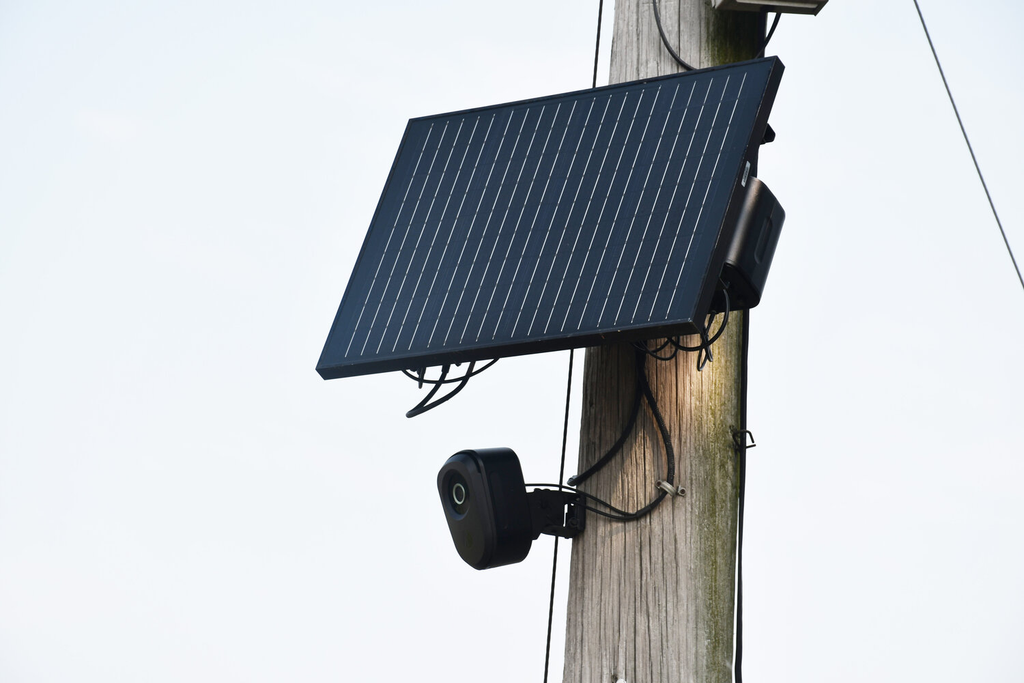
Flock follows a surveillance-as-a-service model, providing cameras, cloud storage, alerts and searchable databases through subscriptions.
Its ALPR cameras record:
- Vehicle registration plate
- Time and location
- Make, model, colour and body type; and
- Features such as stickers, dents or roof racks.
The data can be matched with lists of stolen or wanted vehicles. Police departments may also share access with other agencies, turning local cameras into a wider surveillance network.
While Flock uses AI-based image recognition, it maintains that its ALPR system does not use facial recognition, predictive policing or demographic profiling.
Potential Benefits:
Flock cameras can help police:
- Trace stolen or wanted vehicles
- Locate missing persons
- Investigate hit-and-run and organised crime cases; and
- Generate evidence where other investigative leads are limited.
However, many claims regarding crimes solved using the technology are based on company and customer estimates rather than uniform independent evaluation.
What has Fuelled the Backlash?
- Mass tracking: Aggregated plate sightings can reconstruct a person’s movements and reveal visits to hospitals, protests, religious institutions or political meetings.
- Official misuse: Police officers have allegedly used the database to stalk partners and relatives, exposing weak access controls and supervision.
- Mission creep: A system promoted for serious crimes has reportedly been used for minor matters such as noise complaints, background checks and school-residency verification.
- Sensitive enforcement: A Texas sheriff’s office reportedly searched a vast ALPR network during an abortion-related investigation, demonstrating how surveillance can be redirected towards personal healthcare decisions.
- Uncontrolled data sharing: Information collected by one community may be searched by agencies in other States or by federal authorities for different purposes, including immigration enforcement.
- Private control: A commercial company manages infrastructure performing a public-policing function, raising questions about data ownership, cybersecurity, transparency and accountability.
- Lack of public consent: Cameras have often been installed through administrative contracts without adequate public consultation or clarity over retention and sharing policies.
- Chilling effect: Fear of being tracked may discourage people from attending protests, political meetings, places of worship or healthcare facilities.
Public opposition has included protests, mapping cameras through the DeFlock platform and demands for cancellation of municipal contracts.
Flock’s Response:
The company has announced:
- Reduction of default data retention from 30 to seven days
- Mandatory case codes for searches
- Offence-based search restrictions
- Multi-factor authentication
- Tools to detect unusual search behaviour; and
- Temporary lockouts pending administrative review.
Effectiveness depends on independent audits, active supervision and penalties for misuse.
Relevance for India:
India increasingly uses ANPR cameras, facial-recognition systems and AI-enabled surveillance vehicles for traffic enforcement, public safety and policing.
The concerns are similar:
- India has no dedicated law governing facial recognition or ANPR surveillance.
- In K.S. Puttaswamy, the Supreme Court held that privacy restrictions must satisfy legality, necessity and proportionality.
- The DPDP Act regulates personal data processing but does not independently authorise surveillance or prescribe warrant requirements.
- Most substantive DPDP provisions are scheduled to become operational in May 2027.
- The Act provides exemptions for certain law-enforcement and security-related processing.
- India lacks uniform rules governing biometric data, retention periods, inter-agency sharing and independent audits.
The deployment of facial recognition and ANPR-equipped surveillance vehicles at the 2026 Jantar Mantar protests highlights the risk of surveillance discouraging lawful political participation.
Way Forward:
- Enact a comprehensive law governing police surveillance.
- Require judicial authorisation for historical or network-wide searches, except during emergencies.
- Prescribe strict purpose limitation and short retention periods.
- Maintain tamper-proof access logs and independent audits.
- Publish camera locations, data-sharing arrangements and retention policies.
- Prohibit indiscriminate tracking of protesters and lawful assemblies.
- Impose penalties for unauthorised searches and provide remedies for wrongful identification.
- Require verified deletion of government data after contracts end.
The Flock backlash is not merely against roadside cameras. It reflects concern over the combination of networked surveillance, searchable movement histories, private control and weak accountability.
India must establish legal safeguards before fragmented cameras evolve into an integrated system capable of continuously tracking citizens.
Tell Google you want more of this.
Add Anantam IAS as a preferred sourceOne tap, and this site shows up more often in your own Top Stories, AI Overviews and AI Mode. Remove it any time.