
ANANTAM IAS
UPSC CSE Mains 2027
PSIR QEP and Mentorship 2027
Revise the complete PSIR syllabus with Rahul Puri through 50+ live classes, topic-wise PYQ practice, answer evaluation and personalised mentorship. Includes the 16-test Mains series and PSIR Crash Course 2027.
Classes start 16 October 2026
Three classes a week. Classes and notes in English.

Rahul Puri
PSIR faculty, Anantam IAS
15+ years of teaching experience
Get enrolment details
₹32,999
Share your details and the Anantam IAS team will help you with enrolment.
Valid until 31 August 2027. No payment is collected through this form.
By sending this enquiry, you ask Anantam IAS to contact you about this programme. Privacy policy
50+ live classes
Complete syllabus revision
10 years of PYQs
Topic-wise answer practice
16 Mains tests
8 before Prelims, 8 after
3 classes/week
Friday, Saturday and Sunday
What the QEP and Mentorship programme includes.
Revision, answer practice, notes and mentorship come together in one PSIR preparation programme.
Complete syllabus revision
Revisit the entire PSIR syllabus through focused revision and dedicated doubt-clearing sessions.
50+ live classes
Build conceptual clarity through structured classes covering key concepts, themes and exam-oriented preparation.
PYQ-based answer writing
Work through 10 years of previous-year questions topic-wise, with in-class answer-writing practice.
Notes and value addition
Get PDF notes and value-addition material, with class time focused on learning rather than unnecessary dictation.
Current affairs integration
Connect current developments with the PSIR syllabus using regular current-affairs material in PDF format.
16-test Mains test series
Eight tests before Prelims and eight after Prelims, with model answers and live test discussions.
Exam-oriented note making
Create revision-friendly notes for Mains. Upload your notes for team review and personalised feedback.
Dedicated mentorship and support
Use the dedicated WhatsApp group for regular updates, communication and student support.
PSIR Crash Course 2027 access
Get access to the PSIR crash course launching in June 2027 for UPSC Mains 2027.
Eight areas to work on throughout the programme.
Use classes, answer evaluation and mentoring together to improve how you prepare and write.
Score improvement
Bring structured preparation, continuous practice, evaluation and personalised guidance into your PSIR plan.
Answer-writing mastery
Use political analysis, thinker integration, constitutional references and IR perspectives to write stronger answers.
Personalised mentorship
Get guidance on your preparation strategy, progress, weaknesses and areas that need improvement.
Presentation enhancement
Work on introductions, conclusions, structure, flowcharts, diagrams and overall answer presentation.
Content enrichment
Integrate contemporary examples, Supreme Court judgments, committee recommendations, global cases, reports and scholarly perspectives.
Examiner-oriented approach
Make your answers more analytical, multidimensional and closely aligned with the question's demand.
Interlinking approach
Connect Political Theory, Indian Government and Politics, Comparative Politics, Governance and International Relations.
Continuous feedback and improvement
Use regular answer evaluation, feedback, mentorship and performance tracking throughout your preparation.
Move from description to political analysis.
The programme focuses on how you build an answer, choose examples and connect ideas across the syllabus.
| A basic answer | What to work towards |
|---|---|
| Definition only | Definition supported by a thinker, scholar or theory. |
| Generic examples | Constitutional, contemporary and global examples. |
| Static content | A dynamic, analytical and multidimensional perspective. |
| Descriptive approach | An analytical, comparative and critical approach. |
| Limited thinker integration | Political thinkers and IR theories integrated into the argument. |
| Plain conclusion | A balanced political and strategic conclusion. |
| Information-heavy answer | A conceptual, layered and examiner-oriented answer. |
| Syllabus isolation | Stronger interlinking across Paper I and Paper II. |
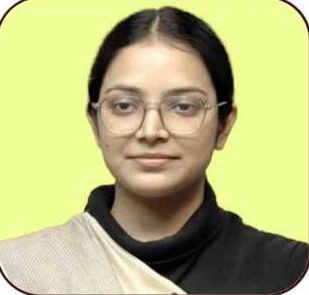
PSIR optional toppers
PSIR optional achievers across recent UPSC Civil Services Examination results.


Your optional deserves its own preparation plan.
The optional component carries 500 marks. The comparison below shows why it needs focused revision and answer-writing practice alongside General Studies and Essay.
| All India Rank | GS + Essay out of 1,250 | Percentage | Optional out of 500 | Percentage |
|---|---|---|---|---|
| AIR 1 | 575 | 46.00% | 292 | 58.40% |
| AIR 2 | 596 | 47.68% | 269 | 53.80% |
| AIR 3 | 597 | 47.76% | 267 | 53.40% |
| AIR 48 | 513 | 41.04% | 316 | 63.20% |
The included Mains test schedule.
Eight thematic tests before Prelims, beginning on 25 October 2026. These test dates are separate from the class timetable above.
Test 1
25 October 2026
Political thought and ideologies
Paper I, Part A
- Democracy: classical and contemporary theories; representative, participatory and deliberative models.
- Power: hegemony, ideology and legitimacy.
- Political ideologies: Liberalism, Socialism, Marxism, Fascism, Gandhism and Feminism.
- Indian political thought: Dharmashastra, Arthashastra and Buddhist traditions; Sir Syed Ahmad Khan, Sri Aurobindo, M. K. Gandhi and B. R. Ambedkar.
- Western political thought: Plato, Aristotle, Machiavelli, Hobbes, Locke, John S. Mill, Marx, Gramsci and Hannah Arendt.
Test 2
11 November 2026
Political theory and the state
Paper I, Part A
- Political theory: meaning and approaches.
- Theories of the state: Liberal, Neo-liberal, Marxist, Pluralist, Post-colonial and Feminist.
- Justice: conceptions of justice, Rawls’s theory and its communitarian critiques.
- Equality: social, political and economic equality; its relationship with freedom; affirmative action.
- Rights: meaning, theories, different kinds of rights and human rights.
Test 3
22 November 2026
Indian government and politics
Paper I, Part B
- Political strategies of India’s freedom struggle: constitutionalism, mass Satyagraha, Non-cooperation, Civil Disobedience, militant and revolutionary movements, and peasant and workers’ movements.
- Perspectives on the Indian national movement: Liberal, Socialist, Marxist, Radical Humanist and Dalit.
- Making of the Indian Constitution: legacies of British rule and different social and political perspectives.
- Constitutional features: Preamble, Fundamental Rights and Duties, Directive Principles and parliamentary system.
- Union government: the envisaged role and actual working of the Executive, Legislature and Supreme Court.
- State government: the envisaged role and actual working of the Executive, Legislature and High Courts.
- Grassroots democracy: Panchayati Raj, municipal government, the 73rd and 74th Amendments, and grassroots movements.
Test 4
6 December 2026
Constitutional institutions and federalism
Paper I, Part B
- Institutions and commissions: Election Commission, CAG, Finance Commission, UPSC, National Commissions for Scheduled Castes, Scheduled Tribes, Women, Minorities and Backward Classes, and the National Human Rights Commission.
- Federalism: constitutional provisions, changing centre-state relations, integrationist tendencies, regional aspirations and inter-state disputes.
Test 5
20 December 2026
Comparative politics and IR theory
Paper II, Part A
- Comparative politics: nature, major approaches, political economy, political sociology and limitations of the comparative method.
- The state in comparative perspective: capitalist and socialist economies; advanced industrial and developing societies.
- Representation and participation: political parties, pressure groups and social movements in advanced industrial and developing societies.
- Globalisation: responses from developed and developing societies.
- Approaches to International Relations: Idealist, Realist, Marxist, Functionalist and Systems theory.
- IR concepts: national interest, security and power, balance of power and deterrence, transnational actors, collective security, world capitalist economy and globalisation.
Test 6
3 January 2027
Global order and international institutions
Paper II, Part A
- Changing international political order: rise of superpowers, strategic and ideological bipolarity, arms race, Cold War and nuclear threat.
- Non-Aligned Movement: aims and achievements; collapse of the Soviet Union, unipolarity, American hegemony and the contemporary relevance of non-alignment.
- International economic system: Bretton Woods to WTO, socialist economies and CMEA, and the Third World demand for a new international economic order.
- United Nations: envisaged role and actual record, specialised agencies and UN reform.
- Regionalisation of world politics: EU, ASEAN, APEC, SAARC and NAFTA.
- Contemporary global concerns: democracy, human rights, environment, gender justice, terrorism and nuclear proliferation.
Test 7
17 January 2027
India's foreign policy and neighbourhood
Paper II, Part B
- Indian foreign policy: determinants, policy-making institutions, continuity and change.
- India’s contribution to the Non-Aligned Movement: phases and current role.
- India and South Asia: SAARC, a South Asian free-trade area and the Look East policy.
- Impediments to regional cooperation: river-water disputes, illegal cross-border migration, ethnic conflicts, insurgencies and border disputes.
- India and the Global South: Africa, Latin America, leadership in the demand for NIEO and WTO negotiations.
Test 8
31 January 2027
India and the global centres of power
Paper II, Part B
- India and global centres of power: USA, EU, Japan, China and Russia.
- India and the UN system: peacekeeping and the demand for a permanent seat on the Security Council.
- India and the nuclear question: changing perceptions and policy.
- Recent foreign-policy developments: Afghanistan, Iraq and West Asia; relations with the US and Israel; and a vision of a new world order.
After Prelims 2027: 4 sectional tests and 4 full-length tests. Dates will be announced after Prelims.
Get enrolment detailsBefore you enrol.
What does this programme include?
Complete syllabus revision, 50+ live classes, 10 years of topic-wise PYQs, PDF notes and current affairs, note-making review, mentorship, the 16-test Mains series and PSIR Crash Course 2027 access.
When do classes begin, and what are the timings?
Classes start on 16 October 2026. The weekly timetable is Friday, 2:30 PM to 4:30 PM; Saturday, 5 PM to 8 PM; and Sunday, 5 PM to 8 PM.
What language are the classes and notes in?
Both classes and class notes are in English.
How does the note-making review work?
Upload your notes for team review and personalised feedback. The focus is on making effective, revision-friendly notes for Mains.
How is mentorship and support provided?
The programme includes personalised guidance on preparation, progress and weaknesses, alongside a dedicated WhatsApp group for updates, communication and student support.
Is the Mains test series included?
Yes. There are 16 tests: eight thematic tests before Prelims, followed by four sectional tests and four full-length tests after Prelims. Model answers and live test discussions are included.
Is PSIR Crash Course 2027 access included?
Yes. Access to the PSIR crash course launching in June 2027 is included.
What is the fee and validity?
The programme fee is ₹32,999. Validity runs until 31 August 2027. Send an enquiry for the enrolment process and payment details.
Give PSIR revision, practice and feedback a regular place in your week.
Starts 16 October 2026. 50+ live classes. ₹32,999.