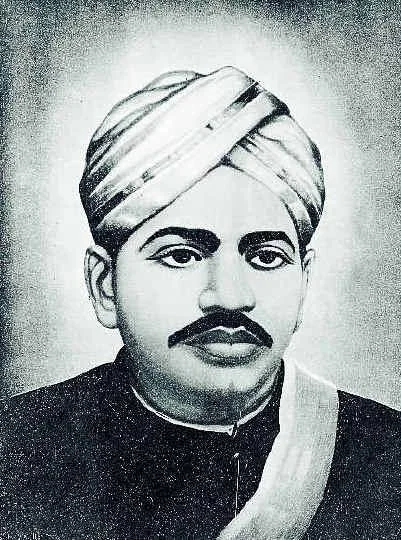
Alluri Sitarama Raju (1897–1924) led the Rampa Rebellion (1922–1924) — an armed tribal uprising in the Agency areas of the Eastern Ghats (present-day Andhra Pradesh) against the British colonial administration. The rebellion was triggered by the Madras Forest Act of 1882, which restricted tribal access to forests that had been their livelihood for centuries. Raju used guerrilla warfare and is remembered as "Manyam Veerudu" (Hero of the Forest).
For UPSC, the Rampa Rebellion connects the tribal movements chapter, Non-Cooperation Movement's influence on armed resistance, and forest rights — themes that appear in GS1, GS3, and Ethics.
Background: Tribal Life in the Agency Areas
The Koyas and Konda Reddis
The Agency areas (hill tracts) of the Godavari district (now part of Andhra Pradesh) were home to tribal communities — primarily the Koyas, Konda Reddis, and Konda Doras. These communities practised:
- Podu (shifting) cultivation — clearing forest patches, cultivating for a few years, then moving on
- Hunting and gathering of forest produce
- A semi-autonomous existence under local headmen, largely outside the mainstream revenue system
The Madras Forest Act (1882)
The British imposed the Madras Forest Act, 1882, which:
- Declared forests as state property — effectively criminalising the tribal way of life
- Banned podu cultivation — the primary agricultural method of hill tribes
- Restricted access to forest produce — timber, bamboo, roots, and other resources that tribals depended on
- Imposed forced labour (vetti) on tribals for road construction and timber operations
- Allowed commercial exploitation of forests by British contractors while denying tribal access
For communities whose entire existence depended on forest access, the Forest Act was an existential threat. It was not merely an inconvenience — it destroyed their economic base, cultural practices, and social autonomy.
Prior Grievances
Before Raju's rebellion, the Agency areas had seen earlier resistance:
- The Rampa Rebellion of 1879 (the first Rampa uprising) had been suppressed
- Tribal petitions to the colonial authorities had been ignored
- Moneylenders and plains merchants (who had moved into the hill areas) were exploiting tribals through debt bondage
Alluri Sitarama Raju: The Leader
Raju was born on July 4, 1897 in Pandrangi village, Visakhapatnam district. He was not himself a tribal — he was from a Kshatriya family — but he grew up among the tribal communities of the Eastern Ghats and identified deeply with their cause.
Early influences:
- He was educated but chose to live among the hill tribes
- He was influenced by Gandhi's Non-Cooperation Movement — particularly the idea of resistance against unjust laws
- He tried non-violent methods initially (petitions, appeals) but concluded that armed resistance was the only viable option for the isolated tribal areas
- He had a charismatic personality and was believed by the tribals to have spiritual powers — they called him a sanyasi (ascetic)
The Rebellion (1922–1924)
Phase 1: Mobilisation (1922)
Raju mobilised the Koya and Konda Reddi tribals against the Forest Act and forced labour. His demands were:
- End of restrictions on podu cultivation
- Abolition of forced labour (vetti)
- Removal of plains moneylenders from the Agency areas
- Restoration of tribal forest rights
Phase 2: Armed Confrontation
When the colonial authorities refused to negotiate, Raju launched armed attacks:
| Action | Date | Details |
|---|---|---|
| Raid on Chintapalli police station | August 1922 | Raju and his followers raided the police station, seized weapons and ammunition |
| Raid on Krishnadevipeta | September 1922 | Another police station raided for arms |
| Ambushes on British forces | 1922–1924 | Guerrilla warfare in the dense Eastern Ghats forests; British columns ambushed repeatedly |
| Dammanapalli engagement | 1923 | A significant encounter with British forces |
Raju's guerrilla tactics were effective in the forested terrain:
- Small, mobile groups that knew the terrain intimately
- Support from local tribal communities (food, shelter, intelligence)
- Hit-and-run attacks on police stations and supply lines
- Avoidance of pitched battles against superior British firepower
British Response
The British deployed the Malabar Special Police and later regular military units to suppress the rebellion:
- Entire villages were burned as collective punishment
- Tribal supporters were arrested and tortured
- A large military cordon was established to isolate Raju from his base
- Intelligence networks were used to track his movements
Capture and Death
Raju was captured on May 7, 1924 after being surrounded by British forces. According to the official account, he was shot while trying to escape — a euphemism commonly used by colonial authorities for extrajudicial killings. He was tied to a tree and shot at Koyyuru (Koyuru).
He was 26 years old at the time of his death.
Connection to Gandhi and the Non-Cooperation Movement
The relationship between Raju's armed rebellion and Gandhi's Non-Cooperation Movement is nuanced:
Inspiration: Raju was inspired by the Non-Cooperation Movement and its call to resist unjust British laws. He encouraged tribals to boycott colonial courts and refuse forced labour — echoing Gandhi's philosophy.
Divergence: When the Non-Cooperation Movement was suspended after the Chauri Chaura incident (February 1922), Raju continued his armed resistance. He concluded that non-violence was ineffective in the remote tribal areas where there was no press coverage, no sympathetic urban public, and no political infrastructure.
Gandhi acknowledged the Rampa Rebellion and reportedly called Raju a figure of great courage, though he could not endorse the armed methods.
Impact
Immediate Impact
- The rebellion forced the British to temporarily relax some forest restrictions in the Agency areas
- It drew national attention to the conditions of forest-dwelling tribal communities
- It demonstrated that tribal communities could mount sustained armed resistance
Long-term Impact
- The rebellion contributed to the recognition that tribal areas needed special governance arrangements — eventually reflected in the Sixth Schedule provisions for tribal autonomous districts
- The Forest Rights Act (2006) — which recognises the rights of forest-dwelling communities over their traditional lands — addresses (in the 21st century) the same fundamental issue that Raju fought for in the 1920s
- Raju's rebellion is one of the key case studies in the UPSC tribal movements chapter
Legacy
- Manyam Veerudu: Hero of the Forest — his popular title in Telugu
- 2022 Biographical film: RRR (by S.S. Rajamouli) featured a fictional version of Alluri Sitarama Raju, bringing his story to a massive global audience
- Alluri Sitarama Raju district: A new district in Andhra Pradesh was carved out and named after him in 2022
- Postage stamps and statues: Multiple commemorations across Andhra Pradesh and Telangana
Comparison with Other Tribal Leaders
| Leader | Period | Region | Method |
|---|---|---|---|
| Birsa Munda | 1899–1900 | Chhotanagpur | Religious reform + armed rebellion |
| Alluri Sitarama Raju | 1922–1924 | Eastern Ghats | Guerrilla warfare |
| Sidhu & Kanhu | 1855–56 | Bengal/Bihar | Armed uprising (Santhal) |
| Rani Gaidinliu | 1930s | Naga Hills | Armed + spiritual movement |
| Komaram Bheem | 1940 | Adilabad (Hyderabad) | Armed resistance against Nizam |
UPSC Relevance
GS1 (Modern History): Tribal movements, Rampa Rebellion, armed resistance.
GS3 (Environment): Forest rights, colonial forest policy, Forest Rights Act 2006.
GS4 (Ethics): Standing up for the voiceless, armed vs. non-violent resistance.
Key Prelims facts:
- Born: July 4, 1897
- Died: May 7, 1924 (shot by British at Koyyuru)
- Rebellion: Rampa Rebellion (1922–1924)
- Region: Agency areas, Godavari district (Andhra Pradesh)
- Trigger: Madras Forest Act 1882, forced labour
- Title: Manyam Veerudu (Hero of the Forest)
- Tribal communities: Koyas, Konda Reddis
- Comparison: Birsa Munda's Ulgulan (similar tribal resistance)
Tell Google you want more of this.
Add Anantam IAS as a preferred sourceOne tap, and this site shows up more often in your own Top Stories, AI Overviews and AI Mode. Remove it any time.