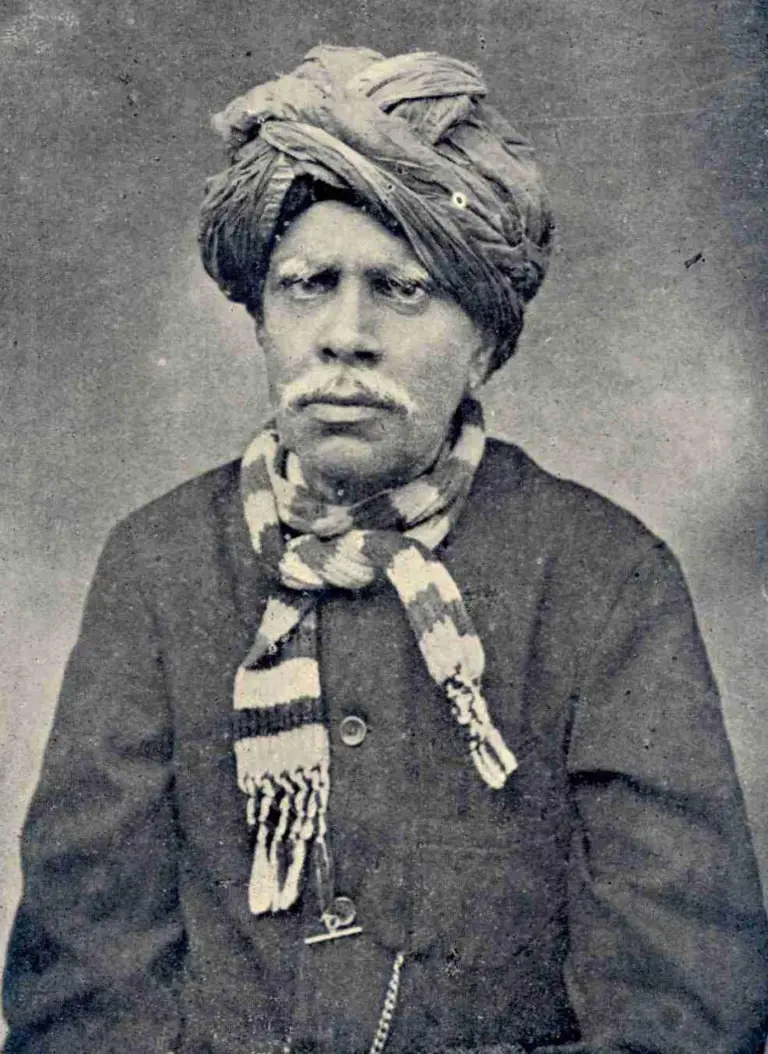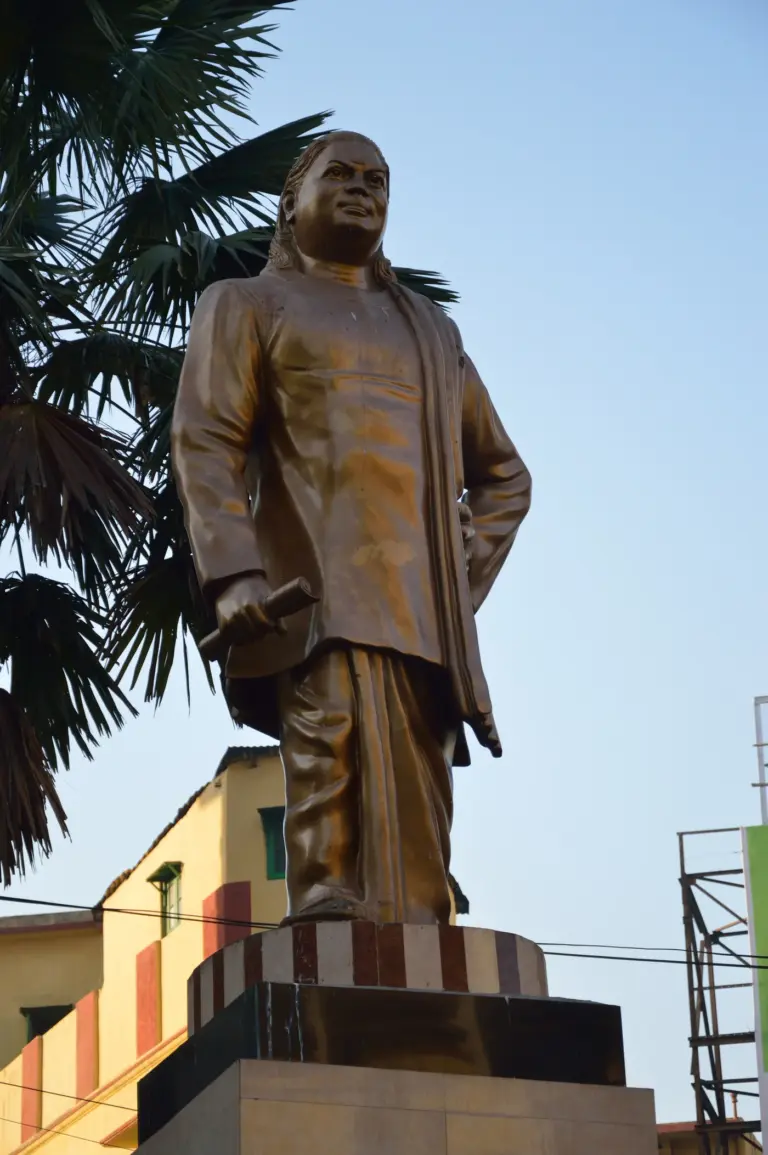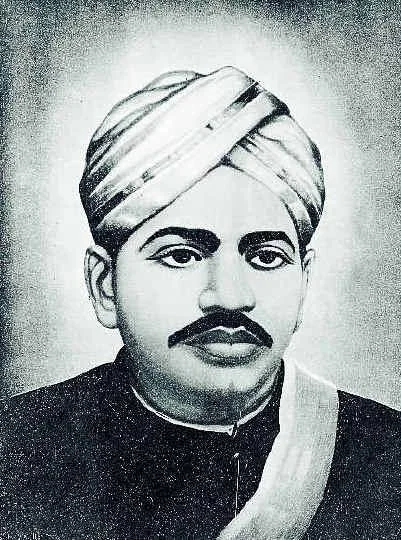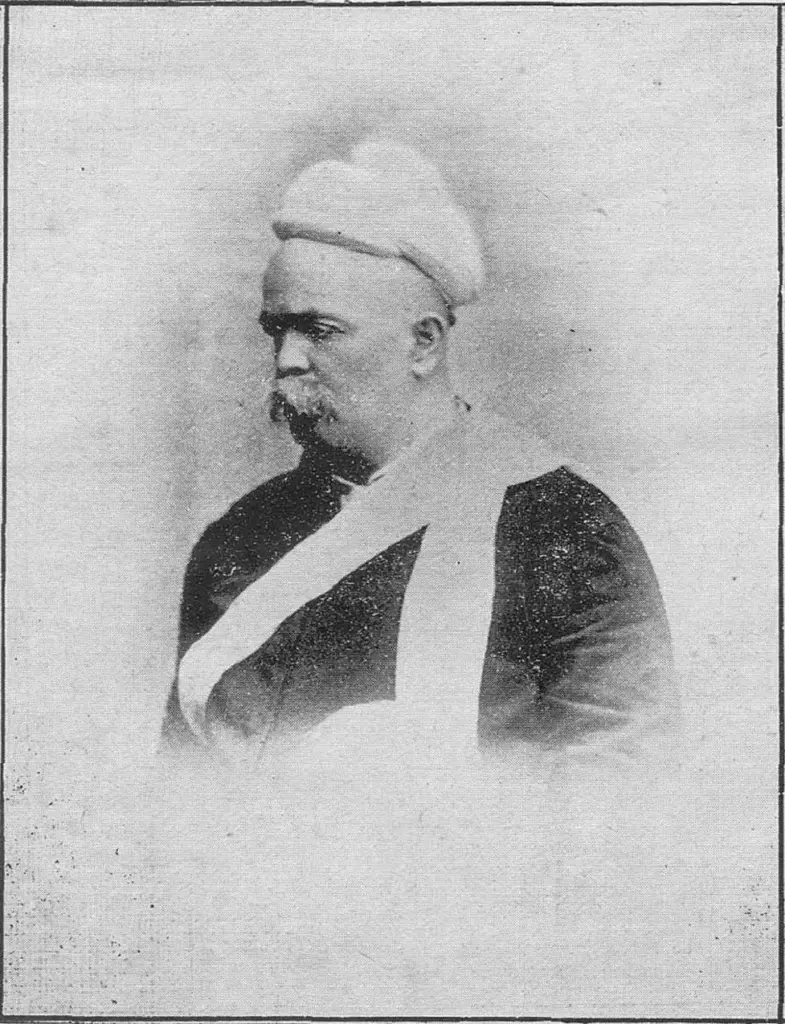
Mahadev Govind Ranade (1842 to 1901) was a judge of the Bombay High Court, a historian of the Marathas and the most influential social reformer of nineteenth-century western India. Justice Ranade worked through institutions: the Prarthana Samaj, the Poona Sarvajanik Sabha and the Indian National Social Conference, which he founded in 1887. His writing on India’s economy has earned him the title of father of Indian economics.
The usual picture of Ranade is of a cautious Moderate who wrote petitions and never broke anything. That reading misses the method. Ranade had a worked-out theory of how a society changes, and he applied the same theory to religion, caste, women’s lives and the economy. This note sets out that theory, the institutions that carried it and the two places where his own life sits awkwardly against it.
Mahadev Govind Ranade at a Glance
The table gives the dates a revision note needs. Two of them are reported differently across sources, and both versions are shown.
| Fact | Detail |
|---|---|
| Born | 18 January 1842, Niphad, Nashik district |
| Died | 16 January 1901, Poona (now Pune) |
| Education | Elphinstone College; first batch of the University of Bombay |
| Career | Subordinate judge at Pune from 1871; judge of the Bombay High Court from 1893 (some accounts say 1895) |
| Religious reform | Early member and leading figure of the Prarthana Samaj (1867) |
| Public bodies | Poona Sarvajanik Sabha (1870); Indian National Social Conference (founded 1887) |
| Major works | Essays on Indian Economics (1898); Rise of the Maratha Power (1900) |
| Best-known student | Gopal Krishna Gokhale |
Ranade’s Life in Phases
Ranade’s life falls into three overlapping stretches: the student and teacher in Bombay, the judge who could not enter politics and the organizer who built reform through associations instead.
Bombay and the early reform circle (1856 to 1871)
He was born into an orthodox Chitpavan Brahmin family, went to school in Kolhapur and joined the Elphinstone institution in Bombay at about fourteen. He belonged to the first batch of students of the University of Bombay, founded in 1857, and in 1866 he became an instructor of history at Elphinstone College. Those years put him inside Bombay’s small reform circle. He was a member of the Vidhava Vivaha Uttejaka Mandal, the Society for Encouragement of Widow Marriage, which Vishnushastri Pandit started in 1865, and he was among the early members of the Prarthana Samaj after its first prayer meeting on 31 March 1867.
The judge in Poona (1871 to 1901)
From 1871 he served as a subordinate judge in Poona and rose to the Bombay High Court bench in the 1890s. The judgeship shaped everything that followed. A serving judge couldn’t campaign, so Ranade worked through bodies that petitioned, published and debated. The Poona Sarvajanik Sabha, founded in 1870, became under his guidance the leading political association of the Deccan, putting the grievances of the region before the government through reasoned petitions.
The organizer (1880s and 1890s)
His largest institutional act came in 1887, when he founded the Indian National Social Conference, which held its first meeting in Madras in December 1887 and met each year alongside the annual session of the Indian National Congress. In 1890 he inaugurated the Industrial Association of Western India, a sign of where his thinking had moved: India’s poverty, he had concluded, needed industry and commerce as much as it needed social reform.
Ranade’s Theory of Reform
Ranade’s central idea is that reform must be gradual and continuous with tradition, because a society is a living organism that cannot be rebuilt from scratch or returned to a golden past. IGNOU’s study unit on him quotes his rejection of revivalism: “If revival is impossible, reformation is the only alternative open to sensible people.”
The four methods
He listed four ways a society can be reformed, and then ranked them. The list is worth memorizing because it shows his reasoning, not just his conclusion:
- Tradition: arguing for change from the society’s own religious texts, as Vidyasagar did for widow remarriage.
- Conscience: appealing to people’s moral sense by exposing unjust and superstitious practices.
- Penal enforcement: change through state law and penalties, as with the ban on sati.
- Rebellion: forcing change by breaking with the society altogether.
Put the four methods against a single cause and the ranking becomes concrete. Take widow remarriage. Vidyasagar first argued from the shastras that a widow’s remarriage had scriptural sanction, which is the method of tradition. Reformers in Bombay and Poona then wrote, lectured and held public remarriages to shame the custom, which is the method of conscience. The Hindu Widows’ Remarriage Act of 1856 supplied the third method, legal protection, but on its own it changed little, because caste councils still punished families who used it. A reformer who wanted to skip all of this and simply leave the community would have chosen the fourth method, and that is the one Ranade refused.
Ranade preferred the first two, accepted the third and rejected the fourth because it would break the historical continuity of the community. That ranking explains his support for the Age of Consent Bill of 1891, a piece of colonial legislation, alongside his refusal to leave Hinduism.
What he wanted to change
His targets were specific. He campaigned against child marriage, the tonsure of widows and the seclusion of women, argued for widow remarriage and women’s education, and criticized caste because it fixed a person’s occupation and place by birth. IGNOU’s unit records that he argued for intercaste marriage and for extending education to the lower castes.
His own summary of what the reform movement aimed at was to “humanise, equalise and spiritualise” Indian society. The three verbs map neatly onto his three fields: social life, caste and religion.
Prarthana Samaj and Ranade’s Religious Ideas
Ranade’s religious position was theism within the Hindu fold. He believed in one God, rejected idol worship and polytheism as later corruptions and set out his position in an essay usually titled The Philosophy of Indian Theism.
The Brahmo Samaj is the comparison everyone reaches for, and Ranade himself drew the line. The Brahmos had, in his view, set themselves up as a separate sect. The Prarthana Samaj would reform from inside, and it took its devotional model from the Marathi saint-poets Jnyaneshvar, Namdev, Eknath and Tukaram rather than from Bengal. That is why its members kept caste and family rites even while preaching against them, a compromise that critics then and now have found hard to accept.
Ranade’s Economics: Why “Father of Indian Economics”
Ranade earned the title by arguing that the laws of classical British economics were not universal and could not simply be applied to a poor, agrarian, colonized country. Economics, for him, was a social science to be studied historically and with attention to a country’s institutions. The core ideas, as IGNOU’s unit sets them out, run like this:
- Classical laws are not universal. Time, place and institutions change what policy works.
- The state must lead industrialization in a late-developing economy, because private capital alone wouldn’t do it.
- Distribution matters. Freedom of contract means little when the two parties are unequal.
- Agriculture needs credit, through cooperative credit societies and agricultural banks, and protection from moneylenders.
Read those four points against the drain theory of Dadabhai Naoroji and you can see two halves of the same project. Naoroji measured what colonial rule took out of India. Ranade argued about what India would need to build instead. Together they are the base of what historians call economic nationalism. His speeches and papers were collected as Essays on Indian Economics, published in Bombay in 1898.
Ranade as Historian of the Marathas
Rise of the Maratha Power (1900) was Ranade’s answer to British historians who described the Marathas as freebooters. He argued that the Maratha state was a national uprising of Marathi-speaking people, and that a social and religious movement, the Bhakti of the saint-poets, came first and prepared the ground for the political one. He compared Maharashtra’s Bhakti movement to the Protestant Reformation in Europe.
The argument was also a lesson for his own time. Ranade wrote that the Maratha state failed because caste pride destroyed its unity. Social reform, in other words, was the precondition of lasting political strength, which is exactly what he was arguing in the 1890s.
What Historians Dispute About Ranade
Three questions recur, and each one has a defensible answer.
Founder or member of the Prarthana Samaj? Some textbooks and the IGNOU unit say Ranade “established” the Samaj with friends. The more precise record is that Atmaram Pandurang hosted its first meeting in 1867 and Ranade joined early and became its leading thinker. Write “leading member”, not “founder”.
Was he a founder of the Congress? He is often listed among the founders. As a government judge he could not be a formal political leader, and his contribution came through the Social Conference and the Sabha rather than the Congress platform. “Closely associated with the early Congress” is safer than “founder”.
Did his life match his teaching? This is the sharpest criticism. When his first wife died, Ranade, who had supported widow remarriage since the 1860s, married Ramabai, a girl of about eleven, at his family’s insistence. His critics called it a surrender; his defenders point out that he educated Ramabai, who became a reformer in her own right. The episode is useful in an answer on the limits of nineteenth-century reform, because it shows the pressure even the leading reformers faced at home.
The larger debate is with Bal Gangadhar Tilak, who held that political freedom should come first and social reform could follow. Ranade held the reverse. The argument over whether the Social Conference could share the Congress pandal ran through the 1890s and is the clearest way to understand the divide between Moderates and Extremists.
Ranade’s Legacy Today
There has been no major official development about Ranade in 2024 to 2026; his presence today is intellectual rather than ceremonial. Three lines of influence are visible in the record:
- Gokhale carried his reform work forward after 1901, and the reform agenda of the Moderates is largely his.
- Economic nationalism, the idea that the state must build industry and protect the cultivator, runs from Ranade into the planning debates of the twentieth century.
- Gradual reform through law and persuasion is still the model of most social legislation in India.
The site’s notes on socio-religious reform movements and reform movements place him alongside Vidyasagar, Phule and Kandukuri Veeresalingam, who carried widow remarriage into the Telugu country.
How to Study Mahadev Govind Ranade for Exams
Ranade sits in GS Paper I under the socio-religious reform movements and the early national movement, and in the economics strand through economic nationalism. Mains tends to test him inside questions on the Moderates, as in Mains 2017 GS Paper I: “Why did the ‘Moderates’ fail to carry conviction with the nation about their proclaimed ideology and political goals by the end of the nineteenth century?” Prelims prefers institution-founder matching; History accounts for 184 of the 1,403 questions in the site’s Prelims question bank.
Revision facts to fix:
- Born 18 January 1842 at Niphad; died 16 January 1901 at Poona.
- Prarthana Samaj (1867): leading member, not founder; founder was Atmaram Pandurang.
- Poona Sarvajanik Sabha (1870): the Deccan’s leading political association under his guidance.
- Indian National Social Conference: founded 1887, first met in Madras, sat alongside the Congress.
- Four methods of reform: tradition, conscience, penal law, rebellion; he rejected rebellion.
- Essays on Indian Economics (1898) and Rise of the Maratha Power (1900).
- Gokhale was his disciple.
The confusions come from neighbors. The Social Conference is not the Servants of India Society, which Gopal Krishna Gokhale founded in 1905. The Prarthana Samaj is not a branch of the Brahmo Samaj. And the Vidhava Vivaha Uttejaka Mandal of 1865 came before the Prarthana Samaj, not out of it.
| Body | Year | Founder or leading figure | Main aim |
|---|---|---|---|
| Prarthana Samaj | 1867 | Atmaram Pandurang; Ranade as leading member | Theistic worship and social reform within Hinduism |
| Poona Sarvajanik Sabha | 1870 | Ranade as its guiding figure | Political petitions and public opinion in the Deccan |
| Indian National Social Conference | 1887 | M. G. Ranade | Annual social reform forum alongside the Congress |
| Servants of India Society | 1905 | G. K. Gokhale | Trained full-time public workers |
For your preparation, Ranade is the key that unlocks the Moderates. Once you understand why a judge who believed in gradual, legal, continuous change built petitions and conferences instead of agitations, the strengths and the failures of the early Congress become far easier to argue in an answer.
Frequently Asked Questions
Who was Mahadev Govind Ranade?
Mahadev Govind Ranade (1842 to 1901) was a judge of the Bombay High Court, a social reformer and a historian from Maharashtra. He was a leading member of the Prarthana Samaj, guided the Poona Sarvajanik Sabha and founded the Indian National Social Conference in 1887. He is also called the father of Indian economics.
Why is Ranade called the father of Indian economics?
He argued that classical British economics could not be applied unchanged to a poor, colonized country and that economics had to be studied historically. He made the case for state-led industrialization, cooperative credit and agricultural banks. His papers were collected as Essays on Indian Economics in 1898.
Did Ranade found the Prarthana Samaj?
Not strictly. The Samaj held its first prayer meeting in 1867 at the house of Atmaram Pandurang, and Ranade joined early and became its leading thinker. Some textbooks call him a founder, so ‘leading member’ is the safer phrase in an answer.
What was the Indian National Social Conference?
It was a forum for social reform that Ranade founded in 1887. Its first meeting was held in Madras in December 1887, and it met every year alongside the Indian National Congress to discuss issues such as child marriage and widow remarriage. After his death, Gokhale and others carried the work on.
What were Ranade’s four methods of social reform?
Ranade named tradition, appeal to conscience, penal enforcement through law and rebellion. He favored the first two, accepted state law and rejected rebellion because it would break society’s continuity. The ranking explains why he backed laws such as the Age of Consent Bill but never left Hinduism.
How did Ranade differ from Tilak?
Ranade held that social reform had to come before or alongside political freedom, while Tilak argued that political freedom should come first. The disagreement shaped the split between Moderates and Extremists in the 1890s. It also decided whether the Social Conference could meet in the Congress pandal.
What books did Ranade write?
His best-known works are Essays on Indian Economics, published in 1898, and Rise of the Maratha Power, published in 1900. He also wrote on theism and delivered many lectures on social reform. His interpretation of Maratha history linked the Bhakti saints to the rise of the Maratha state.
Practice Questions
Prelims
1. Consider the following statements about Mahadev Govind Ranade: 1. He founded the Indian National Social Conference in 1887. 2. He was the founder of the Servants of India Society. Which of the statements given above is/are correct?
- (a) 1 only
- (b) 2 only
- (c) Both 1 and 2
- (d) Neither 1 nor 2
Answer: (a) The Servants of India Society was founded by Gopal Krishna Gokhale in 1905.
2. Which of the following best describes Ranade’s view of social reform?
- (a) Reform through mass rebellion against orthodoxy
- (b) Revival of the Vedic social order
- (c) Gradual reform continuous with tradition, aided by law and persuasion
- (d) Conversion to a separate theistic sect outside Hinduism
Answer: (c) Ranade rejected both revival and rebellion and argued for gradual reform within the tradition.
3. Consider the following statements: 1. The Prarthana Samaj drew its devotional inspiration from Maharashtra’s Bhakti saints such as Tukaram. 2. The Prarthana Samaj required its members to give up caste. 3. Ranade compared the Bhakti movement of Maharashtra to the Protestant Reformation. Which of the statements given above are correct?
- (a) 1 and 2 only
- (b) 2 and 3 only
- (c) 1 and 3 only
- (d) 1, 2 and 3
Answer: (c) The Prarthana Samaj did not require members to give up caste; it reformed from within.
4. The book Rise of the Maratha Power was written by:
- (a) Bal Gangadhar Tilak
- (b) Mahadev Govind Ranade
- (c) R. G. Bhandarkar
- (d) Gopal Krishna Gokhale
Answer: (b) Ranade published it in 1900 to counter British accounts of the Marathas as freebooters.
5. Which of the following ideas is associated with Ranade’s economic thought?
- (a) Laissez-faire as the best policy for India
- (b) Universal validity of classical economic laws
- (c) State initiative in industrialization and cooperative credit for farmers
- (d) Abolition of private property in land
Answer: (c) Ranade argued for state-led industrialization and cooperative credit, and rejected the universality of classical laws.
Mains
- To what extent did the role of the Moderates prepare a base for the wider freedom movement? Comment. (15 marks, 250 words) Previous year: Mains 2021, GS Paper I.
- Explain Ranade’s theory of social reform. How did it shape the work of the Indian National Social Conference? (15 marks, 250 words)
- Why is Mahadev Govind Ranade regarded as the father of Indian economics? (10 marks, 150 words)
- The debate between Ranade and Tilak on the priority of social and political reform shaped the early national movement. Discuss. (10 marks, 150 words)
- How did Ranade’s reading of Maratha history connect religious reform with political strength? (10 marks, 150 words)
Tell Google you want more of this.
Add Anantam IAS as a preferred sourceOne tap, and this site shows up more often in your own Top Stories, AI Overviews and AI Mode. Remove it any time.