

Why in news:
The article is in news because India’s birth rate has shown a significant decline, with both Crude Birth Rate (CBR) and Total Fertility Rate (TFR) falling as per the latest Sample Registration Survey (SRS) Statistical Report (2023).
UPSC Relevance:
Population and associated issues
UPSC PYQ’s:
Q. In the context of any country, which one of the following would be considered as part of its social capital? (2019)
(a) The proportion of literates in the population
(b) The stock of its buildings, other infrastructure and machines
(c) The size of population in the working age group
(d) The level of mutual trust and harmony in the society
Q. India is regarded as a country with “Demographic Dividend”. This is due to (2011)
(a) Its high population in the age group below 15 years
(b) Its high population in the age group of 15-64 year
(c) Its high population in the age group above 65 years
(d) Its high total population
UPSC Mains PYQ:
Q. “Empowering women is the key to control the population growth.’’ Discuss. (2019)
Indian population:
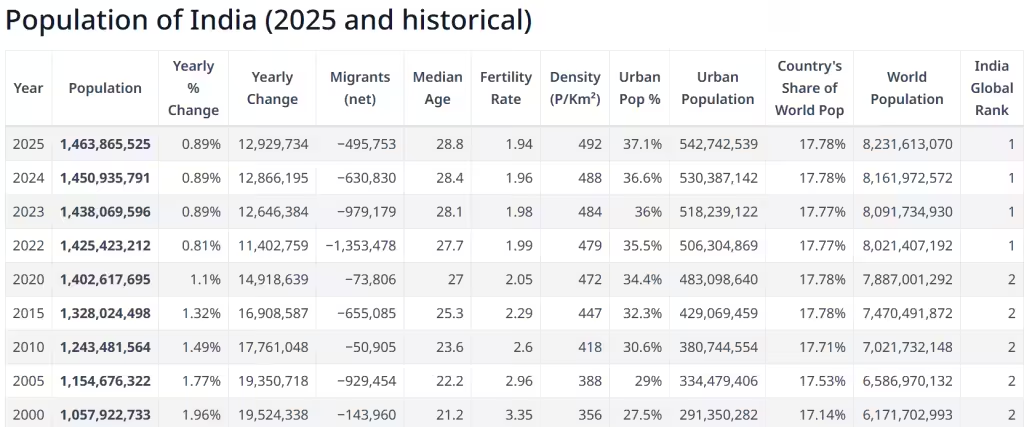
- The current population of India is 1,466,100,795 as of Thursday, September 4, 2025, based on Worldometer’s elaboration of the latest United Nations data1.
- India 2025 population is estimated at 1,463,865,525 people at mid-year.
- India population is equivalent to 17.78% of the total world population.
- India ranks number 1 in the list of countries (and dependencies) by population.
- The population density in India is 492 per Km² (1,275 people per mi²).
- The total land area is 2,973,190 Km² (1,147,955 sq. miles).
- 37.08% of the population is urban (542,742,539 people in 2025)
- The median age in India is 28.8 years.
Total Fertility rate:
The total fertility rate (TFR) is defined as the average number of live births a woman would have by the end of her child-bearing age.
Recent Trends:
- Fell for the first time in two years, from 2.0 to 1.9.
- Below replacement level fertility (2.1) → indicates fewer children are being born than required to replace the population.
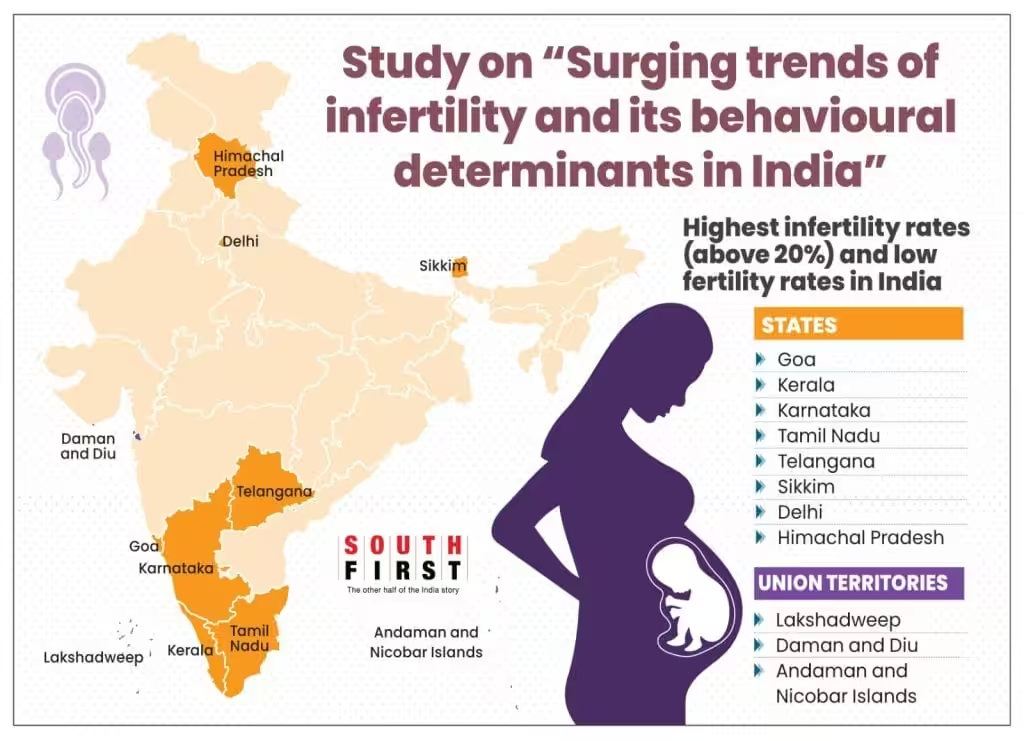
State-level Trends:
- Highest TFR: Bihar (2.8).
- Lowest TFR: West Bengal (1.3) and Maharashtra (1.4).
Elderly Population Growth:
- Proportion of people above 60 years rose to 9.7% of total population.
- Kerala has the highest elderly share (15%).
Replacement-Level Fertility:A TFR of about 2.1 children per woman is considered replacement-level, meaning a generation is replacing itself. A TFR below 2.1 leads to population decline.