Why in news:
REITs (Real Estate Investment Trusts) and InvITs (Infrastructure Investment Trusts) in India have crossed a major milestone as their combined Assets Under Management (AUM) exceeded ₹9 lakh crore in the past nine years. This figure highlights the growing role of these investment vehicles in India’s capital markets, offering alternative avenues for infrastructure and real estate funding.
UPSC Relevance:
Investment models.
UPSC PYQ 2023:
Q. Consider the following statements:
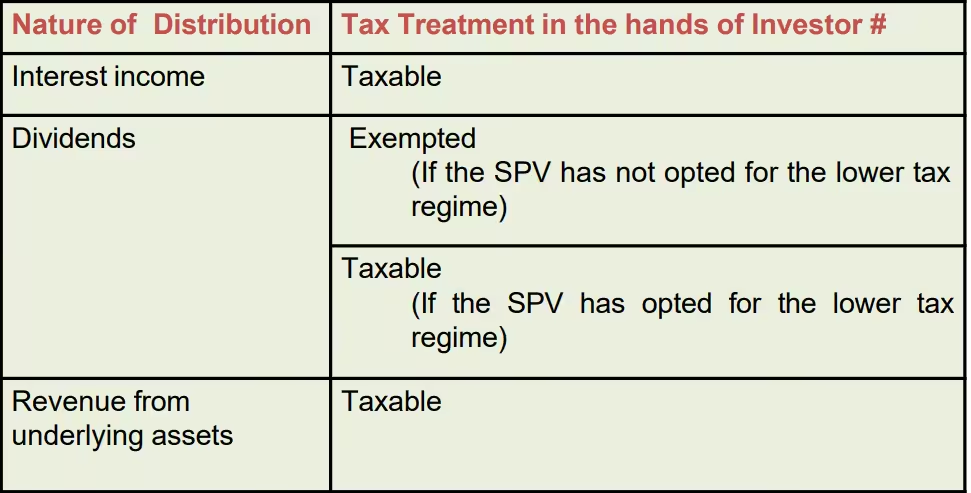
Statement-I: Interest income from the deposits in Infrastructure Investment Trusts (InvITs) distributed to their investors is exempted from tax, but the dividend is taxable.
Statement-II: InviTs are recognised as borrowers under the ‘Securitization and Reconstruction of Financial Assets and Enforcement of Security Interest Act, 2002’.
Which one of the following is correct in respect of the above statements?
a. Both Statement-I and Statement-II are correct and Statement-II is the correct explanation for Statement-1
b. Both Statement-I and Statement-II are correct and Statement-II is not the correct explanation for Statement-1
c. Statement-1 is correct but Statement-II is incorrect
d. Statement-I is incorrect Statement-II is correct
Real estate investment trust (REIT):

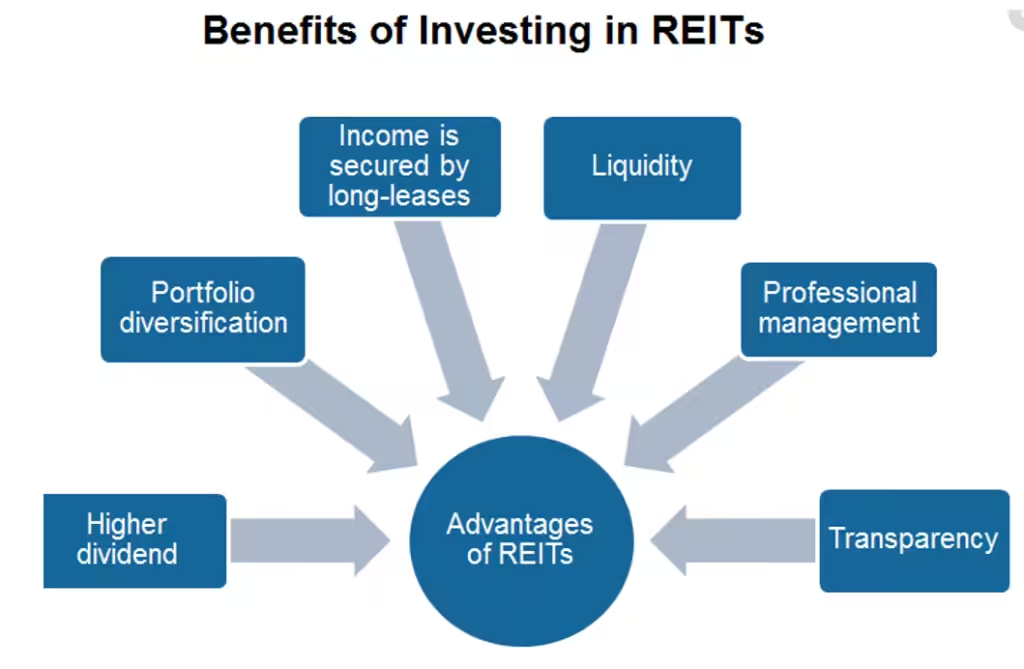
- Real Estate Investment Trusts (REITs) are pooled investment vehicles like mutual funds. However, the REITs, as the name suggests, invest in real estate. Thus, it is another way to invest in real estate.
- REITs are required to be listed, traded on stock exchanges, and can be bought and sold just like shares of any listed company.
- REITs own revenue generating real estate assets i.e. commercial office spaces, warehouses etc.
Regulatory Framework:
- REIT shall be a Trust set up under the Indian Trust Act, 1882 and it must be registered under the SEBI (Real Estate Investment Trusts), Regulations 2014
- Eligibility criteria for sponsor, investment manager viz. net worth, experience
- Assets, directly held or through Holdco/SPV, min value INR 500 crore. Minimum offer size INR 250 crores.
InvITs (Infrastructure Investment Trust):
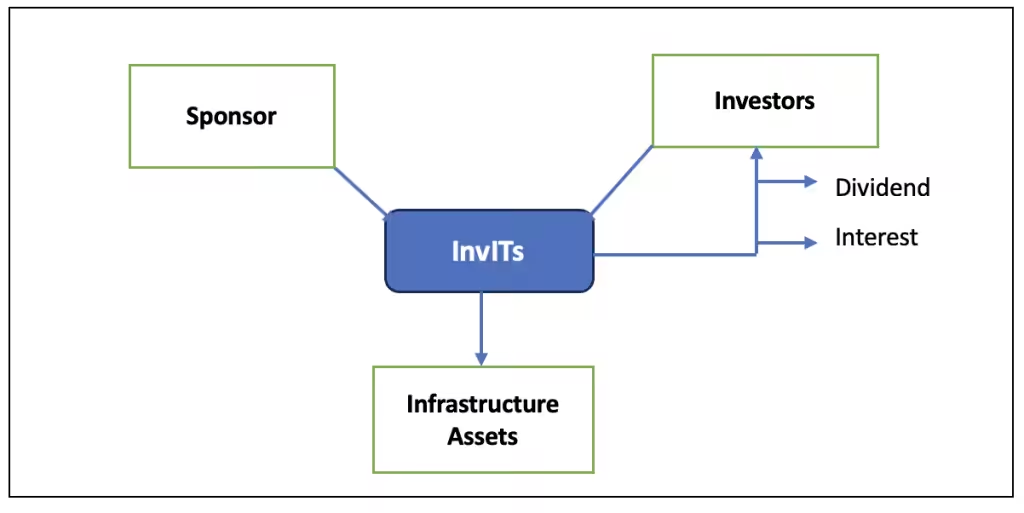
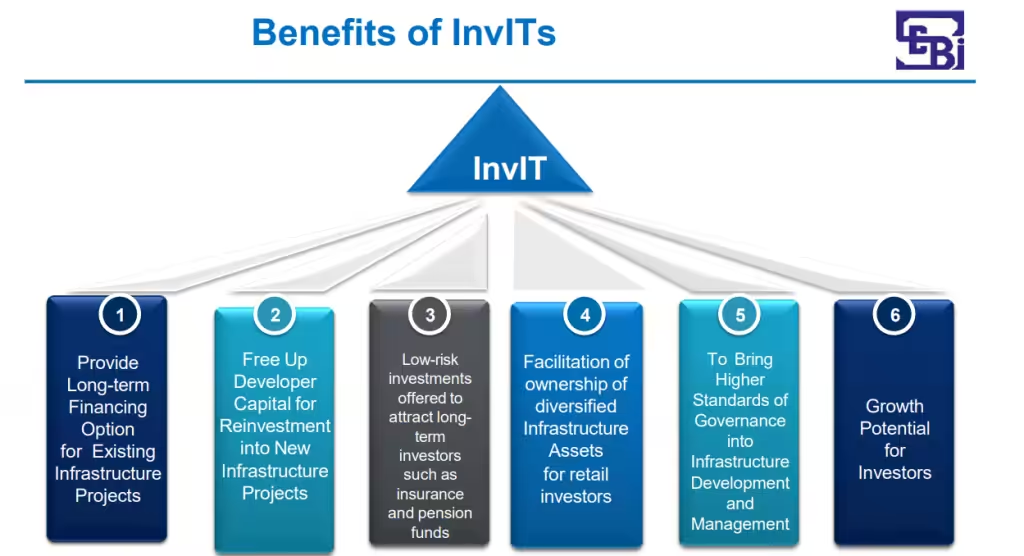
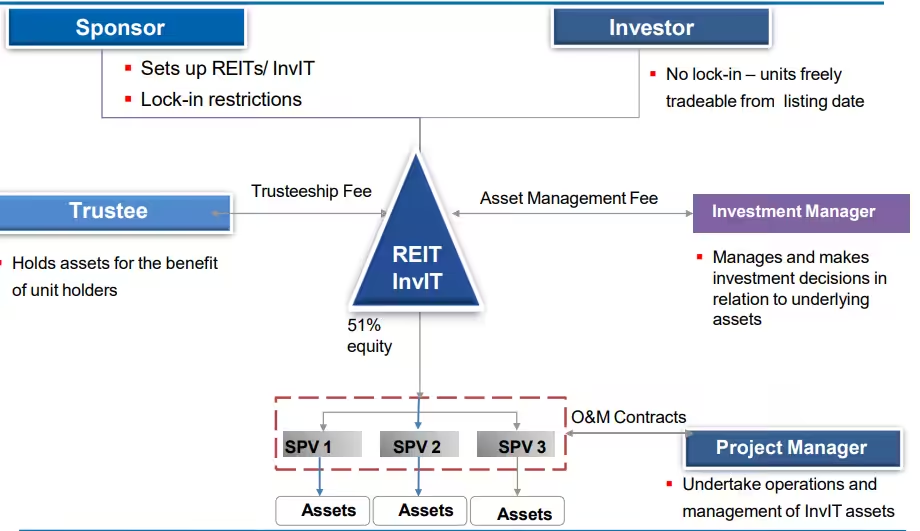
- Infrastructure Investment Trusts (‘InvITs’) are pooled investment vehicles similar to mutual funds which were introduced to make investment in infrastructure assets accessible to private and retail investors.
- The minimum subscription amount for public InvITs is in the range of ₹10,000 to ₹ 15,000/- and the trading lot is 1 unit. (revised w.e.f. July 30, 2021) Previously it was ₹1 lakh & 100 units, respectively.
- Any investor (domestic / foreign / retail / institutional) can buy InvIT units in India.
- Investors can purchase InvIT units through a Demat account, similar to how they would purchase equity shares.
- As per the SEBI regulations, InvITs must invest at least 80% of their assets in projects that are completed and revenue-generating. This lowers the risk for investors as this reduces the typical risk associated with the infrastructure sector i.e. delay in completion, due to lack of regulatory approvals, poor project management etc.
- InvITs and REITs are recognised as borrowers under the Securitisation and Reconstruction of Financial Assets and Enforcement of Securities Interest (SARFAESI) Act. This enables the investors, especially banks, to initiate action against the trustees of InvITs in case of any default.