Why in News?
On 13 September 2026, PIB reported that the Dryland Congress adopted the Delhi Declaration on Drylands, alongside calls for stronger data systems, foresight and living laboratories connecting research, practice and policy.
- Participating governments, institutions and delegates endorsed a shared agenda for dryland agriculture through collaboration, knowledge exchange and innovation.
- The ICAR leadership called for ICAR-NIAP to lead dryland foresight work; the release reports a proposed mandate, not an established new mechanism.
- Living laboratories and robust information systems were highlighted as ways to connect scientific research with field practice and policy decisions.
- Dryland resilience requires solutions that work under water constraints, while fitting the resources and decisions of the farmers expected to adopt them.
- The implementation challenge is to turn shared knowledge into locally useful practices, then feed field experience back into research and public support.
UPSC Relevance
Prelims Relevance
- Delhi Declaration on Drylands: shared agenda adopted at the Dryland Congress.
- ICAR-NIAP: National Institute of Agricultural Economics and Policy Research.
- Living laboratories: common innovation grounds linking research, practice and policy.
- Foresight: examining possible future conditions to inform present choices.
- Dryland agriculture: agricultural systems operating under persistent water constraints.
Mains Relevance
GS Paper 3
- Climate-resilient agriculture through locally tested innovations and adaptive research.
- Data systems, water constraints and long-term agricultural planning.
GS Paper 2
- Institutional coordination between researchers, farmers and policymakers.
Essay
- Agricultural knowledge improves when learning flows both ways.
Background and Context
Why dryland resilience needs local evidence
Dryland agriculture faces water constraints, but a useful response must also fit the farm where it will be applied and the farmer making decisions.
- Water availability depends on climate and rainfall that replenish rivers and groundwater. FAO identifies greater precipitation variability and drought risks as pressures on agriculture, making dependable production a problem of managing uncertainty.
- Local suitability matters even when two regions face similar water constraints. As a planning principle, decision-makers should ask whether a proposed practice fits the receiving farm’s soils, available labour, production needs and access to inputs.
- Resilience should be assessed through the ability to manage difficult conditions, not a single impressive harvest. A useful evaluation would examine whether farmers can sustain production and recover without taking on an unaffordable additional burden.
- Research priorities should begin with a clearly identified farm problem. For example, an innovation intended to manage a dry spell should be evaluated against that problem, rather than promoted solely because it is technically novel.
- The declaration’s knowledge-exchange agenda creates an opportunity to compare experience across settings. Its practical value will depend on explaining where an approach worked, under what conditions, and what needs changing before another farming community adopts it.
How a living laboratory can close the feedback loop
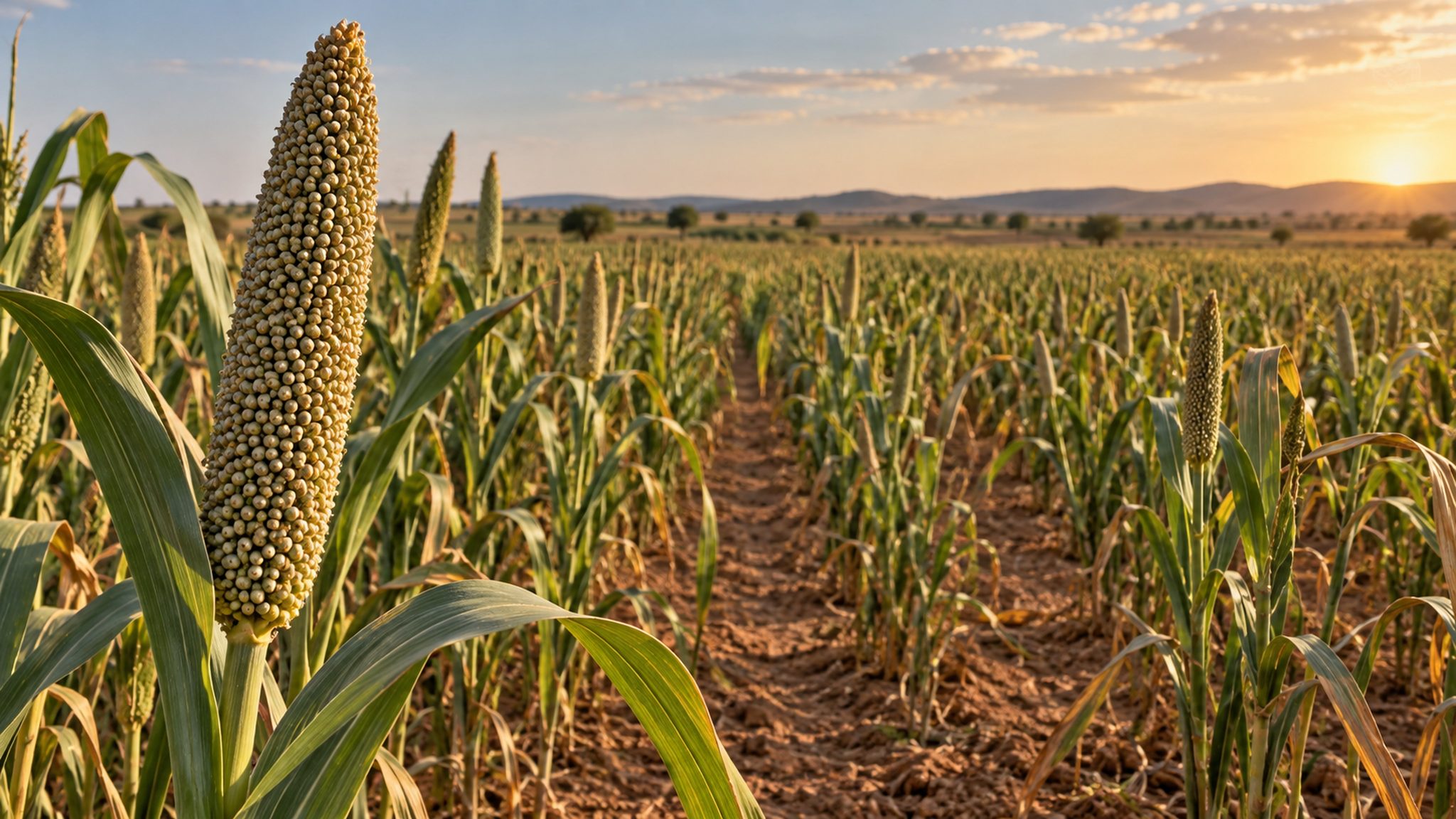
The Congress described living laboratories as common innovation grounds; their value is connecting field experience with researchers and policymakers instead of separating these groups.
- Start with farmers’ constraints: a useful living laboratory would allow farmers and researchers to identify a problem together. This makes the question being tested relevant before resources are spent developing or demonstrating a proposed solution.
- Test in practice: for illustration, a soil-moisture practice could be tried under local farming conditions. The purpose would be to learn whether the practice works there, not to assume results from another location will transfer automatically.
- Record usable evidence: the same illustrative trial could document rainfall conditions, labour requirements, costs and crop response. Researchers would then have a basis for interpreting performance, including cases where adoption creates difficulties for participating farmers.
- Adapt through feedback: farmers’ observations should help revise the practice or the research question. This repeated learning distinguishes a useful innovation ground from an event that merely displays a technology and counts the people who attended.
- Connect evidence with policy: repeated field findings can identify barriers that research alone cannot solve. If a promising practice needs accessible advice or inputs, policymakers can consider the support required while researchers continue checking its performance.
What data and foresight add to the agenda
Data describe conditions and outcomes; foresight helps consider possible future pressures. The Congress called for both, alongside a stronger institutional mechanism for dryland agriculture.
- Robust information systems should make findings interpretable, not collect more entries. A practical design would record the conditions behind an observed result, helping users distinguish a transferable lesson from an outcome that depends on unusual circumstances.
- Comparable evidence helps researchers learn across innovation grounds. Shared definitions and clear measurement methods would make it easier to compare similar trials, while retaining local context instead of reducing every farm to a single performance score.
- Foresight considers possible future conditions to inform decisions made now. In dryland planning, it can help examine how research and support priorities should change if water constraints or farmers’ production conditions evolve over the longer term.
- The proposal for ICAR-NIAP concerns leadership of this foresight work. The announcement says the institute should receive the mandate; it does not establish that a new coordinating mechanism is already operational or has delivered an assessment.
- Implementation accountability should connect an agreed priority with responsibility and observable results. The declaration provides a shared direction; evaluating its value requires following what institutions actually test, learn, change and support after the Congress ends.
Way Forward
Organise adoption around learning
- Choose specific farmer problems for living laboratories and involve affected farmers in defining the question and reviewing results.
- Build comparable, contextual data that record costs and constraints alongside outcomes, so unsuccessful trials also improve future decisions.
- Clarify institutional responsibility for foresight and connect evidence from trials with research priorities, extension support and policy revision.
Conclusion
- The Delhi Declaration on Drylands is most useful as an agenda for organised learning: identify a farm problem, test a response, examine the evidence and improve both the practice and the support around it.
- In an agriculture answer, connect resilience with feedback. Scientific innovation matters when local experience can change research and policy, while clear institutional responsibilities convert conference commitments into sustained action.
UPSC Practice Questions
Prelims MCQ 1
With reference to the dryland agriculture agenda reported after the Dryland Congress, consider the following statements:
- Living laboratories were proposed to connect research, practice and policy.
- The release confirms an already operational new foresight mechanism led by ICAR-NIAP.
- Robust data and information systems were identified as important for dryland agri-food systems.
How many of the above statements are correct?
(a) Only one (b) Only two (c) All three (d) None
Answer: (b) Only two
Explanation:
Statements 1 and 3 are correct. The release reports a call for ICAR-NIAP to receive a foresight mandate, not confirmation of an operational mechanism.
Prelims MCQ 2
Which feature most directly makes a living laboratory useful for agricultural innovation?
(a) Treating farmer feedback as irrelevant to research (b) Promoting a practice before examining local conditions (c) Repeated testing and adaptation linking farmers, researchers and policymakers (d) Measuring success only through attendance at a demonstration
Answer: (c) Repeated testing and adaptation linking farmers, researchers and policymakers
Explanation:
A living laboratory connects practice with research and policy. Feedback allows a proposed response to be evaluated and improved under relevant conditions.
UPSC Mains Questions
- Explain how living laboratories can strengthen the connection between agricultural research, farm practice and public policy in dryland regions.
- How can data systems and foresight improve dryland agricultural resilience? Discuss the institutional requirements for turning a shared declaration into action.
Sources: PIB, Ministry of Agriculture & Farmers Welfare and FAO: Water scarcity.
Frequently Asked Questions
What is the Delhi Declaration on Drylands?
It is the shared agenda adopted at the Dryland Congress and reported by PIB on 13 September 2026. It emphasizes collaboration, knowledge exchange and innovation to improve dryland agriculture across the Global South.
What is a living laboratory in this context?
It is a common innovation ground connecting research, practice and policy. A useful implementation enables farmers and researchers to test responses under local conditions, exchange feedback and improve the proposed practice.
Has ICAR-NIAP received a new operational foresight mandate?
The release reports a call for ICAR-NIAP to be mandated to lead dryland foresight work. It does not confirm that a new mechanism is operational or that a foresight assessment has been delivered.
Why are data systems needed alongside farm trials?
Trial results need context to be useful elsewhere. Recording conditions, costs and constraints alongside outcomes helps distinguish a broadly useful practice from an approach that succeeds only under particular circumstances.
Tell Google you want more of this.
Add Anantam IAS as a preferred sourceOne tap, and this site shows up more often in your own Top Stories, AI Overviews and AI Mode. Remove it any time.