
Why in News?
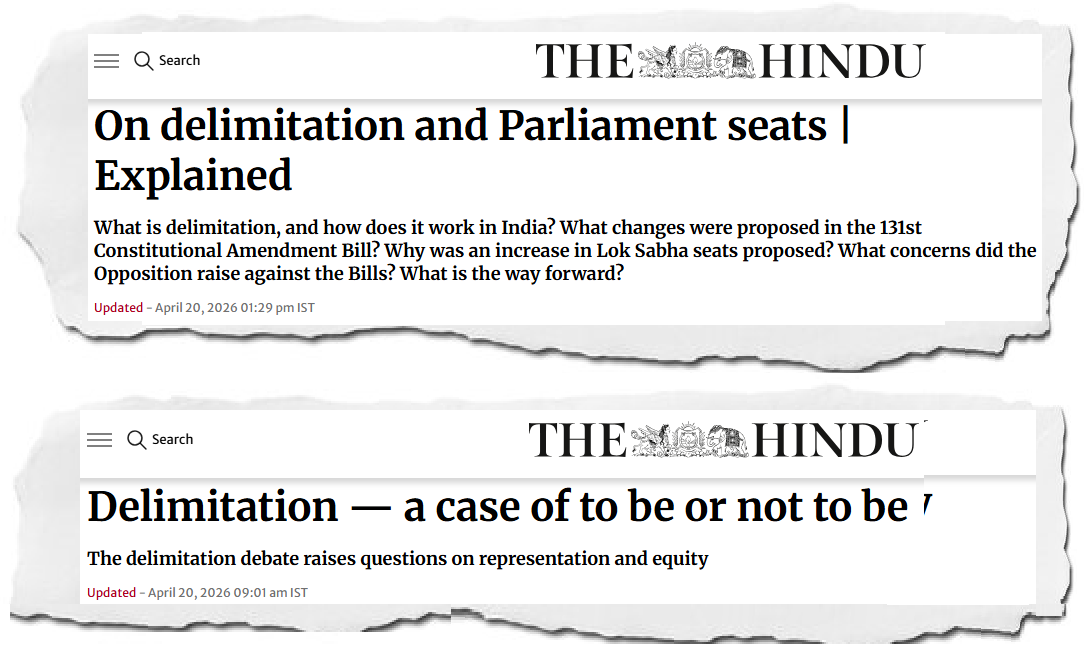
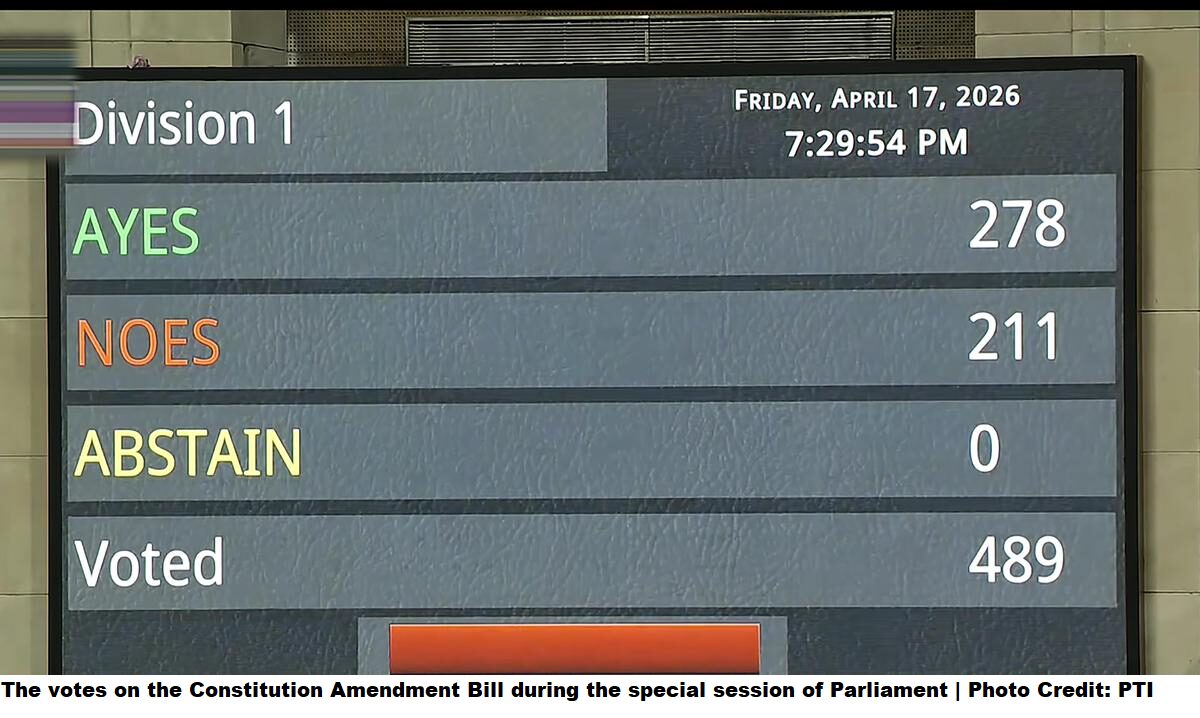
The Constitution (131st Amendment) Bill, 2026 and the Delimitation Bill, 2026 proposed to increase Lok Sabha seats and undertake fresh delimitation, but were withdrawn after failing to secure parliamentary approval. This has revived debates on timing, methodology, and principles of delimitation.
UPSC Relevance
GS-II: Parliament, Delimitation, Federalism, Representation, Constitutional Amendments
What is Delimitation?
Delimitation refers to:
- Fixing the number of seats in Lok Sabha and State Assemblies
- Redrawing constituency boundaries based on population
Objective: Ensure equal representation (one vote, one value).
Constitutional Framework
| Provision | Explanation |
| Article 81(2) | Ratio of seats to population should be uniform across States (as far as practicable) |
| Article 82 | Readjustment of Lok Sabha seats after every Census |
| Article 170(3) | Similar provision for State Assemblies |
Historical Evolution of Delimitation
| Census Base | Key Development |
| 1951 | First delimitation after independence |
| 1961, 1971 | Periodic readjustment |
| 1976 (42nd Amendment) | Freeze on seat redistribution to promote population control |
| 2001 (84th Amendment) | Freeze extended till post-2026; only boundary readjustment allowed |
| Post-2026 | Fresh delimitation expected based on new Census |
Objective of freeze:
Prevent penalising States that successfully controlled population growth.
What Did the Recent Bills Propose?
1. Increase in Lok Sabha Seats
- From ~550 to ~850 seats (around 50% increase)
2. Use of Census Data
- Proposed delimitation based on 2011 Census (latest published data at the time)
3. Delimitation Commission
- To be set up to:
- Allocate seats among States/UTs
- Redraw constituency boundaries
4. Link with Women’s Reservation
- Reservation to be implemented after delimitation exercise
Key Issues in the Proposed Delimitation
1. Use of Outdated Census Data
- 2011 Census would be 15+ years old at time of implementation.
- Population dynamics (growth, migration) may have changed significantly.
Risk: Constituencies may not reflect current demographic realities.
2. Population vs Federal Balance
- Article 81 emphasises population-based representation.
- However:
- States have unequal population growth rates
- Strict population criteria may disturb federal balance
Core tension: Democratic equality vs Federal equity
3. Impact of Migration
- Large-scale rural-to-urban migration has altered population distribution.
- Leads to:
- Overcrowded constituencies in urban areas
- Uneven voter representation
Delimitation must address dynamic population shifts, not static data.
4. Continuation of Delimitation Freeze Logic
- Original rationale (1976 & 2001):
- Encourage population stabilisation
- However:
- Population trends remain uneven across States
Question: Should past incentives continue to shape current representation?
5. Scale of Expansion
- Increase to ~850 seats is significantly larger than past changes.
- Raises concerns:
- Functioning of Parliament
- Quality of deliberation
6. Timing and Preparedness
- Delimitation is a complex and time-consuming process.
- Past exercise (2002–2008) took ~6 years.
Using outdated data and rushing implementation may reduce effectiveness.
Important Constitutional Principle
“One Person, One Vote, One Value”
- Ensures equal weight of each vote
- Currently diluted due to:
- Population changes since 1971
- Unequal constituency sizes
Delimitation aims to restore this principle.
Balancing Competing Objectives
| Objective | Concern |
| Democratic Equality | Requires population-based seat allocation |
| Federalism | Protects State-wise representation balance |
| Administrative Feasibility | Needs updated and reliable data |
| Political Stability | Requires consensus among States |
Delimitation is not merely a technical exercise. It involves:
- Representation of citizens (democratic principle)
- Balance among States (federal principle)
- Adaptation to demographic changes (administrative reality)
Any reform must reconcile all three.
Way Forward
1. Use Updated Census Data
Delimitation should ideally be based on the latest Census, because population distribution changes rapidly due to birth rates and migration. Using old data (like 2011) can create unequal constituencies, defeating the purpose of fair representation.
2. Explore Hybrid Criteria (Population + Other Factors)
While population should remain the main basis, additional factors like demographic performance (population control efforts) can be included. This ensures that States which controlled population are not unfairly penalised, maintaining federal balance.
3. Ensure Federal Safeguards
There should be mechanisms to ensure that no State suddenly loses its relative political importance in Parliament. For example, minimum guaranteed seat share or proportional increase for all States can protect federal stability.
4. Phased Implementation of Reforms
Instead of combining multiple complex reforms (like delimitation + women’s reservation), they should be implemented step-by-step. This reduces administrative confusion and ensures each reform is properly executed.
5. Wider Consultation and Consensus
Since delimitation affects all States and political representation, it should be discussed through parliamentary committees and inter-state consultations. A consensus-based approach will make the reform more acceptable and less controversial.
Conclusion
Delimitation is essential to restore the principle of equal representation in a rapidly changing demographic landscape. However, its design must carefully balance population-based fairness with federal stability. A transparent, data-driven, and consensus-based approach is crucial to ensure that delimitation strengthens, rather than disrupts, India’s democratic framework.
Practice Questions
- Discuss the constitutional and practical challenges associated with delimitation in India.
- “Delimitation involves a tension between democratic equality and federal balance.” Examine.
- Analyse the implications of using outdated Census data for delimitation in India.
Tell Google you want more of this.
Add Anantam IAS as a preferred sourceOne tap, and this site shows up more often in your own Top Stories, AI Overviews and AI Mode. Remove it any time.