

(Rape, Murder, and Dowry Deaths: How India Can Tackle the Grim Reality of Crimes Against Women?)
Why in News?
Recent incidents of young women being tortured and killed, allegedly over dowry demands, point to the cracks in the gender justice system and failure of a “civilised” society.
UPSC Relevance
GS1, Role of Women and Women’s Organization, Population and Associated Issues, Poverty and Developmental issues, Urbanization, their problems and their remedies.
PYQ
2019
What are the continued challenges for women in India against time and space?
2023
Explain why suicide among young women is increasing in Indian society.
2024
Distinguish between gender equality, gender equity and women’s empowerment. Why is it important to take gender concerns into account in programme design and implementation?
Dowry-Related Deaths in India
- Prevalence of Dowry Deaths: The illegal practice of dowry continues to be a significant issue across India, as evidenced by a recent string of reported deaths. In the last three months, cases have been reported from states like Uttar Pradesh and Tamil Nadu and cities like Chandigarh, with victims facing dowry-related violence, harassment, and suicide.
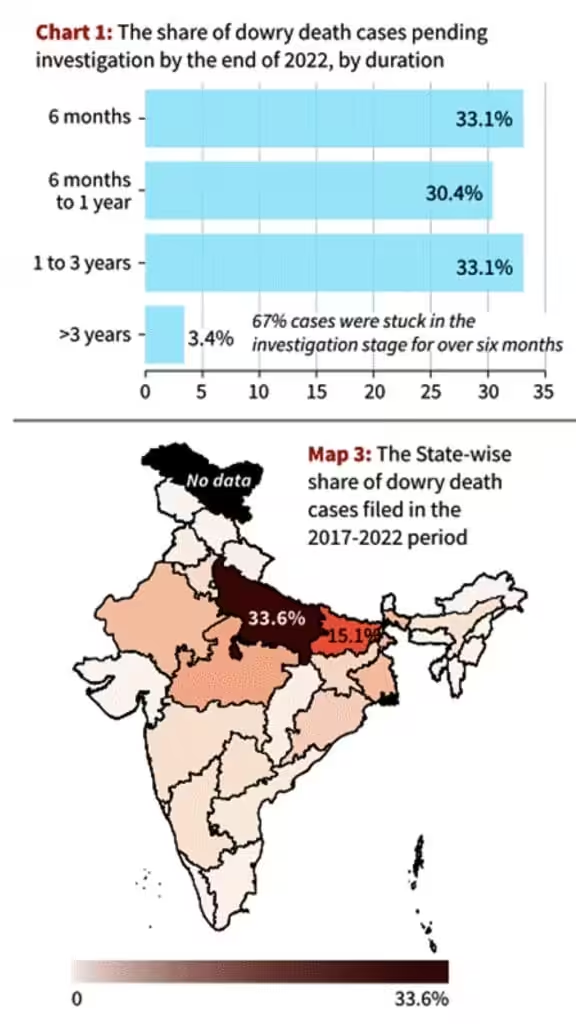
- Official Statistics and Underreporting: According to the National Crime Records Bureau (NCRB), an average of 7,000 dowry-related deaths were reported annually between 2017 and 2022. It’s important to note that this is considered a conservative estimate, as many such deaths go unreported.
- Geographical Concentration: Dowry deaths are particularly prevalent in certain regions of India:
- Dowry was the motive behind over 6,100 murders from 2017 to 2022.
- Over 60% of these murders occurred in West Bengal, Odisha, and Bihar.
- 80% of all dowry death cases were filed in nine states: West Bengal, Odisha, Bihar, Jharkhand, Uttar Pradesh, Madhya Pradesh, Rajasthan, Haryana, and Rajasthan.
- Among major cities, Delhi accounted for the highest number of dowry death cases, comprising 30% of all reported incidents.
Why Dowry?
- Patriarchy and Control: Historically, many societies were structured patriarchally, meaning men held the primary power and authority. Women were often seen as the property of their fathers and, later, their husbands. Dowry emerged as a transfer of this “property” from one male head of a household to another. It was a way for the bride’s family to demonstrate their wealth and status, but it also functioned as a way to “buy” a good husband for their daughter.
- Exclusion from Inheritance: In many cultures, daughters were traditionally excluded from inheriting their family’s ancestral land or wealth. Dowry, therefore, became a way to provide a woman with her share of the family’s assets at the time of her marriage. However, this system often fell short, leaving women with little to no financial security or control over the assets once they were married.
- Economic Non-Productivity: In many traditional societies, a woman’s value was not seen in her potential to earn a living but rather in her domestic and reproductive roles. Families who couldn’t afford a large dowry or a lavish wedding came to view their daughters as an economic liability, a burden. This perception was exacerbated by the expectation that a woman would leave her natal home after marriage and no longer contribute to her parents’ household.
- The Marriage “Market”: Over time, the concept of dowry evolved from a gift to a social obligation and, eventually, a demand. As consumerism grew and men’s earning potential became a key factor in social status, dowry became a way for the groom’s family to extract wealth from the bride’s family. The amount of dowry demanded is often directly linked to the groom’s education, income, and social standing. This turns the process into a transactional “market” where a daughter becomes a burden that must be “offloaded” with a hefty price tag.
- Perpetuation by Insecurity: The cycle is perpetuated by a sense of social insecurity. Families, anxious about finding a “suitable” husband for their daughter, often comply with dowry demands, even if it puts them into debt. This reinforces the idea that women are a financial burden and that their families must pay a price for their marriage.
Legal Provisions to Protect Women in India
The Protection of Women from Domestic Violence Act, 2005 (PWDVA):
- This is a comprehensive civil law specifically designed to protect women from various forms of domestic violence, including physical, sexual, verbal, emotional, and economic abuse.
- It provides for a range of civil reliefs, such as Protection Orders (restraining the abuser from committing violence), Residence Orders (allowing the woman to stay in the shared household), Monetary Relief (covering expenses like medical bills and loss of earnings), and Custody Orders for children.
- The Act is a civil remedy, so it doesn’t automatically lead to criminal charges, but it provides immediate and practical protection.
- It protects women in a wide range of relationships, including those who are married, in a live-in relationship, or related through blood.
The Dowry Prohibition Act, 1961:
- This is the primary law making the giving, taking, or demanding of dowry an offense.
- It specifies penalties for these acts, with imprisonment for not less than five years and a fine of at least ₹15,000 or the value of the dowry, whichever is higher.
- The Act’s purpose is to abolish the practice of dowry altogether.
Indian Penal Code (IPC) and Bhartiya Nyaya Sanhita (BNS):
- Section 304B IPC / Section 109 BNS: Dowry Death: This provision deals specifically with “dowry death.” It states that if a woman dies within seven years of her marriage due to burns, bodily injuries, or other circumstances suggesting a unnatural death, and it is shown that she was subjected to cruelty or harassment for dowry shortly before her death, her husband or his relatives are presumed to have caused her death. This is a serious criminal offense.
- Section 498A IPC / Section 86 BNS: This is a criminal provision that deals with cruelty by a husband or his relatives. It makes it a punishable offense for a husband or his family to subject a woman to cruelty that could drive her to suicide or cause grave injury or danger to her life, limb, or health. This is a cognizable and non-bailable offense.
- This provision is frequently invoked in dowry cases, as dowry demands and the resulting harassment fall under the definition of “cruelty.”
Challenges in tackling dowry deaths
Flaws in India’s Legal Systems
- The Gap Between Law and Justice: The article highlights a disconnect between India’s extensive legal framework and its ability to deliver justice. Despite having specific anti-dowry laws dating back to 1961, with strengthened provisions from 1983, dowry-related violence and deaths continue to be a widespread problem.
- Slow Investigations and Low Charge-Sheeting Rate: The data reveals that a significant number of these cases face slow and inefficient investigation processes:
- On average, only about 4,500 of the 7,000 reported cases each year were charge-sheeted.
- The remaining cases were closed for reasons like “insufficient evidence” or were classified as “false cases.”
- A concerning number of investigations were significantly delayed; as of the end of 2022, 67% of pending dowry death investigations were stuck for over six months.
- Lack of Convictions: Even when cases reach the trial stage, the conviction rate is extremely low, highlighting systemic issues within the legal process:
- Of the approximately 6,500 cases sent for trial each year, only around 100 resulted in a conviction.
- The remaining cases were either pending in court (over 90%) or were disposed of through acquittals, withdrawals, or plea bargains, often due to a lack of evidence.
Flaws in India’s Social Systems
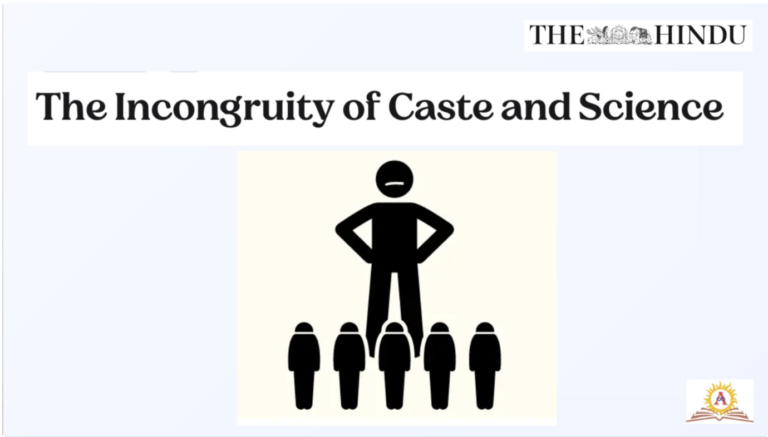
- Societal Prejudices and Systemic Inequality: Dowry-related violence is fueled by deeply entrenched caste, gender, and class prejudices. The author concludes that the powerful in society continue to design social norms and institutions that maintain the status quo. These systems, which include family structures, caste panchayats, and even the police and judiciary, can make inequality feel like equality to the powerless, effectively preventing them from seeking true justice.
- In most of the domestic violence cases women unfortunately considered it proper to tolerate and adjust as husbands are allowed to behave in a certain way. A girl dying in her in-laws house is okay but she deciding to leave her husband and shifting to parent’s house is an unacceptable solution as separation or divorce brings shame to the family. Therefore practically men enjoy impunity till they commit a crime so barbaric that society is left with no option but to condemn it. (Rape, Murder, and Dowry Deaths: How India Can Tackle the Grim Reality of Crimes Against Women?)
- The Role of Community and Caste Panchayats: In cases like the alleged murder of Nikki Bhati, community-based systems often override legal recourse.
- Instead of approaching the police, victims and their families often turn to caste panchayats.
- These all-male bodies typically favor reconciliation over legal action, pressuring the victim to “adjust” for the sake of family and caste honor.
- This demonstrates a systemic failure where community honor is prioritized over individual safety and legal justice.
- Misogyny in Public Discourse: The discourse surrounding dowry deaths is frequently tainted by misogyny. Social media, for example, is used to blame the victim and create counter-narratives that victimize the accused. Hashtags like #JusticeForVipin, in the case of Nikki Bhati, reflect this attempt to deflect blame and claim that men also suffer in marriages.
Way Ahead – a multifaceted approach for any crime against women
A Social Revolution for Gender Equality
- Shift in Social Narratives: India needs a social revolution to change the narrative from teaching women to tolerate violence to actively standing against it. This movement should be a top-down initiative, similar to campaigns like Swachh Bharat Abhiyan or Pulse Polio Abhiyan. It should involve all stakeholders, including government departments, media, celebrities, and educational institutions, to promote continuous dialogue on gender equality.
- Education for Young Men: A key part of this revolution is to educate young boys and men. They need to be taught about consent, the wrongfulness of eve-teasing and dowry, and the importance of not resorting to violence. The concept of rigid gender roles at home should also be dismantled.
- Empowerment Beyond “Beti bachao, Beti Padhao”: The focus must shift from just “educating” a daughter to making her self-reliant (“Beti ko atmanirbhar banao”). Financial independence gives women the freedom to make critical decisions, especially in abusive marriages, and to escape violence rather than tolerating it out of financial dependence. This message needs to be communicated to both girls and their parents.
Reforming the Policing and Justice Systems
- Early Intervention and Deterrence: The article argues for the need to catch and address small-scale crimes against women, such as stalking and eve-teasing, which often escalate into more serious offenses. A new system is proposed to deter these behaviors:
- A woman-focused national helpline and app where complaints can be lodged anonymously.
- The use of geotagged photos and videos as evidence.
- Instead of an immediate FIR, a system of counseling or minor punishment for first-time offenders.
- Maintaining a Sexual Offenders Register to monitor repeat offenders and their behavior.
- Victim-Centric Justice: The proposed system would protect victims from the long and often traumatic legal process. It would allow for action against repeat offenders without placing the full burden of filing an FIR on a single victim. This would also address concerns about false FIRs by starting with a non-judicial intervention.
Accountability and Legal Reforms
- Addressing Low Conviction Rates: The article points out that despite existing laws, the conviction rate for crimes against women is abysmally low (25.3% in 2022), with rape convictions being even lower (27-28% between 2018 and 2022).
- Continuous Review: Laws and institutions must be periodically reviewed and corrected proactively, rather than waiting for a major incident to force change. The annual NCRB reports should be used as a tool to identify these weaknesses.
- Learning from Acquittals: The author stresses that every acquittal or discharge judgment should be treated as a learning opportunity to improve the criminal justice system and hold every stakeholder accountable for the proper implementation of laws.
- Accountability of Law Enforcement: Train police to handle these cases with sensitivity. Implement systems that hold police officers accountable for neglecting complaints or mishandling evidence. This can be done through dedicated “Mahila Police Cells” with trained female officers.
The instances of dowry deaths, domestic violence and any other forms of violence against women are manifestations of cracks in the edifice of gender justice built by our constitution as envisaged under Articles 14, 15, 39, 51A(e), relegating females to be a lesser citizen. To give these humans or what we call aadhi aabadi there due, action and change is needed at individual, societal and systemic levels, at the earliest.
Tell Google you want more of this.
Add Anantam IAS as a preferred sourceOne tap, and this site shows up more often in your own Top Stories, AI Overviews and AI Mode. Remove it any time.