Why in News?
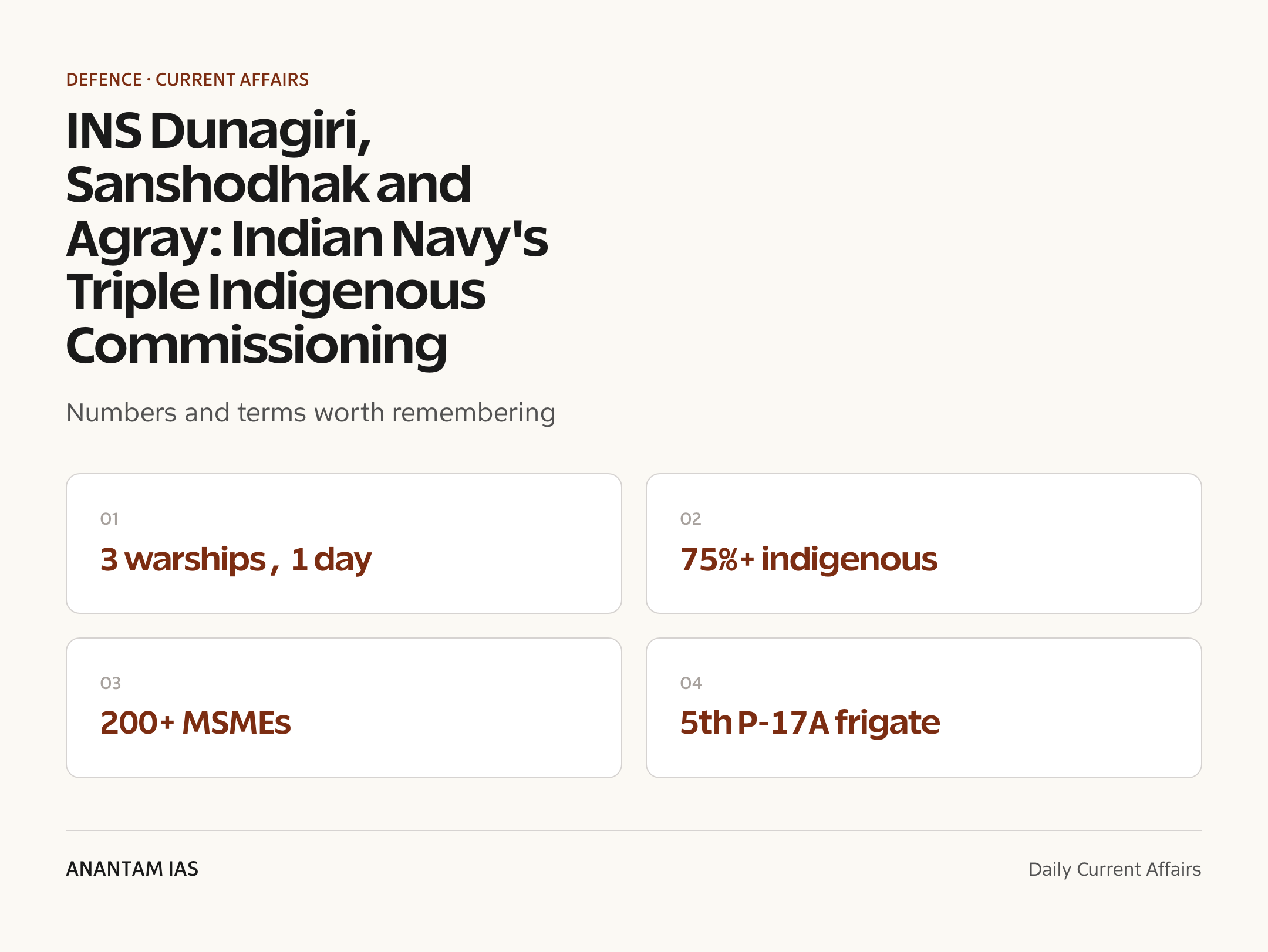
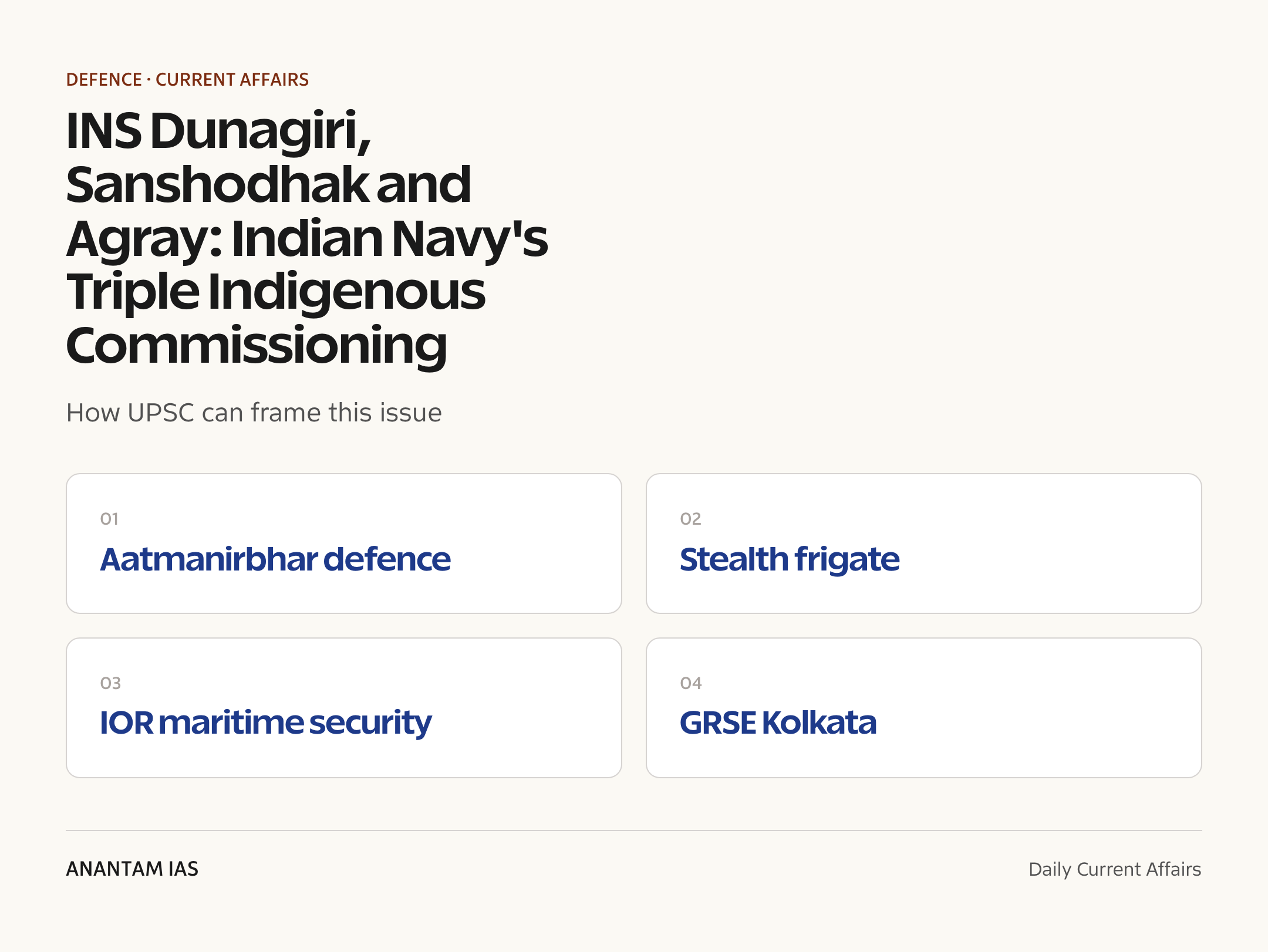
The Indian Navy is set to commission three indigenously built warships on the same day at Garden Reach Shipbuilders and Engineers (GRSE) in Kolkata on 21 June 2026 — the stealth frigate INS Dunagiri, the survey vessel Sanshodhak and the anti-submarine warfare craft Agray. A single-day, triple-platform induction is rare in Indian naval history and underscores the maturing capacity of a single shipyard.
All three vessels carry more than 75 per cent indigenous content and drew on the work of over 200 MSMEs, making the event a showcase of Aatmanirbhar Bharat in the defence-manufacturing sector and a marker of India’s deepening shipbuilding self-reliance for the Indian Ocean Region.
- Three warships commissioned the same day at GRSE Kolkata, a Defence PSU shipyard.
- INS Dunagiri is the fifth Project 17A (Nilgiri-class) stealth frigate.
- Sanshodhak is the fourth and last Survey Vessel (Large); Agray is an Arnala-class ASW shallow-water craft.
- Indigenous content exceeds 75 per cent; over 200 MSMEs involved.
- Part of a wider surge — the Navy aims to commission 19 ships in 2026.
The development matters in the context of:
- India is pursuing a blue-water navy able to secure its Indian Ocean Region (IOR) interests against a growing Chinese naval footprint.
- Domestic warship construction reduces import dependence and builds an indigenous defence-industrial ecosystem.
- GRSE has compressed build timelines — delivering Dunagiri in 80 months against 93 months for the lead ship of the class.
UPSC Relevance
Prelims Relevance
- Project 17A (Nilgiri-class) — follow-on to Project 17 Shivalik-class; 7 frigates total, split between GRSE and Mazagon Dock (MDL).
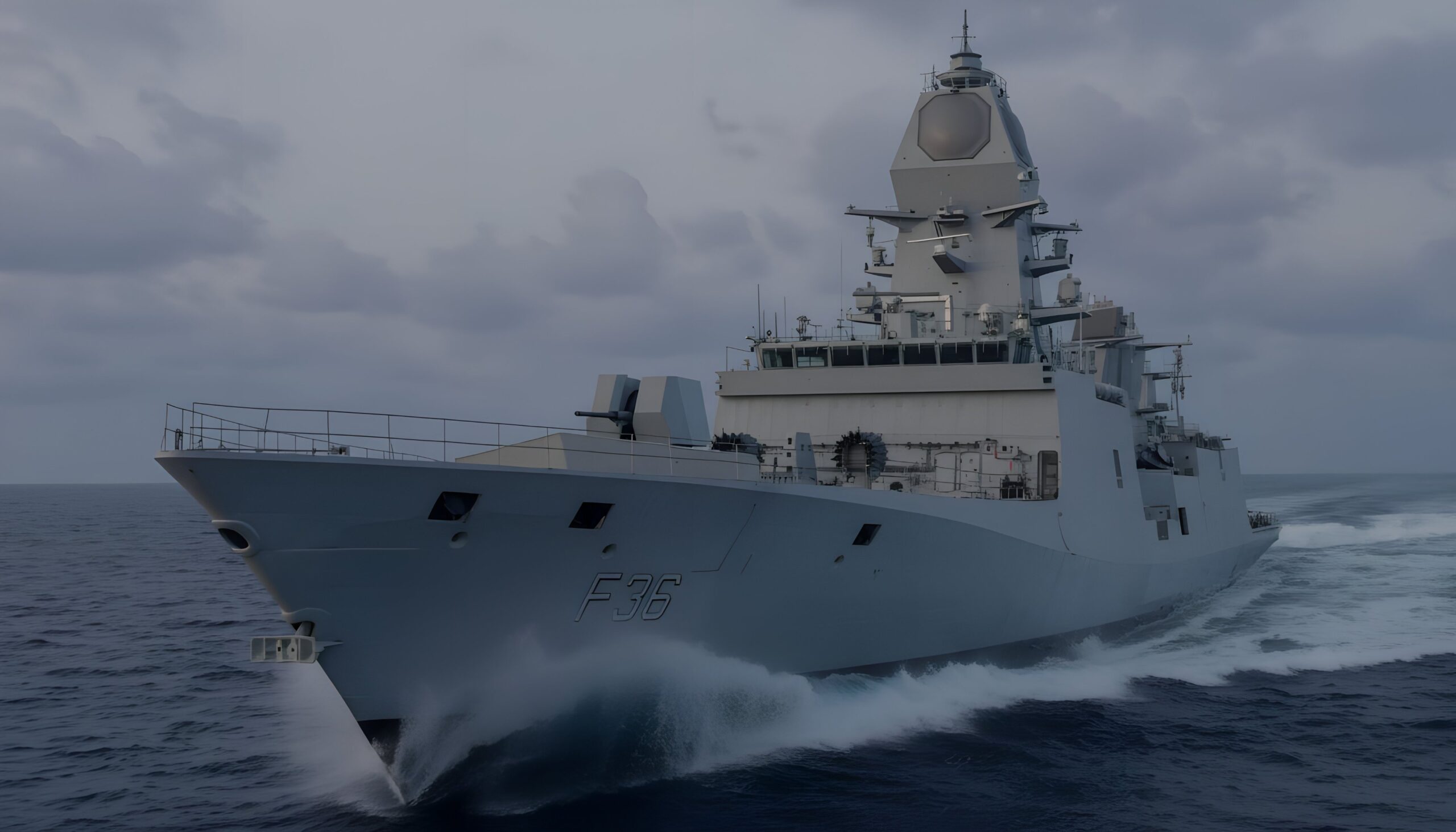
- INS Dunagiri — fifth P-17A frigate, pennant F36, displacement ~6,670 tonnes, speed ~28 knots.
- Armament of P-17A: BrahMos supersonic anti-ship missiles, Barak-8 MRSAM, MF-STAR AESA radar, close-in weapon systems.
- GRSE (Garden Reach Shipbuilders and Engineers) — Kolkata-based Defence PSU shipyard.
- Sanshodhak — fourth Survey Vessel (Large); sisters Sandhayak, Nirdeshak, Ikshak.
- Agray — Arnala-class Anti-Submarine Warfare Shallow Water Craft (ASW-SWC).
- Designer: Indian Navy’s Warship Design Bureau (WDB).
- Propulsion of P-17A: CODOG (Combined Diesel or Gas) with Integrated Platform Management System.
Mains Relevance
GS Paper 3
- Indigenisation of defence production and the role of Defence PSUs and MSMEs in achieving Aatmanirbharta.
- India’s maritime security strategy and naval modernisation in the Indian Ocean Region.
Essay
- Self-reliance as strategic autonomy — building national capability rather than importing it.
Background and Context
Project 17A and INS Dunagiri
Dunagiri is the latest in India’s flagship stealth-frigate programme.
- Project 17A (Nilgiri-class) is a series of seven stealth guided-missile frigates, the follow-on to the earlier Project 17 Shivalik-class.
- The programme is split between GRSE, Kolkata and Mazagon Dock Shipbuilders (MDL), Mumbai; ships are designed by the Navy’s Warship Design Bureau.
- INS Dunagiri is the fifth ship of the class (pennant F36), with a displacement of about 6,670 tonnes, length ~149 m and a top speed near 28 knots.
- Stealth features reduce radar, infrared and acoustic signatures, making the vessel harder to detect and target.
- GRSE delivered Dunagiri in 80 months, an improvement over the 93 months taken for the lead ship, signalling a learning curve in serial production.
Weapons, Sensors and Combat Punch
The frigate carries a layered offensive and defensive suite.
- BrahMos supersonic cruise missiles provide long-range anti-ship and land-attack strike capability.
- The Barak-8 Medium Range Surface-to-Air Missile (MRSAM) system, co-developed with Israel, gives area air defence.
- The MF-STAR (EL/M-2248) AESA radar enables simultaneous tracking of multiple aerial and surface threats.
- Close-in weapon systems and torpedo tubes round out point defence and anti-submarine capability.
- An Integrated Platform Management System and CODOG propulsion improve survivability and operational efficiency.
Sanshodhak — Survey Vessel (Large)
A specialised platform that maps the seabed for navigation and defence.
- Sanshodhak is the fourth and final ship of the Survey Vessel (Large) project, after Sandhayak, Nirdeshak and Ikshak.
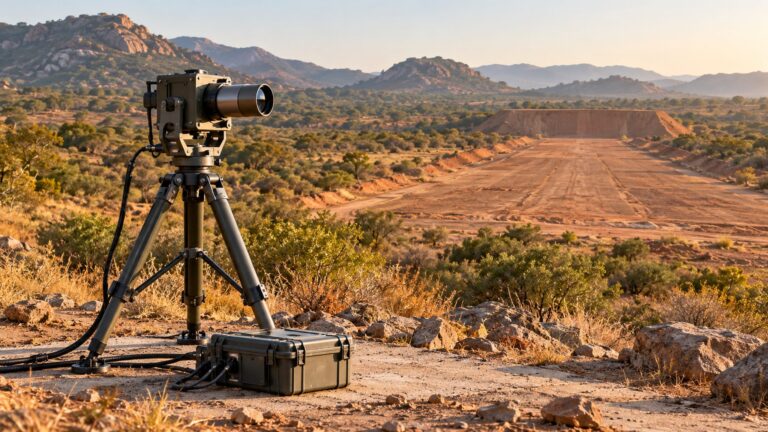
- It conducts full-scale coastal and deep-water hydrographic surveys — mapping depth, currents and the seabed.
- It carries Autonomous Underwater Vehicles (AUVs) and Remotely Operated Vehicles for precise data collection.
- Survey data supports safe navigation, maritime boundary delineation and naval operational planning, and has civil applications too.
Agray — ASW Shallow Water Craft
A compact hunter built for coastal anti-submarine defence.
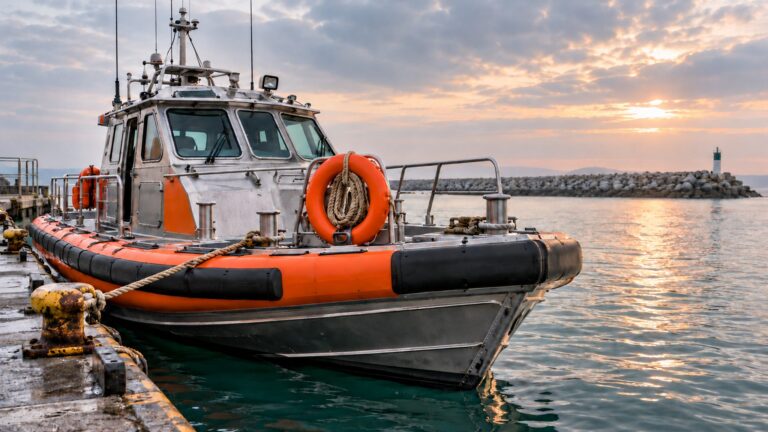
- Agray belongs to the Arnala-class of Anti-Submarine Warfare Shallow Water Craft (ASW-SWC).
- These craft operate in littoral (near-shore) waters where larger frigates are less effective against small, quiet submarines.
- Armament includes lightweight torpedoes and indigenous rocket launchers, with shallow-water sonar for detection.
- They plug a key gap in coastal anti-submarine surveillance and protect harbours, sea lanes and offshore assets.
Indigenisation and the MSME Ecosystem
Self-reliance is measured in supply chains, not just slipways.
- All three vessels exceed 75 per cent indigenous content by value.
- Over 200 MSMEs supplied components, sub-systems and services, spreading capability across the industrial base.
- Warship building has strong forward and backward linkages — steel, electronics, propulsion and software — generating skilled employment.
- The shift aligns with the Defence Ministry’s positive indigenisation lists and the push to make India a net defence exporter.
Strategic Context — Securing the Indian Ocean Region
Hardware feeds a larger maritime strategy.
- The Indian Navy seeks a credible blue-water presence across the Indian Ocean Region, a corridor for much of India’s trade and energy.
- Rapid inductions respond to an expanding Chinese naval and port footprint in the region.
- India’s role as a net security provider and ‘first responder’ rests on a capable, self-sustaining fleet.
- The Navy targeting 19 commissionings in 2026 reflects an accelerated force-accretion plan.
Way Forward
Sustain build momentum
- Hold timelines on remaining Project 17A frigates and avoid cost-and-schedule slippage seen in earlier programmes.
- Standardise designs and sub-systems across shipyards to capture serial-production efficiencies.
Deepen indigenisation
- Move beyond hull and platform to indigenous weapons, sensors and propulsion where import dependence persists.
- Strengthen MSME financing, certification and technology absorption to widen the vendor base.
Match platforms with people and infrastructure
- Scale up trained crews, maintenance dockyards and logistics to keep new ships at high availability.
- Invest in underwater domain awareness and networked surveillance to use these platforms effectively.
Conclusion
The single-day commissioning of Dunagiri, Sanshodhak and Agray at GRSE is more than a ceremonial milestone — it signals that an Indian shipyard can deliver a stealth frigate, a survey vessel and an anti-submarine craft in parallel, with most of the value created at home.
For UPSC, the event ties together indigenous defence manufacturing, the MSME ecosystem and India’s maritime security in the Indian Ocean Region. The harder test now is to sustain build tempo, indigenise weapons and sensors, and keep the growing fleet combat-ready.
UPSC Practice Questions
Prelims MCQ 1
With reference to Project 17A frigates, consider the following statements:
- They are a follow-on to the Project 17 Shivalik-class frigates.
- They are built only by Mazagon Dock Shipbuilders, Mumbai.
- INS Dunagiri is one of the ships of this class.
How many of the above statements are correct?
(a) Only one (b) Only two (c) All three (d) None
Answer: (b) Only two
Explanation:
Statements 1 and 3 are correct. Statement 2 is wrong — Project 17A frigates are built by both GRSE, Kolkata and Mazagon Dock Shipbuilders (MDL), Mumbai, not MDL alone.
Prelims MCQ 2
The warships Dunagiri, Sanshodhak and Agray, in the news, are all being commissioned at which shipyard?
(a) Cochin Shipyard Limited (b) Mazagon Dock Shipbuilders, Mumbai (c) Garden Reach Shipbuilders and Engineers, Kolkata (d) Hindustan Shipyard, Visakhapatnam
Answer: (c) Garden Reach Shipbuilders and Engineers, Kolkata
Explanation:
All three indigenous platforms were built by and are being commissioned at GRSE, Kolkata, a Defence PSU shipyard.
UPSC Mains Questions
- Indigenisation of warship construction is central to India’s quest for strategic autonomy. Discuss, with reference to recent naval commissionings and the role of Defence PSUs and MSMEs.
- Examine India’s naval modernisation imperatives in the Indian Ocean Region. How do platforms such as stealth frigates, survey vessels and anti-submarine craft complement each other in a maritime security strategy?
Sources: Indian Navy / PIB and The Tribune.
Frequently Asked Questions
What is Project 17A?
Project 17A is the Indian Navy’s class of seven Nilgiri-class stealth guided-missile frigates, a more advanced follow-on to the Project 17 Shivalik-class. The ships are built by GRSE in Kolkata and Mazagon Dock in Mumbai, and designed by the Navy’s Warship Design Bureau.
Why is the commissioning of three warships on the same day significant?
Commissioning a stealth frigate, a survey vessel and an anti-submarine craft together at one shipyard is rare in Indian naval history. It demonstrates GRSE’s matured capacity for parallel serial production and accelerates the Navy’s force build-up in the Indian Ocean Region.
What weapons does INS Dunagiri carry?
INS Dunagiri carries BrahMos supersonic anti-ship and land-attack cruise missiles, the Barak-8 Medium Range Surface-to-Air Missile system for area air defence, the MF-STAR AESA radar, close-in weapon systems and anti-submarine torpedoes.
What does a Survey Vessel (Large) like Sanshodhak do?
Sanshodhak conducts coastal and deep-water hydrographic surveys — mapping seabed depth, currents and contours. The data aids safe navigation, maritime boundary work and naval planning. It carries Autonomous Underwater Vehicles and Remotely Operated Vehicles for precise data collection.
How does this event reflect Aatmanirbhar Bharat?
All three vessels have over 75 per cent indigenous content and involved more than 200 MSMEs, spreading defence-manufacturing capability across the domestic industrial base. It cuts import dependence and supports India’s goal of becoming a self-reliant defence producer and exporter.
What is an ASW Shallow Water Craft?
An Anti-Submarine Warfare Shallow Water Craft such as the Arnala-class Agray is a compact vessel built to hunt submarines in near-shore littoral waters where larger frigates are less effective. It uses lightweight torpedoes, rocket launchers and shallow-water sonar.
Tell Google you want more of this.
Add Anantam IAS as a preferred sourceOne tap, and this site shows up more often in your own Top Stories, AI Overviews and AI Mode. Remove it any time.