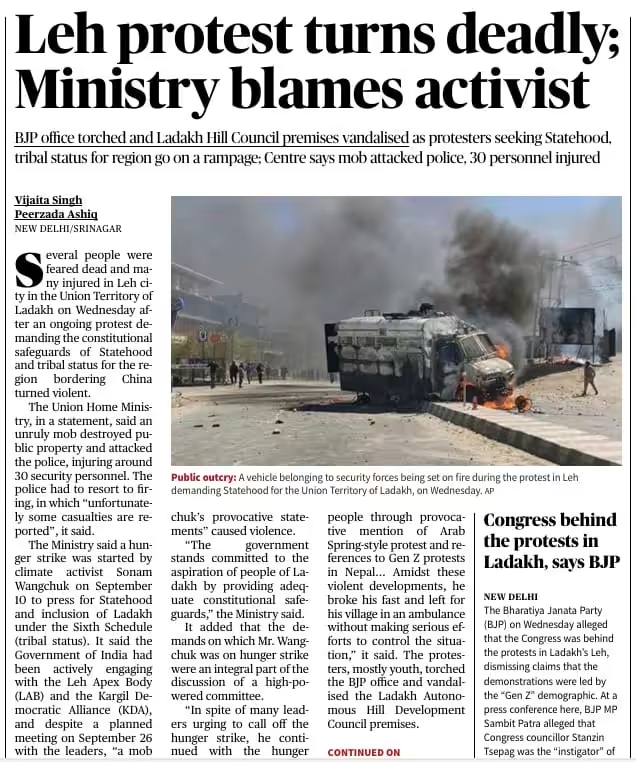
Context:
Protests in Leh (UT of Ladakh) demanding Statehood and inclusion under the Sixth Schedule (tribal safeguards) turned violent.
UPSC Relevance:
Functions and responsibilities of the Union and the States, issues and challenges pertaining to the federal structure, devolution of powers and finances up to local levels and challenges therein.
PYQ:
Q. Why are the tribals in India referred to as ‘the Scheduled Tribes? Indicate the major provisions enshrined in the Constitution of India for their upliftment. (2016)
Reason behind Ladakh issue:
- Ladakh was carved out as a separate Union Territory in 2019 after the abrogation of Article 370 and the bifurcation of Jammu and Kashmir. The other UT in the erstwhile state is Jammu and Kashmir.
- Within few months, concerns emerged over what residents described as a political vacuum under the administration of the Lieutenant Governor. This precisely because Ladakh was without a legislature, placing the region under direct central rule.
Why the statehood demand?
- When Ladakh became a UT in 2019 and was separated from Jammu and Kashmir, it was left without its own representation in the legislature. Locals argued that the lack of assembly has reduced their ability to govern themselves and protect local interests.
- Job opportunities, land rights, and protections that previously existed are weakening in Ladakh by being reduced to a UT.
- Locals also fear that since Ladakh has a fragile ecology, large scale projects (solar, infrastructure, etc.) will put this environment at risk, especially when decision-making is centralised.
- Inclusion under the Sixth Schedule for constitutional protection.
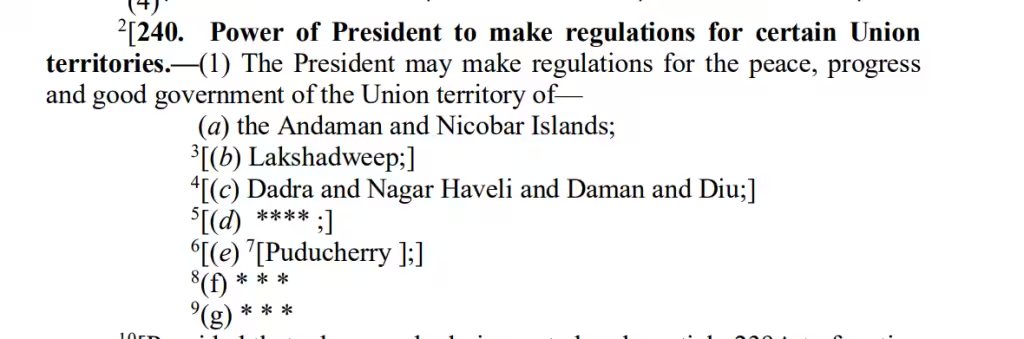
Why 6th Schedule:
The Sixth Schedule under Article 244 of the Indian Constitution provides for the formation of autonomous administrative regions called Autonomous District Councils (ADCs), which govern tribal-majority areas in certain northeastern states.
- The Sixth Schedule (Articles 244(2)) of the Constitution provides for the administration of tribal areas in the four northeastern states — Assam, Meghalaya, Tripura, and Mizoram — where tribes have largely preserved their traditional ways, unlike other tribal populations in India.
- Under 6th schedule Autonomous District Councils are formed to give greater control to local communities over governance.
- Autonomy in Governance: ADCs have the power to make laws on matters such as land use, inheritance, marriage, and social customs. However, these laws require the Governor’s approval to come into effect.
- Judicial Authority: They can establish local courts to decide cases where both parties belong to Scheduled Tribes (STs).
- Revenue and Taxation Powers: ADCs are authorized to collect land revenue and levy taxes on professions, trades, and other activities.
Sixth Schedule grants local bodies wider executive, legislative, judicial, and financial powers compared to the Fifth Schedule areas, thereby ensuring greater autonomy in self-governance.
Tell Google you want more of this.
Add Anantam IAS as a preferred sourceOne tap, and this site shows up more often in your own Top Stories, AI Overviews and AI Mode. Remove it any time.