Why in News?
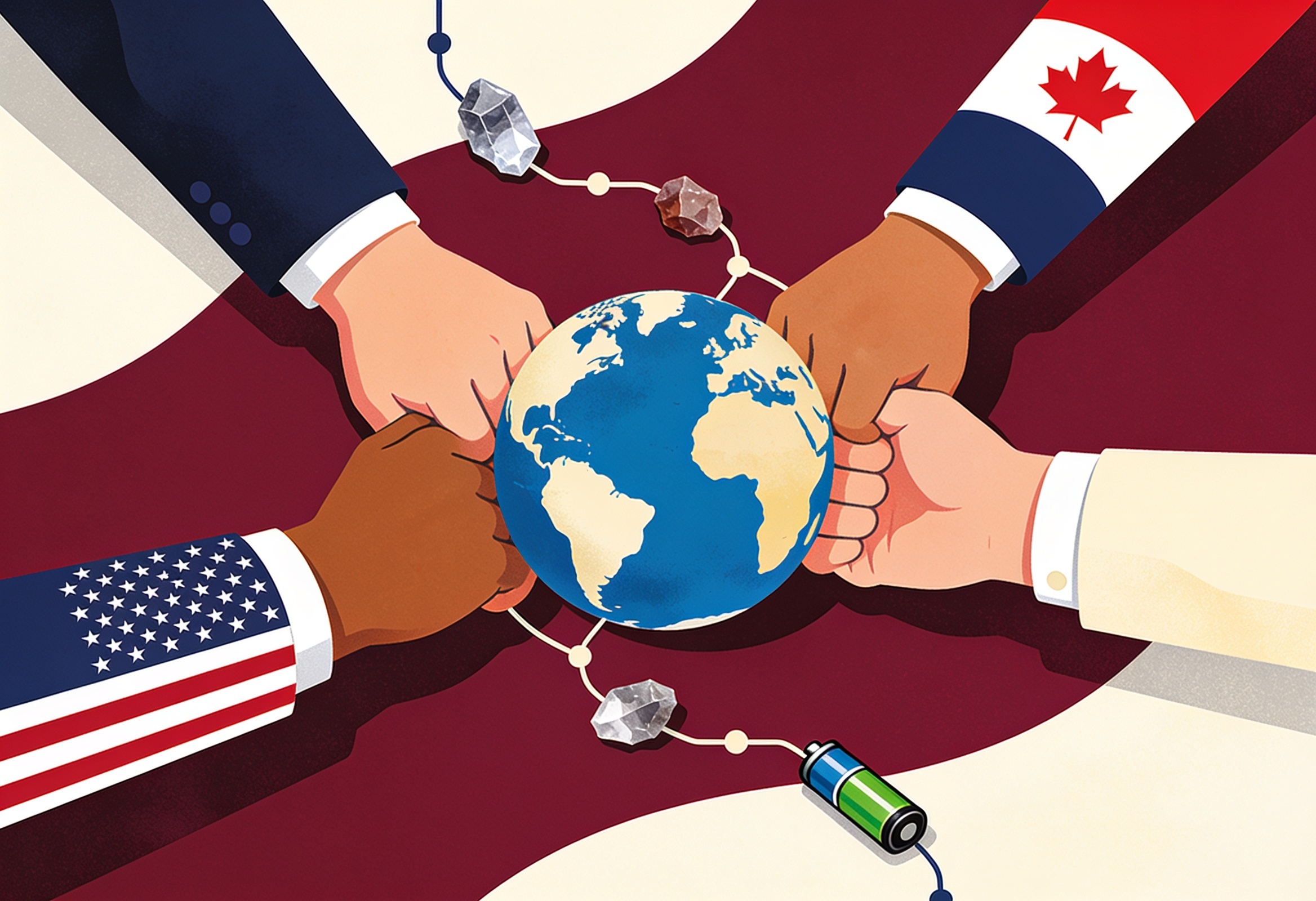
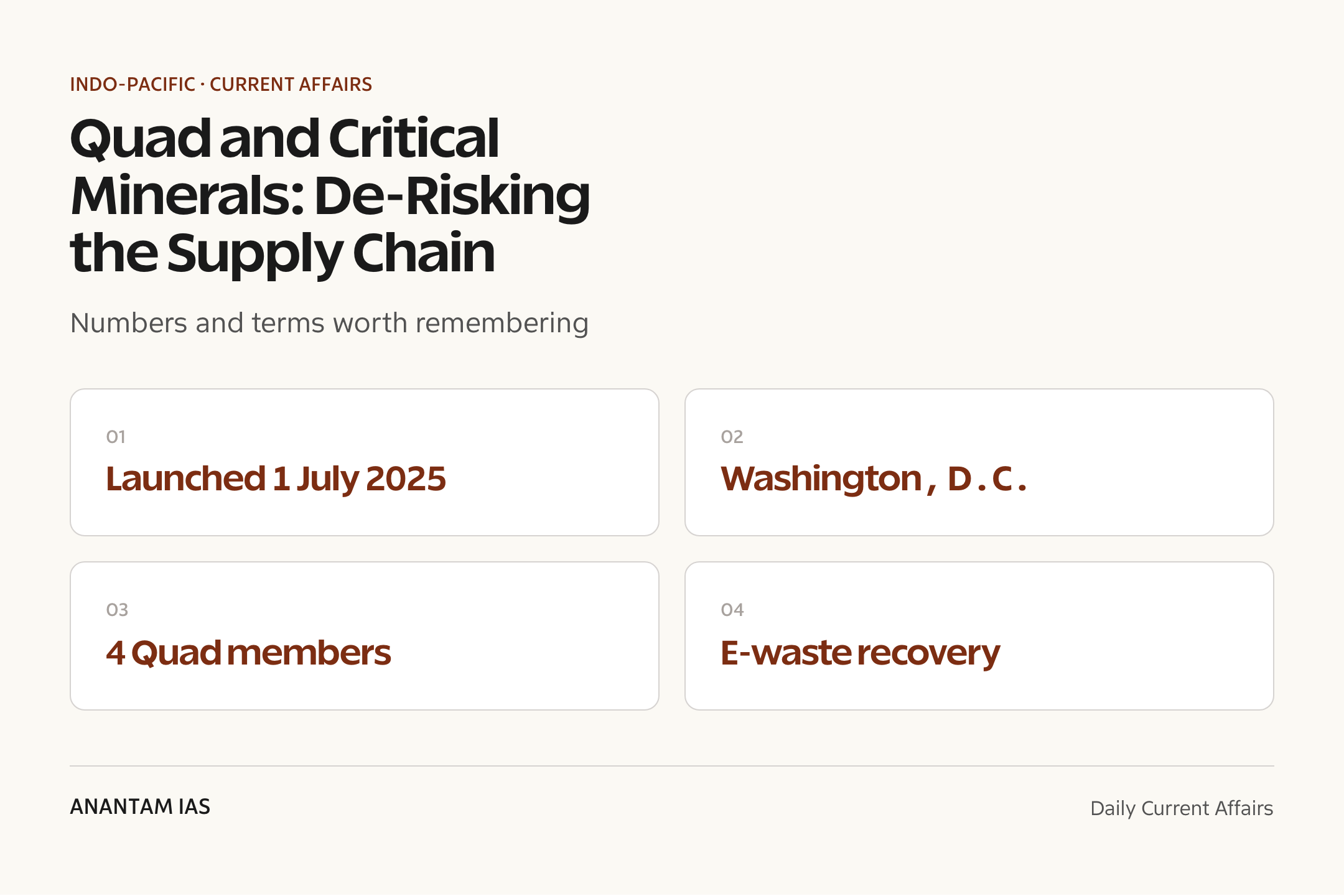
On 1 July 2025 the Quad Foreign Ministers’ Meeting in Washington, D.C. brought together the foreign ministers of India, the United States, Australia and Japan for the grouping’s 10th ministerial. They launched the Quad Critical Minerals Initiative, an effort to secure and diversify supply chains for the minerals that power clean energy, electronics and defence.
The accompanying joint statement said the four were ‘deeply concerned about the abrupt constriction and future reliability of key supply chains, specifically for critical minerals’ — framing economic security and resource resilience as a core strategic domain, with an implicit eye on China.
- The 10th Quad Foreign Ministers’ Meeting was hosted by the US on 1 July 2025, days after the new US administration took office.
- The Quad Critical Minerals Initiative was named the meeting’s flagship outcome — an ‘ambitious expansion’ to strengthen economic security and collective resilience.
- The statement flagged that reliance on any one country for processing and refining exposes industries to economic coercion, price manipulation and supply chain disruptions.
- It targeted ‘non-market policies and practices’ for critical minerals, derivative products and mineral-processing technology.
- The Initiative explicitly adds e-waste critical-minerals recovery and re-processing to diversification and securing of reliable supply chains.
- Ministers signalled coordination with private-sector partners on supply-chain resilience measures.
The development matters in the context of:
- China refines a dominant share of the world’s critical minerals — by ORF estimates around 90% of rare earths, ~60% of lithium and ~62% of cobalt processing — making concentration the central vulnerability.
- The launch followed Chinese export controls on rare earths and magnets in 2025 that disrupted global auto and electronics supply chains.
- For India, mineral security underpins the energy transition (EVs, batteries, solar) and defence manufacturing under Atmanirbhar Bharat.
UPSC Relevance
Prelims Relevance
- Quad — informal strategic grouping of India, US, Australia, Japan; not a treaty alliance, no secretariat.
- Quad Critical Minerals Initiative launched 1 July 2025 at the Washington Foreign Ministers’ Meeting.
- Critical minerals — lithium, cobalt, nickel, graphite, rare earth elements (REEs) used in batteries, magnets, electronics, defence.
- KABIL (Khanij Bidesh India Ltd) — India’s PSU joint venture set up in 2019 to acquire mineral assets abroad.
- National Critical Mineral Mission — India’s mission for exploration, recovery and overseas acquisition of critical minerals.
- Mineral Security Partnership (MSP) — a separate US-led multi-country critical-minerals grouping India joined in 2023.
- Quad maritime arms: IPMDA (Indo-Pacific Partnership for Maritime Domain Awareness) and the new MAITRI training initiative.
- Quad origin: born from 2004 tsunami coordination; revived as the Quad in 2007; first leaders’ summit 2021.
- E-waste recovery / urban mining — extracting critical minerals from discarded electronics, now a named Quad workstream.
Mains Relevance
GS Paper 2
- Quad as Indo-Pacific minilateralism — how economic-security cooperation reshapes India’s strategic partnerships.
- India’s balancing act: deepening Quad ties while preserving strategic autonomy and managing the China relationship.
GS Paper 3
- Critical-mineral supply-chain security as a pillar of energy transition, industrial policy and economic resilience.
- De-risking versus de-coupling — diversification, friend-shoring and circular-economy (e-waste) approaches to resource security.
Essay
- Resource nationalism and the new geopolitics of supply chains.
- Strategic autonomy in an age of economic coercion.
Background and Context
What the Quad is
The Quad is an informal coalition, not a military alliance — which shapes how far this initiative can go.
- Members: India, the United States, Australia, Japan — four maritime democracies of the Indo-Pacific.
- Roots in 2004 Indian Ocean tsunami relief coordination; formalised as the Quadrilateral in 2007, lapsed, then revived from 2017.
- Has no treaty, no secretariat and no binding commitments — it works through ministerial and leaders’ statements and issue-based ‘workstreams’.
- Agenda has widened from security to vaccines, technology, infrastructure, maritime awareness and now critical minerals.
What was announced
The Quad Critical Minerals Initiative is the meeting’s headline deliverable, framing minerals as economic security.
- Described as an ‘ambitious expansion’ to strengthen economic security and collective resilience by securing and diversifying critical-mineral supply chains.
- Workstreams named: securing and diversifying reliable supply chains, and e-waste critical-minerals recovery and re-processing.
- The Quad will expand cooperation on supply-chain resilience measures and coordinate with private-sector partners.
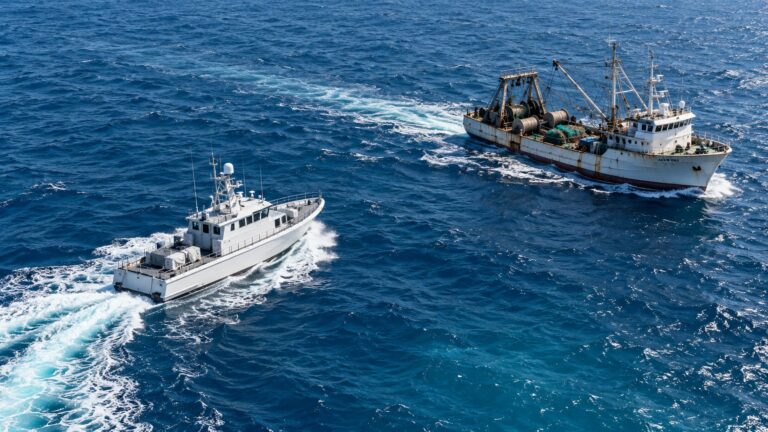
- Positioned alongside parallel outcomes on maritime security (MAITRI, Quad-at-Sea ship-observer mission) and the Quad Ports of the Future partnership.
The China subtext
China is never named, but the language points squarely at concentration risk.
- The joint statement voiced concern over the ‘abrupt constriction’ and future reliability of critical-mineral supply chains.
- It targeted ‘non-market policies and practices’ in minerals, derivative products and processing technology — diplomatic shorthand for state subsidies and export controls.
- It warned that reliance on any one country for processing and refining exposes industries to economic coercion, price manipulation and supply chain disruptions.
- Context: China’s 2025 rare-earth and magnet export controls rattled global automakers and electronics firms, sharpening the urgency.
Why critical minerals matter
These minerals are the raw material of the energy transition and modern defence.
- Lithium, cobalt, nickel, graphite are core to EV batteries and grid storage.
- Rare earth elements (REEs) power permanent magnets in EVs, wind turbines, missiles, fighter jets and electronics.
- Processing is even more concentrated than mining — China refines a dominant share, so a mine elsewhere still depends on Chinese refining.
- Demand is set to surge as countries decarbonise, making secure access a question of economic and national security, not just trade.
India's stake and existing tools
India is a large importer trying to build upstream access and domestic processing.
- KABIL (Khanij Bidesh India Ltd), set up in 2019, pursues mineral assets abroad — including lithium tie-ups with Argentina.
- The National Critical Mineral Mission backs exploration, recovery and overseas acquisition at home.
- India joined the US-led Mineral Security Partnership (MSP) in 2023, complementing the Quad effort.
- The Quad’s e-waste recovery focus aligns with India’s interest in ‘urban mining’, given its large and growing e-waste volumes.
Limits and questions
A statement of intent is not yet a working supply chain.
- No binding targets, financing figures or timelines were attached to the Initiative at launch.
- Building alternative refining and processing capacity is capital-intensive and slow — China’s lead reflects years of investment.
- Members have their own frictions — reporting noted India had paused a long-standing rare-earth export arrangement with Japan, underlining that interests do not always align.
- Diversification works only with private-sector buy-in and demand certainty, which the Quad cannot guarantee on its own.
Way Forward
Build processing, not just mining
- Invest in domestic and partner-country refining and separation capacity so diversified ore translates into usable material.
- Scale e-waste recovery and recycling as a complementary, lower-import source of critical minerals.
Diversify and de-risk
- Pursue friend-shoring and resource diplomacy with Africa, Latin America and Australia to spread sourcing.
- Use stockpiles, long-term offtake contracts and price-floor mechanisms to blunt economic coercion and price shocks.
Turn statements into delivery
- Attach financing, timelines and private-sector partners to the Initiative so it moves beyond a communique.
- Align Quad work with the MSP and India’s National Critical Mineral Mission to avoid duplication.
Conclusion
The Quad Critical Minerals Initiative marks a shift in the grouping’s centre of gravity — from maritime security toward economic security and supply-chain resilience. By naming the ‘abrupt constriction’ of supply and the risks of reliance on a single source, the four democracies have put resource concentration at the heart of Indo-Pacific strategy.
For India, the test is execution: converting the statement into processing capacity, diversified sourcing and recycling while protecting strategic autonomy. The minerals at stake — from lithium to rare earths — will decide who leads the clean-energy and defence economy of the coming decades.
UPSC Practice Questions
Prelims MCQ 1
With reference to the Quad Critical Minerals Initiative launched in 2025, consider the following statements:
- It was announced at the Quad Foreign Ministers’ Meeting held in Washington, D.C.
- Its members are India, the United States, Australia and Japan.
- It includes e-waste critical-minerals recovery and re-processing as a named workstream.
How many of the above statements are correct?
(a) Only one (b) Only two (c) All three (d) None
Answer: (c) All three
Explanation:
All three are correct. The Initiative was launched at the 1 July 2025 Quad Foreign Ministers’ Meeting in Washington by the four Quad members, and the joint statement explicitly names e-waste recovery and re-processing as a focus area.
Prelims MCQ 2
KABIL (Khanij Bidesh India Ltd), often cited in the critical-minerals context, was set up primarily to:
(a) Regulate domestic mining leases within India (b) Acquire and develop critical-mineral assets overseas (c) Process rare earths exclusively for defence use (d) Recycle electronic waste in India
Answer: (b) Acquire and develop critical-mineral assets overseas
Explanation:
KABIL, a joint venture of three PSUs set up in 2019, secures upstream access to critical and strategic minerals abroad, such as lithium in Argentina.
UPSC Mains Questions
- The Quad’s launch of a Critical Minerals Initiative reflects a shift from maritime security to economic security. Examine the strategic and economic rationale behind this move and its significance for India. (250 words)
- Concentration of critical-mineral processing in a single country poses risks of economic coercion. Discuss how India can de-risk its critical-mineral supply chains while preserving strategic autonomy. (250 words)
Sources: U.S. Department of State, Office of the Spokesperson and Australian Minister for Foreign Affairs (joint statement).
Frequently Asked Questions
What is the Quad Critical Minerals Initiative?
It is a cooperation framework launched on 1 July 2025 at the Quad Foreign Ministers’ Meeting in Washington by India, the US, Australia and Japan. It aims to secure and diversify critical-mineral supply chains and includes e-waste recovery and re-processing, framing mineral security as a matter of economic and national security.
Which countries are members of the Quad?
The Quad is an informal grouping of four Indo-Pacific democracies: India, the United States, Australia and Japan. It has no treaty, secretariat or binding commitments, and works through issue-based statements and workstreams on security, technology, infrastructure and now critical minerals.
Why are critical minerals strategically important?
Critical minerals such as lithium, cobalt, nickel, graphite and rare earth elements are essential to EV batteries, magnets, electronics, renewable energy and defence systems. Their supply and processing are highly concentrated, so secure access has become central to the energy transition and to economic and national security.
Did the Quad name China in the statement?
No. The joint statement did not name China, but it expressed concern over the ‘abrupt constriction’ of supply chains, ‘non-market policies and practices’, and the risk that reliance on any one country exposes industries to economic coercion and price manipulation. This is widely read as an implicit reference to China’s dominance in mineral processing.
How does the initiative benefit India?
It supports India’s push to diversify mineral sourcing and build processing capacity for its energy transition and defence sector. It complements existing tools like KABIL, the National Critical Mineral Mission and the Mineral Security Partnership, and its e-waste recovery focus aligns with India’s interest in urban mining.
What are the main limitations of the initiative?
At launch it carried no binding targets, financing figures or timelines. Building alternative refining and processing capacity is slow and capital-intensive, members have their own frictions, and success depends heavily on private-sector buy-in that the Quad cannot guarantee on its own.
Tell Google you want more of this.
Add Anantam IAS as a preferred sourceOne tap, and this site shows up more often in your own Top Stories, AI Overviews and AI Mode. Remove it any time.