Why in News?
On 13 October, PIB reported promising preliminary soybean yields from NRC 268 and NRC 270, assessed during the ICAR–National Soybean Research Institute’s Harvest Day on 9 October.
- Preliminary yields were approximately 20 quintals per hectare; the release placed national average productivity at approximately 10–11 quintals per hectare.
- The Indore institute reported encouraging performance despite adverse weather, while stating that the harvested data would undergo further scientific analysis.
- The report emphasised multi-year data across regions, varieties and production conditions to assess productivity gains and guide agricultural extension.
- Varietal improvement can raise production from existing cultivated land, but the observed outcome also depends on management and environmental conditions.
- Extension advice needs locally relevant evidence: a promising research observation should become a testable recommendation, rather than a guaranteed yield claim.
UPSC Relevance
Prelims Relevance
- NRC 268 and NRC 270: soybean varieties assessed by ICAR–National Soybean Research Institute, Indore.
- Yield per hectare measures productivity; total production also depends on cultivated area.
- Genotype, management and environment jointly influence realised crop yield.
- A national average is not a matched experimental control.
Mains Relevance
GS Paper 3
- Agricultural research, extension and the gap between experimental results and farm outcomes.
- Evidence requirements for assessing crop performance under variable weather.
Essay
- Scientific progress depends on testing whether promising results remain reliable outside their original setting.
Background and Context
What the Soybean Harvest Actually Shows
The harvest provides a promising observation about particular varieties under particular conditions; it does not yet establish an outcome for every soybean farmer.
- NRC 268 and NRC 270 were developed by the ICAR institute at Indore. The release describes their harvest results as preliminary, making further analysis part of the finding rather than an optional qualification.
- The reported 20 quintals per hectare is an area-normalised yield measure. It describes harvested output relative to land area, not the quantity that every participating field necessarily produced in total.
- The national average offers a useful productivity benchmark, but combines farms with different soils, weather and management. Comparing the harvest with that average cannot isolate the contribution made by the new varieties alone.
- Adverse-weather performance is relevant because farmers face variable conditions. The release does not establish which specific stress each variety tolerates, or quantify how much yield loss it avoided against a comparable alternative.
- Promising and proven across farming conditions describe different evidence levels. The announcement supports further investigation; it does not establish guaranteed doubling of farm yields, specific genetic traits or an assured commercial return.
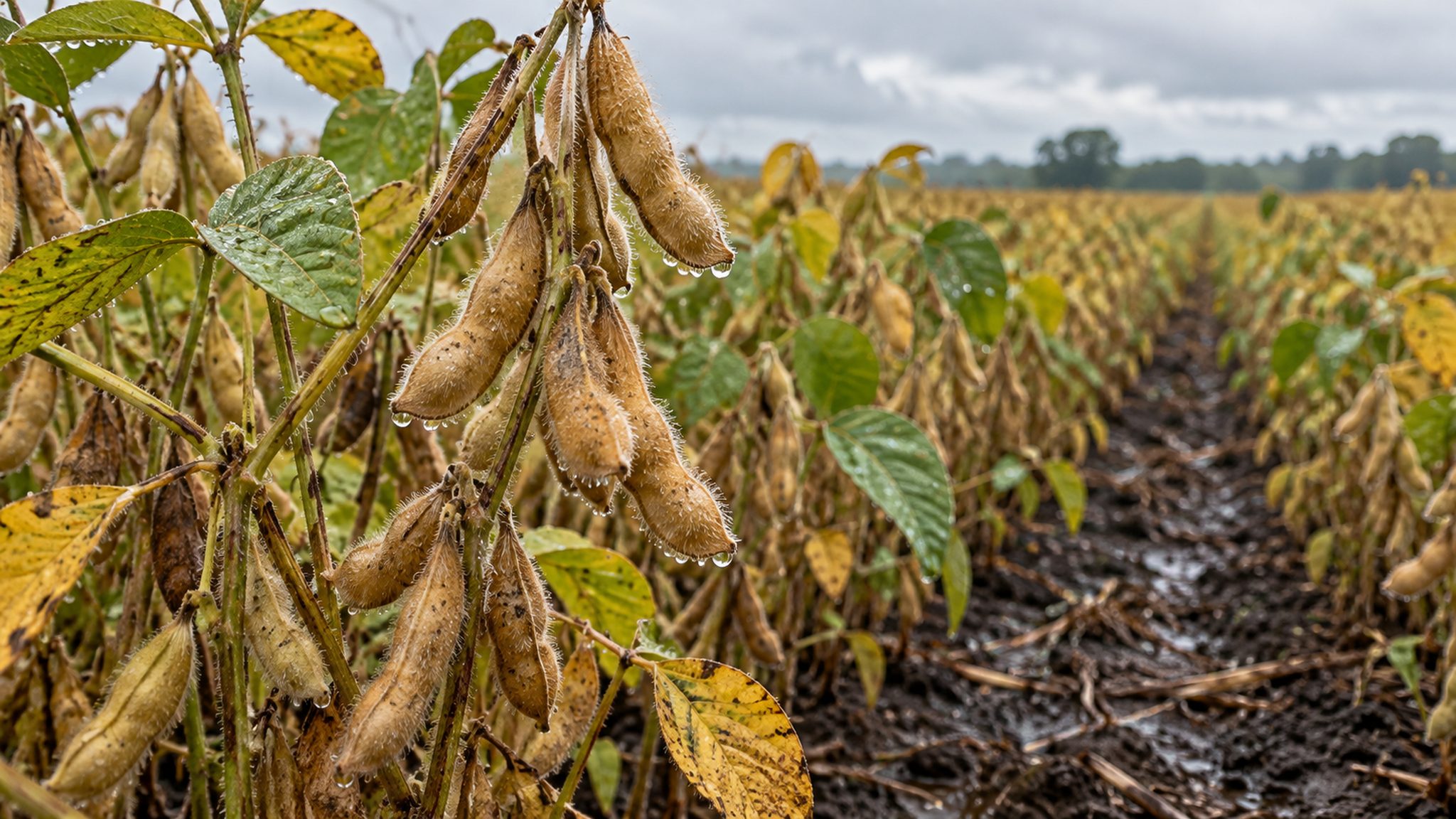
Why Varieties Perform Differently Across Fields
Realised yield emerges from the interaction between the plant, its growing conditions and the practices used to manage it throughout the season.
- Genotype refers to the plant’s genetic constitution. A variety’s productive potential is expressed within an environment, so good performance at one location does not automatically establish equally good performance in another region.
- Management includes practical decisions about sowing and crop care. When management differs between fields, an observed yield difference cannot safely be attributed only to the variety; the production package must also be considered.
- Weather and soil conditions influence the growing environment. A useful assessment records these conditions alongside yields, allowing researchers to distinguish a broadly repeatable advantage from a result tied to one favourable combination.
- Multi-environment trials examine performance across locations and seasons. They help identify whether a variety performs consistently or mainly suits particular conditions, making recommendations more informative than a single highest-yield observation.
- Fair comparison requires suitable alternatives grown under comparable conditions. Without that comparison, a successful harvest shows what happened, but provides weaker evidence about why it happened or which change caused the improvement.
From Research Results to Farm Recommendations
The policy challenge is to turn an encouraging result into advice farmers can trust, with its benefits, costs and limits clearly stated.
- Repeated measurement can show whether an apparent advantage persists. The institute explicitly highlighted systematic data collection over several years as a basis for assessing productivity changes and the effectiveness of research dissemination.
- Farm-level validation should examine performance under practical production conditions. A result achieved with close supervision may not transfer unchanged where farmers face different access to inputs, timely operations, information or labour.
- Yield stability and peak yield answer different questions. Farmers need to know whether performance is dependable, while researchers also need to understand the conditions associated with both stronger results and disappointing harvests.
- Economic assessment should accompany productivity evidence. Additional output is useful, but its value depends on the costs and constraints of achieving it; yield alone is insufficient to establish a farmer’s net benefit.
- Transparent extension should separate the observed result from the recommendation. Reports should explain the comparison used, applicable conditions and remaining uncertainty, enabling farmers and public agencies to assess the evidence behind adoption advice.
Way Forward
Build Recommendations Around Comparable Evidence
- Publish analysed trial findings with suitable comparisons and production conditions, preserving the distinction between an initial harvest observation and a validated recommendation.
- Connect research with local extension feedback so evidence reflects practical constraints; the broader farmer-policy debate also requires attention to viability.
- Keep performance evidence separate from other seed-policy questions, including benefit-sharing in the seed sector; neither substitutes for reliable agronomic testing.
Conclusion
- The soybean harvest is an evidence-building opportunity: encouraging preliminary yields justify deeper assessment, while the national average provides context rather than proof that the varieties alone caused the difference.
- Use the example to connect research with extension: reliable agricultural innovation requires repeatable performance, suitable local comparisons and clear communication of uncertainty before promising farmers a particular outcome.
UPSC Practice Questions
Prelims MCQ 1
With reference to evaluating a new crop variety, consider the following statements:
- A national average yield is necessarily a matched control for a research harvest.
- Performance across different seasons and locations helps assess the reliability of a variety’s yield.
- An encouraging harvest in adverse weather alone proves tolerance to every climatic stress.
How many of the above statements are correct?
(a) Only one (b) Only two (c) All three (d) None
Answer: (a) Only one
Explanation:
Only statement 2 is correct. National averages combine different conditions; a preliminary adverse-weather observation cannot establish tolerance to every stress.
Prelims MCQ 2
Which approach best helps isolate a new variety’s contribution to yield?
(a) Comparing its highest harvest only with a national average (b) Comparing suitable varieties under comparable production conditions (c) Inferring performance from the variety’s name (d) Treating one successful harvest as a nationwide guarantee
Answer: (b) Comparing suitable varieties under comparable production conditions
Explanation:
Comparable conditions and suitable alternatives reduce the risk of attributing management or environmental effects solely to the variety.
UPSC Mains Questions
- Why should promising research-station yields be distinguished from reliable farm-level outcomes? Discuss using recent soybean harvest observations.
- Explain how multi-environment testing and agricultural extension can strengthen evidence-based recommendations for improved crop varieties.
Source: PIB, Ministry of Agriculture & Farmers Welfare.
Frequently Asked Questions
What did the recent soybean harvest report find?
PIB reported preliminary yields of approximately 20 quintals per hectare for NRC 268 and NRC 270. The institute described the observations as encouraging and said the data would undergo further scientific analysis.
Do these results prove that farmer yields will double?
No. The national average combines farms with different growing conditions. Comparing it with a preliminary harvest cannot establish a guaranteed farm outcome or isolate the effect of the varieties from management and weather.
Why are several seasons of crop data useful?
Observations across seasons help assess whether performance persists when growing conditions change. They provide a stronger basis for identifying suitable production conditions and communicating a variety’s limits than a single successful harvest.
Does performance in adverse weather establish climate resilience?
It is a useful observation, but not sufficient proof of broad climate resilience. Researchers need clearer evidence about the stress involved, comparable alternatives and repeated performance under relevant conditions before making that claim.
Tell Google you want more of this.
Add Anantam IAS as a preferred sourceOne tap, and this site shows up more often in your own Top Stories, AI Overviews and AI Mode. Remove it any time.