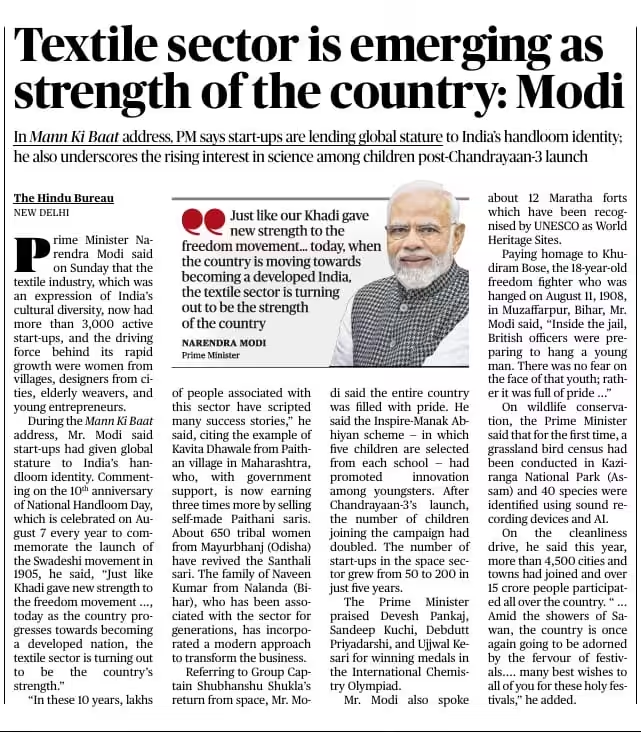
Why in news:
During the Mann Ki Baat address, Mr. Modi said, “As the country progresses towards becoming a developed nation, the textile sector is turning out to be the country’s strength.”
UPSC CSE Relevance:
UPSC CSE in mains and prelims examination has focused on primary, secondary, and tertiary sector industries and their location factors. A case in point is a following PYQ.
UPSC mains PYQ 2019
Question: Discuss the factors for localization of Agro-based food processing industries of North-West India.
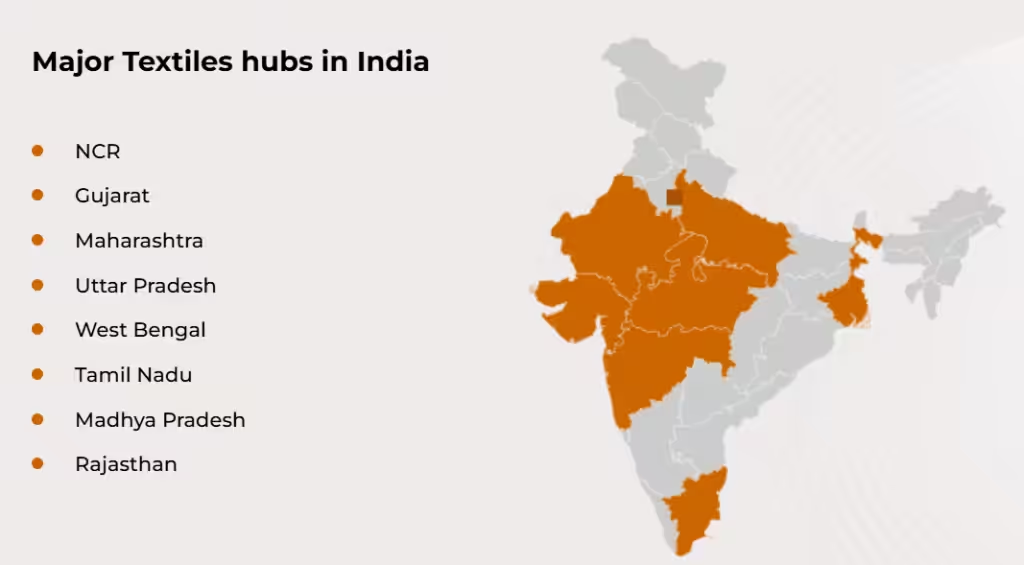
Present Status and Drivers of Growth:
- Global Standing: India is the second-largest textile manufacturer globally and maintains its position as the sixth-largest exporter of textiles and apparel, holding a 3.9% share of global trade in 2023. India is also a leading producer of natural fibers like cotton, jute, and silk.
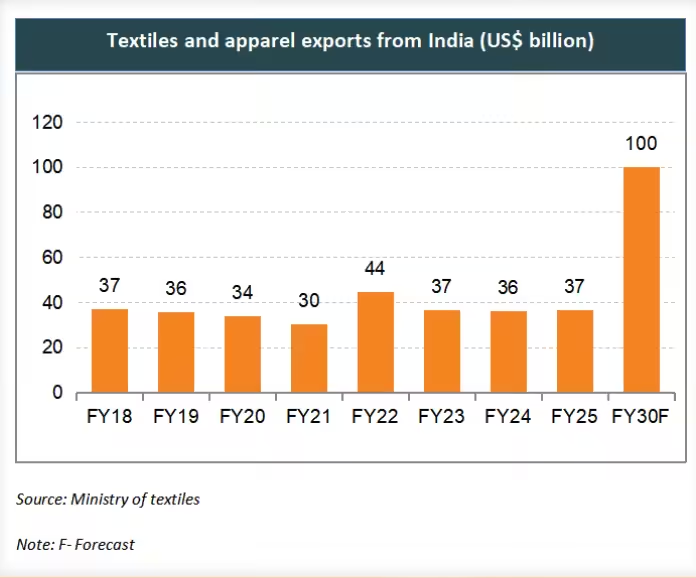
- Growing Exports: It’s experiencing a rebound in exports, with textile and apparel exports growing by 6.10% in FY 2024-25 to nearly US$ 37 billion. Woven and knitted apparel are leading this growth.
- Employment: The textile industry remains the second-largest employment generator in India after agriculture, providing direct employment to over 45 million people. Its growth is especially empowering for artisans and women from rural areas.
- Market Diversification: While the USA and EU remain major destinations, countries like the UK are emerging as key markets. India’s share in US textile imports increased from 9% to 12% by May 2025, indicating a shift in sourcing patterns away from China in some segments.
- Free Trade Agreements (FTAs): The recently signed India-UK FTA is a major game-changer. It eliminates 10-12% duties on Indian textiles and apparel, leveling the playing field with competitors like Bangladesh and Vietnam. This is expected to double exports to the UK over the next 5-6 years and unlock a $27 billion opportunity.
- Government Support: Robust government initiatives like the PLI (Production Linked Incentive) Scheme for Textiles (promoting MMF and technical textiles) and the PM MITRA Parks Scheme (establishing integrated textile parks across the country) are driving investment, modernization, and infrastructure development.
- Sustainability & Technology: There’s a growing emphasis on adopting sustainable practices (e.g., organic materials, circular economy) and leveraging technology (e.g., automation, AI, smart manufacturing) to enhance efficiency and meet global demands.
- Role of Start-Ups: start-ups had given global stature to India’s handloom identity with more than 3000 active start ups in the sector.
Location key factors:
Raw Material:
Availability: The most basic factor is the availability of raw cotton. Historically, this meant locating near cotton-growing areas, but with better transportation, this is less of a constraint.
Quality: The quality of the cotton fiber affects the quality of the yarn and fabric produced, so access to high-quality cotton is important.
Labor:
Availability: The cotton textile industry is labor-intensive, so access to a skilled and affordable workforce is crucial.
Cost: Labor costs can significantly impact production expenses, so locating where labor is available at a reasonable price is important.
Markets:
Proximity: Being close to major markets, both domestic and international, reduces transportation costs and speeds up delivery.
Market Demand: Areas with high demand for textiles are attractive locations for the industry.
Power:
Cost: Lower energy costs can significantly reduce production expenses.
Energy Source: The industry requires a reliable and affordable power source for machinery.
Climate:
Humidity: A moderately humid climate is ideal for spinning cotton yarn, as it prevents the yarn from breaking too easily.
Dryness: Extremely dry climates can hinder the spinning process, making it more difficult and expensive.
Capital:
Availability: Access to capital and financial resources is necessary for establishing and operating a textile mill.
Land and Site:
Cost: Land prices can vary significantly, influencing the overall cost of establishing the mill.
Availability: Adequate land for the mill and related facilities is essential.
Government Policies:
Incentives: Government policies, such as tax breaks or subsidies, can influence the location of industries.
Regulations: Regulations related to environmental protection or labor standards can also play a role.
Challenges:
Raw Material Price Volatility: Fluctuations in the prices of key raw materials, especially cotton and certain man-made fibers (MMF), create uncertainty and impact profitability. Indian cotton prices, for instance, can sometimes be higher than international prices.
Infrastructure Bottlenecks: Inadequate infrastructure, including poor road connectivity, limited warehousing facilities, and inconsistent power supply, increases logistics costs and lead times. This fragmentation affects the overall efficiency of the supply chain. While PM MITRA parks aim to address this, it’s a long-term fix.
Outdated Technology and Lack of Modernization: Many small and medium-sized enterprises (SMEs) in the sector still rely on old machinery and conventional processes, leading to lower productivity, higher waste, and inconsistent quality compared to global competitors.
Despite government schemes like ATUFS (Amended Technology Upgradation Fund Scheme), the rate of adoption of advanced machinery (like shuttle-less looms or automated cutting systems) is slow in many clusters.
Intense Global Competition: India faces stiff competition from countries like Bangladesh, Vietnam, and China, which often have lower labor costs, more integrated supply chains, and established duty-free access to major markets (though FTAs are now helping India).
While the India-UK FTA addresses this for the UK market, similar challenges persist in other markets where FTAs are still pending.
Compliance with International Standards and Regulations: Meeting stringent international quality, environmental, and social compliance standards (e.g., chemical restrictions, wastewater treatment, labor conditions) can be costly and challenging, especially for smaller players like MSMEs.
Fragmented and Unorganized Sector: A significant portion of the Indian textile industry, especially in apparel manufacturing, operates in the unorganized sector with numerous small and medium-sized units. This fragmentation hinders economies of scale, access to finance, and adoption of best practices.
Skill Gaps and Labor Issues: While India has a vast labor pool, there’s often a shortage of adequately skilled labor for operating advanced machinery and managing modern production processes. Issues like high attrition rates in certain segments also pose a challenge. The push towards technical textiles and MMF requires a more specialized workforce. A lack of specific training programs for these areas can lead to lower productivity and quality issues.
Government Support and Policy Interventions
- Production Linked Incentive (PLI) Scheme for Textiles: This scheme, with an outlay of ₹10,683 crore, incentivizes domestic manufacturing of Man-Made Fibre (MMF) apparel, fabrics, and technical textiles. It aims to boost investment, create employment, and enhance India’s manufacturing capabilities. Companies are investing in modern machinery and expanding production capabilities for technical textiles (e.g., medical textiles, industrial textiles), which accounted for over 56% of approved applications. The scheme is projected to create over 7.5 lakh direct jobs.
- PM Mega Integrated Textile Regions and Apparel (PM MITRA) Parks Scheme: This ambitious scheme aims to establish seven state-of-the-art textile parks to create an integrated textile value chain from “Farm to Fibre, Fabric, Fashion, and Foreign Markets.”
- a)Infrastructure development has commenced in several parks, such as Amravati, where the Prime Minister laid the foundation stone in September 2024. These parks will offer “plug-and-play” facilities, reducing logistics costs and attracting significant domestic and foreign investment (over ₹18,500 crore in MoUs/proposals received so far).
- Seven locations have been finalized: Virudhnagar (Tamil Nadu), Warangal (Telangana), Navsari (Gujarat), Kalaburagi (Karnataka), Dhar (Madhya Pradesh), Lucknow (Uttar Pradesh), and Amravati (Maharashtra).
- Union Budget 2025-26: The budget reflects the government’s strong commitment with a 19% increase in allocation to the Textile Ministry.
- A five-year Cotton Mission (₹600 Cr) was launched to boost cotton productivity, especially for extra-long staple (ELS) varieties, and promote clean cotton production.
- Duties have been revised
- a)Customs duties on specific shuttle-less looms (Rapier and Air Jet Looms) have been reduced to zero from 7.5%, encouraging modernization.
- Basic Custom Duty (BCD) on knitted fabrics was revised upwards to curb cheap imports and protect domestic manufacturers in hubs like Surat and Ludhiana.
- Samarth Scheme: Focuses on skill development to address skill gaps across the textile value chain, ensuring a trained workforce.
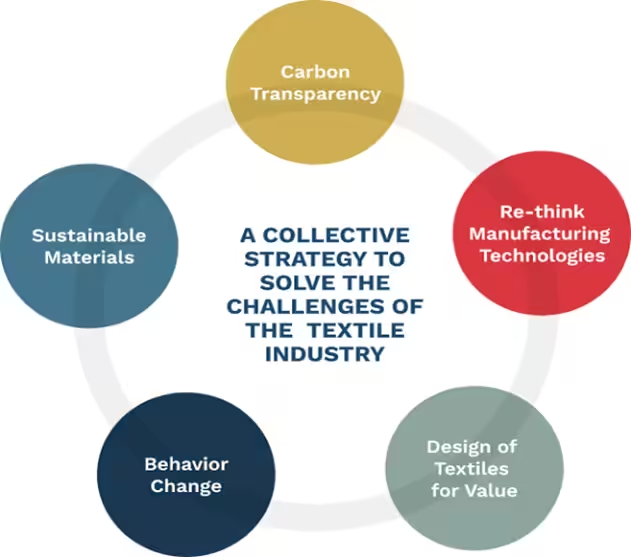
The Indian textile sector is at a crucial juncture, poised for significant growth driven by favorable government policies, increased focus on sustainability and technology, and enhanced market access through FTAs. While challenges related to infrastructure, raw material volatility, and global competition persist, the industry is demonstrating resilience and adaptability. The current period is marked by a concerted effort to modernize, increase value addition, and secure a larger share in the global textile and apparel market.
Tell Google you want more of this.
Add Anantam IAS as a preferred sourceOne tap, and this site shows up more often in your own Top Stories, AI Overviews and AI Mode. Remove it any time.