Why in News?
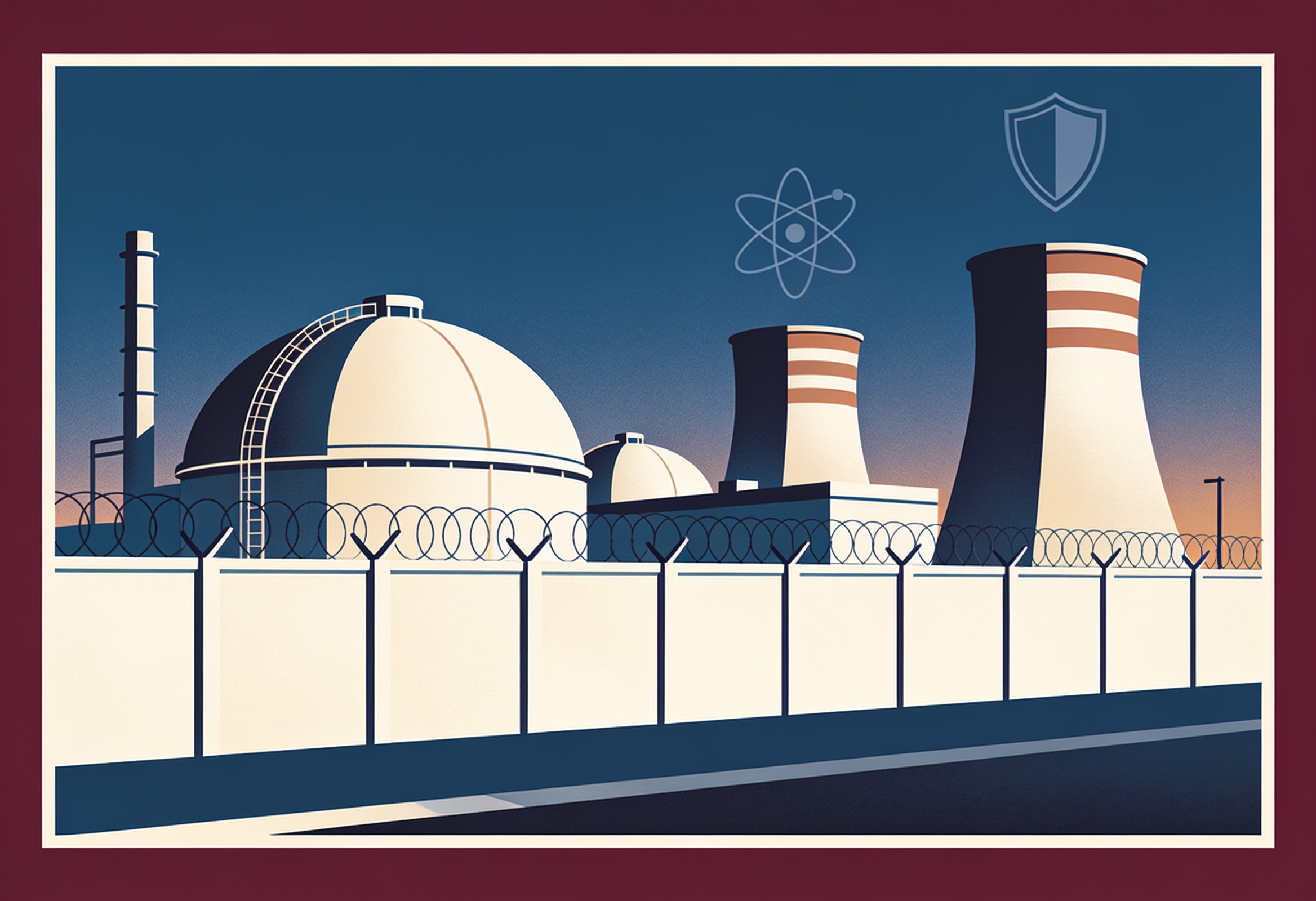
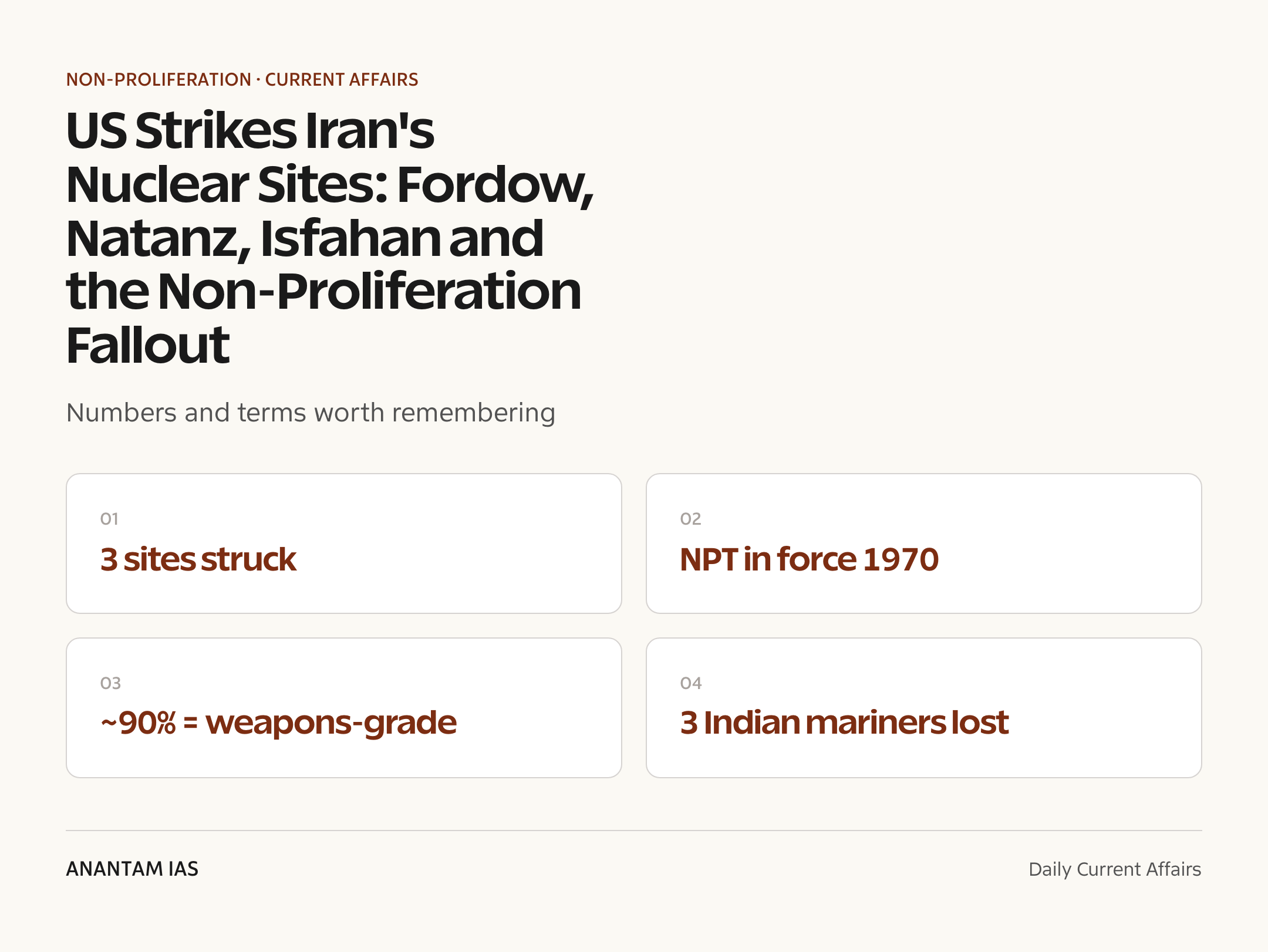
The United States carried out direct military strikes on Iran’s three principal nuclear sites — the deeply buried Fordow Fuel Enrichment Plant, the Natanz enrichment complex, and facilities at Isfahan. The Congressional Research Service notes the operation marked the first time the US itself struck Iran’s enrichment infrastructure, using heavy bunker-buster munitions delivered by strategic bombers. The action follows years of stalled diplomacy over Iran’s enrichment programme and Israeli strikes that preceded the US move.
For India, the episode is not distant. Three Indian mariners were reported killed in attacks on commercial tankers amid the wider conflict, prompting the Ministry of External Affairs (MEA) to lodge a strong protest, as reported by CBS News. India must balance its energy security, large diaspora in the Gulf, and principled support for dialogue and diplomacy against great-power pressures.
- Targets: Fordow (fortified, mountain-buried near Qom), Natanz (Iran’s main enrichment hub), and Isfahan nuclear facilities.
- Delivery reported as B-2 strategic bombers dropping GBU-57 Massive Ordnance Penetrator (MOP) bunker-busters, per CRS and news reporting.
- First direct US military action against Iran’s enrichment sites, escalating an Israel–Iran exchange.
- Iran is a party to the Nuclear Non-Proliferation Treaty (NPT); its sites were under IAEA safeguards.
- India’s MEA protested the killing of three Indian mariners on tankers, per CBS News.
- Tensions threatened shipping through the Strait of Hormuz, a chokepoint for global oil.
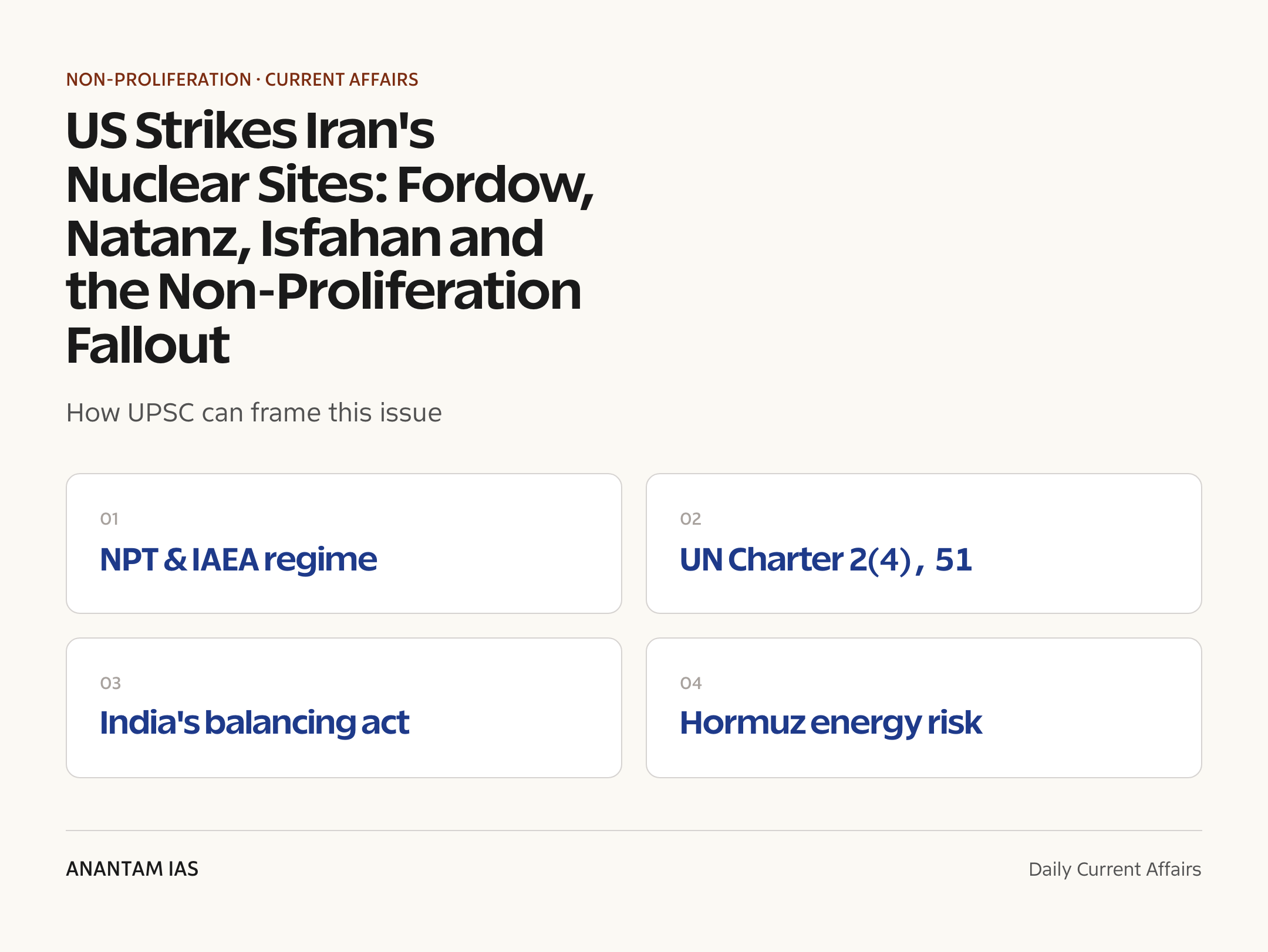
The development matters in the context of:
- Tests the credibility of the global non-proliferation regime and IAEA verification when sites under safeguards are struck militarily.
- Raises questions on the UN Charter framework governing the use of force — Article 2(4) and the Article 51 self-defence exception.
- Affects India’s energy security (West Asian crude, Hormuz), Gulf diaspora safety, and connectivity projects like Chabahar port.
- Sharpens India’s diplomatic tightrope between the US, Israel, Iran and the wider Gulf.
UPSC Relevance
Prelims Relevance
- NPT: opened 1968, in force 1970; three pillars — non-proliferation, disarmament, peaceful use; India is NOT a signatory.
- IAEA: UN-affiliated nuclear watchdog (HQ Vienna) administering safeguards and verification.
- Fordow: deeply buried enrichment plant near Qom, Iran; Natanz: principal enrichment site; Isfahan: nuclear research and conversion facilities.
- Uranium enrichment: raising U-235 share via centrifuges — ~3–5% (reactor fuel), ~20% (research), ~90% (weapons-grade).
- UN Charter Article 2(4): prohibits the threat or use of force against territorial integrity.
- UN Charter Article 51: inherent right of individual or collective self-defence if an armed attack occurs.
- Strait of Hormuz: chokepoint between the Persian Gulf and Gulf of Oman, vital for oil shipping.
- NSG (Nuclear Suppliers Group): controls export of nuclear materials and technology; India has a 2008 waiver but is not a member.
- JCPOA (2015): the Iran nuclear deal that capped enrichment in exchange for sanctions relief; the US exited in 2018.
- Chabahar port: Iran’s port developed with Indian assistance, key to India’s Central Asia connectivity.
Mains Relevance
GS Paper 2
- Effectiveness and limits of the NPT and IAEA in preventing proliferation and managing crises involving safeguarded sites.
- International law on the use of force: scope of Article 2(4), the Article 51 self-defence exception, and the contested doctrine of pre-emption.
- India’s strategic autonomy and balancing among the US, Israel, Iran and the Gulf states.
GS Paper 3
- Energy security exposure: West Asian crude dependence and Strait of Hormuz disruption risk.
- Spillovers to internal security via oil-price shocks, diaspora safety, and supply-chain stress.
Essay
- Power, law and morality in international relations: when force outruns institutions.
- Energy, diplomacy and the costs a connected world pays for conflict in distant straits.
Background and Context
What was struck and how
The strikes hit Iran’s core enrichment and nuclear infrastructure.
- Fordow — a heavily fortified plant built into a mountain near Qom, designed to resist conventional attack.
- Natanz — Iran’s largest enrichment complex, long the centre of its centrifuge programme.
- Isfahan — sites linked to uranium conversion and research.
- Reporting and the CRS describe use of GBU-57 MOP bunker-busters delivered by B-2 bombers to reach hardened, buried targets.
- The US action followed a preceding Israel–Iran military exchange.
Uranium enrichment, simply put
Enrichment level decides whether material fuels a reactor or a weapon.
- Natural uranium is ~0.7% U-235; centrifuges raise this share.
- ~3–5% suits power-reactor fuel; ~20% serves some research reactors.
- ~90% is weapons-grade; the gap from 20% to 90% is technically shorter than from natural to 20%.
- This is why monitoring stockpiles at higher enrichment is central to IAEA verification.
The NPT and IAEA regime
The strikes test the institutions built to manage nuclear risk.
- The NPT rests on three pillars: non-proliferation, disarmament, and the peaceful use of nuclear energy.
- Iran is an NPT party; its declared sites were subject to IAEA safeguards and inspection.
- Critics argue military action against safeguarded sites can weaken incentives to stay within the regime; supporters argue verification gaps justified action.
- India is not an NPT signatory but maintains a strong record of non-proliferation and a 2008 NSG waiver.
International law on the use of force
The UN Charter sets the legal frame for any military action.
- Article 2(4) prohibits the threat or use of force against another state’s territorial integrity or political independence.
- Article 51 preserves the inherent right of self-defence ‘if an armed attack occurs’, pending Security Council action.
- The legality of anticipatory or pre-emptive self-defence against a future threat remains deeply contested in international law.
- Use of force is also expected to meet tests of necessity and proportionality.
India's interests and the mariners
The conflict reached Indians directly.
- CBS News reported three Indian mariners killed in attacks on commercial tankers amid the conflict.
- The MEA lodged a strong protest and reiterated calls for restraint and protection of civilians and seafarers.
- Roughly nine million Indians live and work across the Gulf, a major source of remittances.
- India relies heavily on West Asian crude, much of it transiting the Strait of Hormuz.
India's principled position
New Delhi has favoured de-escalation over alignment.
- India has consistently urged a return to dialogue and diplomacy and respect for international law.
- It maintains working ties with the US, Israel and Iran simultaneously — a test of strategic autonomy.
- Iran hosts the India-backed Chabahar port, central to connectivity with Afghanistan and Central Asia.
- India balances energy, diaspora and strategic stakes without taking sides in the conflict.
Wider spillovers
Effects radiate well beyond the battlefield.
- Threats to Hormuz shipping can spike oil and freight costs globally.
- Higher energy prices feed inflation and pressure India’s import bill and current account.
- A weakened non-proliferation norm could spur other states to reassess their own nuclear hedging.
- Prolonged instability strains maritime security and global supply chains.
Way Forward
Restore verified diplomacy
- Revive a negotiated framework with intrusive IAEA verification rather than military pathways.
- Use the UN Security Council and credible mediators to seek de-escalation.
Protect Indian interests
- Ensure safe passage and contingency plans for Indian seafarers and Gulf diaspora.
- Diversify crude sourcing and maintain strategic petroleum buffers.
Defend the rules-based order
- Reaffirm the primacy of the UN Charter and proportionality in any use of force.
- Strengthen, not erode, the NPT–IAEA verification architecture.
Conclusion
The strikes on Fordow, Natanz and Isfahan place two pillars of the post-war order under strain at once: the non-proliferation regime built around the NPT and IAEA, and the UN Charter’s tight limits on the use of force. How the international community reads necessity, proportionality and the line between defence and pre-emption will shape precedents far beyond West Asia.
For India, the lesson is the cost of distant conflicts arriving at home — through the price of oil, the safety of seafarers, and the welfare of millions in the Gulf. A calm, law-anchored insistence on dialogue, paired with hard-headed protection of energy and diaspora interests, remains the most durable course.
UPSC Practice Questions
Prelims MCQ 1
With reference to the Non-Proliferation Treaty (NPT) and the IAEA, consider the following statements:
- India is a signatory to the NPT.
- The IAEA administers safeguards to verify that nuclear material is not diverted to weapons.
- Iran is a party to the NPT.
How many of the above statements are correct?
(a) Only one (b) Only two (c) All three (d) None
Answer: (b) Only two
Explanation:
India is NOT an NPT signatory, so statement 1 is wrong. The IAEA does administer safeguards and verification (2 correct), and Iran is an NPT party (3 correct). So exactly two statements are correct.
Prelims MCQ 2
Which provision of the UN Charter sets out the inherent right of individual or collective self-defence if an armed attack occurs?
(a) Article 2(4) (b) Article 51 (c) Article 33 (d) Article 99
Answer: (b) Article 51
Explanation:
Article 51 preserves the inherent right of self-defence pending Security Council action. Article 2(4) prohibits the use of force; Article 33 concerns peaceful settlement of disputes; Article 99 empowers the Secretary-General.
UPSC Mains Questions
- The military targeting of safeguarded nuclear sites tests the credibility of the global non-proliferation regime. Examine the roles of the NPT and the IAEA and the challenges they face in such crises. (250 words)
- Discuss how the UN Charter regulates the use of force, including the contested scope of pre-emptive self-defence under Article 51, with reference to recent events in West Asia. (250 words)
- Conflict in West Asia exposes India’s energy, diaspora and strategic vulnerabilities. Analyse how India can protect these interests while preserving strategic autonomy. (150 words)
Sources: UN Charter (United Nations) and Congressional Research Service.
Frequently Asked Questions
What are Fordow, Natanz and Isfahan?
They are Iran’s principal nuclear sites. Fordow is a fortified enrichment plant buried near Qom, Natanz is the country’s main uranium enrichment complex, and Isfahan hosts conversion and research facilities. All were associated with Iran’s nuclear programme and subject to IAEA monitoring.
What is uranium enrichment?
Enrichment raises the proportion of the fissile isotope U-235 in uranium using centrifuges. About 3–5% suits power reactors and around 20% serves some research reactors, while roughly 90% is weapons-grade. The level of enrichment is central to assessing whether a programme is peaceful.
What is the NPT and is India a member?
The Nuclear Non-Proliferation Treaty, in force since 1970, rests on non-proliferation, disarmament and peaceful use of nuclear energy. India is not a signatory but maintains a strong non-proliferation record and received a Nuclear Suppliers Group waiver in 2008.
What does international law say about use of force?
The UN Charter’s Article 2(4) prohibits the threat or use of force against another state. Article 51 allows self-defence if an armed attack occurs, pending Security Council action. Any force is also expected to meet tests of necessity and proportionality, and pre-emptive action remains legally contested.
How does this affect India directly?
CBS News reported three Indian mariners killed on tankers, drawing a strong MEA protest. India also depends on West Asian crude transiting the Strait of Hormuz and has a large Gulf diaspora, so conflict here threatens energy security, prices and the safety of Indian workers.
What is India’s official stance?
India has urged restraint, dialogue and respect for international law, without taking sides. It balances ties with the US, Israel and Iran, protecting energy and diaspora interests while preserving strategic autonomy and its connectivity stake in Iran’s Chabahar port.
Tell Google you want more of this.
Add Anantam IAS as a preferred sourceOne tap, and this site shows up more often in your own Top Stories, AI Overviews and AI Mode. Remove it any time.