

Why in News?
The Komagata Maru incident recently came into public discussion after Diljit Dosanjh mentioned it during his appearance on The Tonight Show Starring Jimmy Fallon, drawing attention to this historic episode.
UPSC Relevance
GS-I: Modern Indian History, Freedom Struggle, Revolutionary Movements
GS-II: Indian Diaspora, Citizenship, Migration, Human Rights
GS-IV: Justice, Equality, Human Dignity, Ethical Governance
What is the Komagata Maru Incident?
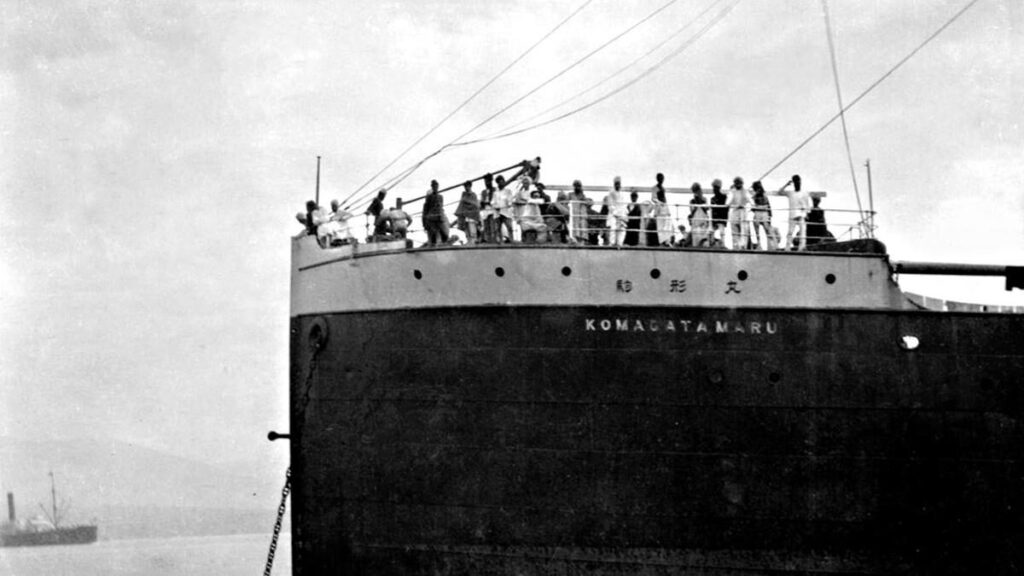
The Komagata Maru incident was a major event in the history of Indian migration, colonial discrimination, and the freedom struggle. It involved a Japanese ship, the Komagata Maru, carrying Indian passengers to Canada in 1914, where they were denied entry despite being British subjects.
The incident exposed the racial discrimination practiced within the British Empire and became an important turning point in the growth of anti-colonial nationalism, especially among overseas Indians.
Historical Background
Punjab and Migration under British Rule
By the early 20th century, Punjab had become the main recruitment centre for the British Indian Army. The British portrayed Punjabis, especially Sikhs, as a “martial race” and heavily recruited them into the army.
However, Punjab also faced:
- Rural indebtedness due to loans and land pressure.
- Agricultural distress and epidemics such as plague and malaria.
- Limited economic opportunities.
As a result, many Punjabis migrated abroad in search of employment and better living conditions, especially to:
- Canada
- United States
- Southeast Asia
Most migrants were peasants, labourers, and retired soldiers from districts such as Jalandhar and Hoshiarpur.
Rise of the Ghadar Movement
Indian migrants in North America experienced severe racial discrimination despite being subjects of the British Empire. This led to growing anti-colonial sentiment.
In 1913, expatriate Indians established the Ghadar Party in the United States.
Features of the Ghadar Movement
- It aimed to overthrow British rule through armed revolution.
- It united Sikhs, Hindus, and Muslims.
- It published the newspaper “Ghadar” with strong anti-British messaging.
- It inspired revolutionary nationalism among overseas Indians.
Important leaders included:
- Lala Har Dayal
- Kartar Singh Sarabha
The Komagata Maru voyage became closely linked with the Ghadar movement because activists boarded the ship during its journey and spread revolutionary ideas among passengers.
The Komagata Maru Voyage
Objective of the Voyage
The voyage was organised by Gurdit Singh, a Sikh businessman based in Singapore.
His aim was to challenge Canada’s discriminatory immigration laws.
The ship sailed from:
- Hong Kong
- Through Shanghai and Yokohama
- Towards Vancouver, Canada
Passengers on Board
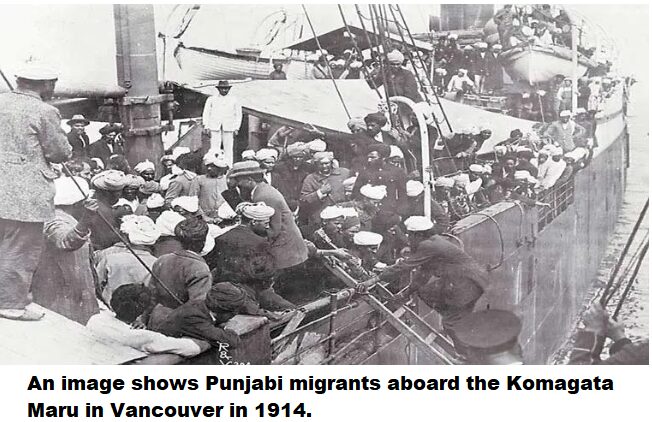
The ship carried 376 passengers: 340 Sikhs, 24 Muslims, 12 Hindus
- All were British Indian subjects.
Canada’s Discriminatory Immigration Policy
Canada had introduced the “Continuous Journey Regulation” in 1908.
According to this rule:
- Migrants could enter Canada only if they arrived through a continuous direct journey from their country of origin.
- Since no direct ship service existed from India to Canada, Indians were effectively excluded.
The law was specifically designed to restrict Asian immigration without openly mentioning race.
The Vancouver Standoff (1914)
The ship reached Vancouver on May 23, 1914.
However:
- Canadian authorities refused passengers permission to disembark.
- The ship remained stranded in the harbour for nearly two months.
- Food and water supplies were restricted.
- Legal appeals by the Indian community failed.
The local Indian community in Canada raised money and fought legal battles, but Canadian courts upheld the exclusionary policy.
When authorities attempted to forcibly board the ship:
- Passengers resisted using coal and scrap materials.
- The Canadian government deployed a naval cruiser to pressure the ship.
Eventually only 22 passengers were allowed entry. The remaining passengers were forced to leave Canada.
Return to India and Budge Budge Incident
When the ship returned near Calcutta (now Kolkata) in September 1914, British authorities suspected passengers of revolutionary links with the Ghadar movement.
At Budge Budge confrontation:
- Passengers resisted forced transportation to Punjab.
- British police opened fire.
As a result:
- Around 20 passengers were killed.
- Many were arrested and imprisoned.
Gurdit Singh escaped initially but later surrendered after advice from Mahatma Gandhi.
Impact of the Incident
Growth of Revolutionary Nationalism
The incident intensified anti-British feelings among Indians, especially overseas communities.
It strengthened:
- The Ghadar movement.
- Revolutionary nationalism in Punjab.
- Anti-colonial political consciousness.
Many Ghadar revolutionaries later attempted armed uprisings against British rule during World War I.
Exposure of Colonial Hypocrisy
The incident revealed the contradiction within the British Empire:
- Indians were treated as British subjects when serving imperial interests.
- But denied equal rights in dominions such as Canada.
It exposed:
- Racial discrimination.
- Limits of imperial citizenship.
- Exclusionary immigration policies.
Influence on Indian Freedom Movement
The incident inspired several revolutionaries.
Bhagat Singh is believed to have admired Ghadar revolutionary Kartar Singh Sarabha deeply.
The event became a symbol of:
- Resistance against racial injustice.
- Overseas Indian nationalism.
- Colonial oppression.
Canada’s Apology
For many decades, Canada did not officially acknowledge the injustice.
In 2016, Canadian Prime Minister Justin Trudeau formally apologised in the Canadian Parliament for the Komagata Maru incident.
The apology recognised:
- The racial discrimination faced by Indian migrants.
- Canada’s exclusionary policies of the past.

Significance of the Incident
The Komagata Maru incident remains important because it highlights:
- Colonial racism within the British Empire.
- The role of the Indian diaspora in the freedom struggle.
- Early resistance against discriminatory immigration policies.
- The connection between migration and nationalism.
It also reflects how overseas Indians contributed significantly to India’s anti-colonial movement.
Practice Questions
Prelims Practice Questions
1. With reference to the Komagata Maru incident, consider the following statements:
- The incident took place during the First World War period.
- The passengers were denied entry into Canada because of discriminatory immigration laws.
- The voyage was closely associated with the Ghadar movement.
Which of the statements given above are correct?
(a) 1 and 2 only
(b) 2 and 3 only
(c) 1 and 3 only
(d) 1, 2 and 3
Correct Answer:
(d) 1, 2 and 3
2. The “Continuous Journey Regulation” was associated with:
(a) Restricting Indian migration to South Africa
(b) Preventing direct trade between India and Canada
(c) Restricting Asian immigration into Canada
(d) Imposing taxes on Indian labourers abroad
Correct Answer:
(c) Restricting Asian immigration into Canada
3. The Ghadar Party was founded primarily to:
(a) Promote constitutional reforms in India
(b) Support Indian soldiers in World War I
(c) Overthrow British rule in India through revolutionary means
(d) Demand separate electorates for Indians abroad
Correct Answer:
(c) Overthrow British rule in India through revolutionary means
Tell Google you want more of this.
Add Anantam IAS as a preferred sourceOne tap, and this site shows up more often in your own Top Stories, AI Overviews and AI Mode. Remove it any time.