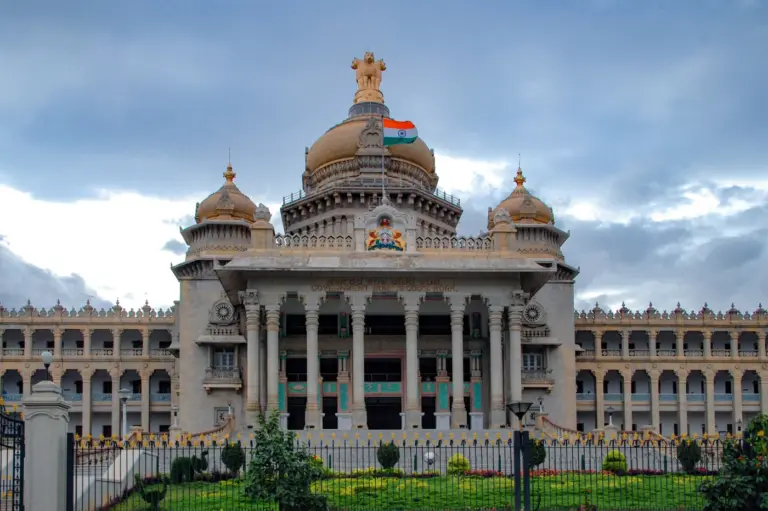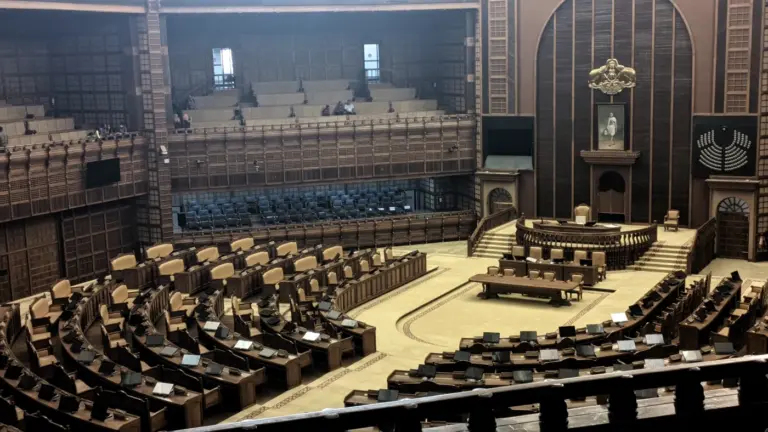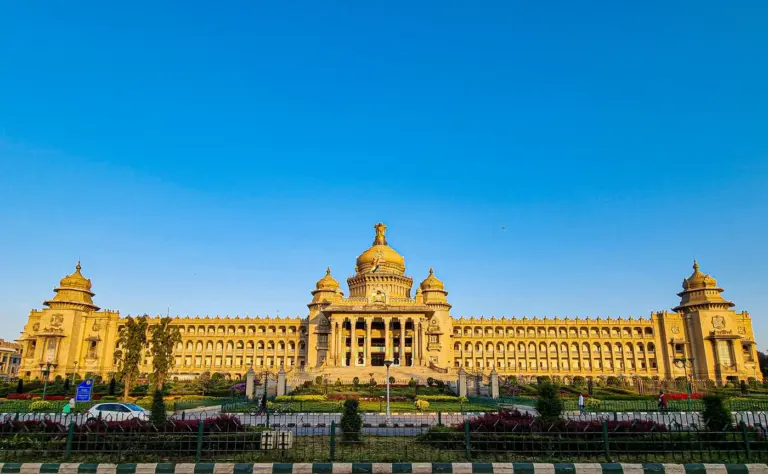
A bicameral Parliament is built to argue with itself. Two Houses, two moods, two majorities that need not match — the Lok Sabha elected directly by the people, the Rajya Sabha chosen by the states and meant to be the calmer, more reflective chamber. Most of the time the friction is healthy: a bill rushed through one House gets a second look in the other, an amendment is added, a rough edge is smoothed. But what happens when the friction hardens into a wall — when one House passes a bill and the other flatly refuses, or sits on it, or insists on changes the first will not accept? A government with a clear mandate cannot let a single chamber bury its law forever. The Constitution’s answer to that standoff is one of the most talked-about and least-used tools in the whole document: the joint sitting of Parliament under Article 108.
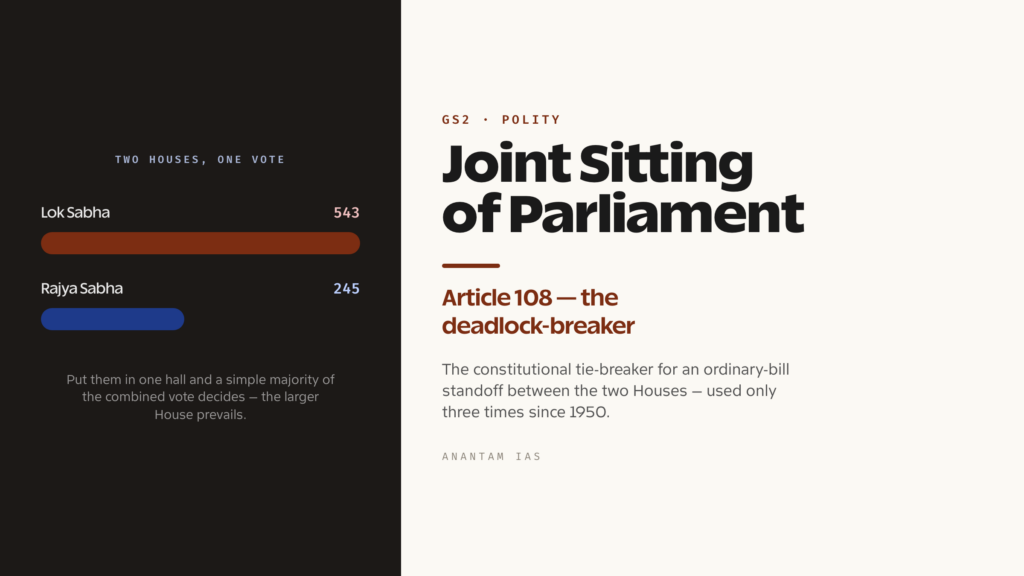
It is a tie-breaker — and a blunt one. When the two Houses deadlock over an ordinary bill, the President can summon both of them to sit together as one body, debate the bill as one, and vote on it as one. Because the Lok Sabha is more than twice the size of the Rajya Sabha, that single combined vote almost always tilts the government’s way. The mechanism is elegant on paper and dramatic in practice, which is exactly why it has been triggered only three times in more than seven decades of independent India. For a UPSC aspirant, Article 108 is a small topic that punches far above its weight: it tests whether you understand the logic of bicameralism, the careful limits the Constitution places on majority power, and the difference between an ordinary bill and the categories the joint sitting cannot touch.
What Article 108 Says and When a Joint Sitting Is Summoned
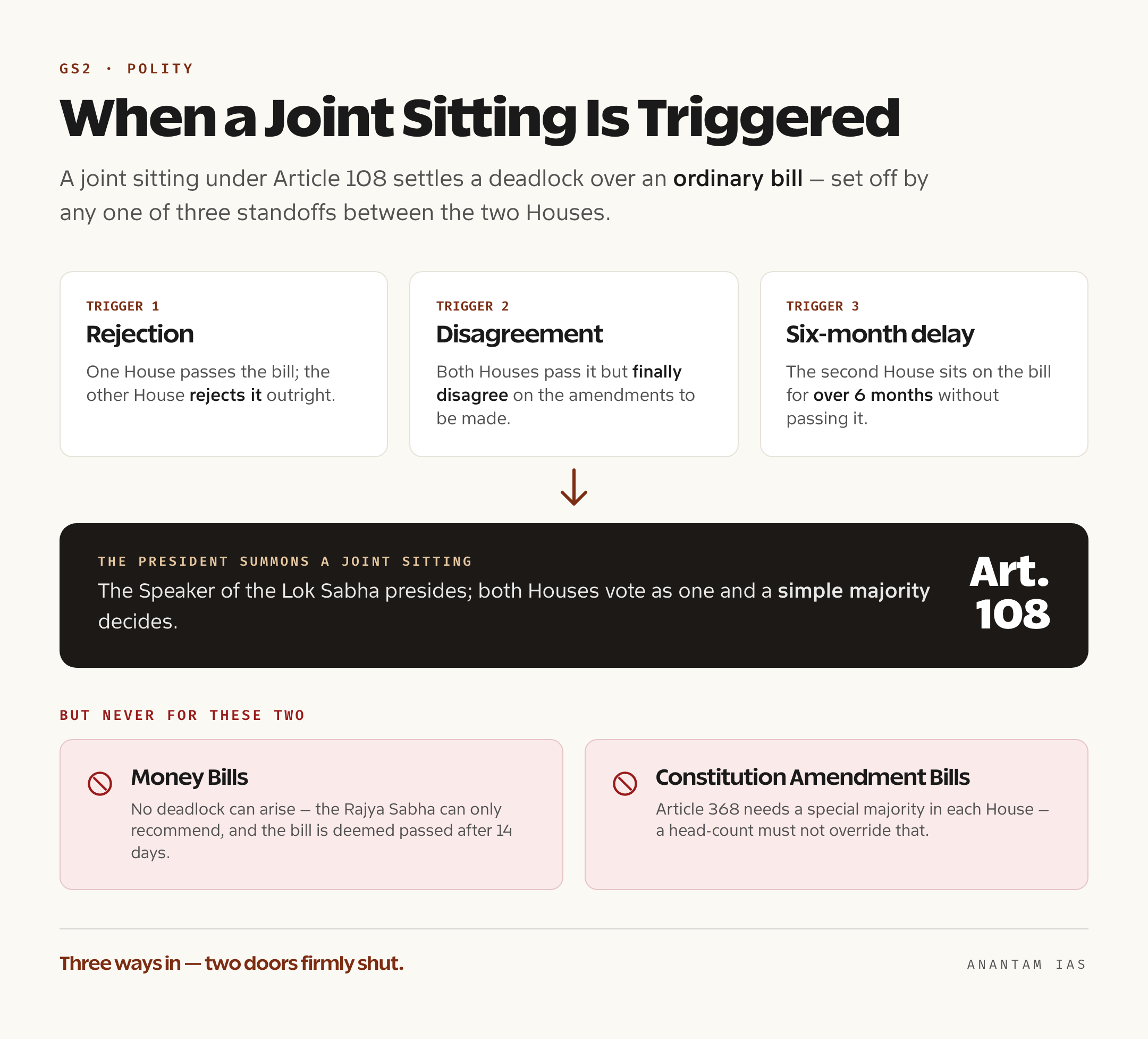
Start with the text and the trigger. Article 108 lets the President summon a joint sitting of both Houses to resolve a deadlock over an ordinary bill — and the Constitution is precise about what counts as a deadlock. There are exactly three situations. The first is rejection: a bill is passed by one House and then thrown out by the other. The second is disagreement on amendments: the bill passes both Houses, but the two cannot finally agree on the changes to be made to it. The third is the clock running out: more than six months pass from the date the second House receives the bill without that House passing it. In counting those six months, days when the House is prorogued or adjourned for more than four consecutive days are left out — so it is six months of actual working time, not just calendar time.
If any one of those three conditions is met, the President “may” summon a joint sitting. That word matters. The President acts on the advice of the Council of Ministers, so in practice the decision belongs to the government of the day, and a government will reach for Article 108 only when it genuinely cannot get a bill through the upper House by ordinary means. There is also an important guardrail on timing. A joint sitting cannot be summoned if the bill has lapsed because the Lok Sabha was dissolved — but it can be called even after a dissolution if the President had already notified the intention to summon one before the House was dissolved. So the tool is tied to a living bill in a living House; it cannot be used to revive legislation that has already died.
The other half of the design is the presiding officer, and it carries a quiet but telling message about who Parliament treats as first among the two Houses. A joint sitting is presided over by the Speaker of the Lok Sabha. If the Speaker is absent, the Deputy Speaker of the Lok Sabha takes the chair; if both are absent, the Deputy Chairman of the Rajya Sabha presides; and if even that officer is unavailable, the sitting chooses a presiding member by consensus. Notice who is missing from that list — the Chairman of the Rajya Sabha, who is the Vice-President of India. The constitutional head of the upper House never presides over a joint sitting. The chair belongs to the Speaker of the lower House, the chamber that answers most directly to the electorate. The quorum for the sitting is one-tenth of the combined strength of both Houses, and the proceedings run on the Lok Sabha’s rules of business, not the Rajya Sabha’s.
How the Voting Works and Why the Lok Sabha Dominates
Here is where Article 108 reveals its real character. Once both Houses are sitting together, the deadlock is broken not by negotiation but by sheer arithmetic. The bill is debated and then put to a vote of all the members present, and it is decided by a simple majority of those present and voting — half-plus-one of the members in the room, counting both Houses as a single pool. There is no special threshold, no two-thirds requirement, no separate tally for each chamber. One combined head-count settles the matter.
And that is precisely why the combined vote is, in practice, the Lok Sabha’s vote. The lower House has a sanctioned strength of up to 543 elected members; the Rajya Sabha has a maximum of 245. Put them in one hall and the Lok Sabha brings more than twice as many votes to the floor. A government that commands a majority in the Lok Sabha — which, by definition, every government does, because that is how it stays in office — will carry the joint sitting even if the Rajya Sabha is solidly against the bill. The upper House can delay, amend and resist a bill through the normal process, but the moment a joint sitting is called, its numbers are simply swamped. This is the structural truth behind the mechanism: Article 108 does not so much balance the two Houses as let the larger, popularly elected House have the final word on ordinary legislation when the two cannot agree.
There is one more procedural nuance worth carrying into an answer. At a joint sitting, members generally cannot move brand-new amendments to the bill. The sitting is meant to settle the existing disagreement, so as a rule only amendments already in dispute between the Houses — or amendments needed because of the passage of time — may be considered, and the presiding officer’s ruling on what is admissible is final. This keeps the joint sitting focused: it is a device for resolving a specific stalemate over a specific bill, not an open second drafting session. The bill that emerges, if it secures the simple majority, is deemed to have been passed by both Houses and goes to the President for assent like any other law.
Which Bills the Joint Sitting Cannot Touch
The most examined part of this topic is not what Article 108 can do but what it deliberately cannot. The joint-sitting route applies only to ordinary bills. Two important categories are kept entirely outside its reach, and the reasoning behind each exclusion is as important as the fact of it.
The first exclusion is the Money Bill. A Money Bill — one dealing strictly with taxation, government borrowing, or the Consolidated Fund, as certified by the Speaker under Article 110 — never needs a joint sitting, because the Constitution already settles its fate in the Lok Sabha’s favour. The Rajya Sabha cannot reject or amend a Money Bill; it can only make recommendations, which the Lok Sabha is free to accept or ignore. And if the upper House holds a Money Bill for more than fourteen days, it is automatically deemed to have been passed. So there is simply no deadlock for a joint sitting to resolve — the lower House’s will already prevails by design. Including Money Bills in Article 108 would have been redundant.
The second exclusion is the Constitution Amendment Bill, and here the logic runs the opposite way. A bill to amend the Constitution under Article 368 must be passed separately by each House by a special majority — a majority of the total membership of that House and at least two-thirds of the members present and voting. That high bar is the whole point: changing the Constitution is meant to require the genuine, independent consent of both Houses, not a combined head-count that one chamber can dominate. If a constitutional amendment fails to clear the Rajya Sabha, it simply fails; there is no joint sitting to rescue it. Letting the more numerous Lok Sabha out-vote the Rajya Sabha on a constitutional change through Article 108 would gut the protection that the two-thirds, both-Houses rule is built to provide. So the framers walled off amendments from the joint-sitting mechanism entirely. A clean way to remember it: the joint sitting bends the rule of equal Houses for ordinary laws, but the Constitution refuses to let that bending reach the Constitution itself.
The Three Joint Sittings in Indian History
In more than seventy years, Parliament has met in joint sitting exactly three times — a rarity that tells you the mechanism is less a routine tool than a constitutional last resort, reached for only when the stakes were high and the deadlock total. Each of the three is worth knowing by name, year and cause, because examiners love this short, closed list.
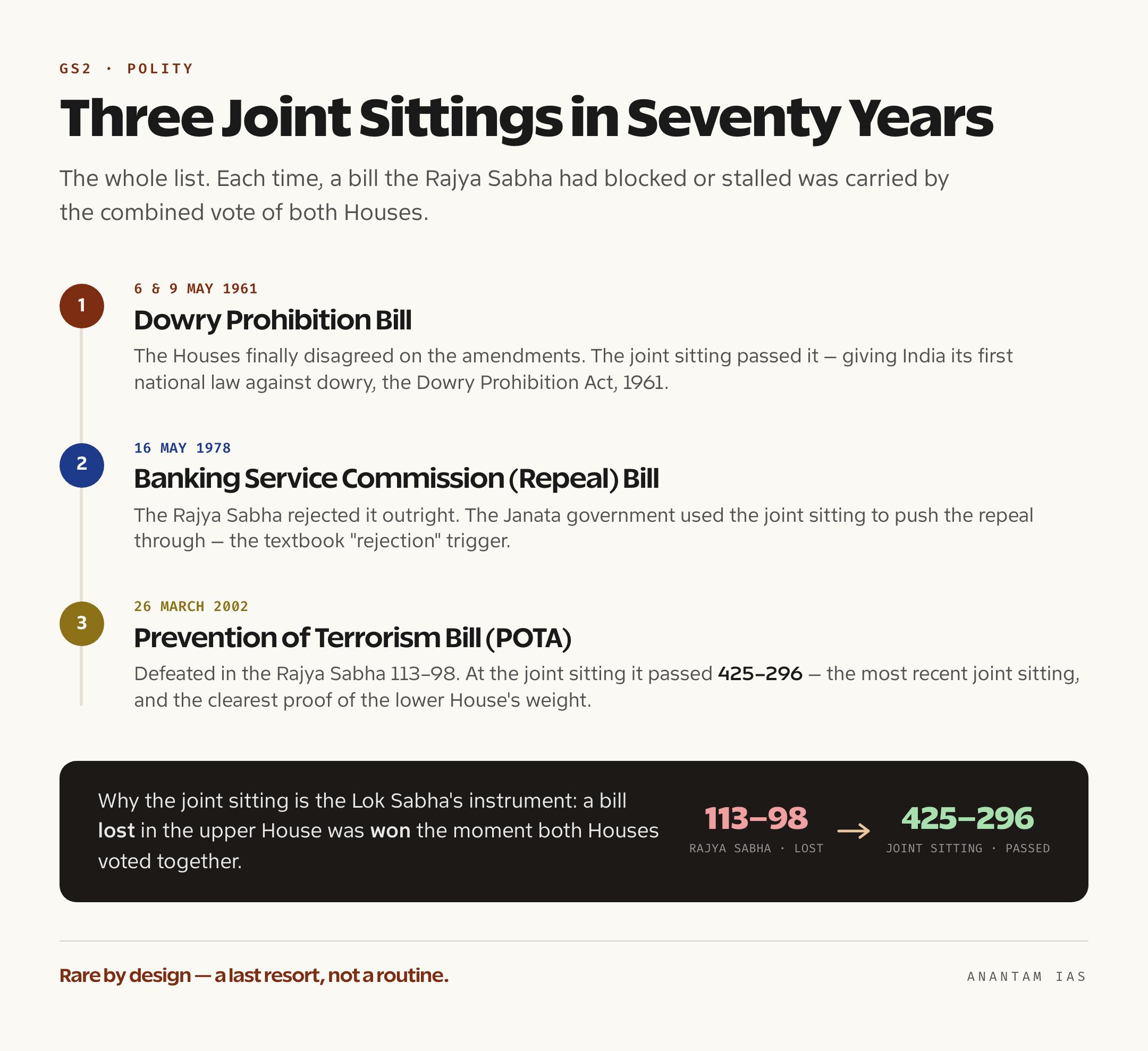
The first joint sitting came in May 1961, over the Dowry Prohibition Bill. The Lok Sabha and the Rajya Sabha had passed the bill but could not finally agree on the amendments to be made to it — the second of the three triggers. President Rajendra Prasad summoned a joint sitting, which met in the Central Hall of Parliament House on 6 May 1961 and reconvened on 9 May 1961, when the bill, as amended at the sitting, was passed. The result was the Dowry Prohibition Act, 1961, India’s first national law against the giving and taking of dowry — so the very first use of Article 108 produced a landmark social-reform statute.
The second came seventeen years later, in 1978, over the Banking Service Commission (Repeal) Bill. The Lok Sabha had passed the bill to wind up the Banking Service Commission, but the Rajya Sabha rejected it outright — the first of the three triggers. The Janata Party government, which had a thin position in the upper House, used the joint sitting to push it through. Parliament met jointly on 16 May 1978 and passed the bill. This is the least glamorous of the three, but it is the textbook example of the “rejection by the other House” trigger, and it is the one aspirants most often forget.
The third and most consequential came in 2002, over the Prevention of Terrorism Bill — the law that became POTA. The Lok Sabha passed the anti-terror bill, but the Rajya Sabha, where the ruling coalition lacked the numbers, defeated it. The Vajpayee government summoned a joint sitting, which met on 26 March 2002 — and the arithmetic told the whole story. In the Rajya Sabha the bill had gone down by 113 votes to 98; at the joint sitting, with the full weight of the Lok Sabha added in, it passed by 425 votes to 296. That single tally is the clearest illustration of why the joint sitting is the lower House’s instrument: a bill defeated in the upper House sailed through once both Houses voted as one. POTA was later repealed in 2004, but the joint sitting that birthed it remains the most recent — and the only one most current aspirants have lived through.
For Your Mains Answer
This is a focused, high-yield topic for GS Paper 2, which covers the Constitution, the functioning of the Parliament, and the separation of powers. Questions on parliamentary procedure, the relationship between the two Houses, the resolution of legislative deadlocks, and the comparative powers of the Lok Sabha and the Rajya Sabha can all draw on Article 108. It is also a ready-made example for any answer arguing that India’s bicameralism gives the directly elected House the final say on ordinary legislation. The skill being tested is precision: a strong answer states the article, the three triggers, the presiding officer, the two exclusions, the voting rule, and the three precedents — and then explains the logic connecting them.
How to Build the Answer
Move from rule to reason to record. Open by stating what a joint sitting is and the article that provides it, then lay out the three triggers (rejection, amendment disagreement, six-month inaction). Next, explain the mechanics — the Speaker presides, the Vice-President never does, decisions are by simple majority of the combined Houses — and immediately draw the consequence: the Lok Sabha’s larger numbers (543 versus 245) mean it effectively decides. Then handle the two exclusions and why each is excluded (Money Bills need no joint sitting; amendments must not be reducible to a head-count). Close with the three historical sittings as evidence, and a line evaluating whether this is a healthy way to resolve deadlock. That arc — provision, mechanics, exclusions, precedent, judgement — fits almost any question on the topic.
Common Mistakes to Avoid
Don’t say the President presides or summons it on a whim — the President summons it on ministerial advice and the Speaker presides. Don’t list the Vice-President or Rajya Sabha Chairman as a presiding officer; that is a classic trap, since they never preside. Don’t claim a joint sitting can pass a Money Bill or a constitutional amendment — both are excluded, for opposite reasons. Don’t confuse the simple-majority rule of the joint sitting with the special-majority rule of Article 368. And get the count right: there have been exactly three joint sittings, not two and not four.
A Compact Answer Spine
Article 108 → joint sitting to break a deadlock on an ordinary bill → three triggers: rejection, final disagreement on amendments, or six months’ inaction by the second House → summoned by the President on ministerial advice → presided over by the Speaker (then Deputy Speaker, then Deputy Chairman of Rajya Sabha; never the Vice-President) → decided by simple majority of both Houses voting together → Lok Sabha (543) outnumbers Rajya Sabha (245), so the lower House effectively prevails → excludes Money Bills (no deadlock possible) and Constitution Amendment Bills (need special majority in each House) → used only thrice: Dowry Prohibition Bill (1961), Banking Service Commission Repeal Bill (1978), Prevention of Terrorism Bill / POTA (2002, passed 425-296).
Diagram or Flowchart Idea
Sketch a simple flow: “Bill passed by House A → House B rejects / disagrees on amendments / sits on it for 6 months → President summons joint sitting → both Houses vote as one → simple majority decides.” Beside it, put a small two-bar comparison of Lok Sabha (543) against Rajya Sabha (245) to show visually why the combined vote favours the lower House, and a side box listing the two excluded bill types. The visual makes the whole mechanism legible in seconds.
A Balanced-Conclusion Line
A line that lands the marks: “The joint sitting is the Constitution’s pressure valve — it lets the popularly elected Lok Sabha have the last word on ordinary legislation when the Houses deadlock, while deliberately keeping that brute-majority logic away from Money Bills and constitutional amendments, where the framers wanted either the lower House’s automatic primacy or both Houses’ genuine consent.”
How to Use Data Without Cramming
You need only a handful of anchors: Article 108, the three triggers, the chamber strengths (543 and 245), the simple-majority rule, the two exclusions, and the three years — 1961, 1978, 2002 — with the POTA vote of 425 to 296. Drop those into the right sentences and the answer reads as authoritative. Attribute the precedents plainly — “the only three joint sittings, in 1961, 1978 and 2002” — rather than reciting numbers without a frame.
FAQ
When can a joint sitting of Parliament be summoned under Article 108? The President can summon a joint sitting to resolve a deadlock over an ordinary bill in three situations: when one House passes a bill and the other rejects it, when the two Houses finally disagree on the amendments to be made to the bill, or when more than six months pass after the second House receives the bill without it being passed. The President acts on the advice of the Council of Ministers, and a joint sitting cannot be summoned if the bill has already lapsed because the Lok Sabha was dissolved.
Who presides over a joint sitting of Parliament? The Speaker of the Lok Sabha presides. In the Speaker’s absence the Deputy Speaker of the Lok Sabha takes the chair, and failing that, the Deputy Chairman of the Rajya Sabha. The Chairman of the Rajya Sabha — who is the Vice-President of India — never presides over a joint sitting. The proceedings follow the Lok Sabha’s rules, and decisions are taken by a simple majority of the members of both Houses present and voting.
Can a Money Bill or a constitutional amendment be passed at a joint sitting? No. Both are excluded from Article 108. A Money Bill needs no joint sitting because the Rajya Sabha cannot reject it — it can only make recommendations, and the bill is deemed passed if the upper House holds it for more than fourteen days, so the Lok Sabha already prevails. A Constitution Amendment Bill is excluded because Article 368 requires it to be passed by a special majority in each House separately; allowing the more numerous Lok Sabha to out-vote the Rajya Sabha in a joint sitting would defeat that protection.
How many times has a joint sitting been held in India? Only three times. The first was in 1961 over the Dowry Prohibition Bill (held on 6 and 9 May 1961), the second in 1978 over the Banking Service Commission (Repeal) Bill (16 May 1978), and the third in 2002 over the Prevention of Terrorism Bill that became POTA (26 March 2002), which the Rajya Sabha had defeated but which passed at the joint sitting by 425 votes to 296.
Practice Questions
Prelims MCQs
- A joint sitting of Parliament under Article 108 can be summoned to resolve a deadlock over which type of bill?
(a) A Money Bill
(b) A Constitution Amendment Bill
(c) An ordinary bill
(d) A financial bill involving the Consolidated Fund
Answer: (c) Article 108 applies only to ordinary bills; Money Bills and Constitution Amendment Bills are expressly excluded from the joint-sitting mechanism. - Who presides over a joint sitting of the two Houses of Parliament?
(a) The President of India
(b) The Vice-President, as Chairman of the Rajya Sabha
(c) The Speaker of the Lok Sabha
(d) The senior-most member of the Rajya Sabha
Answer: (c) The Speaker of the Lok Sabha presides; in the Speaker’s absence the Deputy Speaker, and then the Deputy Chairman of the Rajya Sabha. The Vice-President never presides. - Which of the following can trigger a joint sitting under Article 108?
(a) A bill rejected by the other House
(b) Final disagreement between the Houses on amendments to a bill
(c) A bill not passed by the second House within six months of its reception
(d) All of the above
Answer: (d) All three — rejection, final disagreement on amendments, and six months’ inaction by the second House — are the conditions under which a joint sitting may be summoned. - At a joint sitting of Parliament, a bill is decided by which kind of majority?
(a) A two-thirds majority of members present and voting
(b) A simple majority of the members of both Houses present and voting
(c) A majority of the total membership of each House separately
(d) An absolute majority of the Lok Sabha alone
Answer: (b) A bill at a joint sitting is passed by a simple majority of all members of both Houses present and voting, counted together. Because the Lok Sabha is larger, this effectively favours the lower House. - Which of the following bills was the subject of a joint sitting of the Indian Parliament?
(a) The Goods and Services Tax Bill
(b) The Banking Service Commission (Repeal) Bill, 1977
(c) The 42nd Constitution Amendment Bill
(d) The Finance Bill, 2002
Answer: (b) The Banking Service Commission (Repeal) Bill led to the second joint sitting, held on 16 May 1978. The only three joint sittings concerned this bill, the Dowry Prohibition Bill (1961), and the Prevention of Terrorism Bill (2002).
Mains Practice Questions
- Explain the constitutional provision for a joint sitting of Parliament under Article 108. Under what circumstances can it be summoned, and why are Money Bills and constitutional amendments excluded from it? (15 marks, 250 words)
- “The joint sitting of Parliament effectively gives the Lok Sabha the final word on ordinary legislation.” Critically examine this statement with reference to the composition and voting rules of a joint sitting. (15 marks, 250 words)
- Discuss the three occasions on which a joint sitting of the Indian Parliament has been held. What do these precedents reveal about the role of the mechanism in resolving legislative deadlock? (15 marks, 250 words)
- Distinguish between the way the Constitution resolves a deadlock over an ordinary bill and the way it treats disagreement over a Money Bill or a Constitution Amendment Bill. (10 marks, 150 words)
- The Rajya Sabha is designed as a chamber of reflection and federal balance, yet a joint sitting can override its resistance to an ordinary bill. Evaluate whether Article 108 strikes the right balance between bicameralism and effective governance. (15 marks, 250 words)
Tell Google you want more of this.
Add Anantam IAS as a preferred sourceOne tap, and this site shows up more often in your own Top Stories, AI Overviews and AI Mode. Remove it any time.