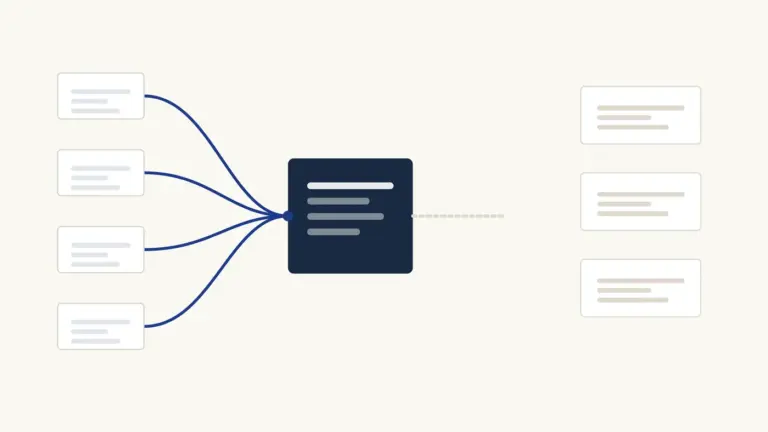

The Sahyog portal is the Ministry of Home Affairs’ online system through which authorized government agencies send takedown notices to online platforms for content they consider unlawful. It is run by the Indian Cyber Crime Coordination Centre (I4C) and has been operational since October 2024, with Section 79(3)(b) of the Information Technology Act, 2000 as its legal footing. Sahyog means cooperation: one window where police and ministries on one side and platforms on the other exchange notices instead of emails.
Most people meet Sahyog as the portal X Corp called a censorship tool, and assume it is a new power to block. It isn’t. The portal creates no power of its own; it is a pipe. The real dispute is about what flows through it: whether Section 79(3)(b), a clause that only says when a platform loses its legal shield, can serve as a takedown route running parallel to Section 69A, the blocking power that carries hearings and review. Keep the pipe and the power apart, and the whole court fight reads clearly.
What is the Sahyog portal?
Sahyog is a notice-routing system of the Ministry of Home Affairs, not a regulator and not a court. It works under the Information Technology Act, 2000 and connects two sets of users: officers authorized to send notices and the intermediaries who receive them.
| Fact | Detail |
|---|---|
| Run by | Indian Cyber Crime Coordination Centre (I4C), an attached office of the Ministry of Home Affairs |
| Operational since | October 2024, as the Union told the Karnataka High Court |
| Legal basis | Section 79(3)(b) of the IT Act, 2000, read with Rule 3(1)(d) of the IT Rules, 2021 |
| I4C’s authority | MHA notification of 13 March 2024 designating I4C as its agency under Section 79(3)(b) |
| Who can send notices | Authorized agencies of the Centre, states and UTs; since 15 November 2025, only officers of Joint Secretary rank (Director where none exists) or, for police, DIG and above |
| Who receives them | Intermediaries: 38 were onboarded by March 2025 and 524 by the Centre’s 2026 count |
| Time to act | 36 hours under the 2021 Rules; three hours since 20 February 2026 |
| Scale | More than 1,11,185 items blocked under Section 79(3)(b), Sahyog included, up to 31 March 2025 |
| Legal status | Upheld by the Karnataka High Court on 24 September 2025; High Court challenges stayed by the Supreme Court on 22 July 2026 |
How a Sahyog notice works
An authorized officer uploads a reasoned notice that points to a specific web address, and the platform must take that content down within three hours or lose its legal immunity for it. That second half is the part most people miss.
Start with the shield. Section 79 gives intermediaries, meaning services that carry other people’s content, a safe harbour: they aren’t liable for what users post, much as a courier isn’t answerable for what’s sealed inside a parcel. Section 79(3)(b) is the exception. If a platform learns through a court order or a government notice that some content is being used to commit an unlawful act, and still doesn’t remove it quickly, the shield falls away for that content.
The courier picture holds only so far. A courier never opens the parcel, while a platform ranks and moderates what it carries, which is why the law expects it to act once told.
Follow one notice through. Suppose a state police cyber cell finds a fake stock-tips page luring people into a scam:
- An officer of at least DIG rank, specially authorized by the state government, issues a reasoned intimation on Sahyog.
- The intimation states the legal provision invoked and the nature of the unlawful act, and gives the exact URL.
- The platform receives it on the portal, not at an email address that may not answer.
- The platform has three hours to remove the page or disable access to it.
- If it refuses, the refusal is not itself an offense. The platform loses Section 79 immunity for that page and can be proceeded against under whichever law the page breaks.
That last step is the whole design. A Sahyog notice is a warning with consequences, not an order backed by a penalty of its own.
Why a portal at all? The Union told the Karnataka High Court that police faced these problems in reaching platforms:
- nodal contact details that were outdated or never answered;
- slow removal even after formal requests, which hurts most with non-consensual intimate images;
- foreign platforms with no office or representative in India;
- a different law-enforcement request portal for each company;
- no common record of which notices were pending or ignored.
Sahyog answers these by putting every authorized agency and every onboarded intermediary on one platform with a shared record. It is one part of a wider cybercrime response built around I4C, which Union Home Minister Amit Shah inaugurated on 10 January 2020.
Sahyog wasn’t the first use of Section 79(3)(b) either. The MHA’s annual report records that the NCRB was notified in August 2018 to send such notices for child sexual abuse material and rape content. What changed in 2024 was scale: a common portal that 28 states and 5 UTs had joined by March 2025.
Section 69A and Section 79(3)(b): two routes to a takedown
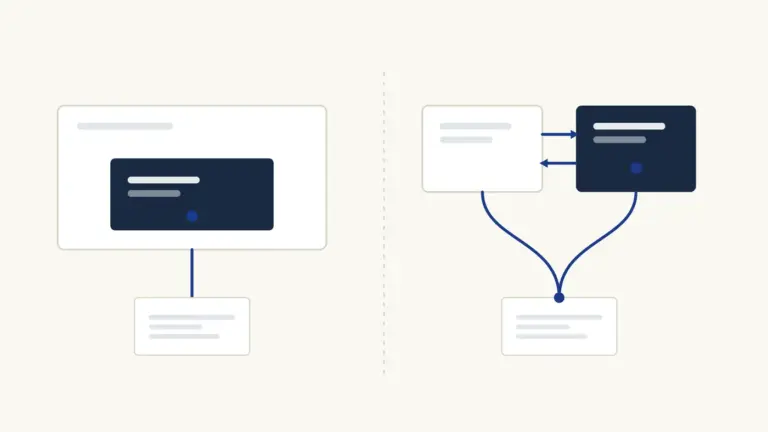
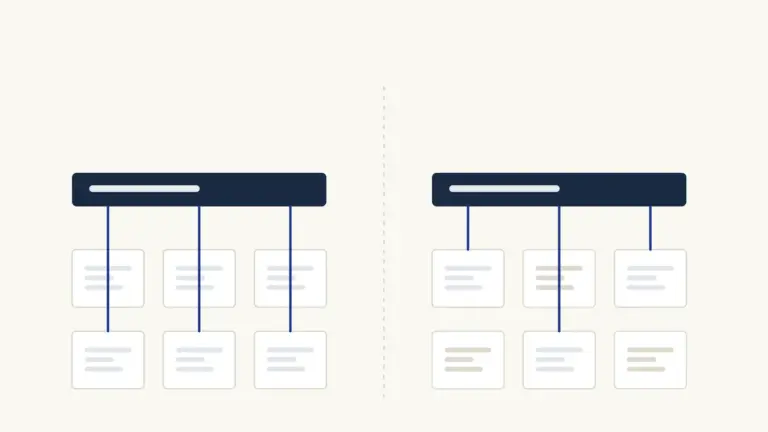
Section 69A is a power to block; Section 79(3)(b) is a condition attached to immunity. Both end with content vanishing, which is why they get confused.
Under Section 69A, the Central Government or an officer it specially authorizes may direct a platform to block content, for reasons recorded in writing, when it is necessary in the interest of:
- sovereignty and integrity of India;
- defence of India;
- security of the State;
- friendly relations with foreign States;
- public order;
- preventing incitement to a cognizable offence relating to any of these.
Failing to comply is an offense for the intermediary, punishable with up to seven years in prison and a fine.
The procedure under the 2009 Blocking Rules
The Information Technology (Procedure and Safeguards for Blocking for Access of Information by Public) Rules, 2009 turn that power into a sequence of checks:
- The requesting ministry or state sends its request through its Nodal Officer to the Designated Officer, a Central Government officer of at least Joint Secretary rank.
- A committee chaired by the Designated Officer, with Joint Secretary-level members from four other bodies including CERT-In, examines the request.
- The person or platform hosting the content gets notice and at least 48 hours to reply before that committee.
- The Secretary of the IT department approves or rejects the committee’s recommendation, and a request must be decided within seven working days.
- In an emergency the Secretary can order interim blocking without a hearing. The matter must then reach the committee within 48 hours, and the block is revoked if it isn’t approved.
- A Review Committee meets at least once in two months and can set aside any direction that falls outside Section 69A.
Rule 16 adds strict confidentiality about requests and actions. The route is far from dormant, as the Centre’s 2026 submissions on Telegram show.
The two routes side by side
Set next to each other, the two routes differ at almost every step.
| Feature | Section 69A blocking | Section 79(3)(b) notice via Sahyog |
|---|---|---|
| Nature | A power to order blocking | A condition for keeping safe harbour |
| Who decides | Designated Officer after a committee; Secretary approves | Authorized officer of the Centre, a state or a UT; Joint Secretary rank, or DIG for police, since 15 November 2025 |
| Grounds | Six grounds from sovereignty to incitement | Article 19(2)-type grounds, including decency, defamation and contempt, plus information prohibited under any law |
| Hearing | Notice and at least 48 hours to reply, except in emergencies | None before the notice |
| Reasons | Recorded in writing | Reasoned intimation with legal basis and URL since 15 November 2025 |
| Review | Review Committee at least once in two months | Monthly review by a Secretary-rank officer of the issuing government |
| Deadline | As set in the direction | 36 hours from 2021; three hours from 20 February 2026 |
| If ignored | Offense: up to seven years and a fine | Loss of immunity for that content |
| Court record | Upheld in Shreya Singhal (2015) | Upheld by a Karnataka High Court single judge (2025); now before the Supreme Court |
The whole dispute fits in one question: can the government get the left column’s result through the right column, without the left column’s checks? The government’s answer is that the columns cover different ground, since Section 69A’s six grounds can’t reach a scam page or a defamatory post. The critics’ answer is that a removal notice with no hearing is a blocking order in all but name.
What Shreya Singhal said about Section 79
In Shreya Singhal v Union of India, decided on 24 March 2015 by Justices J. Chelameswar and R.F. Nariman, the Supreme Court upheld Section 69A and saved Section 79(3)(b) only after reading it down. Both sides in the Sahyog litigation quote it, and its three holdings on online speech under Article 19 are these:
- Section 66A, which punished grossly offensive or menacing online messages, was struck down as violating Article 19(1)(a) and not saved by Article 19(2).
- Section 69A and the 2009 Blocking Rules were upheld because blocking is confined to Article 19(2) grounds, needs written reasons and allows a hearing to the intermediary and, where identified, the originator.
- Section 79(3)(b) was read down: a platform must act on actual knowledge from a court order or a notification by the appropriate government or its agency, and only for unlawful acts relatable to Article 19(2).
Now read that third holding the way each side does. X Corp says it confirms that takedown power belongs to Section 69A, and that Section 79(3)(b) only marks when a platform loses immunity. The Karnataka High Court read it the other way: the 2015 bench expressly contemplated government notifications under Section 79(3)(b), and it was ruling on the 2011 Intermediary Rules, which the 2021 Rules have since replaced.
Same paragraph, two readings. That is exactly the question the Supreme Court now has to settle.
The X Corp case in the Karnataka High Court
On 24 September 2025, Justice M. Nagaprasanna of the Karnataka High Court dismissed X Corp’s petition and upheld both the Sahyog portal and Rule 3(1)(d). The judgment runs to 351 pages; what it decided is short.
X Corp, the US company behind the platform formerly called Twitter, had filed Writ Petition No. 7405 of 2025 in March 2025. It sought three declarations:
- that Section 79(3)(b) gives no power to issue blocking orders, which can come only under Section 69A;
- that Rule 3(1)(d) is ultra vires or, in the alternative, must be read down;
- that the Sahyog portal, which the petition called a censorship portal, is ultra vires.
It also sought to quash a MeitY office memorandum of 31 October 2023 and notifications of four ministries, among them the MHA’s order designating I4C. The court rejected every prayer. Its findings come down to these points:
- Rights under Article 19 belong to citizens only, so a foreign company can’t invoke them.
- Sahyog, conceived under Section 79(3)(b) and Rule 3(1)(d), is a lawful mechanism of cooperation against cybercrime and not a censorship tool.
- Shreya Singhal spoke to the 2011 Rules and can’t simply be carried over to the 2021 Rules.
- Social media “cannot be left in a state of anarchic freedom”, and regulation matters most for offenses against women.
- X complies with the US TAKE IT DOWN Act, 2025 at home, and the court saw no reason for it to resist comparable notices in India.
X filed a writ appeal in November 2025. On 10 March 2026, a division bench of Chief Justice Vibhu Bakhru and Justice C.M. Poonacha issued notice to the Centre. On appeal X argues that Section 79 cannot be a source of takedown power and that Sections 69A and 79 must be read together.
Keep this apart from X’s earlier loss in the same court. On 30 June 2023, Justice Krishna S. Dixit dismissed its challenge to Section 69A blocking orders with Rs 50 lakh in costs; that case was about the other route.
The case for speed and the case for safeguards
The government’s case rests on scale and speed; the critics’ case rests on process. Both describe something real.
The government’s case
- Volume. According to the MHA’s annual report for 2024-25, more than 1,11,185 items were blocked under Section 79(3)(b), Sahyog included, up to 31 March 2025. Counted from I4C’s designation in March 2024, that is roughly 290 a day.
- Growth. The government said in August 2026 that about 2.98 lakh URLs were sent for takedown between March and July 2026, and states sent about 82 percent of them.
- Reach. Section 69A’s six grounds miss much of what police handle daily; the government says most of I4C’s notices concern financial fraud and crimes against women and children.
- Response. According to the Union, platforms, many of them based abroad, often answered police notices late or not at all.
- Choice. A notice doesn’t compel removal; a platform that thinks it wrong can refuse and defend itself in court, at the cost of immunity for that item.
- Safeguards added. Since 15 November 2025, notices must come from senior officers with reasons attached, and a Secretary-rank officer reviews them every month.
The critics’ case
- Wrong source of power. Section 79 is an exemption clause; the power to block sits in Section 69A, together with its safeguards.
- No hearing. Petitioners argue content can be removed without prior notice to the user who posted it, which critics see as a denial of the hearing that due process demands.
- Many hands. Officers in every state and several ministries can send notices, where Section 69A has one Designated Officer and a committee.
- Wider grounds. Rule 3(1)(d) reaches information prohibited under any law, which critics say goes beyond the Article 19(2) limit that Shreya Singhal set.
- Over-removal. When keeping content risks immunity and the clock runs three hours, a platform’s safest choice is to remove first, which is the chilling effect courts warn about.
- Inside review. The monthly review sits inside the government that sends the notices.
Being absolute on either side isn’t a good idea at all. A fake investment page draining savings today can’t wait for a committee in Delhi, and a satirical post shouldn’t disappear in three hours with nobody told why. A middle path would keep the fast lane and add checks after the takedown, for example:
- notice to the user once content is removed, with a way to contest it;
- published figures on notices by agency and ground;
- review by a body outside the office that sent the notice.
It is wise to hold both halves of this together, because the courts will have to.
Where the Sahyog portal stands today
The portal keeps growing while its legality waits on the Supreme Court. On 22 July 2026, a bench of Chief Justice of India Surya Kant and Justices Joymalya Bagchi and V. Mohana issued notice on the Union’s transfer petitions and stayed every High Court case on the portal.
| Date | Development |
|---|---|
| 13 March 2024 | MHA designates I4C as its agency under Section 79(3)(b) |
| October 2024 | Sahyog becomes operational |
| March 2025 | X Corp files its writ petition in the Karnataka High Court |
| 24 September 2025 | Justice M. Nagaprasanna dismisses the petition and upholds Sahyog |
| 22 October 2025 | MeitY amends Rule 3(1)(d) for senior officers, reasons and monthly review, in force 15 November 2025 |
| November 2025 | X Corp files a writ appeal |
| 10 February 2026 | MeitY cuts the Rule 3(1)(d) deadline from 36 hours to three, in force 20 February 2026 |
| February 2026 | Kunal Kamra and Haresh Jagtiani challenge Sahyog in the Bombay High Court |
| 10 March 2026 | A Karnataka High Court division bench issues notice on X’s appeal |
| 22 July 2026 | The Supreme Court stays all four High Court cases |
The stayed cases are X’s appeal and a petition by DigiPub News India Foundation, a body of digital news publishers, in the Karnataka High Court, and the petitions of comedian Kunal Kamra and senior advocate Haresh Jagtiani in the Bombay High Court.
The Bombay petitions also attack the 2025 amendment to Rule 3(1)(d). Because Kamra and Jagtiani are Indian citizens, the Article 19 door the Karnataka court closed on X stays open to them. The Union wants all four heard together, and the matters are pending before the Supreme Court.
The rules have moved in parallel. MeitY’s October 2025 notification narrowed who may send a notice, and the February 2026 amendment cut the time to act; the 2025 and 2026 amendments to the IT Rules have a note of their own. In June 2026, NITI Aayog asked platforms and industry bodies whether current takedown timelines were workable; that consultation changes no law.
In a Gujarat High Court PIL on deepfakes, the Centre said in 2026 that 524 intermediaries had joined Sahyog, Meta and Google among them, while X had not fully integrated. The Supreme Court stayed that case too on the Union’s transfer plea, as reported on 12 September 2026.
How to study the Sahyog portal for exams
Sahyog sits where three parts of the syllabus meet:
- GS Paper II: fundamental rights, especially Article 19, along with government policies and the judiciary’s role in reviewing them.
- GS Paper III: internal security and cyber security, where the syllabus names the role of media and social networking sites.
- Essay and GS Paper IV: liberty against order, and the accountability of officials who use discretion.
The theme is tested through the law behind the portal more than through its name. Mains 2013 GS Paper II asked, “Discuss Section 66A of IT Act, with reference to its alleged violation of Article 19 of the Constitution.” That is Shreya Singhal territory, the same judgment that now anchors the Sahyog debate. Mains 2024 GS Paper III asked, “Social media and encrypting messaging services pose a serious security challenge. What measures have been adopted at various levels to address the security implications of social media? Also suggest any other remedies to address the problem.” Sahyog is now one of those measures.
On the Prelims side, 240 of the 1,403 questions from 2013 to 2026 in the site’s Prelims question bank are tagged Indian Polity, so the numbers below deserve exact revision:
- I4C: attached office of the MHA, inaugurated on 10 January 2020 and designated under Section 79(3)(b) on 13 March 2024.
- Sahyog: operational since October 2024; routes notices under Section 79(3)(b) read with Rule 3(1)(d).
- Section 69A: six grounds, written reasons, a committee with at least 48 hours’ notice under the 2009 Rules, review every two months and up to seven years for non-compliance.
- Shreya Singhal (24 March 2015): Section 66A struck down, Section 69A upheld, Section 79(3)(b) read down.
- Rule 3(1)(d): 36 hours in 2021, three hours from 20 February 2026; Joint Secretary or DIG rank and monthly Secretary review from 15 November 2025.
- X Corp v Union of India: Justice M. Nagaprasanna, 24 September 2025, petition dismissed; appeal notice on 10 March 2026; Supreme Court stay on 22 July 2026.
Four mix-ups are common:
- Sahyog and Section 69A. Sahyog carries Section 79(3)(b) notices; Section 69A orders go through the Designated Officer and the committee.
- Sahyog and Sanchar Saathi. Sanchar Saathi is the telecom department’s citizen portal for lost phones and SIM checks; citizens don’t use Sahyog at all.
- The two X Corp cases. The 2023 ruling of Justice Krishna S. Dixit concerned Section 69A blocking orders; the 2025 ruling of Justice M. Nagaprasanna concerned Sahyog and Section 79(3)(b).
- MHA and MeitY. The MHA runs Sahyog through I4C; MeitY writes the IT Rules and runs the Section 69A process.
Sahyog is easier to place beside its neighbors:
| Mechanism | Run by | Used by | What it does |
|---|---|---|---|
| Sahyog portal | MHA, through I4C | Authorized agencies and intermediaries | Routes Section 79(3)(b) takedown notices |
| Section 69A blocking | Designated Officer and committee under the 2009 Rules | Ministries and states through Nodal Officers | Blocks content on six grounds after committee review |
| National Cyber Crime Reporting Portal | MHA, through I4C | Citizens | Takes cybercrime complaints; helpline 1930 |
| Sanchar Saathi | Department of Telecommunications | Citizens | Blocks lost phones and shows connections in one’s name |
Sahyog is a small portal carrying a large constitutional question. The aspirant who can say in one line that Section 69A is a power and Section 79(3)(b) is a condition, and then argue both the scam-page case and the satire case fairly, is ready for whatever the Supreme Court decides.
Frequently Asked Questions
What is the Sahyog portal?
The Sahyog portal is the Ministry of Home Affairs’ online platform through which authorized government agencies send takedown notices to intermediaries under Section 79(3)(b) of the IT Act, 2000. It is run by the Indian Cyber Crime Coordination Centre and has been operational since October 2024. It puts the agencies that send notices and the platforms that receive them on one system with a shared record.
Who runs the Sahyog portal?
The Indian Cyber Crime Coordination Centre, an attached office of the Ministry of Home Affairs, runs the portal. The MHA designated I4C as its agency under Section 79(3)(b) on 13 March 2024. I4C itself was inaugurated on 10 January 2020 to coordinate the response to cybercrime.
Is the Sahyog portal legal?
The Karnataka High Court upheld it on 24 September 2025 in X Corp v Union of India. That ruling is under appeal, and on 22 July 2026 the Supreme Court stayed all High Court cases on the portal while it considers the Union’s transfer petitions. Until the Supreme Court decides, the portal continues to operate.
What is the difference between Section 69A and Section 79(3)(b) of the IT Act?
Section 69A is a direct power to block content on six grounds such as sovereignty and public order, backed by a committee process and periodic review. Section 79(3)(b) only says when a platform loses its safe harbour, which happens if it fails to remove unlawful content after a court order or a government notice. Sahyog carries notices of the second kind.
What did the Karnataka High Court hold in the X Corp case?
Justice M. Nagaprasanna dismissed X Corp’s petition on 24 September 2025. He held that Article 19 rights are available only to citizens, so a foreign company cannot claim them. He also found Sahyog and Rule 3(1)(d) valid under Section 79(3)(b) and treated Shreya Singhal as a ruling on the older 2011 Rules.
What happens if a platform ignores a Sahyog notice?
Ignoring a notice is not itself an offense, unlike defying a Section 69A blocking order, which can bring up to seven years in prison. The platform instead loses its Section 79 immunity for that content and can be proceeded against under whichever law the content breaks. That risk is why critics say notices work as orders in practice.
How quickly must platforms act on a Sahyog notice?
Since 20 February 2026, an intermediary must remove or disable access to flagged content within three hours of receiving a court order or a reasoned intimation. The earlier limit under Rule 3(1)(d) of the IT Rules, 2021 was 36 hours. The change came through an amendment notified on 10 February 2026.
Is the Sahyog portal the same as Sanchar Saathi?
No. Sanchar Saathi is a Department of Telecommunications portal for citizens to block lost phones and check mobile connections in their name. Sahyog is a Home Ministry channel between authorized agencies and platforms, and ordinary citizens do not use it.
Practice Questions
Prelims
1. Consider the following statements about the Sahyog portal:
1. It is operated by the Indian Cyber Crime Coordination Centre under the Ministry of Home Affairs.
2. Notices sent through it are blocking orders issued under Section 69A of the IT Act, 2000.
3. It routes notices to intermediaries under Section 79(3)(b) of the IT Act, 2000.
Which of the statements given above is/are correct?
- (a) 1 and 2 only
- (b) 1 and 3 only
- (c) 2 and 3 only
- (d) 1, 2 and 3
Answer: (b) Sahyog routes Section 79(3)(b) notices; Section 69A orders come from the Designated Officer under the 2009 Blocking Rules.
2. Consider the following statements about blocking under Section 69A of the IT Act, 2000:
1. The reasons for a blocking direction must be recorded in writing.
2. A Review Committee must meet at least once in two months to examine blocking directions.
3. An intermediary that fails to comply may be punished with imprisonment of up to seven years.
Which of the statements given above is/are correct?
- (a) 1 and 2 only
- (b) 2 and 3 only
- (c) 1 and 3 only
- (d) 1, 2 and 3
Answer: (d) Statements 1 and 3 come from Section 69A itself and statement 2 from Rule 14 of the 2009 Blocking Rules.
3. In Shreya Singhal v Union of India (2015), the Supreme Court:
- (a) struck down Section 69A of the IT Act
- (b) struck down Section 79 of the IT Act in its entirety
- (c) read down Section 79(3)(b) to require a court order or a government notification relatable to Article 19(2)
- (d) upheld Section 66A of the IT Act with added safeguards
Answer: (c) The Court struck down Section 66A, upheld Section 69A and read down Section 79(3)(b).
4. Under Rule 3(1)(d) of the IT Rules, 2021, as amended with effect from 15 November 2025, a takedown intimation from the police must be issued by an officer not below the rank of:
- (a) Superintendent of Police
- (b) Deputy Inspector General of Police
- (c) Inspector General of Police
- (d) Director General of Police
Answer: (b) The amended rule requires a specially authorized officer not below DIG rank for police intimations.
5. Consider the following statements about the Karnataka High Court’s judgment of 24 September 2025 in X Corp v Union of India:
1. The court held that the rights under Article 19 cannot be invoked by a company that is not an Indian citizen.
2. The court struck down Rule 3(1)(d) of the IT Rules, 2021.
Which of the statements given above is/are correct?
- (a) 1 only
- (b) 2 only
- (c) Both 1 and 2
- (d) Neither 1 nor 2
Answer: (a) The court upheld Rule 3(1)(d) and the Sahyog portal and dismissed X Corp’s petition.
Mains
- Explain how fake news and disinformation pose threat to Internal Security and Public Order in Indian context? In this regard, discuss salient features of amendments in respect of Information Technology (Intermediatory Guidelines and Digital Media Ethics Code) Rules 2021. (10 marks, 150 words) Previous year: Mains 2026, GS Paper III.
- The Sahyog portal is a facilitation mechanism for the government and a parallel blocking regime for its critics. Examine both positions in the light of Sections 69A and 79(3)(b) of the IT Act, 2000. (15 marks, 250 words)
- How did Shreya Singhal v Union of India (2015) shape the law on intermediary liability in India, and why do both sides in the Sahyog litigation rely on it? (15 marks, 250 words)
- Speed and due process are both legitimate goals in regulating unlawful online content. Suggest safeguards that would let a takedown system achieve both. (10 marks, 150 words)
- Discuss the federal dimension of online content takedown in India, with reference to the role of state police forces in issuing notices to intermediaries. (10 marks, 150 words)
Tell Google you want more of this.
Add Anantam IAS as a preferred sourceOne tap, and this site shows up more often in your own Top Stories, AI Overviews and AI Mode. Remove it any time.