Most aspirants I meet think mentorship means someone hands them a reading list and says "follow this." That is not mentorship. That is a timetable with a human face attached to it.
I have mentored 200+ UPSC aspirants across multiple cycles. The ones who improved dramatically between attempts did not suddenly become smarter. They got specific, personalized feedback on what was broken in their preparation and fixed it. That is what mentorship actually does.
Let me walk you through what the process looks like in practice, because the word "mentorship" has become so overused in the UPSC space that it means everything and nothing at the same time.
Mentorship Is Not Coaching With a Fancy Name
Coaching gives you content. Lectures, notes, test series. It is a broadcast model. One teacher, 200 students, same material. Coaching assumes every student has the same gaps, the same strengths, the same number of hours available per day.
Mentorship gives you direction. It starts with understanding where you are right now, figures out why you are stuck, and builds a strategy around your specific situation. A working professional preparing in 4 hours a day needs a fundamentally different approach than a full-time aspirant with 10 hours. Coaching ignores this. Mentorship cannot afford to.
Here is how the two compare across key parameters:
| Parameter | Coaching | Mentorship |
|---|---|---|
| Content delivery | Lectures, notes for entire batch | Curated sources based on individual gaps |
| Answer evaluation | Generic model answers, occasional test marking | Weekly personalized answer review with written feedback |
| Strategy | One standard study plan for all | Custom plan based on background, hours, attempt number |
| Feedback frequency | Post-test scorecard | Weekly or biweekly 1-on-1 sessions |
| Emotional support | Motivational speeches in class | Direct conversation during plateaus and failures |
| Optional subject guidance | Separate optional batch (if available) | Optional selection, source curation, answer structuring |
| Accountability | Self-driven, nobody tracks you | Weekly progress tracking against milestones |
| Adaptability | Fixed syllabus, fixed pace | Strategy shifts based on mock performance and changing gaps |
The core difference: coaching assumes the problem is knowledge. Mentorship knows the problem is usually strategy, execution, or mindset.
What Real Mentorship Involves
Let me break down the five pillars that any serious mentorship program should cover.
Answer Evaluation With Actionable Feedback
This is the backbone. I have seen aspirants write 500 practice answers and not improve because nobody told them their introductions were too long, their diagrams were irrelevant, or their conclusions were copy-paste fillers.
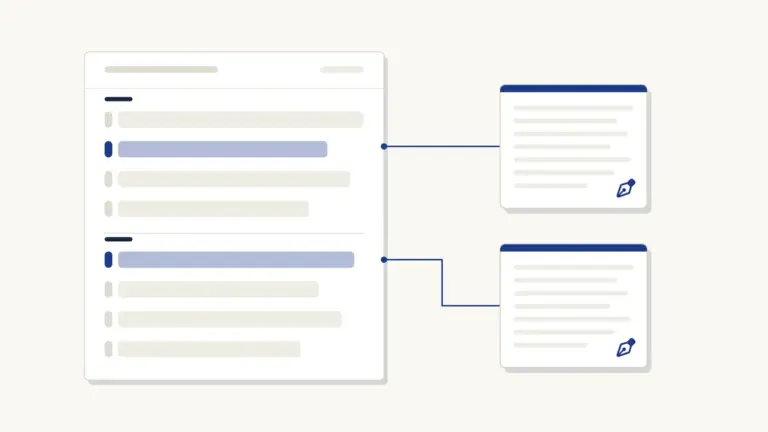
Real answer evaluation means your mentor reads your answer, identifies structural problems, content gaps, and presentation issues, and gives you specific, written feedback you can act on. Not "good attempt, keep practicing." That is useless.
If you want to see what strong answer writing looks like in practice, study model answers critically. Notice the structure, not just the content.
Strategy Calibration
Your strategy at Month 1 should not be your strategy at Month 6. A good mentor recalibrates based on data: your mock scores, your answer quality trends, your completion rates. If you are scoring 90+ in GS-I but struggling at 60 in GS-II, your time allocation needs to shift. Obvious? Yes. But I have watched students keep "following the plan" for months without adjusting.
Subject Gap Mapping
Before any reading starts, a mentor should audit where you stand across all four GS papers, your optional, and essay. I use a simple 1-5 rating system for each sub-topic. This initial map drives everything: what you read first, what you can afford to skim, what needs deep work.
Emotional Support During Plateaus
This is the part nobody talks about. Around Month 5-6 of preparation, most aspirants hit a wall. Scores plateau. Motivation drops. The internal narrative becomes "maybe I am not cut out for this." A mentor who has seen this pattern 200 times can normalize it, help you push through, and prevent the spiral that leads to quitting or panic-switching strategies.
Pre-Mains Intensive Planning
The 90 days before Mains are the highest-leverage period. A mentor helps you prioritize ruthlessly: which topics to revise, which to write practice answers on, which to let go. This triage is impossible to do alone because you are too close to your own preparation to see clearly.
Common student mistake: Treating mentorship as a passive experience. Students who show up to sessions without having written answers that week or without specific questions waste 80% of the value. Mentorship is a two-way commitment.
The Typical Mentorship Cycle
Here is what a structured mentorship engagement looks like over 10-12 months:
Phase 1: Initial Assessment (Week 1-2) Subject audit across all papers. Background analysis. Available hours calculation. Goal setting for the cycle.
Phase 2: Subject Gap Mapping (Week 3-4) Detailed mapping of strong, moderate, and weak areas. Source selection (maximum 2-3 per subject). Priority sequencing.
Phase 3: Weekly Answer Review (Ongoing) 3-5 answers per week reviewed with written feedback. Focus rotates across GS papers based on the preparation calendar. This is where the real improvement happens, answer by answer.
Phase 4: Monthly Strategy Review Score trend analysis. Time allocation adjustments. Source addition or dropping. Milestone tracking against the annual plan. This connects directly to building a personalized study plan that evolves with your performance.
Phase 5: Pre-Mains Intensive (Final 90 Days) Daily answer writing. Rapid revision scheduling. Paper-wise priority triage. Mock test analysis. This phase is intense and mentor involvement peaks here.
When Mentorship Helps Most
Not everyone needs a mentor at every stage. Here are the three profiles where mentorship delivers the highest return:
After a first attempt failure. You have the content. You know the exam format. What you lack is an honest diagnosis of why you fell short. A mentor can identify patterns in your failed attempt that you cannot see yourself: weak answer structures, poor time management in the exam hall, imbalanced preparation.
Career changers with limited time. Engineers, doctors, lawyers entering UPSC preparation need brutal prioritization. They cannot afford the "read everything" approach. A mentor builds a realistic time-budget framework around their actual availability.
Optional selection confusion. I have seen students waste 3-4 months on an optional that does not suit their aptitude. A mentor who has seen scoring patterns across multiple optionals can save you from this expensive mistake. If you are considering PSIR, for instance, understanding the syllabus weightage patterns before committing is non-negotiable.
Common student mistake: Seeking mentorship only in the last 2 months before Mains. By then, structural gaps in preparation cannot be fixed. Mentorship works best when started at least 8-10 months before the exam.
Red Flags in Bad Mentorship
Not all mentorship is good mentorship. Watch out for these:
One-size-fits-all plans. If your mentor gives the same study plan to a humanities graduate and an engineer, run. The whole point of mentorship is personalization.
No answer evaluation. If sessions are just "how is your preparation going?" conversations without actual answer review, you are paying for a motivational coach, not a mentor.
Motivation speeches instead of actionable feedback. "Believe in yourself, you can do it" is not mentorship. "Your second paragraph lacks analytical depth, here is how to fix it" is mentorship.
Outsourced to juniors. Some programs advertise "faculty mentorship" but the actual sessions are conducted by recent graduates with zero teaching experience. Verify who actually conducts your sessions.
No tracking system. If there is no record of your progress over weeks and months, the mentor is winging it. Good mentorship is data-driven.
How We Approach It at Anantam
At Anantam IAS, our mentorship model is built on three non-negotiables. Faculty-led sessions, meaning you work directly with experienced teachers, not assistants. Capped batches, because a mentor handling 100 students is not doing mentorship. And real answer writing feedback, not checkmarks and generic comments, but paragraph-level critique that tells you exactly what to change.
We see mentorship as inseparable from answer writing practice and ethics case study training. These are not separate products. They are parts of a single system designed to close the gap between "I know this topic" and "I can write a 250-word answer that scores."
Common student mistake: Evaluating mentorship programs based on the mentor's own UPSC rank rather than their teaching and mentoring experience. A top-50 ranker who has never mentored anyone may give worse guidance than a faculty member who has guided 200+ students through the process.
Frequently Asked Questions
How often should mentorship sessions happen?
Weekly is ideal during active preparation. Biweekly works during the foundation phase when you are primarily reading and note-making. During the pre-Mains intensive, some students benefit from 2-3 short check-ins per week.
Can online mentorship be as effective as in-person?
Yes, provided the mentor reviews your handwritten answers (scanned copies work) and sessions include screen-sharing for strategy discussions. I have mentored students across India and abroad with strong results. The format matters less than the consistency and quality of feedback.
What should I prepare before each mentorship session?
Bring 3-5 written answers for review. Have a list of specific questions or doubts. Share your weekly study log if your mentor tracks hours. The more prepared you come, the more value you extract.
How do I know if my mentor is actually helping?
Track two things: are your answer scores improving over 6-8 weeks? And are you getting specific, actionable feedback (not just "good" or "needs improvement")? If both answers are no after 2 months, re-evaluate.
Is mentorship worth the cost for first-time aspirants?
For first-timers with no coaching background, structured coaching plus self-study often works better initially. Mentorship delivers the highest ROI for second-attempt aspirants or those with specific weaknesses they cannot diagnose themselves.
Can a mentor help with optional subject selection?
Absolutely. This is one of the highest-value interventions. A good mentor assesses your academic background, writing style, interest areas, and scoring trends across optionals to recommend the right fit. This single decision can swing your final score by 50-80 marks.
How is mentorship different from a test series with discussion?
A test series gives you a score and a rank. Discussion sessions explain model answers. Neither tells you why your specific answer scored low or how your specific preparation strategy needs to change. Mentorship addresses the individual, not the batch.
Should I continue mentorship during the interview stage?
Yes. Interview preparation is inherently personal. Your DAF, your career choices, your opinion formation all need individualized guidance. Group mock interviews help, but 1-on-1 sessions for DAF analysis and personality refinement are where mentorship shines.
Tell Google you want more of this.
Add Anantam IAS as a preferred sourceOne tap, and this site shows up more often in your own Top Stories, AI Overviews and AI Mode. Remove it any time.