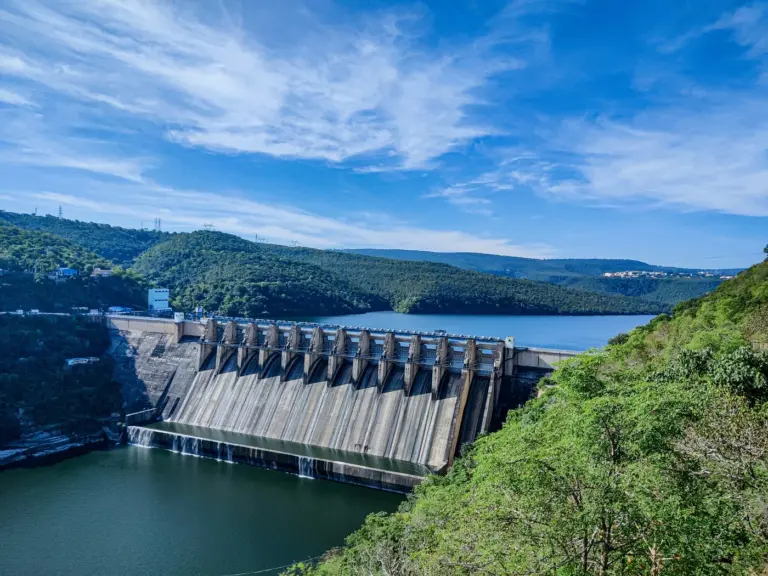

The 107th national park in India is widely cited as Raimona National Park in Assam, notified on 9 June 2021, together with Dehing Patkai National Park (often counted as the 106th). These notifications raised Assam's tally to seven national parks and were pivotal additions to India's protected area network in the Eastern Himalaya biodiversity hotspot. The "107th" label reflects the running tally at the time of notification; as of 2026 India has 107 national parks — the most recent being Similipal (Odisha), notified as the 107th in April 2025 — together covering about 45,248 sq km (roughly 1.4% of India's geographical area). Understanding Raimona and its context is important for UPSC Environment and Ecology preparation. This guide covers the 107th national park, related parks, the legal framework, and broader significance.
Raimona National Park: The 107th National Park
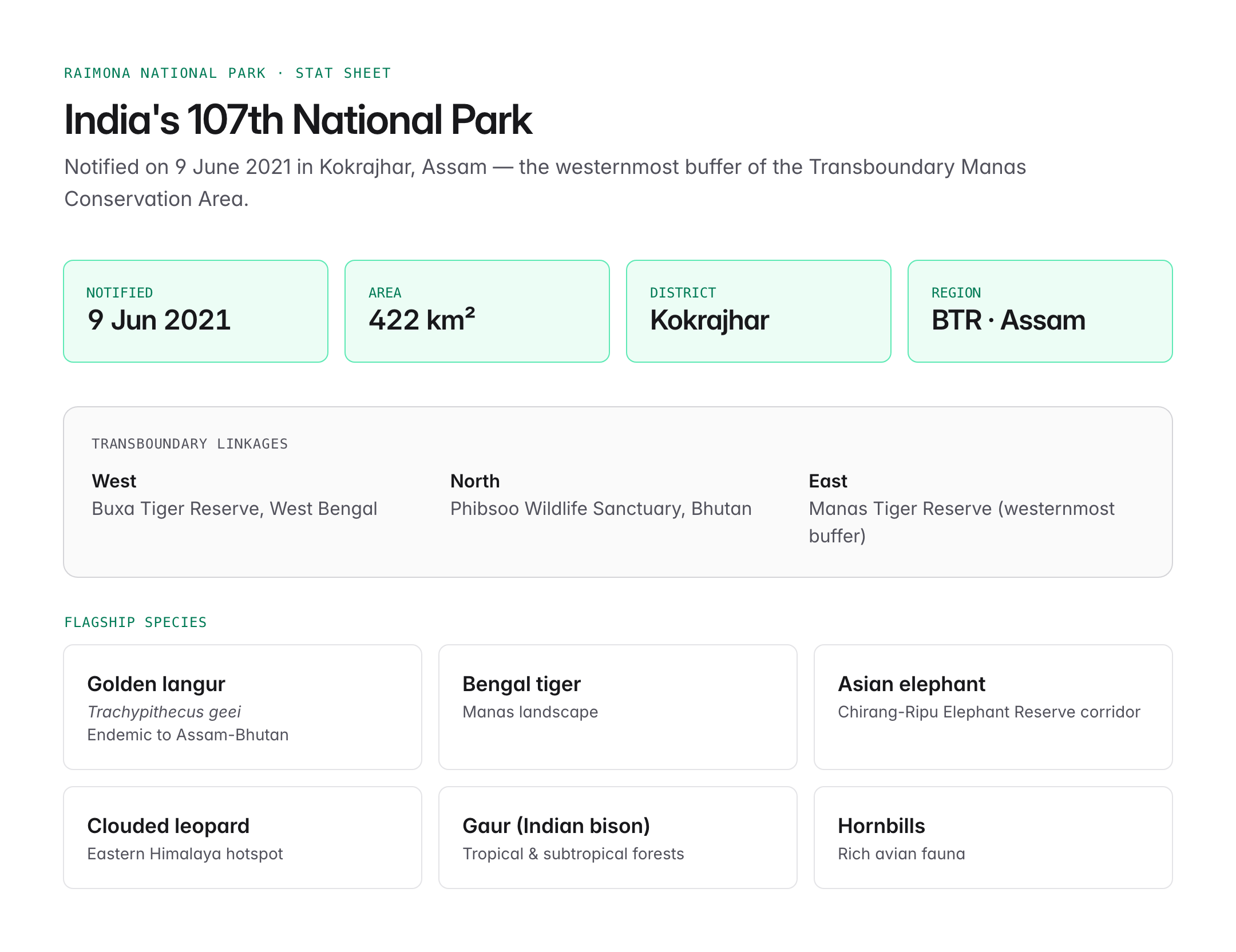
Raimona National Park is located in the Kokrajhar district of Assam, in the extreme western part of the state adjoining Bhutan and West Bengal.
- Notified: 9 June 2021 (World Environment Day announcement on 5 June 2021 by the Assam government).
- Area: about 422 sq km.
- Location: Bodoland Territorial Region (BTR), Kokrajhar district, in the Himalayan foothills.
- Landscape: Forms the westernmost buffer of Manas Tiger Reserve and adjoins Phibsoo Wildlife Sanctuary (Bhutan) and Buxa Tiger Reserve (West Bengal).
Raimona is part of a larger Transboundary Manas Conservation Area, making it critical for elephant, tiger, and golden langur conservation.
Why Raimona Matters Ecologically
Raimona lies in the Eastern Himalaya biodiversity hotspot and protects a mosaic of tropical and subtropical forests.
Key species found in Raimona:
- Golden langur (Trachypithecus geei), endemic to Assam-Bhutan
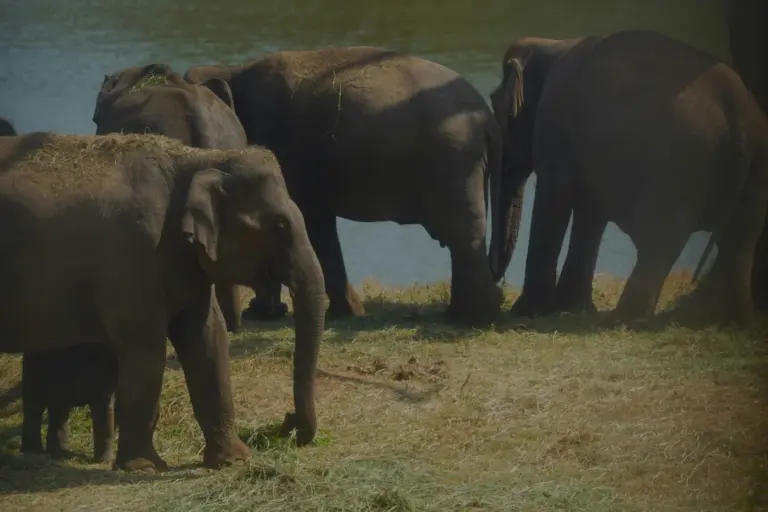
- Asian elephant
- Gaur (Indian bison)
- Bengal tiger
- Clouded leopard
- Hornbills and a rich bird fauna
The park supports the golden langur in particular, with Raimona and surrounding Chirang-Ripu Elephant Reserve forests recognised as globally significant habitat.
Dehing Patkai: The Related Notification
Closely linked in public discussion is Dehing Patkai National Park, often counted as the 106th national park.
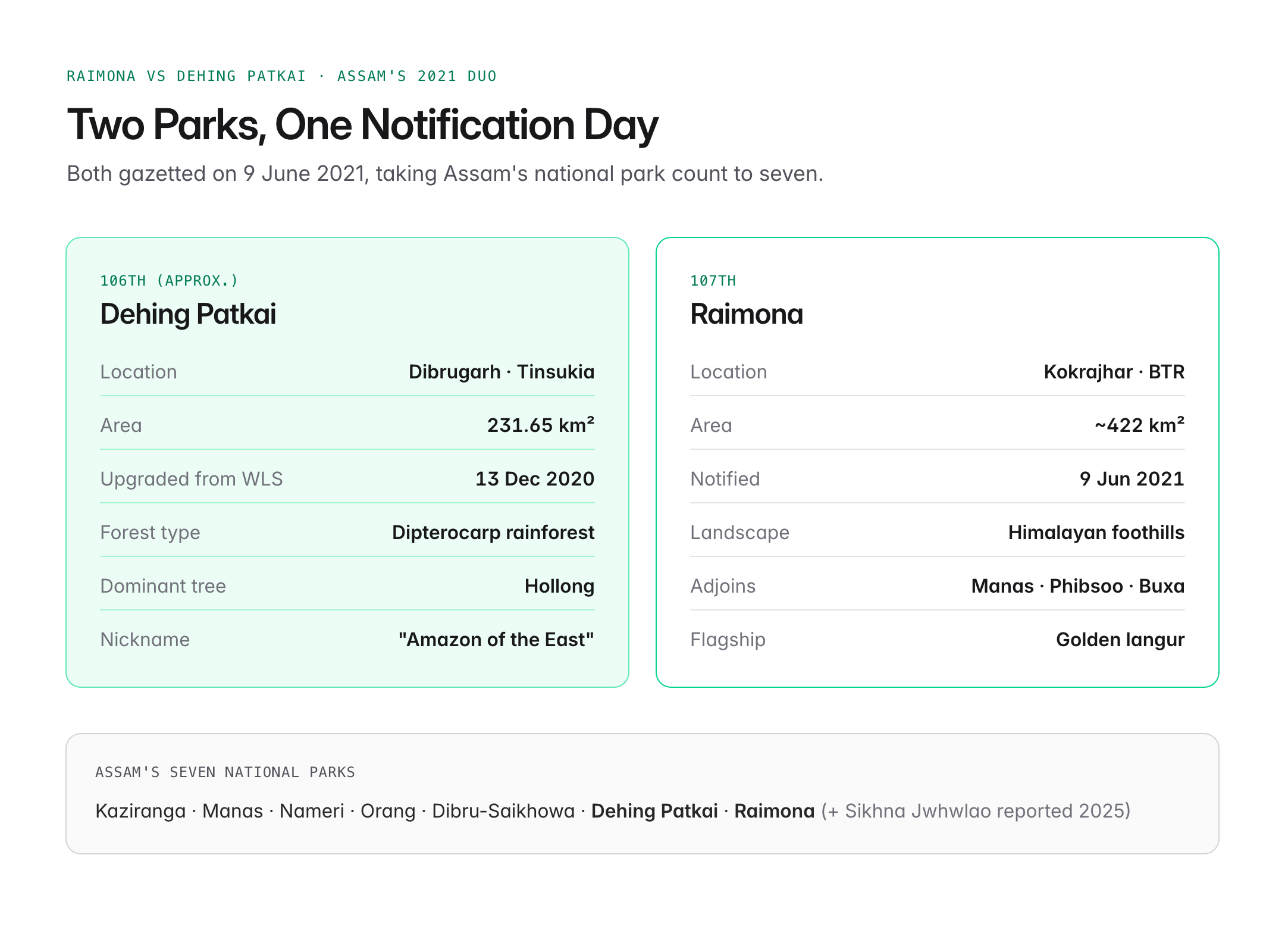
- Upgraded from wildlife sanctuary on 13 December 2020; notified on 9 June 2021.
- Area: around 231.65 sq km.
- Location: Dibrugarh and Tinsukia districts, Assam.
- Known as the "Amazon of the East" for its dense dipterocarp rainforests.
- Dominant tree: Hollong (Dipterocarpus macrocarpus), Assam's state tree.
Dehing Patkai hosts clouded leopards, hoolock gibbons (India's only ape), and the globally threatened white-winged wood duck, Assam's state bird.
Timeline of Recent Notifications
| Park | State | Notified | Approx. Area |
|---|---|---|---|
| Dehing Patkai | Assam | 9 June 2021 | 231.65 sq km |
| Raimona | Assam | 9 June 2021 | 422 sq km |
| Later additions | Various | Post-2022 | – |
The consolidated official list maintained by the Wildlife Institute of India totals 107 national parks (Similipal added April 2025) covering roughly 1.4% of the country's geographical area (about 44,402.95 sq km).
Legal Framework: Wildlife (Protection) Act, 1972
India's national parks are notified under the Wildlife (Protection) Act, 1972 (WLPA).
- Section 35 of the Act provides for declaration of national parks.
- National parks are more strictly protected than wildlife sanctuaries — grazing, forestry operations, and human habitation are generally not permitted.
- Boundary alteration requires a resolution of the State Legislature.
- The Act also enables creation of wildlife sanctuaries (Section 26A), conservation reserves, community reserves, and tiger reserves.
The Ministry of Environment, Forest and Climate Change (MoEFCC) maintains the official list, while the National Board for Wildlife (NBWL), chaired by the Prime Minister, advises on protected areas.
India's Protected Area Network
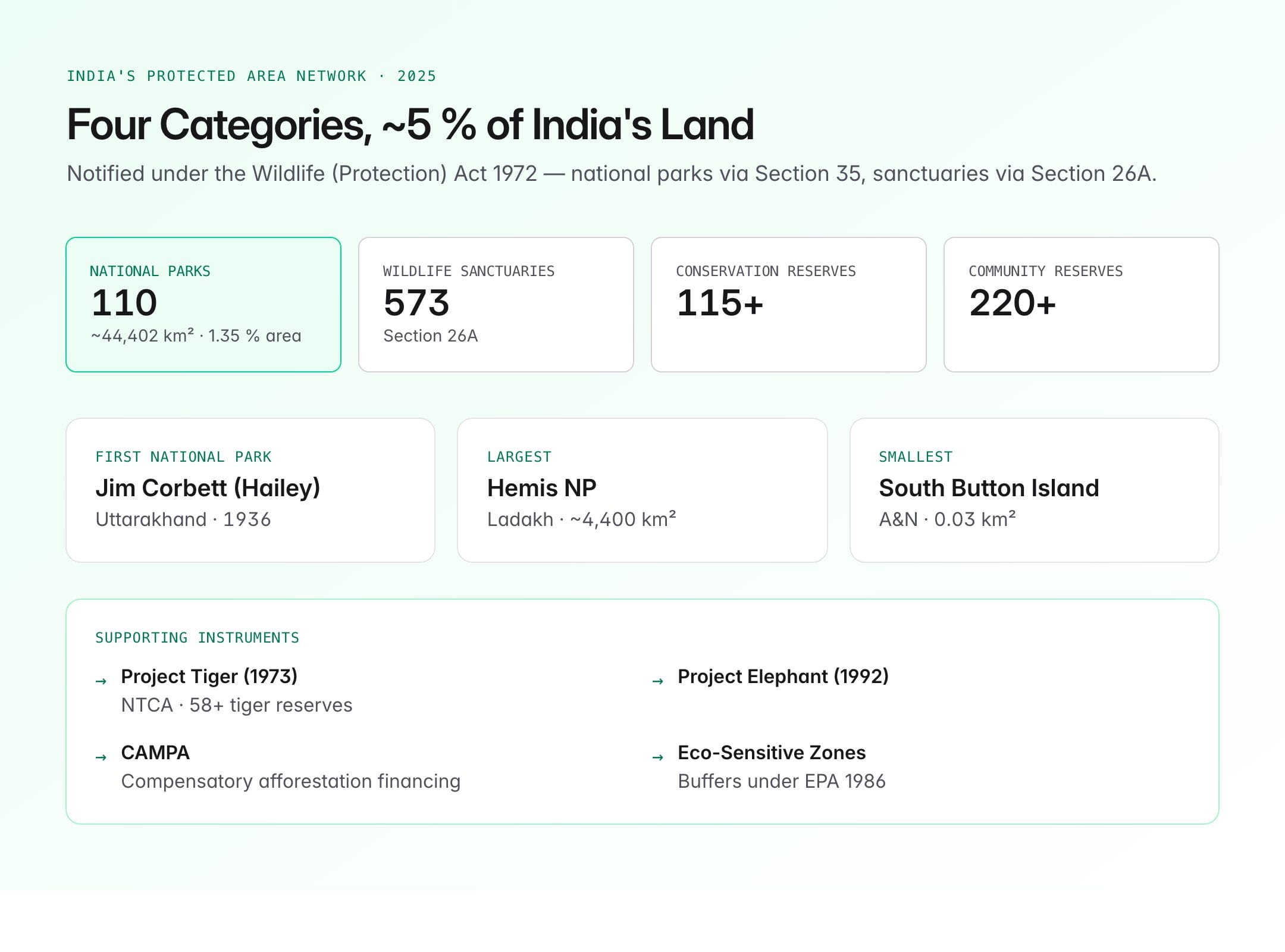
India's Protected Area (PA) network comprises four categories under WLPA 1972.
| Category | Approximate Number |
|---|---|
| National Parks | 106 |
| Wildlife Sanctuaries | 573 |
| Conservation Reserves | 115+ |
| Community Reserves | 220+ |
Together, these cover approximately 5% of India's land area. Of these, Tiger Reserves (58+) are notified under Project Tiger through the National Tiger Conservation Authority (NTCA).
First and Largest National Parks
- First national park in India: Jim Corbett (Hailey) National Park, established in 1936 in Uttarakhand.
- Largest national park by area: Hemis National Park, Ladakh (~4,400 sq km), famous for snow leopards.
- Smallest: South Button Island National Park, Andaman & Nicobar Islands (0.03 sq km).
- Newest additions (beyond Raimona/Dehing Patkai) include parks notified by Chhattisgarh, Maharashtra, and Assam in 2024–25.
Significance of Assam's Expanding Park Network
With Raimona and Dehing Patkai, Assam now has seven national parks: Kaziranga, Manas, Nameri, Orang, Dibru-Saikhowa, Raimona, and Dehing Patkai (plus Sikhna Jwhwlao as a recent addition reported in 2025).
- Strengthens elephant corridors linking Bhutan, Assam, and West Bengal.
- Enhances golden langur conservation.
- Supports the Manas Transboundary Conservation Area shared with Bhutan's Royal Manas National Park.
- Delivers eco-tourism and livelihoods in the Bodoland Territorial Region.
Threats and Challenges
Despite notification, these parks face pressures typical of protected areas in India.
- Encroachment and illegal logging in buffer areas.
- Coal mining conflicts near Dehing Patkai drew national attention in 2020.
- Human-elephant conflict along park fringes.
- Climate change affecting rainfall patterns and riverine habitats.
- Inadequate staffing and funding relative to PA size.
Policy Instruments Supporting National Parks
- Project Tiger (1973) and Project Elephant (1992) — umbrella species-focused schemes.
- Compensatory Afforestation Fund (CAMPA) — forest restoration financing.
- Biological Diversity Act, 2002 — complements the WLPA.
- Eco-Sensitive Zones (ESZs) — buffers around protected areas regulated under the Environment (Protection) Act, 1986.
- Forest (Conservation) Act, 1980 — governs diversion of forest land.
UPSC Relevance
Prelims focus:
- Raimona National Park – Kokrajhar, Assam; notified 9 June 2021; ~422 sq km.
- Dehing Patkai – Dibrugarh/Tinsukia, Assam; upgraded 13 December 2020; notified 9 June 2021.
- Wildlife Protection Act, 1972 – Section 35 for national parks.
- First national park: Jim Corbett (1936).
- Total national parks: 106 as of the latest official WII list.
- Golden langur, hoolock gibbon, white-winged wood duck – key species.
Mains GS angle (GS Paper III – Environment):
- Adequacy of India's Protected Area Network for biodiversity conservation.
- Transboundary conservation and the Manas–Raimona–Phibsoo landscape.
- Coal mining vs conservation — the Dehing Patkai controversy.
- Role of Bodoland Territorial Region in conservation governance.
Sample PYQ angle: UPSC has asked about wildlife sanctuaries, Project Tiger, and the Wildlife Protection Act. Expect direct MCQs on Raimona location, Dehing Patkai tree species, or classification under the WLPA.
Tell Google you want more of this.
Add Anantam IAS as a preferred sourceOne tap, and this site shows up more often in your own Top Stories, AI Overviews and AI Mode. Remove it any time.