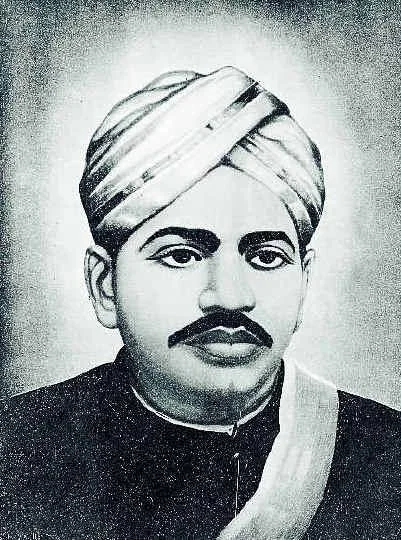
Birsa Munda (1875–1900) was a tribal leader from the Chhotanagpur Plateau (present-day Jharkhand) who led the Ulgulan (Great Tumult) — an armed rebellion against the British colonial administration, zamindars, and Christian missionaries in 1899–1900. He combined religious reform with political rebellion and is revered among tribal communities as "Dharti Aba" (Father of the Earth).
For UPSC, Birsa Munda is central to the Tribal Movements chapter in Modern History (GS1). His movement illustrates the intersection of land alienation, cultural displacement, and resistance — themes that connect colonial history to contemporary tribal rights debates.
Background: The Munda Tribe and Colonial Disruption
The Mundas and the Khuntkatti System
The Mundas are one of the oldest tribal communities of the Chhotanagpur Plateau (present-day Jharkhand, parts of Odisha and West Bengal). Their traditional land tenure system was called khuntkatti — communal land ownership where the original clearing family and their descendants held collective rights over the land.
Under the khuntkatti system:
- Land belonged to the community, not individuals
- Village headmen (mundas) managed land distribution
- No landlord or revenue intermediary existed between the cultivator and the land
Colonial Disruption
The British introduced three changes that destroyed the khuntkatti system:
1. Zamindari settlement: The British imposed zamindari landlordism on tribal areas. Outside landlords (called dikus — a Mundari word meaning "outsiders") were given revenue-collection rights over tribal lands. Tribals became tenants on their own ancestral land.
2. Money-lending and land alienation: Hindu and Muslim moneylenders moved into tribal areas. Tribals, unfamiliar with written contracts and interest calculations, were trapped in debt bondage. When they couldn't repay, moneylenders seized their land — often through fraudulent means.
3. Forced labour (beth begari): Tribals were compelled to provide free labour to zamindars, contractors, and government officials — a form of bonded servitude that violated their traditional autonomy.
4. Christian missions: German Lutheran and Anglican missionaries established a significant presence in Chhotanagpur from the mid-19th century. Many Mundas converted to Christianity for social uplift and protection from Hindu/Muslim exploitation. But missionaries also imposed new cultural norms and created divisions within tribal communities.
Early Life
Birsa was born on November 15, 1875 in Ulihatu village, Khunti district (now in Jharkhand). He belonged to the Munda tribe.
Education: He attended a German mission school and was baptised as "Birsa David." But he grew disillusioned with Christianity — missionaries discouraged traditional Munda practices and did little to address land alienation.
He left the mission and came under the influence of a Vaishnava leader. He also drew from traditional Munda religious beliefs, animist practices, and the Sardar movement — an earlier Munda protest movement against land alienation (1858–1895).
Religious Reform: The Birsait Movement
Before launching the political uprising, Birsa initiated a religious reform movement in the 1890s:
- He proclaimed himself a prophet and healer — his followers called him "Bhagwan" (God) Birsa Munda
- He preached a new faith called Birsait — a synthesis of Munda animism, Vaishnavism, and anti-colonial ideology
- He rejected both Hinduism (which placed tribals at the bottom of the caste hierarchy) and Christianity (which was linked to colonial power)
- He advocated for return to the original Munda way of life — worship of Singbonga (the supreme deity of Munda tradition)
- He preached against animal sacrifice, witchcraft, and alcohol consumption
The religious movement served a political purpose: it unified the Mundas across villages and gave them a shared identity and sense of purpose before the armed rebellion began.
Ulgulan: The Great Tumult (1899–1900)
Goals
The Ulgulan had explicit political objectives:
- Expulsion of dikus — outsiders (zamindars, moneylenders, British officials) who had seized tribal land
- Restoration of the khuntkatti system — communal land ownership
- End of forced labour (beth begari)
- Establishment of Munda Raj — self-governance
The Rebellion
On December 24, 1899 (Christmas Eve — symbolically chosen), Birsa declared the Ulgulan. His followers attacked:
- Police stations and government outposts
- Churches and mission properties
- Landlords and moneylenders
The movement involved several thousand armed Mundas using traditional weapons — bows and arrows, axes, swords. They were not equipped for sustained warfare against the British military, but they achieved significant disruption across the Chhotanagpur region.
Key confrontation: On January 9, 1900, a major encounter took place at Dombari Hill (also called Sail Rakab). British forces opened fire on a gathering of Birsa's followers, killing many. This was the movement's military turning point.
British Response
The British deployed significant military and police forces to suppress the rebellion. They arrested hundreds of participants, burned villages suspected of harbouring rebels, and imposed collective fines.
Arrest and Death
Birsa was captured on March 3, 1900 in the Jamkopai forest (betrayed by an informer, according to tribal oral tradition). He was imprisoned in Ranchi Jail.
He died in custody on June 9, 1900 — officially of cholera, though his followers and subsequent historians have questioned whether this was natural or the result of poisoning/neglect. He was only 25 years old.
Impact and Consequences
The Chhotanagpur Tenancy Act (1908)
The most direct legislative consequence of the Ulgulan was the Chhotanagpur Tenancy Act, 1908:
- Prohibited the transfer of tribal land to non-tribals
- Recognised the khuntkatti system as a legitimate form of tenure
- Restricted the ability of moneylenders and zamindars to seize tribal land
This was a landmark — for the first time, the colonial administration acknowledged that tribal land alienation was a problem requiring legal protection. The Act’s principles influenced later tribal land protection legislation, including provisions in the Indian Constitution.
Fifth and Sixth Schedules
The constitutional protections for tribal areas — the Fifth Schedule (tribal areas in nine states) and Sixth Schedule (autonomous councils in northeastern states) — reflect the colonial-era recognition, partly forced by movements like the Ulgulan, that tribal communities needed specific legal protections against land alienation and exploitation.
Legacy
| Recognition | Details |
|---|---|
| Janjatiya Gaurav Divas | November 15 (Birsa's birthday) declared as Tribal Pride Day by the Government of India (2021) |
| Birsa Munda Airport | Ranchi airport named after him |
| Birsa Munda Tribal University | Established in Jharkhand |
| Parliament portrait | His portrait was installed in the Central Hall of Parliament |
| Jharkhand formation | Birsa Munda's legacy was a driving force behind the demand for a separate Jharkhand state (formed 2000) |
Historical Significance for UPSC
Birsa Munda's movement illustrates several themes that UPSC tests repeatedly:
Tribal agency: Tribal movements were not passive reactions but organised, ideologically motivated resistance with clear political goals.
Land as the central issue: Almost every tribal movement in colonial India — from the Santhal Rebellion (1855–56) to the Ulgulan — was fundamentally about land alienation. This remains relevant today (Forest Rights Act 2006, mining vs. tribal rights debates).
Religious reform as political mobilisation: Birsa combined religious revivalism with political rebellion — a pattern seen in many anti-colonial movements worldwide.
Women's participation: Munda women participated in the Ulgulan, though this aspect is less documented than in some other movements.
Comparison with Other Tribal Movements
| Movement | Year | Region | Leader | Key Issue |
|---|---|---|---|---|
| Santhal Rebellion | 1855–56 | Bihar/Jharkhand | Sidhu & Kanhu | Land alienation, dikus exploitation |
| Kol Uprising | 1831–32 | Chhotanagpur | Buddhu Bhagat | Land and revenue demands |
| Munda Ulgulan | 1899–1900 | Chhotanagpur | Birsa Munda | Land, self-governance, religious reform |
| Rampa Rebellion | 1922–24 | Andhra | Alluri Sitarama Raju | Forest rights, forced labour |
| Tana Bhagat Movement | 1914 onwards | Chhotanagpur | Jatra Oraon | Religious reform, land rights |
Key Prelims Facts
- Born: November 15, 1875, Ulihatu, Khunti
- Died: June 9, 1900, Ranchi Jail
- Tribe: Munda
- Movement: Ulgulan (Great Tumult), 1899–1900
- Key demand: Restoration of khuntkatti system, expulsion of dikus
- Legislative impact: Chhotanagpur Tenancy Act, 1908
- November 15: Janjatiya Gaurav Divas
Tell Google you want more of this.
Add Anantam IAS as a preferred sourceOne tap, and this site shows up more often in your own Top Stories, AI Overviews and AI Mode. Remove it any time.