Why in News?
On 18 September 2026, the Union Agriculture Minister called for preparation and notification of tenant-farmer SOPs in southern states while directing closer integration of land records and the Farmer Registry.
- The direction explicitly covers sharecroppers and agricultural tenants, placing their recognition within the ongoing Farmer ID and AgriStack implementation agenda.
- States were asked to expedite land-parcel linkages and coordinate land-record data with the Farmer Registry.
- The release calls for preparing and notifying SOPs; it does not establish that those procedures are already notified or that all tenants are registered.
- An owner-based record can identify one person while another cultivates the parcel, creating an inclusion problem that digitization alone cannot solve.
- The new policy question is how states verify tenant cultivation, rather than how many Farmer IDs they generate.
UPSC Relevance
Prelims Relevance
- AgriStack, Farmer ID and the Farmer Registry.
- Land ownership versus actual cultivation.
- Tenant farmers and sharecropping arrangements.
- Georeferencing and parcel identification.
- SOP preparation, notification and implementation as distinct stages.
Mains Relevance
GS Paper 2
- Administrative inclusion, digital governance and grievance redress.
- Centre–state implementation of farmer identification systems.
GS Paper 3
- Tenant cultivation and access to agricultural support.
- Land-record integration and the limits of registry-based targeting.
Essay
- Making people visible in data requires more than making records digital.
Background and Context
The new instruction concerns tenant recognition
The immediate development is a request for state procedures, not a completed national system of tenant recognition or an automatic entitlement to agricultural assistance.
- The official direction links two tasks: connecting land records with the Farmer Registry and preparing tenant-farmer SOPs. These tasks are related, but successful parcel linkage does not itself establish who currently cultivates that parcel.
- A Standard Operating Procedure can specify evidence, responsible officials and processing steps. The announcement asks states to prepare and notify such procedures; the release does not publish a uniform final verification checklist for tenants.
- The inclusion of sharecroppers matters because farming arrangements need not involve the cultivator owning the land. The procedure must address the relationship between a person and cultivation, rather than merely reproduce an ownership entry.
- Registration and scheme eligibility are separate administrative questions. Identifying a tenant in a registry does not by itself establish entitlement to every agricultural benefit; applicable programme rules and implementation decisions still require examination.
- The release describes work states must undertake, not verified universal coverage. A sound assessment should track notified procedures and their operation before claiming that tenant exclusion has ended or that benefits have actually reached cultivators.
Ownership data and cultivation evidence answer different questions
Land records help locate and connect parcels; recognizing tenants requires a separate assessment of the person cultivating them and the arrangement under which cultivation occurs.
- Ownership concerns rights recorded in relation to land; cultivation concerns who operates it. These can coincide, but an owner and tenant may be different people, so an ownership match cannot always identify the active farmer.
- Sharecropping generally involves cultivation in return for an agreed share of produce. Administrative identification must distinguish this arrangement from ownership, while avoiding the assumption that every person associated with a parcel performs the same role.
- Georeferencing connects a map to geographical coordinates. It can help establish which parcel a record refers to, but it cannot independently prove a tenancy arrangement or identify the current cultivator merely from the parcel’s location.
- The earlier DILRMP land-stack discussion concerns land-information integration. The present issue adds a distinct administrative question: how to represent cultivators whose names are not necessarily the ownership names linked to those parcels.
- The broader smallholder-farming discussion highlights access barriers. Here, the new implementation test is narrower: whether forthcoming state SOPs offer a workable way to establish tenant cultivation when an ownership-only match cannot do so.
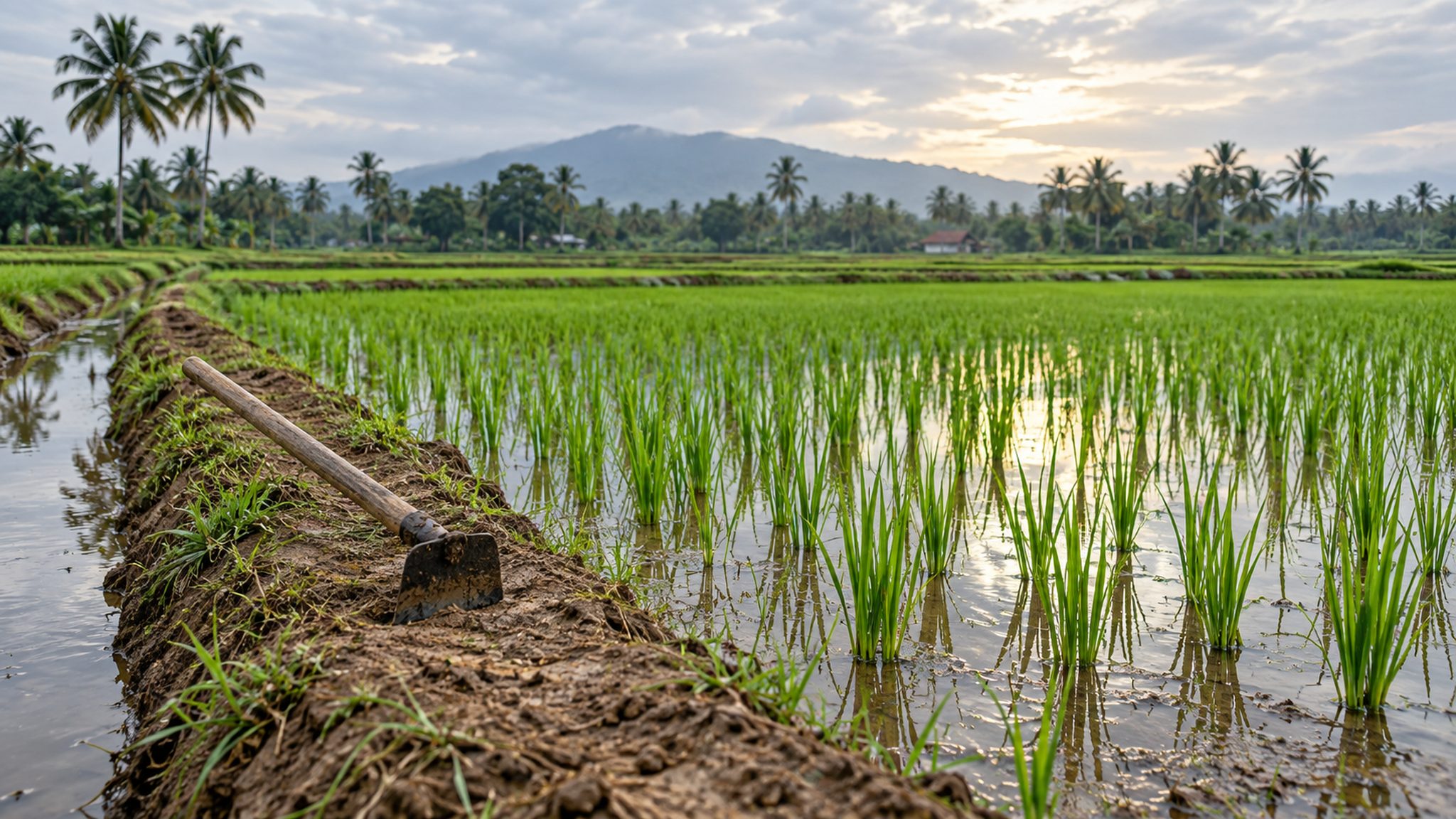
What a workable procedure should protect
The following are policy-design recommendations, not safeguards already enacted by this announcement; their value lies in making verification accurate without turning missing records into automatic exclusion.
- A clear evidence standard should explain which documents or verification methods establish cultivation. Where formal documentation is unavailable, states should examine lawful alternatives instead of silently treating absence from ownership records as proof of ineligibility.
- Role separation should distinguish owner, tenant and cultivator entries and explain what each entry means. Recognizing a person for an administrative purpose should not be presented as automatically settling land title or a tenancy dispute.
- Correction and appeal should address wrong parcel links, rejected applications and conflicting claims. Applicants need reasons they can understand and a route to human review, rather than an unexplained digital mismatch becoming the final administrative answer.
- Purpose-limited data access should govern how identity and cultivation details are shared. Clear notice, appropriate consent where required and access controls can reduce misuse without assuming that all linked information belongs in a publicly searchable record.
- Seasonal updating should reflect that cultivation arrangements may change. An old verified tenant entry should not silently become permanent evidence for later seasons; a practical update process needs to preserve accuracy without repeated avoidable burdens.
Way Forward
Measure inclusion after notification
- Publish state SOPs with plain-language evidence requirements, official responsibilities and accessible application routes.
- Track rejections and corrections, not only Farmer ID totals, to identify whether tenant applicants are being excluded by ownership-based matching.
- Provide assisted verification and human review so poor connectivity or documentation gaps do not become unexamined administrative barriers.
Conclusion
- The tenant-SOP direction recognizes an important limit of land-record integration: an accurately digitized ownership entry may still fail to identify the person cultivating the field and seeking agricultural support.
- For an answer on inclusive digital governance, separate the announcement from notified implementation, and distinguish parcel identification from cultivation evidence. Judge progress by workable verification and correction procedures, not registrations alone.
UPSC Practice Questions
Prelims MCQ 1
With reference to land records and farmer identification, consider the following statements:
- A landowner and the current cultivator of a parcel may be different persons.
- Georeferencing a village map independently establishes every tenancy arrangement within that village.
- A direction to prepare and notify SOPs does not establish that the SOPs have already been notified.
How many of the above statements are correct?
(a) Only one (b) Only two (c) All three (d) None
Answer: (b) Only two
Explanation:
Statements 1 and 3 are correct. Georeferencing connects maps to geographical coordinates; it does not by itself identify or prove tenancy arrangements.
Prelims MCQ 2
Which approach best addresses tenant inclusion when integrating land records with a Farmer Registry?
(a) Treating the recorded owner as the only possible cultivator. (b) Assuming every registered person qualifies for every agricultural scheme. (c) Verifying cultivation through specified procedures while distinguishing it from ownership. (d) Treating a parcel’s coordinates as conclusive evidence of the cultivator’s identity.
Answer: (c) Verifying cultivation through specified procedures while distinguishing it from ownership.
Explanation:
Tenant inclusion requires evidence about the cultivator’s relationship with the land. Ownership records and coordinates alone do not establish that relationship; programme eligibility remains a separate question.
UPSC Mains Questions
- Why can integrating land records with a Farmer Registry fail to identify actual cultivators? Discuss with reference to tenant farmers and sharecroppers.
- Examine the administrative safeguards needed to make tenant-farmer identification accurate, accessible and open to correction.
Source: PIB, Ministry of Agriculture and Farmers Welfare.
Frequently Asked Questions
What did the September direction announce for tenants?
It called for preparation and notification of SOPs covering tenant farmers, including sharecroppers and agricultural tenants. The release does not establish that these procedures are already notified or that tenant registration is complete.
Why are land records insufficient for identifying every farmer?
Land records help identify recorded rights and link parcels, but the owner may differ from the cultivator. Recognizing tenant farmers needs evidence about cultivation and the arrangement connecting the farmer to the land.
Does Farmer Registry inclusion guarantee agricultural benefits?
The announcement does not create an automatic entitlement to every agricultural benefit. Registry identification and programme eligibility are separate questions; access depends on applicable scheme rules and the implementation decisions governing those schemes.
What safeguards should tenant SOPs include?
Recommended safeguards include clear evidence standards, distinct owner and cultivator roles, reasoned rejection notices, correction and appeal routes, appropriate data-access controls and practical updating. These are policy recommendations, not protections already enacted by this release.
Tell Google you want more of this.
Add Anantam IAS as a preferred sourceOne tap, and this site shows up more often in your own Top Stories, AI Overviews and AI Mode. Remove it any time.