Why in News?
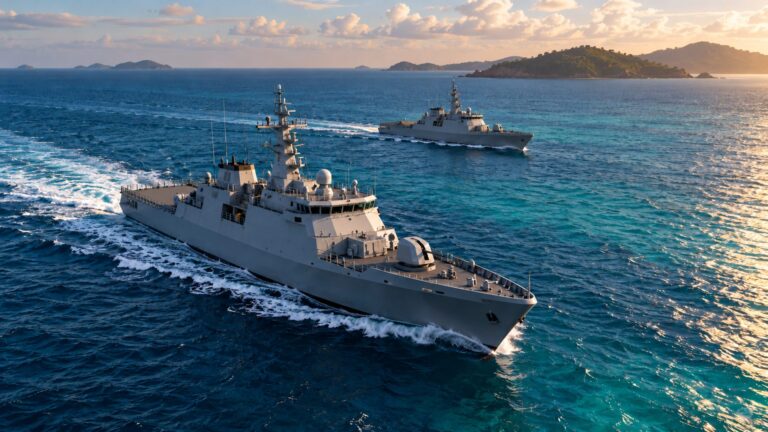
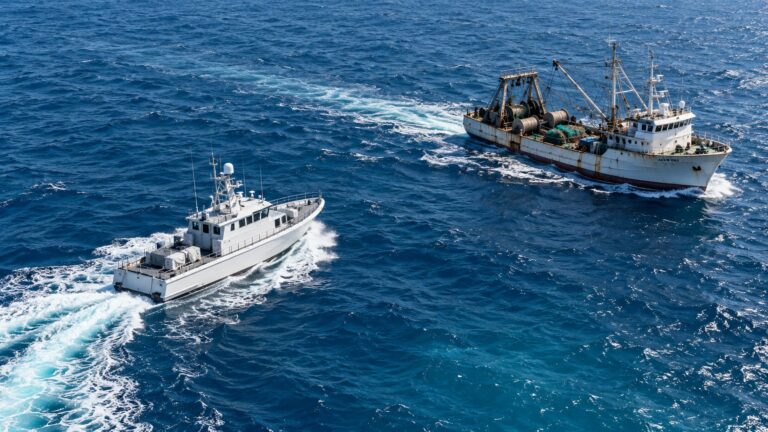
On 3 November 2026, the Defence Ministry reported that the Indian Navy rescued all twenty crew members of the hijacked fishing vessel Azini off Somalia.
- The operation lasted over forty-eight hours and ended without casualties or injuries, according to PIB.
- Surveillance and intervention involved a mission-deployed warship, maritime reconnaissance aircraft and Marine Commandos.
- Air Force support included a C-17 aircraft airdropping additional Marine Commandos for the operation.
- A captured fishing vessel can threaten other shipping if pirates use it as a mobile base for further attacks.
- Hostage rescue requires matching information, containment and intervention while protecting the crew aboard the same vessel.
UPSC Relevance
Prelims Relevance
- Somalia and the western Indian Ocean
- Mother-ship role in piracy
- Maritime reconnaissance and persistent tracking
- Naval intervention and Air Force transport support
Mains Relevance
GS Paper 3
- Maritime security and protection of seafarers
- Inter-service coordination in complex rescue operations
GS Paper 2
- Cooperative security and stability of maritime trade routes
Essay
- Security at sea connects the safety of individual workers with the continuity of international trade.
Background and Context
Why a Hijacked Fishing Vessel Threatens Other Shipping
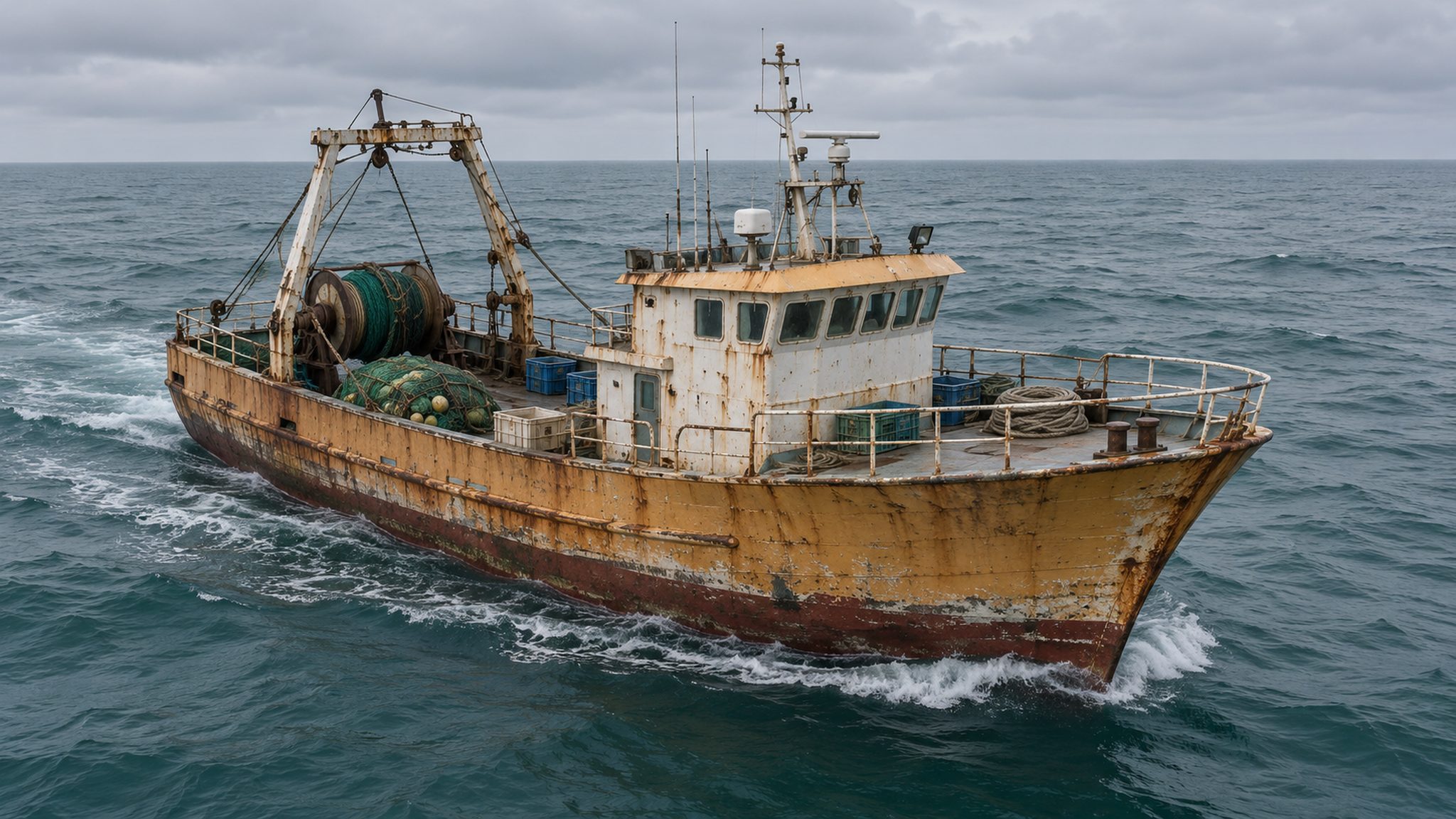
The significance of Azini extends beyond one captured vessel because pirates could have used it to support attacks elsewhere in the surrounding waters.
- Azini was reportedly hijacked off Somalia’s north-eastern coast in the preceding month. The release confirms its rescue but does not identify the crew’s nationality, the responding warship or the exact location of the final intervention.
- A mother ship functions as a supporting platform from which further pirate attacks may be launched. In this case, PIB described that use as a possibility, rather than confirming attacks already launched from Azini.
- The fishing vessel’s ordinary purpose does not determine its use after capture. Security assessment must consider who controls it and how it is moving, while recognising that its legitimate crew may remain trapped aboard.
- Seafarer safety and protection of merchant shipping are linked objectives. Freeing the crew removes an immediate threat to people, while denying pirates a supporting vessel can reduce opportunities for additional attacks against commercial traffic.
- The geographic reference is Somalia’s north-eastern coast. The report does not provide coordinates or specify the legal maritime zone; an answer should avoid assigning territorial waters or a particular jurisdiction to the operation without evidence.
Detection, Tracking and Intervention Have Different Jobs
A successful response requires more than finding a suspicious vessel: the force must maintain awareness of its movement and select a safe opportunity to intervene.
- Maritime reconnaissance supported the deployed warship in locating Azini through persistent surveillance. Locating a vessel establishes where it is observed; continued tracking helps the response force follow its movements as the operational situation changes.
- The warship and aircraft worked together to track the vessel. Their coordination connected information gathering with a platform able to intervene, illustrating why a surveillance observation alone does not complete a hostage-rescue mission at sea.
- Non-kinetic measures were used to contain movement and prevent escape, according to PIB. The release does not specify those measures, so particular communications, manoeuvres or electronic techniques should not be presented as confirmed operational details.
- Marine Commandos carried out the tactical intervention that secured the vessel and released the crew. The report establishes the outcome but supplies no basis for inventing weapons used, arrests made or a detailed sequence aboard.
- Crew protection remained central to judging the result: all twenty were rescued without reported casualties or injuries. An effective operation combines control of the threat with protection of people exposed to it on the same vessel.
Inter-Service Coordination Must Be Judged by the Mission
The operation shows how distinct military capabilities can support a common rescue objective without making every participating platform responsible for the same task.
- The Navy supplied the deployed maritime response and Marine Commandos, while the Air Force’s C-17 supported their augmentation through an airdrop. The capabilities were complementary, connecting transport support with intervention at the threatened vessel.
- Coordination requires the participating elements to work from a sufficiently shared understanding of location, movement and mission needs. The published account supports that broad relationship, but does not disclose the operational communications or command arrangements used.
- Exercises and operations offer different evidence: the BIMSTEC maritime exercise examined coordination through training, whereas Azini involved an actual hijacked vessel and crew rescue. Training participation alone cannot establish how a particular operation unfolded.
- Regional cooperation remains relevant because maritime threats affect shipping across national boundaries. The wider regional security-cooperation agenda provides context, but should not be described as directing this Navy operation without an explicit official statement.
- Operational reporting should distinguish confirmed outcomes from unanswered questions. Crew safety is confirmed here; the handling of suspects, evidentiary procedures and any subsequent prosecution are not described, so the rescue cannot establish those separate outcomes.
Way Forward
Protect Crews and Preserve Reliable Information
- Maritime forces should sustain surveillance and information sharing that help distinguish a vessel’s legitimate crew from those controlling it unlawfully.
- Response planning should integrate transport, tracking and intervention capabilities around the safety of hostages and nearby shipping.
- Public communication should report verified outcomes while clearly identifying operational or legal details that remain undisclosed.
Conclusion
- The Azini rescue demonstrates the connection between persistent surveillance, containment and coordinated intervention. A fishing vessel can become a wider security threat when pirates seek to use it as a supporting platform.
- For security answers, evaluate both the immediate protection of seafarers and prevention of further attacks. Keep operational success separate from assumptions about jurisdiction, arrests or prosecution that the available evidence does not establish.
UPSC Practice Questions
Prelims MCQ 1
With reference to the reported Azini rescue, consider the following statements:
- A hijacked fishing vessel may be used as a mother ship for further pirate attacks.
- Locating a hijacked vessel by surveillance itself completes the rescue of its crew.
- An Air Force C-17 supported augmentation of Marine Commandos.
How many of the above statements are correct?
(a) Only one (b) Only two (c) All three (d) None
Answer: (b) Only two
Explanation:
Statements 1 and 3 are correct. Surveillance locates and tracks a vessel; securing it and rescuing the crew require further intervention.
Prelims MCQ 2
Which distinction best explains the relationship between surveillance and intervention in a maritime rescue?
(a) Surveillance establishes and updates situational information, while intervention acts on the threat. (b) Surveillance automatically establishes the nationality of every person aboard. (c) Intervention makes continued knowledge of vessel movement unnecessary. (d) Reconnaissance aircraft and transport aircraft necessarily perform identical functions.
Answer: (a) Surveillance establishes and updates situational information, while intervention acts on the threat.
Explanation:
The reported operation combined persistent surveillance and tracking with containment, commando augmentation and tactical intervention.
UPSC Mains Questions
- Explain how the possible use of a hijacked fishing vessel as a mother ship changes the maritime security threat.
- Discuss the contribution of surveillance and inter-service coordination to hostage rescue at sea, using the Azini operation as an example.
Source: PIB, Ministry of Defence.
Frequently Asked Questions
What did the Navy report about the Azini crew?
PIB reported that all twenty crew members were safely rescued after an operation lasting over forty-eight hours. No casualties or injuries were reported in the official account.
What is a mother ship in this context?
It is a supporting vessel that pirates may use as a base for further attacks against other shipping. The release described this as a possible use of the hijacked Azini.
How did the Air Force support the operation?
An Air Force C-17 aircraft airdropped additional Marine Commandos. This transport support complemented the Navy’s warship, reconnaissance and tactical intervention capabilities during the operation described by the Defence Ministry.
Does the release confirm arrests or prosecution?
No. It confirms that the vessel was secured and its crew rescued, but does not describe arrests, suspect custody or prosecution. Those outcomes should not be inferred from the successful rescue.
Tell Google you want more of this.
Add Anantam IAS as a preferred sourceOne tap, and this site shows up more often in your own Top Stories, AI Overviews and AI Mode. Remove it any time.