Why in News?
On 25 October 2026, the Department of Consumer Affairs reported a CCPA order against Hogar Technologies over missing regulatory disclosures in walkie-talkie advertisements.
- The CCPA imposed a ₹1 lakh penalty after finding that the advertised models lacked clear information about operating frequencies and applicable licensing requirements, potentially misleading buyers about lawful use.
- The company cited a Dealer Possessing Licence and Equipment Type Approvals in its defence. The authority held that possessing approvals did not remove the obligation to explain material operating conditions.
- The release identifies 446.0–446.2 MHz as the prescribed licence-exempt range for personal mobile radios under the cited 2018 rules, subject to applicable conditions rather than an unrestricted permission for all radios.
- The order also covered a lead-generation website without direct checkout. The main technical lesson is that an approved product, a licensed dealer and an authorized use answer different regulatory questions.
- Spectrum sharing allows useful wireless communication only when equipment and operating conditions remain compatible with other users of the same resource.
- Regulatory literacy requires identifying what an approval covers, rather than treating any certificate as permission for every possible use of a device.
UPSC Relevance
Prelims Relevance
- Radio spectrum: frequency ranges used to transmit wireless signals.
- WPC Wing: the Wireless Planning and Coordination Wing within the Department of Telecommunications.
- Equipment Type Approval: certification concerning wireless equipment and radio-frequency compliance.
- Conditional licence exemption: permission applying only within the relevant prescribed requirements.
- CCPA: consumer-protection authority acting against misleading advertisements and unfair trade practices.
Mains Relevance
GS Paper 3
- Technology governance: making shared-spectrum rules understandable without removing technical safeguards.
- Infrastructure regulation: balancing convenient wireless access with interference management.
GS Paper 2
- Consumer protection: treating operating restrictions as material information before purchase.
Background and Context
Why Radio Use Depends on More Than the Device
A handheld radio combines transmitting equipment with a chosen operating frequency; both matter when determining whether its use fits an exemption.
- Radio frequency describes how rapidly an electromagnetic signal oscillates. A receiver must be able to receive the relevant signal; a similar-looking handset can operate in a different frequency range from another model.
- A basic direct radio link can connect nearby users without routing their conversation through a public cellular network. That independence does not remove the need to comply with applicable spectrum-use conditions.
- Interference arises when unwanted radio signals impair reception. Frequency and other technical restrictions help different users share the spectrum, so an exemption must be read alongside its operating conditions rather than in isolation.
- Licence-exempt does not mean rule-free. The CCPA release describes a specified range and applicable conditions; it does not declare every handheld transmitter, every selectable channel or every equipment configuration exempt.
- Equipment capability and permission are different: a radio might technically support a setting that its purchaser is not entitled to use. A broad advertised tuning range cannot itself establish lawful operation throughout that range.
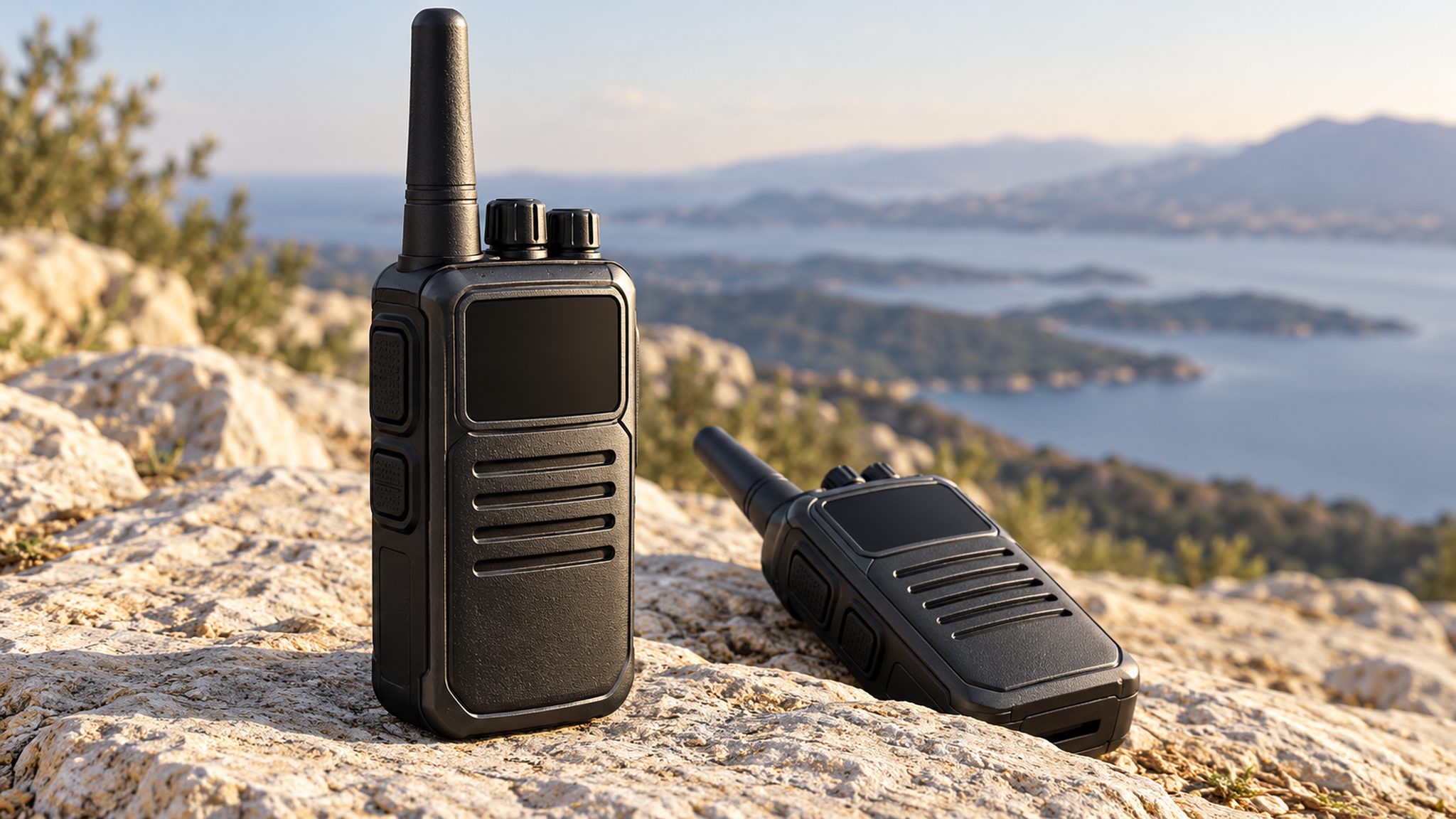
Equipment Approval, Dealer Permission and Lawful Operation
Each regulatory document has a scope; the buyer needs to understand that scope before relying on it.
- The DoT Equipment Type Approval page identifies WPC certification for wireless devices and a self-declaration route for eligible products. Equipment approval addresses compliance associated with the equipment, rather than an unrestricted choice of operating frequency.
- The DoT dealer-licence page describes possession, stocking and sale of radio equipment. These dealer functions differ from the conditions under which a purchaser may transmit using a particular model.
- In the Hogar case, DPL and ETA were company submissions. CCPA still required clear disclosure of frequencies and licensing requirements; the presence of certificates did not settle whether advertisements adequately explained permitted use.
- Operating authorization must be assessed against the relevant device, frequency and applicable rules. Where an exemption applies, its conditions matter; equipment outside that exemption remains subject to the relevant regulatory requirements.
- The broader distinction also appears in satellite-service approvals: different permissions serve different purposes. A document should be interpreted by what it authorizes, rather than by the general impression that the product is approved.
How to Read a Conditional Exemption
The useful question is whether the intended operation satisfies the applicable requirements, not whether the advertisement contains the word approved.
- Identify the operating range for the specific model and intended use. A product category such as walkie-talkie does not identify its frequency settings or demonstrate that all available settings fall within an exemption.
- Read the qualifying conditions together with the frequency provision. The same frequency label alone does not establish compliance with every relevant requirement; claims about unrestricted use need evidence beyond a product name.
- Match the certificate to its purpose instead of combining dealer permission, equipment approval and operating entitlement into one claim. This prevents a valid document from creating a misleading impression about matters outside its scope.
- Distinguish restriction from prohibition: falling outside the cited exemption does not by itself prove that a device can never be used lawfully. It means the relevant regulatory requirements must be established and satisfied.
- Material omissions affect informed choice because an unusable or restricted device may not meet the purchaser’s needs. The earlier CCPA explosives case explains platform responsibilities; this order adds the specific problem of conditional radio use.
Way Forward
Make Operating Conditions Easy to Check
- Standardize disclosures around the model, operating frequencies and applicable licensing conditions, with clear links to the relevant official requirements.
- Separate approval categories in product information so buyers can distinguish equipment compliance from dealer permission and conditions governing transmission.
- Keep guidance current as authorization procedures change; historic certificates and application instructions should not be presented as a universal current route.
Conclusion
- A licence exemption is conditional permission. Its usefulness depends on matching the actual equipment and operation to the rule, while preserving the safeguards that allow multiple users to share radio spectrum.
- For governance analysis, connect technical compliance with informed choice. Consumers need to know the limits of an approval as well as its existence, because a valid certificate cannot answer every regulatory question.
UPSC Practice Questions
Prelims MCQ 1
With reference to the CCPA order on walkie-talkie advertisements, consider the following statements:
- The cited exemption for personal mobile radios applies subject to prescribed conditions.
- Possession of Equipment Type Approval removes the need to disclose applicable operating conditions.
- A promotional website can come within misleading-advertisement scrutiny even without a checkout facility.
How many of the above statements are correct?
(a) Only one (b) Only two (c) All three (d) None
Answer: (b) Only two
Explanation:
Statements 1 and 3 are correct. The official release expressly makes the exemption conditional and covers promotional websites. Equipment approvals do not remove the duty to disclose material operating requirements.
Prelims MCQ 2
Which conclusion best follows when a radio device falls outside the frequency exemption cited in the CCPA release?
(a) It can never be used lawfully in India. (b) Its dealer licence automatically authorizes every buyer to transmit. (c) It is exempt whenever the seller does not accept online payments. (d) Its lawful operation must be assessed under the relevant regulatory requirements.
Answer: (d) Its lawful operation must be assessed under the relevant regulatory requirements.
Explanation:
Being outside an exemption is not the same as a universal prohibition. Applicable authorization and technical requirements must be identified; a dealer document or sales method does not replace that assessment.
UPSC Mains Questions
- Explain how conditional spectrum exemptions balance ease of access with interference management. Why must consumers understand the scope of equipment approvals?
- Distinguish equipment compliance, dealer permission and operating authorization. Discuss how incomplete disclosures can undermine the regulation of wireless devices.
Sources: PIB, Department of Consumer Affairs and Department of Telecommunications, Equipment Type Approval.
Frequently Asked Questions
Does licence-exempt mean that any walkie-talkie can be used without conditions?
No. The official release cites a prescribed frequency range and applicable conditions. A product label or general claim of approval does not establish that every operating mode satisfies the relevant exemption.
What does Equipment Type Approval establish?
ETA is WPC certification concerning wireless equipment and radio-frequency compliance. It should be read within its scope; its existence does not remove the need to explain the licensing conditions that govern actual operation.
Why was the company’s dealer licence insufficient as a defence?
The company cited dealer and equipment approvals, but CCPA found that material operating information was still missing. Permission associated with dealing in equipment does not eliminate the duty to disclose lawful-use conditions to buyers.
Does a website need an online checkout to be accountable for its advertisements?
No. According to the CCPA release, promotional representations can be examined for misleading advertising even when the website only generates enquiries and the eventual transaction happens through another channel.
Does being outside a licence exemption make a device automatically prohibited?
No. It means the relevant regulatory requirements must be examined. An exemption is one route to lawful operation under stated conditions; its absence does not establish a blanket ban on every possible authorized use.
Tell Google you want more of this.
Add Anantam IAS as a preferred sourceOne tap, and this site shows up more often in your own Top Stories, AI Overviews and AI Mode. Remove it any time.