Why in News?
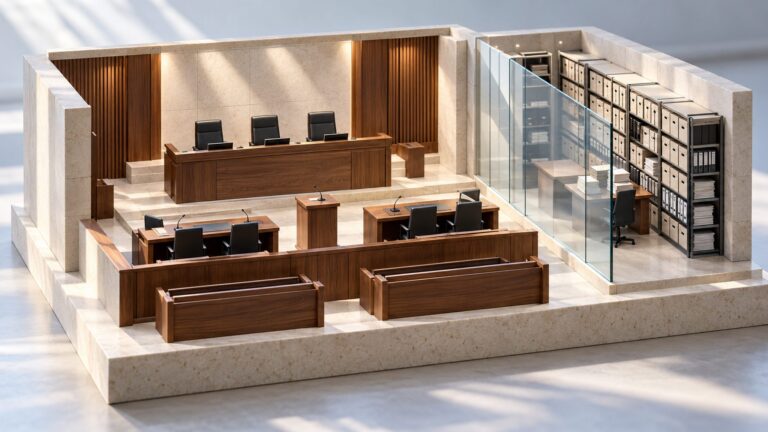
The Hindu reported that on 30 October 2026, the Supreme Court asked MeitY to formulate measures against commercial exploitation of live-streamed judicial proceedings in violation of earlier orders.
- The Solicitor General said stakeholder suggestions from High Courts and others had reached the Ministry of Electronics and Information Technology, which would consider them and respond.
- The report describes concerns about unauthorised extraction, modification and circulation of hearing clips, including misleading captions and commercial use.
- A lawyer proposed verifiable digital signatures or watermarks for official clips; the report does not establish that the Court adopted this as a mandatory technical standard.
- The proposed policy response remained pending. The news should not be read as confirmation that every court has deployed an authenticated video archive.
- Open justice lets people observe judicial work, but a short viral extract can hide the question, qualification or response that gave an exchange its meaning.
- Source authenticity and lawful reuse require separate checks: footage can be genuine while its redistribution breaches applicable restrictions or its caption misrepresents the hearing.
UPSC Relevance
Prelims Relevance
- MeitY: the ministry considering measures against misuse of court feeds.
- e-Committee: develops the judiciary’s technology framework, including model live-streaming rules.
- Open justice: public access to judicial proceedings and scrutiny of court processes.
- Digital signature: cryptographic authentication tied to the signed electronic content.
- Model rules: a framework whose publication alone does not establish identical binding rules in every court.
Mains Relevance
GS Paper 2
- Balance judicial transparency with privacy, fair proceedings and responsible reporting.
- Design proportionate remedies for manipulated or commercially misused court footage.
GS Paper 3
- Assess authentication tools and their limits in preserving trustworthy digital public records.
Essay
- Public access becomes meaningful when information remains verifiable and understandable.
Background and Context
Why Public Access Needs a Reliable Record
A live feed extends observation beyond the courtroom; its public value depends on viewers understanding what the hearing actually establishes.
- Geographical access is the first benefit: citizens, journalists and students can follow proceedings without travelling to the court, reducing the practical barriers created by distance, limited seating and the cost of attendance.
- Institutional scrutiny becomes possible when viewers can follow arguments and judicial questioning. The e-Committee describes live streaming as a means of improving transparency and access, while recognising that sensitive proceedings require safeguards.
- Context matters because a question from the Bench may test an argument rather than announce a conclusion. A clip should not be treated as proof of the final ruling merely because a judge speaks.
- Privacy and confidentiality remain relevant to public proceedings. The e-Committee identifies litigant and witness privacy, business confidentiality and statutory restrictions as concerns that a streaming framework must accommodate when deciding what becomes publicly accessible.
- The e-Committee model-rules consultation supplies background, not evidence of a newly uniform national prohibition. For a particular recording, the applicable court rules and orders must be checked before conclusions about permitted use.
Viewing a Hearing and Reusing Its Footage
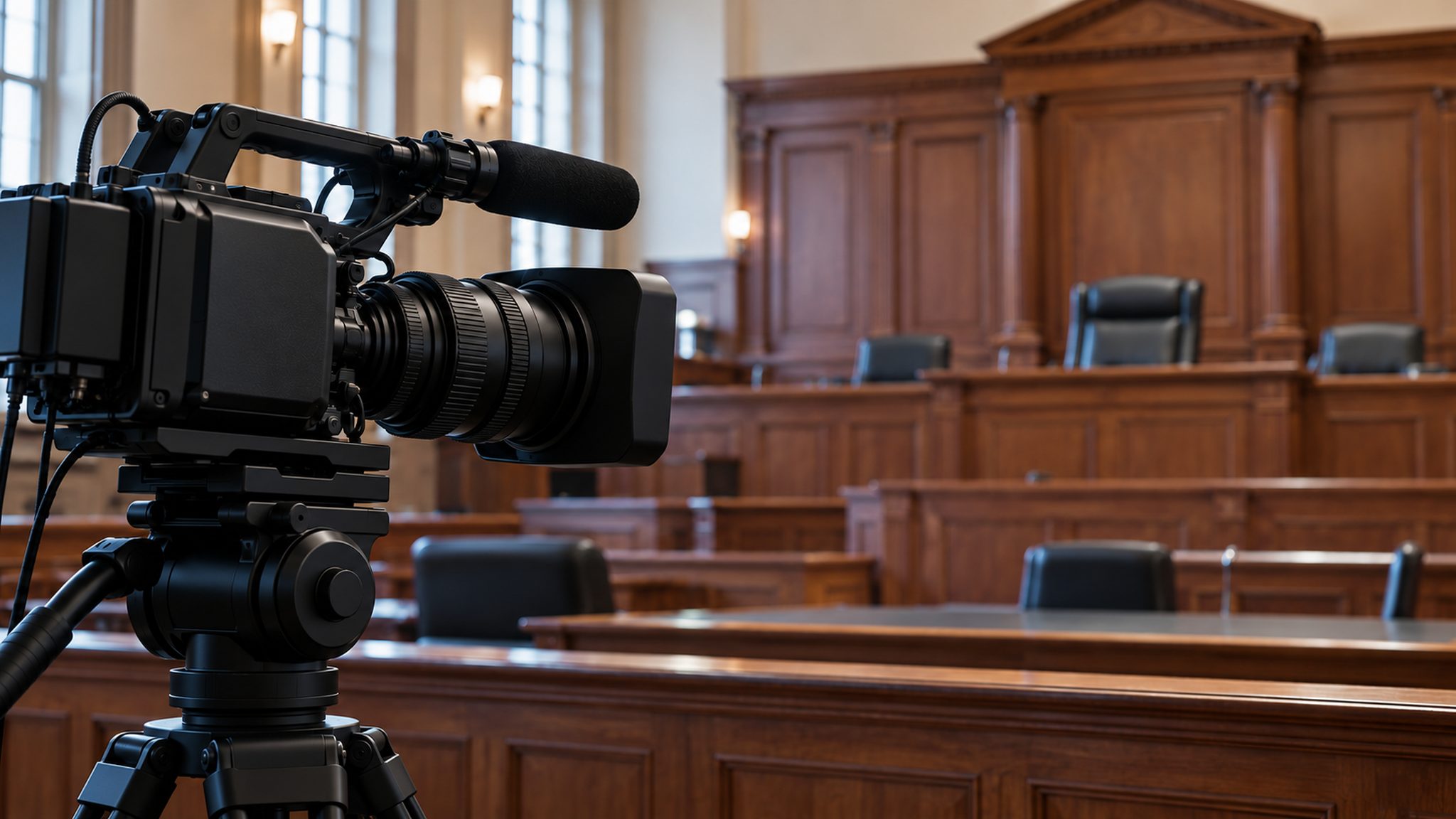
Public availability answers who can watch; permission, accuracy and purpose determine how a recording can responsibly be used afterward.
- Viewing access does not itself settle every question about downloading, editing, commercial distribution or republication. The current dispute concerns misuse of live-streamed material, so the specific restriction and conduct must be identified together.
- Reporting informs the public about proceedings; republishing an extracted video is a separate action. An accurate account and an uploaded clip can raise different issues even when both concern the same hearing.
- Misleading editing can remove a qualification or the answer to a judicial question. The remaining footage may be authentic, yet the inference encouraged by its shortened presentation can differ from the full exchange.
- Commercial exploitation is central to the reported hearing. The Hindu says the Court sought measures against use violating earlier orders; this should not be expanded into an unsupported claim banning all discussion of cases.
- Proportionate enforcement should identify the offending material and the relevant restriction. This is a policy design consideration: broad removal without clear reasons can affect useful public reporting along with genuinely misleading or prohibited reuse.
Authentication Helps but Does Not Supply Context
A technical authenticity check can identify the source of a file; it cannot decide whether a caption fairly explains a hearing.
- A visible watermark can help viewers recognise an official source, but a displayed mark alone is not cryptographic proof. The reported suggestion for authentication needs a specified verification method before its reliability can be assessed.
- A digital signature binds authentication to electronic content. The Controller of Certifying Authorities explains that signatures change with message content and can be independently verified using software, unlike simply recognising an on-screen graphic.
- Verification still needs a trusted reference. The principles behind digital certificates and trust help explain why a platform must validate the claimed signer instead of accepting an uploader’s unsupported statement that a clip is official.
- Authenticity cannot certify interpretation: a genuine recording may carry a misleading caption or omit the surrounding exchange. Readers should compare disputed extracts with the official recording and the written order where one is available.
- Privacy-aware access needs editorial and legal safeguards alongside technology. The wider privacy and public-interest journalism debate illustrates this tension, without determining the separate court-specific rules governing a hearing recording or its reuse.
Way Forward
Make Verification Practical
- Courts should provide stable official recording links and clear notices about applicable reuse conditions, making the authoritative source easier to find.
- Platforms should distinguish verified source footage from claims about its meaning, linking disputed extracts to available official context and providing reasons for enforcement.
- Policy makers should specify the verification method, responsible authority and review process before presenting a watermark or signature as a complete solution.
Conclusion
- Open justice requires accessible proceedings and dependable context. The reported intervention concerns protecting that public value against misuse; it does not establish a completed nationwide authentication system.
- For an answer, separate access, authenticity and lawful reuse. Each solves a different problem, and technological verification should support proportionate rules and accurate reporting rather than substitute for them.
UPSC Practice Questions
Prelims MCQ 1
With reference to live-streamed court proceedings, consider the following statements:
- Public viewing access automatically establishes unrestricted permission for commercial redistribution.
- A genuine video can still be presented with a misleading caption.
- The publication of model rules alone establishes identical binding rules in every court.
How many of the above statements are correct?
(a) Only one (b) Only two (c) All three (d) None
Answer: (a) Only one
Explanation:
Only statement 2 is correct. Viewing access does not by itself resolve reuse permissions, and model rules must not be mistaken for identical rules binding every court.
Prelims MCQ 2
Which is the strongest reason to distinguish authentication of court footage from interpretation of a hearing?
(a) Authentication makes written court orders unnecessary (b) Every authentic clip may be commercially redistributed (c) Genuine footage may still omit context or carry a misleading caption (d) Only edited footage can ever mislead viewers
Answer: (c) Genuine footage may still omit context or carry a misleading caption
Explanation:
Authentication concerns the source and integrity of content. It does not establish that a caption, selection or inference accurately represents the full hearing.
UPSC Mains Questions
- How can courts preserve the benefits of live-streamed proceedings while addressing misleading and unauthorised reuse? Discuss.
- Explain the distinction between source authentication and contextual accuracy in digital public records. Assess its relevance to open justice.
Sources: The Hindu and Supreme Court e-Committee.
Frequently Asked Questions
What was the latest development on court live streams?
The Hindu reported that the Supreme Court asked MeitY on 30 October to formulate measures against commercial exploitation of live-streamed proceedings in violation of earlier orders. The policy response remained pending.
Did the Court mandate watermarks for every recording?
The report attributes the digital-signature or watermark proposal to a lawyer. It does not establish an adopted mandatory technical standard or confirm that every court has implemented an authenticated archive.
Why can an authentic hearing clip still be misleading?
An extract may omit the response, qualification or surrounding argument. Its caption may also present a judicial question as a conclusion. Checking the official recording and available written order helps restore context.
Do model live-streaming rules apply identically everywhere?
The e-Committee published model rules for consultation. That publication alone does not establish identical binding rules across every court; the applicable court rules and orders must be checked for a particular recording.
What does a digital signature contribute?
A digital signature ties authentication to electronic content and can be verified with software. It can support checks on source and integrity, but cannot establish that an accompanying caption or interpretation is accurate.
Tell Google you want more of this.
Add Anantam IAS as a preferred sourceOne tap, and this site shows up more often in your own Top Stories, AI Overviews and AI Mode. Remove it any time.