Why in News?
Revised Divyangjan FASTag guidelines take effect on 2 October 2026, replacing annual renewal with longer validity for eligible vehicles.
- Recorded disability of 70–100% gives eligible exempted FASTags five-year validity.
- Recorded disability of 40% to less than 70% gives eligible exempted FASTags three-year validity.
- Vehicle eligibility covers specially designed and constructed vehicles for persons with physical disabilities, and vehicles registered under ownership type “Divyangjan”.
- Renewal remains conditional on continued eligibility and compliance with the applicable National Highways Fee Rules.
- Administrative burden can restrict access even when a concession exists: repeated applications cost time, travel and assistance.
- Longer validity addresses renewal frequency; it does not establish universal toll exemption for every vehicle used by a person with a disability.
UPSC Relevance
Prelims Relevance
- Exempted FASTag versus ordinary toll payment
- Qualifying vehicle categories
- Disability Certificate and Unique Disability Identity Card
- Validity linked to recorded disability
- Conditional renewal under National Highways Fee Rules
Mains Relevance
GS Paper 2
- Disability inclusion and access to public services
- Administrative burden and exclusion in targeted concessions
GS Paper 3
- Inclusive design of transport infrastructure and toll administration
Essay
- A right becomes usable when its administrative process is accessible.
Background and Context
Vehicle eligibility and recorded disability are separate checks
The concession requires an eligible vehicle and valid supporting records; personal circumstances alone should not be treated as proof of every condition.
- Specially designed and constructed vehicles form one stated category. The relevant connection is their design for use by persons with physical disabilities, rather than an assumption about every passenger.
- Registration under ownership type “Divyangjan” is the other stated category. This matters because the announcement expressly recognizes a registration route alongside the specially designed vehicle route.
- Supporting records include a valid Disability Certificate, Unique Disability Identity Card or other applicable records. The recorded disability percentage determines the validity period described in the announcement.
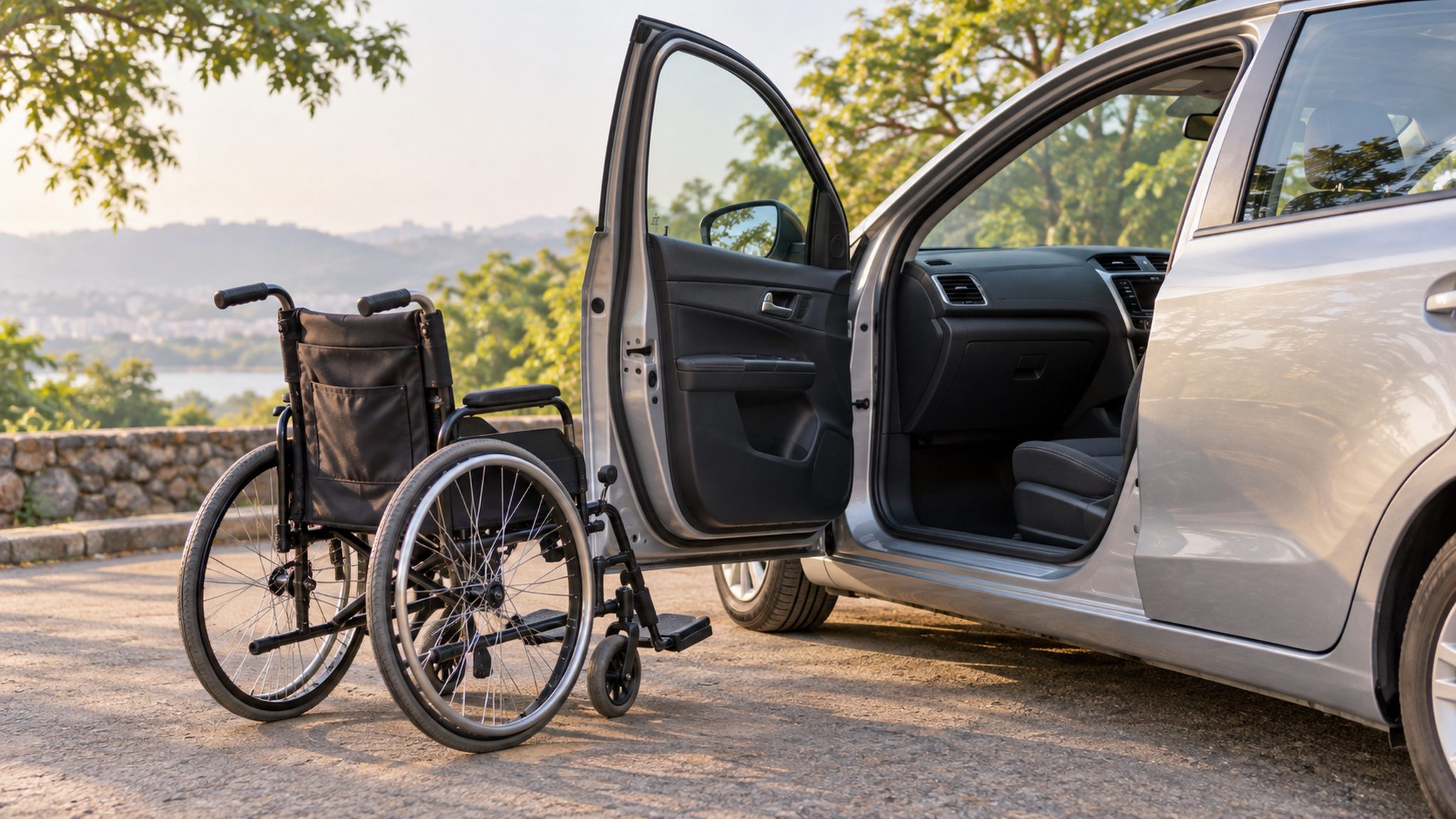
- Eligibility is not visible from a photograph, wheelchair or driver alone. A plain-looking vehicle cannot be classified as eligible or ineligible without checking the applicable registration and records.
- Exam trap: “Every vehicle driven by a person with a disability receives exemption” is too broad. It removes the vehicle categories and documentation conditions from the stated framework.
Longer validity changes the renewal cycle
The principal administrative change is the interval between renewals, replacing the earlier annual requirement with differentiated periods.
- The higher disability band receives the longer validity period, while the other stated band receives a shorter multi-year period. Both are changes to the duration of the exempted FASTag.
- Reduced repetition can save applicants repeated document submission and follow-up. This is the policy logic of longer validity, rather than a measured outcome already demonstrated by the announcement.
- Expiry still matters: a multi-year tag is not a permanent exemption. The release expressly permits subsequent renewal subject to continued eligibility and compliance with the applicable rules.
- Scope discipline: the release specifies two disability bands. It does not provide enough information to invent an additional validity period or a new decision rule for lower percentages.
- Implementation detail remains limited: the release does not spell out the treatment of every existing tag. Do not infer automatic extension or a universal fresh-application requirement from this summary.
Why procedure is part of disability inclusion
A targeted concession has practical value when eligible users can establish entitlement and keep it active without disproportionate effort.
- Compliance costs include time spent understanding requirements, arranging documents and following up. For a person needing assistance, the same administrative step can impose an additional coordination burden.
- Uniform administration is an explicit aim of the revision. Consistent interpretation can reduce uncertainty, but a stated objective should not be mistaken for evidence that every operational difficulty has disappeared.
- Clear communication should distinguish vehicle eligibility, disability evidence and validity. Combining these into a vague message about “free travel” risks misleading applicants about the concession’s conditions.
- Digital processing can simplify repeated transactions, but inaccessible interfaces or unclear rejection reasons can create new obstacles. These are implementation risks to assess, not reported findings from this announcement.
- Evaluate delivery through applicant effort, processing delays and correction of errors. Counting issued tags alone would not show whether eligible users can navigate the process and resolve problems.
Way Forward
Make the revised process usable
- Publish clear guidance separating vehicle categories, acceptable records, validity and renewal conditions, with examples that avoid promising blanket exemption.
- Provide assisted access and accessible application interfaces so the change does not shift procedural work onto applicants or their caregivers.
- Explain adverse decisions and provide a workable correction channel for record mismatches; monitor avoidable repeat submissions and delays.
Conclusion
- The reform reduces renewal frequency for eligible exempted FASTags while retaining documentary and vehicle-related conditions. Its value lies in making an existing concession easier to maintain.
- For a governance answer, connect inclusion with administrative design: fewer repeated steps, clear eligibility and usable remedies must operate together for a concession to translate into reliable access.
UPSC Practice Questions
Prelims MCQ 1
With reference to the revised Divyangjan FASTag guidelines, consider the following statements:
- Validity is linked to the disability percentage recorded in valid supporting records.
- Renewal after expiry is unconditional.
- Vehicles registered under ownership type “Divyangjan” are among the stated eligible categories.
How many of the above statements are correct?
(a) Only one (b) Only two (c) All three (d) None
Answer: (b) Only two
Explanation:
Statements 1 and 3 are correct. Renewal remains subject to continued eligibility and compliance with the applicable National Highways Fee Rules.
Prelims MCQ 2
Which administrative change is central to the revised guidelines effective from 2 October 2026?
(a) Permanent exemption without documentary checks (b) Exemption for every vehicle carrying a person with a disability (c) Replacement of annual renewal with differentiated multi-year validity (d) Abolition of vehicle eligibility requirements
Answer: (c) Replacement of annual renewal with differentiated multi-year validity
Explanation:
The earlier annual renewal requirement is replaced by five-year and three-year validity for the respective stated disability bands. Eligibility requirements continue.
UPSC Mains Questions
- How can reducing administrative burden improve access to disability-related concessions? Discuss with reference to revised exempted FASTag validity.
- Targeted transport concessions require both clear eligibility and accessible procedures. Examine the implementation choices needed to balance these objectives.
Source: PIB, Ministry of Road Transport and Highways.
Frequently Asked Questions
What changed in Divyangjan FASTag validity?
The revised guidelines replace annual renewal with five-year validity for the higher stated disability band and three-year validity for the other stated band. Vehicle eligibility and valid supporting records remain necessary.
Does every vehicle used by a person with a disability qualify?
No blanket entitlement is stated. The announcement identifies specially designed and constructed vehicles for persons with physical disabilities, as well as vehicles registered under ownership type “Divyangjan”, subject to applicable requirements.
Which records determine the validity period?
The announcement refers to the disability percentage recorded in a valid Disability Certificate, Unique Disability Identity Card or other applicable records. This documentary basis should be distinguished from the separate vehicle eligibility conditions.
Is renewal automatic after the validity period?
Renewal is conditional on continued eligibility and compliance with the applicable National Highways Fee Rules. The announcement does not establish an unconditional lifetime exemption or explain the treatment of every existing tag.
Tell Google you want more of this.
Add Anantam IAS as a preferred sourceOne tap, and this site shows up more often in your own Top Stories, AI Overviews and AI Mode. Remove it any time.