Why in News?
On 29 September 2026, the government announced a MoTA-IGNCA partnership, signed a day earlier, to document and preserve tribal cultural heritage.
- The Ministry of Tribal Affairs and Indira Gandhi National Centre for the Arts signed the MoU on 28 September 2026.
- The collaboration connects Tribal Research Institutes with IGNCA’s archival, research and curatorial expertise.
- Planned work includes digital archives and museum galleries, alongside support for endangered languages, oral traditions, arts and customary knowledge.
- Living heritage survives through people practising and teaching it. A recording can support continuity but cannot substitute for speakers, performers or craft practitioners.
- Public visibility and community control can pull in different directions; documentation needs decisions about what may be recorded, accessed and reused.
UPSC Relevance
Prelims Relevance
- MoTA: Ministry of Tribal Affairs.
- IGNCA: an autonomous trust under the Ministry of Culture.
- TRIs: Tribal Research Institutes within the ministry’s research ecosystem.
- Tangible heritage: material objects and artefacts.
- Intangible heritage: living practices, expressions, knowledge and skills transmitted by communities.
Mains Relevance
GS Paper 1
- Cultural diversity: preserving tribal languages, oral traditions and craft knowledge.
- Living heritage: distinguishing documentation from continued practice and transmission.
GS Paper 2
- Participatory governance: community authority over access, representation and reuse of cultural knowledge.
Essay
- Cultural preservation requires space for communities to shape continuity and change.
Background and Context
Why a preserved object is only part of the story
Tangible and intangible heritage are connected, but conserving one does not automatically safeguard the other.
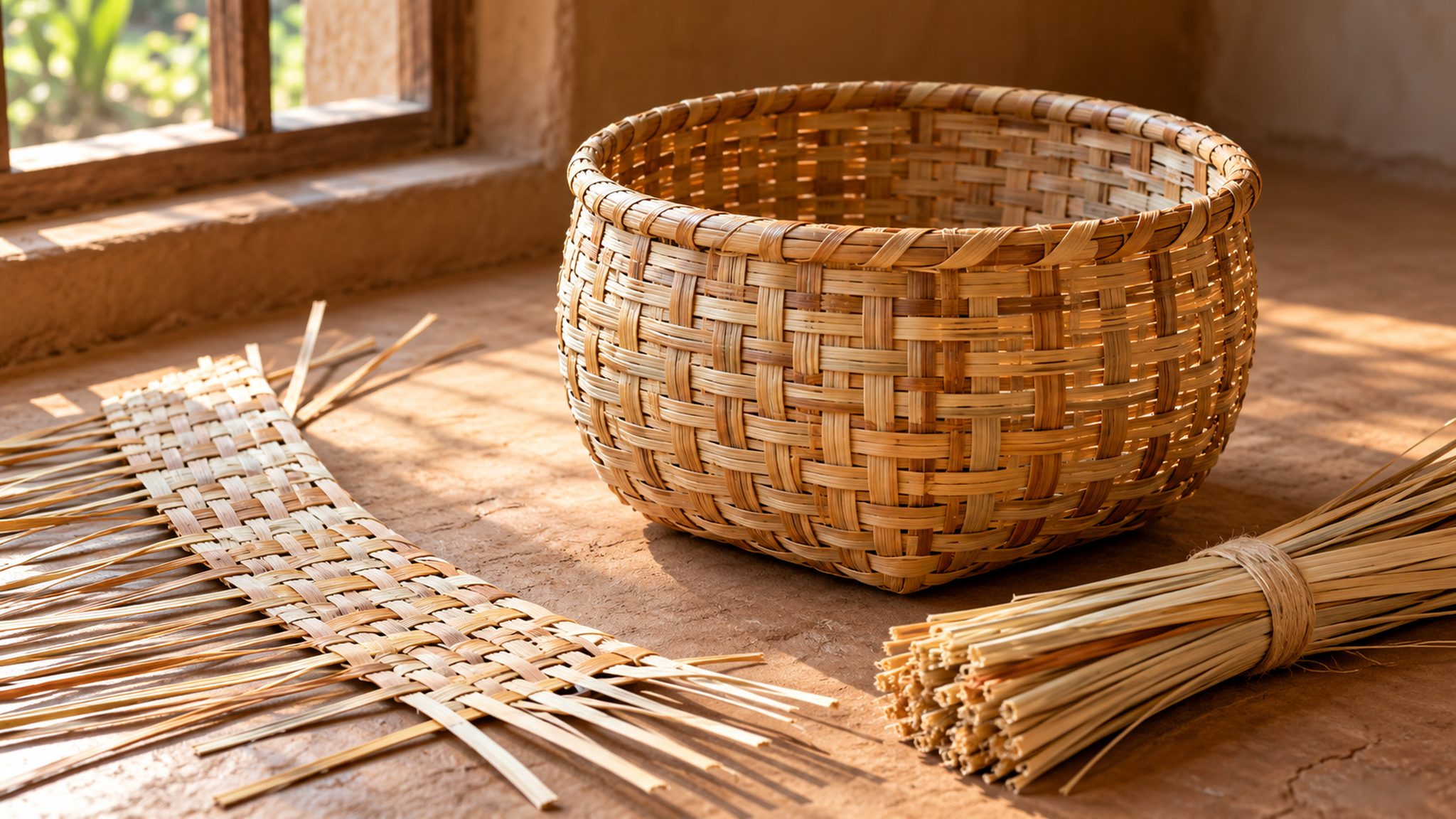
- Tangible heritage includes material objects such as a musical instrument or woven basket. Their physical form can be conserved and displayed, but an exhibit alone does not explain how people make or use them.
- Intangible heritage includes skills, expressions and knowledge sustained through practice. For a basket, the associated knowledge may concern material preparation and weaving; the object and the skill require different forms of preservation.
- Oral traditions and languages carry meanings through speech and performance. UNESCO notes that language loss threatens transmission of living heritage; a translated summary can preserve information while leaving pronunciation and performance context inadequately represented.
- Traditional ecological knowledge is among the subjects identified in the announcement. Recording it requires attention to the people and settings in which it is used, rather than treating each statement as a context-free fact.
- Living heritage changes as communities practise and transmit it. Safeguarding should enable that continuity, not require every future performance or craft object to reproduce an archived version selected by an outside researcher.
What the institutional partnership proposes
The announcement establishes a framework for collaboration; it does not report completed archives or measured preservation outcomes.
- The Ministry of Tribal Affairs contributes its research ecosystem and Tribal Research Institute network. IGNCA contributes academic, archival and curatorial expertise, linking knowledge of communities with specialist capacity to document and present cultural material.
- The proposed work covers identification, documentation, digitisation, research and dissemination. These are related activities: collecting a recording, preserving its digital file and making it accessible to an audience are separate implementation tasks.
- Digital archives and interactive galleries are envisaged, including displays about tribal contributions to the freedom struggle. Their mention is a plan for future cooperation, not evidence that every proposed facility is already functioning.
- Endangered languages, oral traditions and folklore receive explicit attention. The partnership also envisages youth camps, offering a possible connection between documenting traditions and helping learners engage with knowledge holders and cultural practices.
- Exhibitions, publications, festivals and digital platforms are proposed dissemination channels. Wider visibility is an intended benefit; whether it strengthens transmission or livelihoods must be assessed through implementation, rather than inferred from signing the agreement.
How to document without taking control away
The following are recommended safeguards, supported by UNESCO principles, rather than verified clauses of the MoU.
- Community participation should begin when deciding what to record and how to describe it. UNESCO gives communities a central role in safeguarding; consultation after a catalogue has been completed leaves important interpretive decisions elsewhere.
- Consent should be informed and sustained, consistent with UNESCO ethical principles. Practitioners should understand the intended audience and uses; willingness to be recorded should not be presumed to authorise every future form of reuse.
- Access controls should distinguish public material from knowledge whose circulation communities wish to limit. A digital archive can support preservation without making every recording freely downloadable or detaching it from community-defined conditions.
- Attribution and benefit arrangements should be agreed before publication or commercial reuse. These are implementation recommendations here: the announcement does not establish specific intellectual-property licences, payment obligations or benefit-sharing clauses for every contributor.
- Success measures should include opportunities to learn and practise, alongside the quantity of digitised files. An archive with many entries may still fail its wider purpose if younger community members cannot access or use it.
Way Forward
Pair archival preservation with community use
- Co-design collections: involve knowledge holders in selection, naming, descriptions and decisions about sensitive material.
- Return usable copies: provide locally accessible recordings and learning resources in formats and languages chosen with communities.
- Support transmission: connect documentation with practitioner-led teaching, then evaluate continued use rather than counting uploads alone.
Conclusion
- The MoTA-IGNCA partnership can connect institutional expertise with community knowledge. Its educational value will depend on preserving context and supporting people who continue to practise and transmit that heritage.
- In a Mains answer, distinguish objects, records and living practice, then assess whose choices govern documentation, access and reuse. More digital material alone is not proof of successful safeguarding.
UPSC Practice Questions
Prelims MCQ 1
With reference to the MoTA-IGNCA partnership, consider the following statements:
- IGNCA is an autonomous trust under the Ministry of Culture.
- The collaboration concerns both tangible and intangible tribal cultural heritage.
- The announcement confirms that all proposed digital archives and museum galleries have been completed.
How many of the above statements are correct?
(a) Only one (b) Only two (c) All three (d) None
Answer: (b) Only two
Explanation:
The first two statements match the announcement. Archives and galleries are proposed areas of cooperation; their completion was not reported.
Prelims MCQ 2
Which approach best safeguards the living heritage associated with a traditional craft?
(a) Conserving one object while preventing changes to the practice (b) Replacing practitioner instruction entirely with catalogue photographs (c) Supporting community-led teaching alongside appropriate documentation (d) Making every recording public irrespective of community preferences
Answer: (c) Supporting community-led teaching alongside appropriate documentation
Explanation:
Living heritage depends on continued practice and transmission. Documentation can assist, while communities remain central to decisions about representation and access.
UPSC Mains Questions
- Distinguish preservation of tangible heritage from safeguarding living heritage. Illustrate why digital archives need to be linked with intergenerational transmission.
- Discuss the safeguards required when public institutions document tribal cultural knowledge for museums and digital platforms.
Sources: PIB, Ministry of Tribal Affairs and UNESCO, Ethics and Intangible Cultural Heritage.
Frequently Asked Questions
When was the MoTA-IGNCA MoU signed?
The MoU was signed on 28 September 2026 and announced by PIB on 29 September. It establishes a collaboration framework for documenting, preserving, researching and promoting tribal cultural heritage.
What is the difference between tangible and intangible heritage?
Tangible heritage concerns material objects such as instruments or craft artefacts. Intangible heritage includes the skills, practices, expressions and knowledge associated with community life, which survive through practice and transmission.
Have the proposed digital archives already been completed?
The announcement identifies archives, galleries and other activities as areas of cooperation. It does not demonstrate that all facilities are completed or that the intended cultural and livelihood benefits have already occurred.
Are consent and access safeguards confirmed MoU clauses?
They are recommendations in this article, informed by UNESCO ethical principles. The public announcement does not establish specific consent procedures, access restrictions or intellectual-property arrangements as clauses of the signed agreement.
Tell Google you want more of this.
Add Anantam IAS as a preferred sourceOne tap, and this site shows up more often in your own Top Stories, AI Overviews and AI Mode. Remove it any time.