Why in News?
Iran has urged India to continue investing in the strategically significant Chabahar Port despite the challenges posed by US sanctions. The US sanctions waiver for Iran’s Chabahar port expired in April 2026, jeopardising India’s long-term connectivity project.
| UPSC Relevance: GS-2 International Relations: Bilateral Relations Prelims: Chabahar Port: Location & Significance |
Chabahar Port:
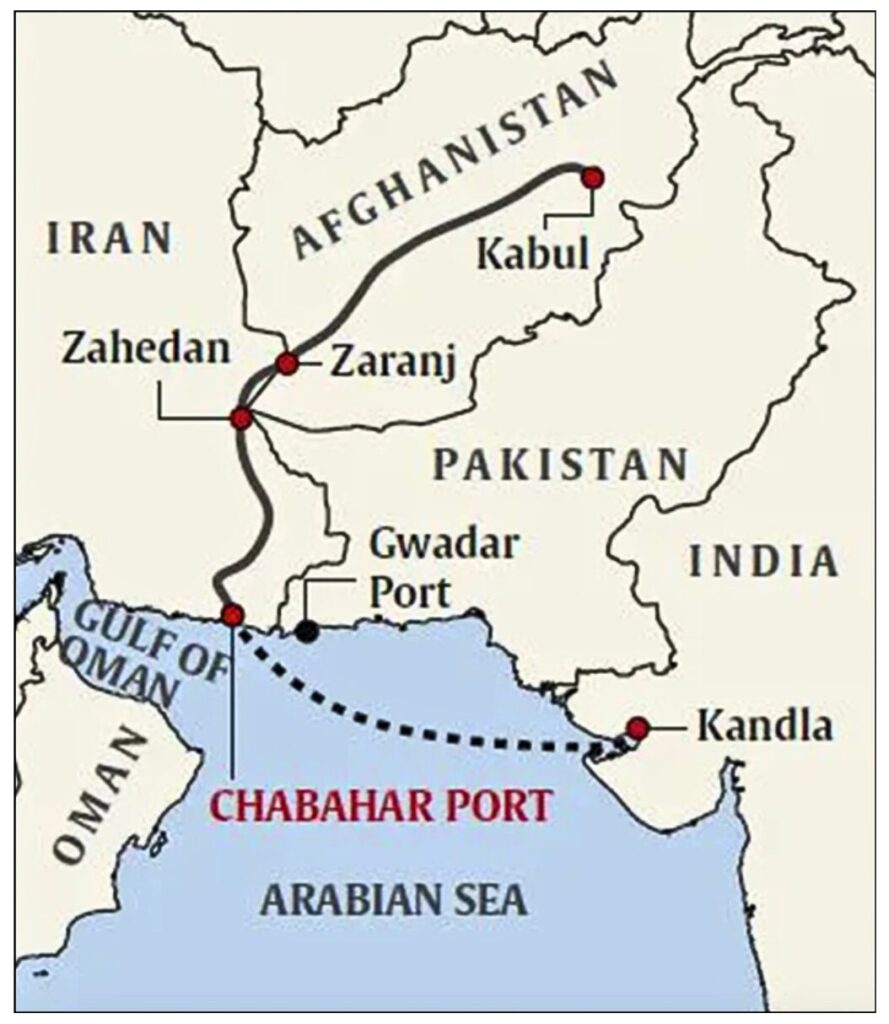
- Chabahar Port is located on the Makran Coast in the Sistan-Baluchestan Province of Iran. It lies on the Gulf of Oman, near the mouth of the Arabian Sea. It is situated west of Iran’s border with Pakistan.
- Key Features: It is Iran’s first deep-water port. It is the only Iranian port with direct access to the Indian Ocean.
- The port consists mainly of Shahid Beheshti Terminal and Shahid Kalantari Terminal.
India-Iran Agreement:
- In 2024, India signed a 10-year agreement with Iran for operating the Shahid Beheshti Terminal.
- India committed around $120 million for infrastructure development and a $250 million credit line for related projects. The project is being developed by India Ports Global Limited.
Strategic importance of Chabahar:
- Access to Afghanistan and Central Asia: The port allows India to bypass Pakistan for trade with Afghanistan, Central Asia, Russia and Europe through multimodal corridors. Pakistan has historically denied India direct overland access to Afghanistan. Thus, Chabahar reduces India’s dependence on Pakistan-based transit routes.
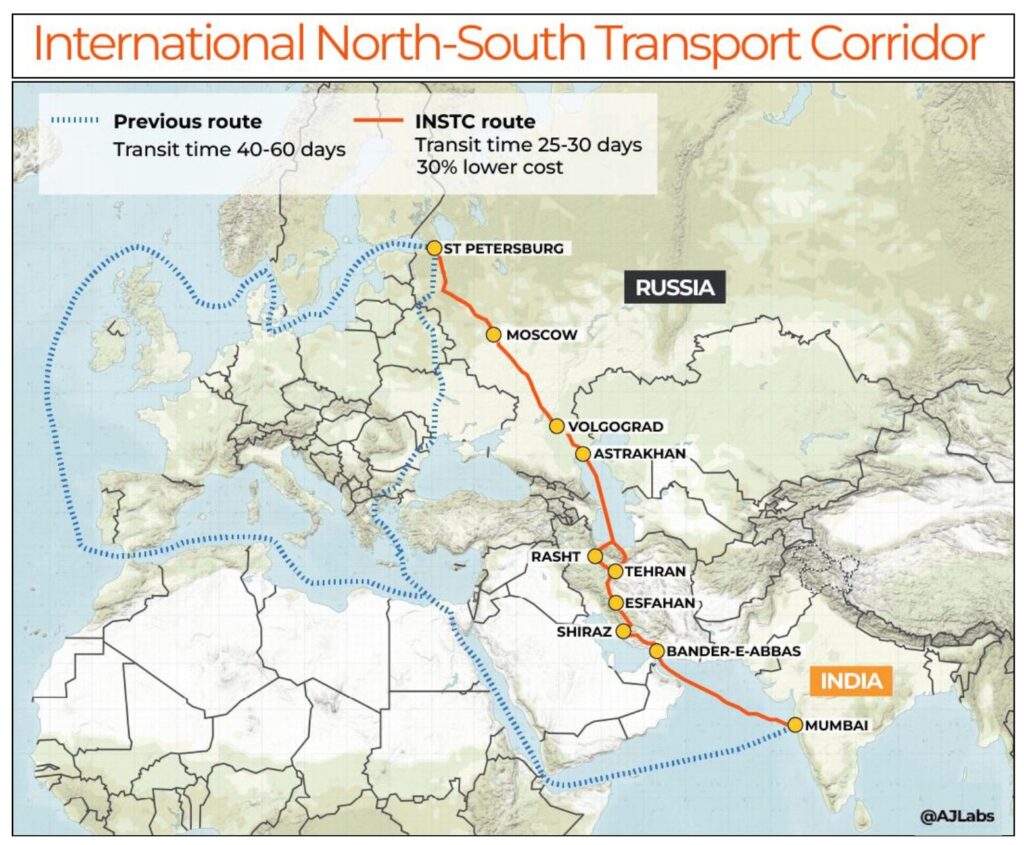
- Key Node in the International North-South Transport Corridor (INSTC): Chabahar is an important component of the International North-South Transport Corridor. INSTC connects India, Iran, Central Asia, Russia and Europe through sea routes, railways and road networks. It is estimated to be nearly 40% shorter and around 30% cheaper than the traditional Red Sea-Suez Canal route. The corridor can significantly reduce logistics costs and delivery time for Indian exports.
- Counterbalance to Gwadar Port and Chinese Influence: Chabahar is often viewed as India’s strategic response to Gwadar Port (developed by China in Pakistan), China’s Belt and Road Initiative (BRI) and China-Pakistan Economic Corridor (CPEC). Thus, Chabahar strengthens India’s geopolitical footprint in the region.
- Energy Security and Trade Diversification: The corridor enables India to improve connectivity with energy-rich countries such as Turkmenistan, Azerbaijan and Kazakhstan. It also supports diversification of trade routes amid global disruptions in the Red Sea and the Strait of Hormuz.
- Strategic Maritime Significance: The port lies near the strategically crucial Strait of Hormuz, through which a major share of global oil trade passes. It is important for maritime trade monitoring and enhancing India’s presence in the western Indian Ocean region.
Importance of the port for Iran:
- For Iran, Chabahar serves as:
- A gateway to Central Asia
- A major economic development project for its underdeveloped southeastern region
- A means to reduce the impact of Western sanctions.
- Iran also seeks to transform Chabahar into a free trade zone, transit and logistics hub and regional commercial gateway.
Challenges in developing Chabahar Port:
- US Sanctions on Iran: The biggest challenge remains the sanctions imposed by the United States on Iran. This leads to financing difficulties, banking restrictions, hesitation among investors and delays in infrastructure development.
- Delays in Railway Connectivity: Key railway projects remain incomplete: Chabahar-Zahedan line and Rasht-Astara line. These are essential for integrating the port with the INSTC network. Without efficient hinterland connectivity, the port’s commercial potential remains limited.
- Banking and Payment Constraints: Iran’s restricted access to the global financial system, including limitations related to SWIFT transactions, complicates trade settlements, credit transfers and international investment flows.
Despite substantial potential, cargo handling has remained below capacity due to sanctions, connectivity bottlenecks and limited commercial integration.
Security concerns associated with Chabahar Port:
- Terrorism and Insurgency: The region surrounding Chabahar is vulnerable to instability due to extremist groups, sectarian violence and cross-border insurgency. Threats emerge from areas influenced by the Islamic State, Tehrik-i-Taliban Pakistan.
- Instability in Afghanistan: Political uncertainty in Afghanistan affects regional trade routes, infrastructure safety and long-term investments. The return of the Taliban has created uncertainties regarding security and transit guarantees.
- Narcotics Trafficking: The region lies near the “Golden Crescent”, a major illicit drug-production zone involving Afghanistan, Iran and Pakistan. This creates challenges related to smuggling, organised crime and port security.
Chabahar port is like a golden gate for India to access Central Asia, the Caucasus and then Europe. Its success will depend on India’s ability to navigate geopolitical rivalries, security challenges, and sanctions pressures.
UPSC PYQ 2017
Q. What is the importance of developing Chabahar Port by India?
(a) India’s trade with African countries will enormously increase.
(b) India’s relations with oil-producing Arab countries will be strengthened.
(c) India will not depend on Pakistan for access to Afghanistan and Central Asia.
(d) Pakistan will facilitate and protect the installation of a gas pipeline between Iraq and India.
Answer: (c)
Tell Google you want more of this.
Add Anantam IAS as a preferred sourceOne tap, and this site shows up more often in your own Top Stories, AI Overviews and AI Mode. Remove it any time.