Why in News?
On 18 November 2026, PIB announced that an indigenous H5N1 chicken vaccine developed by ICAR-NIHSAD would be dedicated to the nation on 20 November.
- The inactivated vaccine targets H5N1 highly pathogenic avian influenza of clade 2.3.2.1a in chickens.
- The developer is ICAR-NIHSAD, Bhopal, the National Institute of High Security Animal Diseases.
- The scheduled dedication is a future event at this report’s cutoff; the announcement does not establish nationwide vaccination.
- The announced product is for chickens, not for human vaccination.
- Poultry disease control affects farm livelihoods, wildlife health and opportunities for animal-to-human exposure.
- Vaccine availability and a functioning vaccination programme are separate policy questions; the latter requires decisions about use, delivery and monitoring.
UPSC Relevance
Prelims Relevance
- H5N1: an avian influenza virus subtype.
- Clade: a genetically related group within a viral lineage.
- HPAI: high pathogenicity classification concerns disease in poultry.
- ICAR-NIHSAD: the announced vaccine’s developer in Bhopal.
- WOAH: international standards for animal health, surveillance and safe trade.
Mains Relevance
GS Paper 3
- How targeted vaccines fit into animal-disease prevention and control.
- Why laboratory capacity and field surveillance must develop together.
GS Paper 2
- Coordination between veterinary, wildlife and public-health institutions under One Health.
Background and Context
What The Vaccine Announcement Establishes
The announcement identifies a product, host and target virus group; each limits the claims that can reasonably be made.
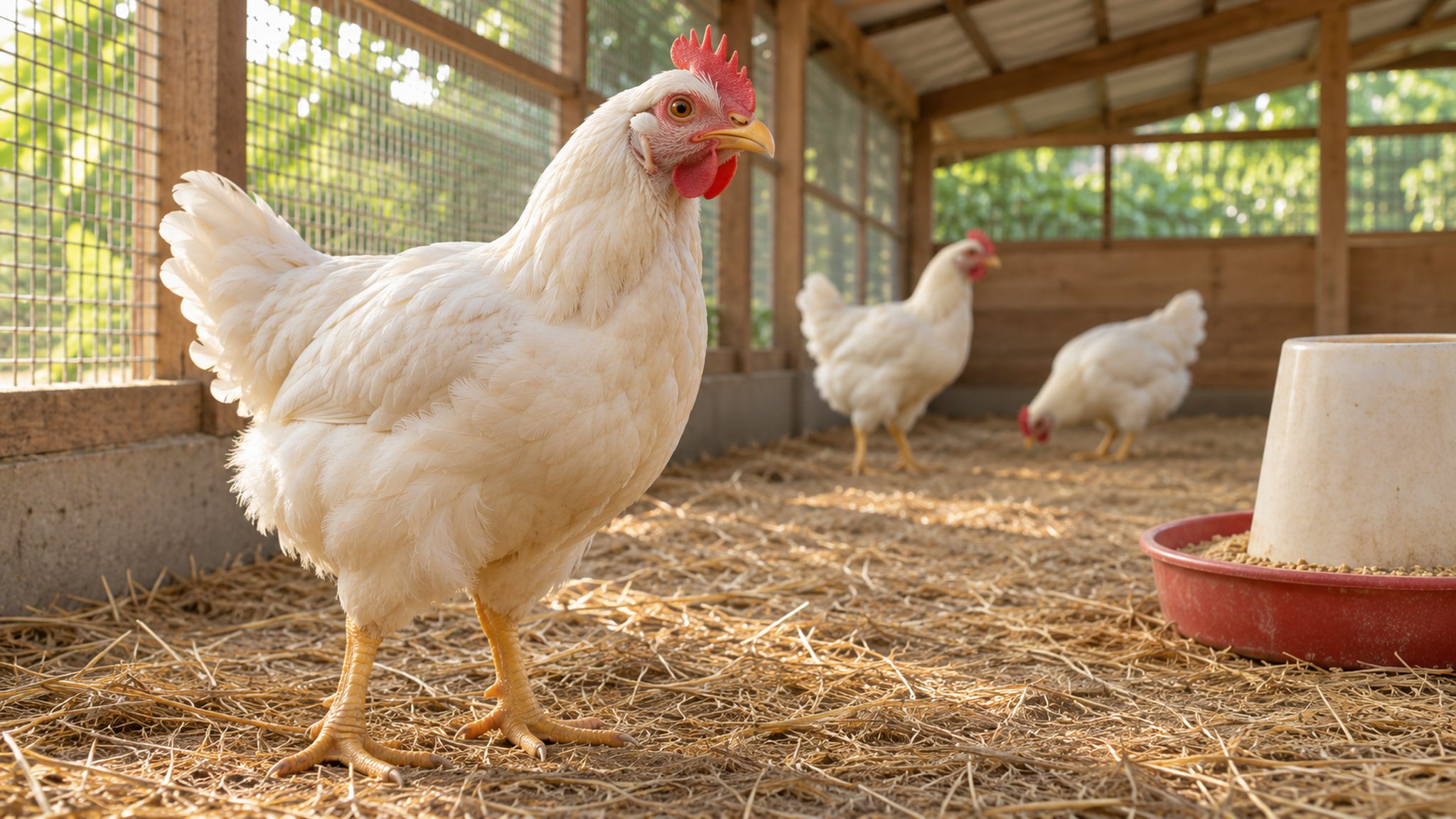
- The target host is the chicken. A poultry vaccine announcement supplies no evidence of suitability for people, other livestock or wild birds, whose use would require its own supporting evidence.
- The named clade narrows the virus group addressed by the product. Reading “H5N1” alone and assuming equivalent protection against every circulating lineage would discard an important part of the announcement.
- The development claim comes from the official release. It does not supply a field-effectiveness percentage, approved dosing schedule or nationwide implementation order that could support those additional claims.
- The dedication date concerns a planned public event. Product development, regulatory decisions, procurement and farm-level delivery are separate stages; the release should not be used to treat them as already completed.
- Programme assessment must ask what is authorized, where use is proposed and how results will be measured. These are questions for subsequent evidence, rather than gaps to fill with assumptions.
Why Vaccine Matching Requires Continuing Evidence
A vaccine programme needs evidence about circulating viruses as well as the vaccine selected to address them.
- Virus evolution can change the relationship between circulating strains and available vaccines. Genetic relatedness helps describe a lineage, but the clade label alone is not a measured guarantee of protection.
- Vaccine composition needs continuing review against circulating strains. WOAH’s vaccination policy brief connects reliable vaccines with monitoring, surveillance and the changing epidemiological situation.
- Field monitoring tests whether the control programme is achieving its purpose. A count of administered doses cannot, by itself, establish that infection is absent or that transmission has been interrupted.
- National Veterinary Authorities decide whether vaccination is appropriate through risk evaluation. Their decision includes disease conditions and the capacity to deliver the programme, rather than the existence of a product alone.
- Clade-specific scope should remain explicit in public communication. Without results supporting broader protection, the sound conclusion is that the announced vaccine targets the named group, with wider performance still requiring evidence.
Vaccination And Surveillance Perform Different Jobs
Vaccination can complement disease control, while surveillance establishes what is happening in birds and the wider environment.
- Biosecurity limits opportunities for introduction and spread. WOAH guidance includes reducing contact with wild birds, cleaning housing and equipment, and reporting unusual illness or deaths to veterinary services.
- Early detection supports timely investigation and response. Farm reports, diagnostic work and information from wildlife surveillance help authorities distinguish a suspicion from confirmed infection and understand where risks are changing.
- Disease-free status cannot be inferred from vaccination alone. The WOAH Terrestrial Code allows vaccination without loss of a free country’s or zone’s status when surveillance supports absence of infection.
- One Health coordination connects poultry, wild birds and people exposed to infected animals. It improves information sharing across sectors; it does not turn a chicken vaccine into a human medical intervention.
- Preparedness remains an operational task, as the SAT-1 response exercise illustrates for a different livestock disease. Avian influenza still requires its own evidence-based detection, reporting and response arrangements.
Way Forward
Connect Product Evidence With Field Decisions
- Publish authorization and deployment details separately from the dedication announcement, including the evidence supporting the intended use.
- Maintain strain monitoring and review vaccine suitability as circulating viruses change.
- Fund diagnostic and reporting capacity alongside any vaccination programme, with clear responsibilities across veterinary and wildlife services.
- Communicate scope and uncertainty clearly: chickens are the intended host, and broader protection must be demonstrated.
Conclusion
- The H5N1 chicken vaccine announcement is a specific product development. Its significance should be assessed within the named host and clade, without converting a planned dedication into evidence of completed deployment.
- Vaccination and surveillance answer different questions. A useful disease-control programme connects an appropriate vaccine with field evidence, biosecurity and response capacity, while keeping human and veterinary uses distinct.
UPSC Practice Questions
Prelims MCQ 1
With reference to the announced H5N1 chicken vaccine, consider the following statements:
- It targets H5N1 clade 2.3.2.1a in chickens.
- Its announcement establishes authorization for human use.
- Its announcement proves that nationwide poultry vaccination has been completed.
How many of the above statements are correct?
(a) Only one (b) Only two (c) All three (d) None
Answer: (a) Only one
Explanation:
Only statement 1 is supported. The announced product is for chickens, and a future dedication does not establish human authorization or completed national deployment.
Prelims MCQ 2
Which statement best reflects WOAH guidance on avian influenza vaccination and disease-free status?
(a) Vaccination automatically demonstrates absence of infection. (b) A vaccinated country can never retain disease-free status. (c) Vaccination makes surveillance unnecessary. (d) Vaccination need not affect free status when surveillance supports absence of infection.
Answer: (d) Vaccination need not affect free status when surveillance supports absence of infection.
Explanation:
WOAH’s Terrestrial Code links retention of free status to surveillance evidence, not to vaccination alone. Vaccination remains a complementary control tool.
UPSC Mains Questions
- Explain why clade-specific vaccine development must be supported by continuing surveillance in avian influenza control.
- Distinguish the development of a veterinary vaccine from implementation of a disease-control programme. Discuss the institutional capacity required for the latter.
Sources: PIB, Ministry of Agriculture and Farmers Welfare and WOAH, Avian Influenza.
Frequently Asked Questions
Is the announced H5N1 vaccine intended for people?
No. The PIB announcement concerns an inactivated vaccine for chickens targeting H5N1 clade 2.3.2.1a. It does not establish authorization, suitability or a vaccination programme for humans.
Has the vaccine already been deployed nationwide?
The 18 November announcement schedules dedication for 20 November. It does not confirm nationwide deployment. Procurement, authorization and farm-level delivery require separate evidence beyond a planned public event.
Does clade-specific targeting prove protection against every H5N1 lineage?
No. The named clade defines the announced target. Broader protection requires evidence; it should not be inferred from the shared H5N1 subtype name or the fact of indigenous development.
Why is surveillance needed when poultry vaccination is used?
Surveillance tracks infection and circulating viruses, supports investigation and informs vaccine suitability. WOAH treats vaccination as a complementary measure; disease-free status still depends on evidence supporting the absence of infection.
Tell Google you want more of this.
Add Anantam IAS as a preferred sourceOne tap, and this site shows up more often in your own Top Stories, AI Overviews and AI Mode. Remove it any time.