Why in News?
India’s Department of Animal Husbandry and Dairying and ICAR-NIVEDI rehearsed the response to foot-and-mouth disease serotype SAT-1 in Bengaluru on 4–5 November.
- The VAJRA-SAT tabletop exercise used a simulated outbreak to test decisions by state veterinary services, diagnostic laboratories and other agencies.
- On 6 November, the department said SAT-1 had never been reported in India. Its spread from Africa into parts of West Asia prompted the exercise.
- Participants discussed emergency vaccination and possible animal movement controls as responses to the hypothetical outbreak.
- The phrase foot-and-mouth disease identifies the disease. SAT-1 specifies one immunologically distinct type of the virus that causes it.
- For a family selling milk, production losses can continue after a sick cow survives. An outbreak also affects the movement and sale of livestock.
UPSC Relevance
Prelims Relevance
- FMD affects cloven-hoofed livestock, including cattle, pigs, sheep and goats.
- SAT-1 is one of the virus’s seven serotypes.
- Laboratory testing confirms a suspicion raised by clinical signs.
- ICAR-NIVEDI helped organise the exercise in Bengaluru.
Mains Relevance
GS Paper 3
- Relate livestock disease surveillance to dairy incomes and trade.
- Explain how sample referral and virus typing inform emergency vaccination.
GS Paper 2
- Examine the need for inter-state coordination when a livestock movement crosses jurisdictions.
Essay
- How public institutions practise decisions before an emergency.
Background and Context
Why SAT-1 Changes the Vaccine Question
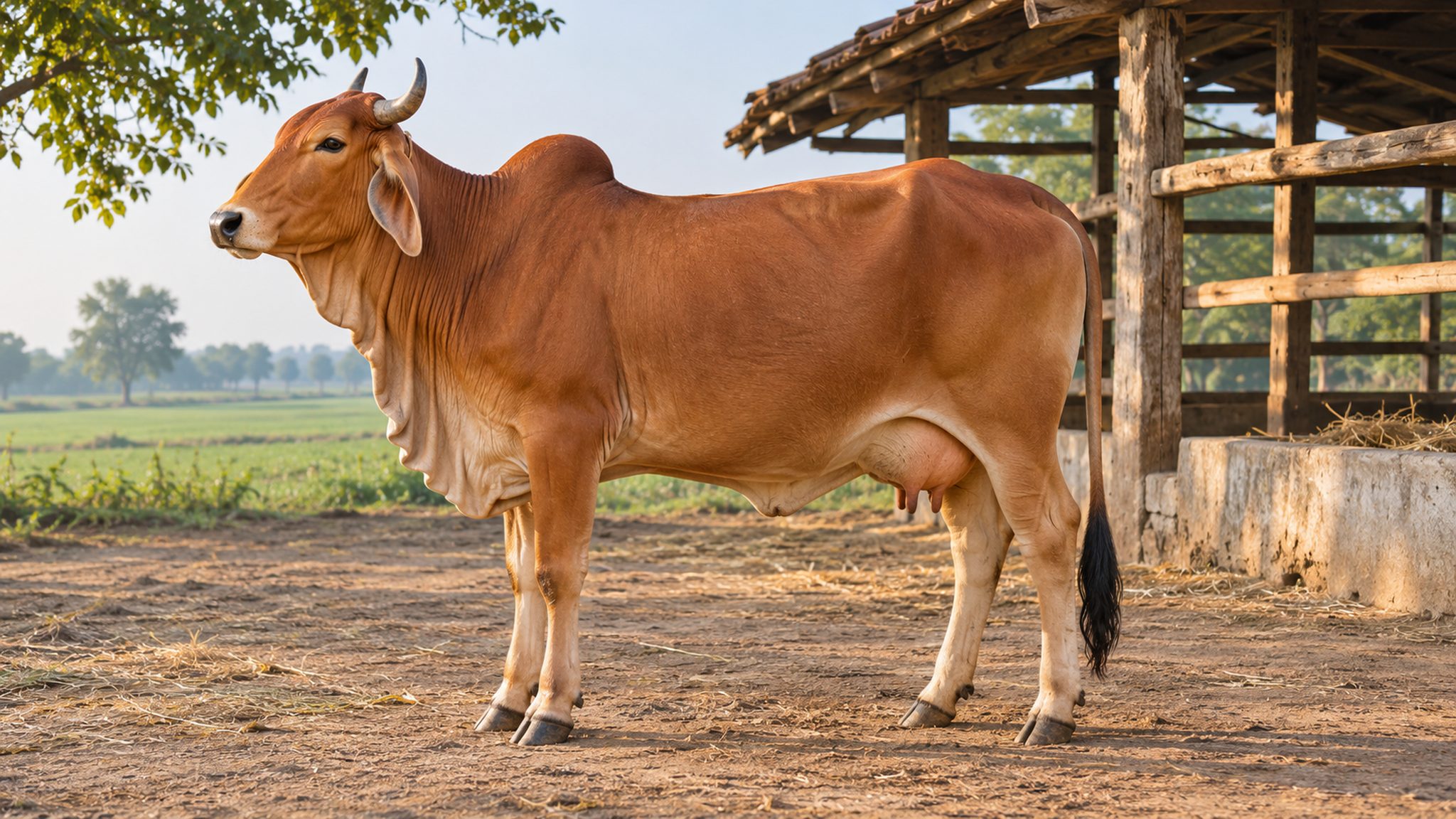
A cow with mouth blisters may alert a veterinarian to disease. Its appearance cannot identify which type of virus a vaccine would need to cover.
- Foot-and-mouth disease spreads readily among susceptible livestock. Painful lesions can make an animal reluctant to eat or walk, while reduced milk production can cut the income from a surviving dairy cow.
- A serotype groups viruses by the way antibodies recognise them. FMD virus has seven recognised serotypes, including SAT-1. Protection against one type cannot be assumed to extend to another.
- Consider a vaccinated herd in a hypothetical SAT-1 investigation. Even a complete record of previous doses leaves a question for the veterinary team. Which serotypes did the vaccine cover?
- Laboratories that characterise the virus can help officials assess vaccine suitability. Manufacturers can then advise on the availability of an appropriate vaccine and the practical steps involved in supplying it.
From the First Report to Laboratory Confirmation
Field officers and diagnostic laboratories answer different questions about the same animal. An early warning works only when the report reaches both.
- A farmer may notice lameness or mouth lesions before a laboratory receives a sample. The location of the affected herd and when signs first appeared give investigators a starting point for follow-up.
- Clinical suspicion justifies prompt investigation. Other diseases can produce similar blisters, so the field report alone leaves both the cause of illness and the identity of any FMD serotype unresolved.
- The Bengaluru exercise brought state departments and laboratories into the same scenario. Participants could examine who would receive a suspect report, arrange testing and relay the finding to the officers investigating the herd.
- The department identified regional diagnostic capacity as a priority. Regional FMD laboratories and Regional Disease Diagnostic Laboratories can draw on technical support from the ICAR National Institute of Foot-and-Mouth Disease.
- In a tabletop exercise, a facilitator can supply a hypothetical test result and ask officials what they would do next. An actual case report requires evidence from specimens collected during a real investigation.
How Animal Movements Guide an Investigation
An exposed herd can have links to a farm beyond the district where the first report arrived. Tracing follows those links across administrative boundaries.
- Suppose a trader moved cattle from a suspect holding to another state. The origin team can share the destination and movement date so its counterpart can investigate animals that may have been exposed.
- Transport vehicles can also carry contaminated material between holdings. Investigators who ask only about the sale of an animal could miss a vehicle that visited two farms on the same day.
- Movement controls were among the options teams discussed in Bengaluru. The simulation allowed officials to examine their consequences for farms and markets before any decision on an actual outbreak.
- Clear risk communication matters at this stage. Farmers need to know what signs to report and whom to contact, while neighbouring districts need to distinguish a suspected exposure from a confirmed infection.
Way Forward
Test the Route From Farm to Laboratory
- Give field veterinarians a current laboratory contact and a referral route for suspect cases.
- Use a simulated cross-border livestock movement to check whether two state teams can identify and contact each other promptly.
- Review vaccine readiness alongside typing capacity so a laboratory finding can inform a supply decision.
Conclusion
- A SAT-1 preparedness exercise gives officials a chance to find a missing link while the livestock case is still hypothetical. One such gap would be a test result that never reaches the investigating district.
- With transboundary animal disease, the response depends on several kinds of evidence. The field report identifies a suspect herd, the laboratory identifies the agent and movement records point to the next premises to investigate.
UPSC Practice Questions
Prelims MCQ 1
With reference to foot-and-mouth disease, consider the following statements:
- It can affect both cattle and pigs.
- Protection against one serotype guarantees protection against SAT-1.
- Several diseases can produce clinical signs resembling FMD.
How many of the above statements are correct?
(a) Only one (b) Only two (c) All three (d) None
Answer: (b) Only two
Explanation:
Statements 1 and 3 are correct. Vaccine protection is serotype-specific.
Prelims MCQ 2
What prompted India’s VAJRA-SAT exercise?
(a) Confirmation of SAT-1 in Bengaluru (b) Certification of every Indian herd as FMD-free (c) Spread of SAT-1 beyond Africa into parts of West Asia (d) Withdrawal of all FMD vaccines
Answer: (c) Spread of SAT-1 beyond Africa into parts of West Asia
Explanation:
The department cited the changing geographical risk when explaining the exercise.
UPSC Mains Questions
- How do field surveillance and laboratory confirmation contribute differently to the management of transboundary animal diseases?
- Using livestock movement as an example, discuss the role of inter-state coordination in protecting farm incomes during an animal disease investigation.
Sources: Press Information Bureau and World Organisation for Animal Health.
Frequently Asked Questions
Was SAT-1 found in India during VAJRA-SAT?
The department reported on 6 November that India had recorded no SAT-1 occurrence. Teams used a simulated outbreak in Bengaluru to rehearse decisions they might face if a suspected case arose.
What does serotype mean for vaccination?
A serotype is an immunologically distinct type of virus. In foot-and-mouth disease, vaccine planners must consider which virus type threatens the herd when assessing whether a vaccine offers suitable protection.
Can a veterinarian identify SAT-1 from visible blisters?
A veterinarian can recognise signs that warrant testing and report a suspect animal. Laboratory investigation is needed to establish the cause and determine which FMD virus type may be involved.
Why would another state need an alert?
A trader or transporter might have moved exposed animals across a state boundary. The destination state’s veterinary service needs enough information to locate the receiving herd and investigate potential exposure.
Tell Google you want more of this.
Add Anantam IAS as a preferred sourceOne tap, and this site shows up more often in your own Top Stories, AI Overviews and AI Mode. Remove it any time.