Why in News?
The India–New Zealand Free Trade Agreement entered into force on 20 October 2026, with New Zealand confirming implementation and India highlighting duty-free export access alongside protection for sensitive agricultural products.
- New Zealand has eliminated customs duties on all tariff lines covering Indian exports, according to the Ministry of Commerce and Industry.
- India’s concessions include immediate and phased access; sensitive products such as dairy, sugar and edible oils remain excluded from concessions.
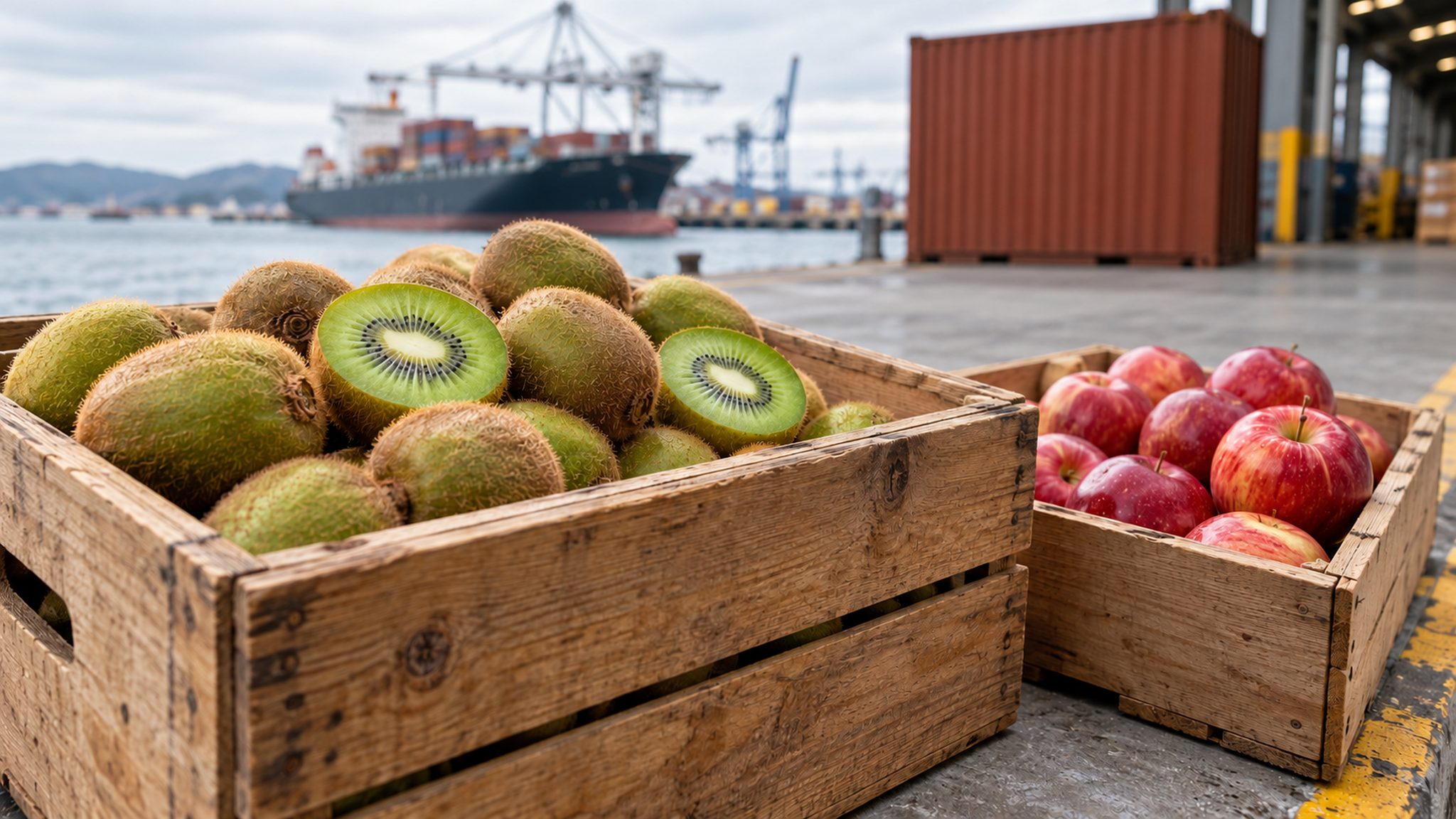
- Tariff-rate quotas for apples, kiwifruit and Mānuka honey are linked to agricultural productivity action plans under a joint council.
- The agreement illustrates asymmetric liberalisation: reciprocal benefits can coexist with different product coverage, implementation periods and protections.
- The central policy question is whether export opportunities and agricultural cooperation can deliver benefits while managing adjustment costs for vulnerable producers.
UPSC Relevance
Prelims Relevance
- Entry into force: commencement of treaty operation, distinct from signature and domestic approval.
- Tariff line: a product category in a customs tariff schedule.
- Tariff-rate quota: different tariff treatment within and beyond a specified import quantity.
- Rules of origin: conditions determining whether a product qualifies as originating under the agreement.
- Exclusion: withholding a negotiated tariff concession for a product.
Mains Relevance
GS Paper 3
- Balancing export competitiveness with agricultural sensitivity in trade negotiations.
- Distinguishing negotiated market access from realised economic benefits.
GS Paper 2
- Economic partnerships as instruments of bilateral engagement.
Background and Context
What Changes When an FTA Takes Effect?
Entry into force activates the agreement, but the timing and reach of each concession still depend on its negotiated terms.
- Signature records agreement on the negotiated text, while domestic approval prepares each country to implement it. Entry into force is the separate operational milestone; MFAT confirms that today’s development concerns that final transition.
- New Zealand’s commitment removes customs duties across tariff lines covering Indian exports. Textiles, footwear and engineering goods are among the sectors identified by India as potential beneficiaries, rather than sectors with guaranteed sales gains.
- India’s offer follows a different structure, combining tariff elimination, reductions, staged implementation and exclusions. Reciprocal agreement does not mean every product receives identical treatment in both directions, or that every concession starts immediately.
- A tariff line is a customs classification, whereas export value measures actual trade. Claims about coverage of tariff lines and shares of exports describe different denominators and should not be treated as interchangeable indicators.
- Zero customs duty addresses one border cost. It does not establish that transport, documentation or product-compliance costs disappear; exporters still need commercially viable prices and buyers before legal access becomes an actual trade flow.
How Exclusions and Agricultural Quotas Work
Agricultural access is differentiated by product and linked to cooperation intended to improve Indian farm productivity.
- Exclusion means a product does not receive the negotiated concession. India’s official release identifies dairy, sugar and edible oils among sensitive exclusions; this is different from a complete prohibition on importing those products.
- A tariff-rate quota gives specified tariff treatment within a defined import quantity and different treatment beyond it. It is distinct from both unlimited duty-free entry and a simple absolute limit on all imports.
- For apples, kiwifruit and Mānuka honey, India says the quotas are formally linked to delivery of agricultural action plans. The relevant question is how implementation connects access conditions with promised improvements for domestic producers.
- The Agricultural Productivity Partnership covers technology, training and cultivation practices. Better orchard management and reduced post-harvest losses are intended outcomes; announced cooperation should not be described as productivity gains already achieved in Indian farms.
- A Joint Agriculture Productivity Council oversees the linkage. This institutional arrangement matters because concessions and cooperation are interdependent commitments, requiring follow-through rather than an assumption that agricultural benefits arise automatically from signing an FTA.
Reading Protection and Benefits Correctly
The agreement combines opening with conditions; assessment should follow the commitments actually implemented and the outcomes subsequently observed.
- Rules of origin determine which goods qualify for preferential treatment. They help prevent goods from outside the partnership from receiving concessions merely because they are routed through a partner country without meeting origin requirements.
- India’s release also identifies a bilateral safeguard mechanism and anti-circumvention provisions. Their existence does not imply automatic protection against every import increase; invoking a safeguard depends on the agreement’s applicable conditions and procedures.
- Asymmetry accommodates differences in economic structure and domestic sensitivity. India can pursue wider access for its manufacturers while reserving agricultural protections; this combination is consistent with negotiation rather than evidence that reciprocity is absent.
- Investment facilitation is a commitment to support investment, not evidence that money has already arrived. Similarly, announced services or mobility opportunities should not be converted into claims of guaranteed employment or automatic visa entitlement.
- For evaluation, separate policy design from economic results: first identify the product concession and its timing, then examine trade and producer outcomes. A positive announcement alone cannot establish gains for every firm or household.
Way Forward
Make the Terms Usable and Accountable
- Publish clear product-level guidance distinguishing immediate concessions, phased reductions, quotas and exclusions so firms do not mistake headline access for universal treatment.
- Track agricultural action-plan delivery alongside quota administration, with evidence on extension services and post-harvest improvements reaching farmers.
- Report realised outcomes separately from investment announcements and export projections, including the experience of smaller producers facing adjustment costs.
Conclusion
- The India–New Zealand FTA demonstrates that reciprocal liberalisation can be asymmetric: broad export access can coexist with product exclusions, phased commitments and conditional agricultural preferences.
- A sound assessment distinguishes legal opportunity from realised benefit, and treats origin rules, quota administration and delivery of agricultural cooperation as integral parts of the agreement’s economic effect.
UPSC Practice Questions
Prelims MCQ 1
With reference to the India–New Zealand FTA, consider the following statements:
- New Zealand has eliminated customs duties on tariff lines covering Indian exports.
- India has granted identical, immediate duty-free treatment to every New Zealand product.
- Agricultural tariff-rate quotas can coexist with exclusions for sensitive products.
How many of the above statements are correct?
(a) Only one (b) Only two (c) All three (d) None
Answer: (b) Only two
Explanation:
Statements 1 and 3 are correct. India’s concessions are differentiated and retain sensitive exclusions; the two countries have not made identical universal commitments.
Prelims MCQ 2
Which description best explains a tariff-rate quota?
(a) A complete ban on imports after a licensing deadline (b) An identical customs duty on every imported product (c) Different tariff treatment within and beyond a specified import quantity (d) An exemption from rules of origin for all imports
Answer: (c) Different tariff treatment within and beyond a specified import quantity
Explanation:
A tariff-rate quota distinguishes imports within the specified quantity from imports beyond it through tariff treatment. It is not the same as an absolute import prohibition.
UPSC Mains Questions
- How can asymmetric market-access commitments reconcile export promotion with agricultural sensitivity? Discuss using the India–New Zealand FTA.
- Explain why entry into force is only the beginning of evaluating a trade agreement’s economic benefits.
Sources: PIB, Ministry of Commerce and Industry and New Zealand Ministry of Foreign Affairs and Trade.
Frequently Asked Questions
When did the India–New Zealand FTA enter into force?
New Zealand’s Ministry of Foreign Affairs and Trade confirms that the agreement entered into force on 20 October 2026. This operational milestone is distinct from signing the agreement or completing domestic approval.
Does the agreement make all bilateral trade duty-free immediately?
No. New Zealand has eliminated duties on tariff lines covering Indian exports, while India’s concessions are differentiated. Phased access, agricultural quotas and sensitive exclusions mean the commitments are not identical.
Does exclusion of dairy mean dairy imports are banned?
No. Exclusion from a trade agreement’s tariff concessions means the product does not receive that negotiated preference. It does not, by itself, create a prohibition on importing the product.
Why are agricultural action plans relevant?
India says quotas for apples, kiwifruit and Mānuka honey are linked to action-plan delivery under joint oversight. The arrangement connects market access with cooperation intended to improve cultivation practices and farm productivity.
Tell Google you want more of this.
Add Anantam IAS as a preferred sourceOne tap, and this site shows up more often in your own Top Stories, AI Overviews and AI Mode. Remove it any time.