Why in News?
On August 31, 2026, an ad hoc Court of Arbitration, administered by the Permanent Court of Arbitration (PCA) at The Hague, ruled that the Indus Waters Treaty (IWT), 1960, remains fully in force despite India’s decision to hold it in abeyance. The tribunal also imposed temporary restrictions on parts of the Ratle Hydroelectric Project in Jammu and Kashmir.
India rejected the award, maintaining that the arbitral body was illegally constituted and had no jurisdiction over India’s sovereign decisions.
| UPSC Relevance: GS-1 Indian Geography; GS-2 International Relations: Bilateral Relations Prelims: Indus Water Treaty, Dispute-Settlement Mechanism, Ratle Hydroelectric Project Mains: Indus Water Treaty: India’s stance & implications |
Key Provisions of Indus Waters Treaty:
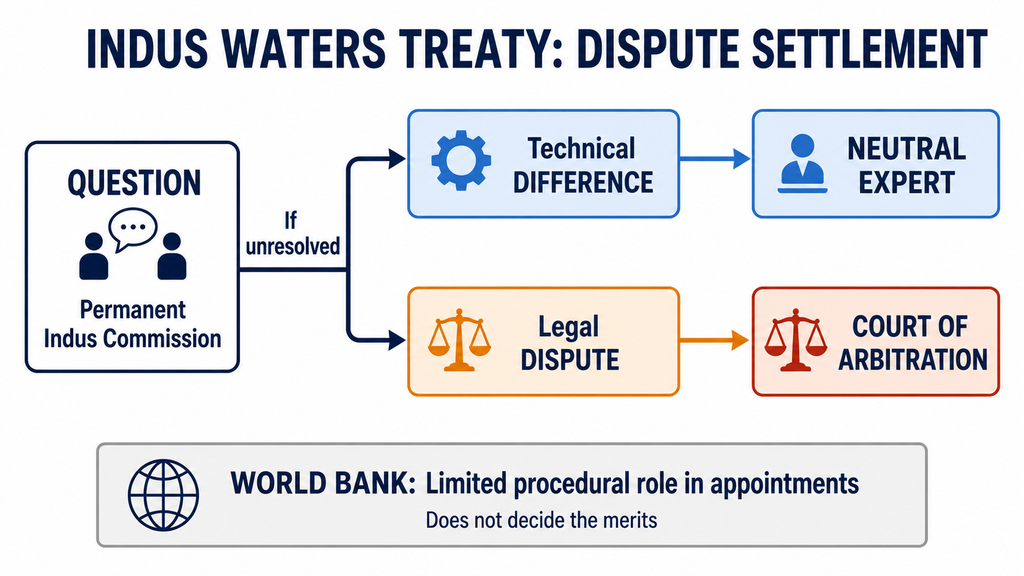
- Signed in 1960 after World Bank-assisted negotiations, the Treaty divided the Indus river system broadly as follows:
- Eastern Rivers: Ravi, Beas and Sutlej- Allocated for India’s unrestricted use.
- Western Rivers: Indus, Jhelum and Chenab- Allocated principally to Pakistan. India can use the Western Rivers for domestic and non-consumptive purposes, limited irrigation, specified storage and run-of-the-river hydropower, subject to design restrictions.
- The Treaty also established:
- Regular exchange of hydrological data
- The bilateral Permanent Indus Commission
- Prior notification of projects affecting the other country; and
- A graded dispute-settlement mechanism.
The World Bank’s role is primarily procedural, including making specified appointments; it is neither the Treaty’s guarantor nor its enforcement authority.
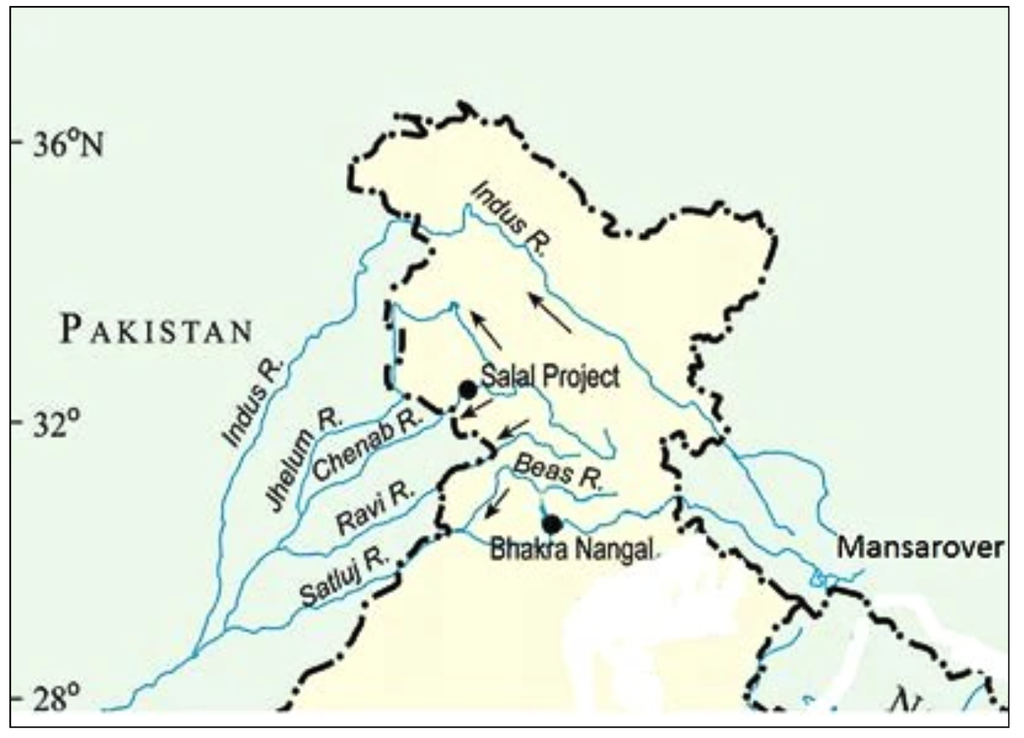
Dispute-Settlement Mechanism:
- Article IX provides three stages:
- A question is first examined by the Permanent Indus Commission.
- A technical difference may be referred to a Neutral Expert.
- A legal dispute may be placed before a seven-member Court of Arbitration under Annexure G.
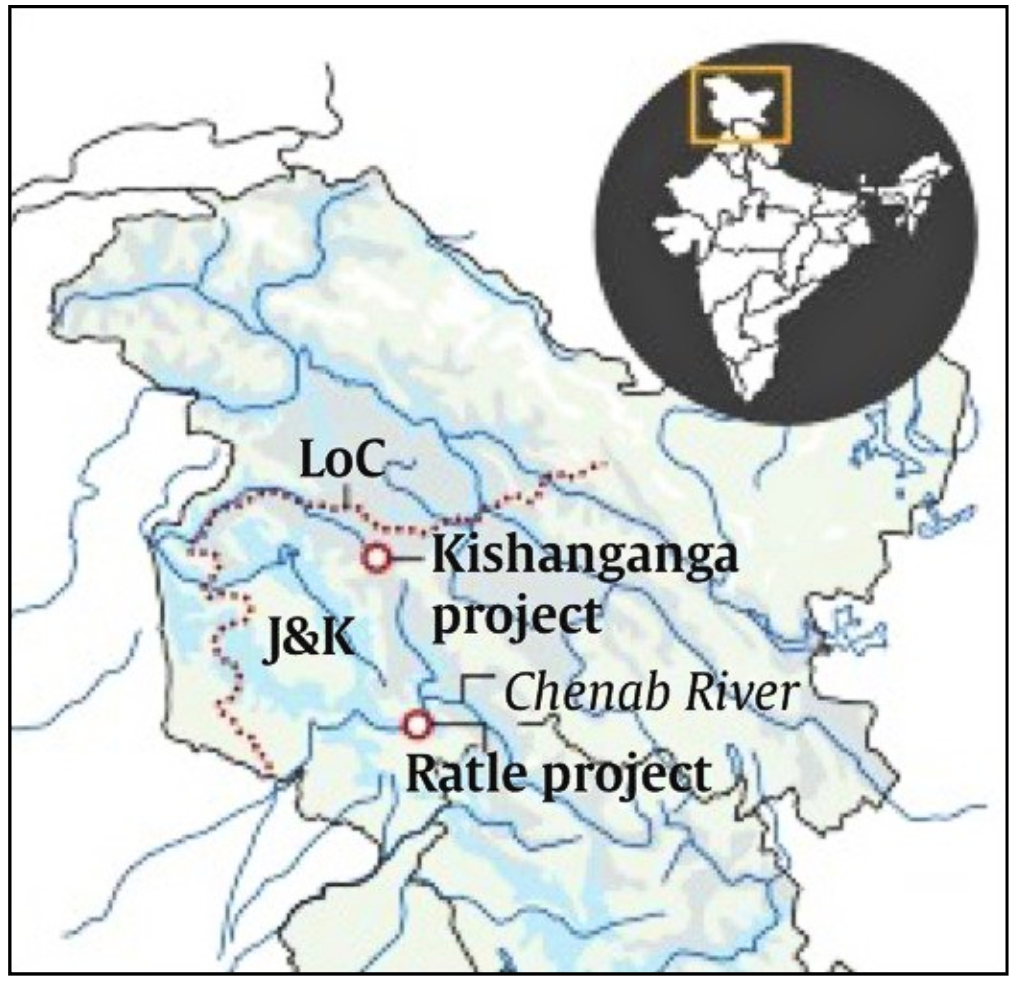
- The present controversy arose because Pakistan sought a Court of Arbitration, while India requested a Neutral Expert to examine overlapping technical objections concerning the Kishenganga and Ratle projects.
- India argues that the Treaty does not permit parallel adjudication (i.e., a Neutral Expert and a Court of Arbitration to examine the same issue simultaneously). Article IX(6) supports this position by stating that arbitration cannot proceed while a “difference” is being considered by a Neutral Expert.
Why did India place the Treaty in abeyance?
Following the Pahalgam terrorist attack in April 2025, India announced that the IWT would be held in abeyance until Pakistan credibly and irrevocably ended its support for cross-border terrorism.
India’s broader concerns include:
- Continued cross-border terrorism
- Pakistan’s repeated objections to Indian hydropower projects
- Prolonged and duplicative dispute proceedings
- Population growth and rising energy requirements
- Advances in dam and hydropower technology
- Climate change and altered river hydrology; and
- Pakistan’s alleged reluctance to renegotiate an agreement framed in the 1950s.
Importantly, India has not formally terminated or “scrapped” the Treaty; it has declared its obligations to be in abeyance.
What did the Court rule?
The tribunal interpreted “abeyance” as an attempted suspension or termination, because the term has no technical meaning under international treaty law. It unanimously concluded that:
- The IWT contains no provision allowing unilateral suspension or termination.
- Under Article XII(4), it continues until India and Pakistan terminate it through another duly ratified treaty.
- Sovereignty by itself cannot release a State from treaty obligations.
- Pakistan’s alleged support for terrorism, even if assumed, would not constitute a “material breach” of the IWT because the Treaty specifically governs river-water rights and obligations.
- Demographic, technological and climatic changes did not meet the strict threshold of a “fundamental change of circumstances”.
- The Treaty is of a character that would continue operating even during armed conflict.
- Suspension could not be justified as a countermeasure.
The tribunal consequently held that India must continue observing the Treaty, including its hydropower-design and dispute-settlement obligations.
India did not participate in the proceedings; the tribunal considered India’s position through official statements and communications.
Ratle Hydroelectric Project:
- The Ratle Hydroelectric Project is an 850 MW run-of-the-river project currently under construction on the Chenab River. It is located in the Kishtwar district of Jammu and Kashmir.
- Pakistan has challenged features such as its spillways, power intakes, freeboard and operating pool, arguing that these could provide India excessive control over river flows.
- Pending the Neutral Expert’s decision, expected around July 2027, the Court ordered India:
- Not to concrete the dam wall and power-intake structure above specified levels
- To report changes in the construction schedule; and
- To maintain these restrictions until 90 days after the Neutral Expert’s final decision.
This is a limited interim order, not a direction to stop the entire Ratle project.
Why has India rejected the award?
India maintains that:
- The arbitral body was constituted in violation of the Treaty
- Parallel proceedings on the same issues undermine Article IX
- The Neutral Expert is the appropriate forum for technical design questions
- India never recognised or participated in the arbitration
- The tribunal cannot adjudicate India’s sovereign decision to hold the Treaty in abeyance; and
- Its awards are therefore “null and void” and will not affect Indian projects.
The Ministry of External Affairs reiterated that India’s decision to hold the Treaty in abeyance remains in force.
What happens now?
The dispute has produced a gap between legal pronouncement and political implementation:
- The tribunal regards the Treaty and its awards as binding.
- India rejects the tribunal’s jurisdiction and continues to treat the Treaty as being in abeyance.
- The Neutral Expert process is continuing, with a final decision expected in July 2027.
- Pakistan may invoke the award diplomatically and before international forums.
- The PCA has no independent executive machinery to physically enforce the order; implementation ultimately depends on State conduct, diplomacy and international pressure.
- India’s limited storage and diversion infrastructure means that abeyance does not immediately enable it to stop or divert the entire flow of the Western Rivers.
Way Forward:
- Pursue formal modernisation under Article XII(3), which permits modification through a mutually ratified treaty.
- Clarify the sequencing of Neutral Expert and arbitration proceedings to prevent duplication.
- Update the Treaty for climate change, glacier loss, environmental flows, sedimentation and groundwater.
- Establish real-time flood, drought and hydrological data-sharing systems.
- Preserve humanitarian and disaster-warning communication even during political crises.
- Ensure transparent, Treaty-compliant design of Indian hydropower projects while firmly protecting India’s legitimate developmental rights.
- Combine technical engagement with demands for verifiable action against cross-border terrorism.
- Use limited bilateral or back-channel negotiations to prevent a water dispute from becoming an uncontrollable security crisis.
The Hague award does not by itself end the dispute: it reinforces the Treaty’s legal continuity, while India’s rejection creates an operational and diplomatic stalemate.
The durable solution lies neither in an unchanged 1960 framework nor in uncontrolled water coercion, but in a modernised, climate-resilient and enforceable arrangement that protects India’s developmental and security interests while ensuring responsible transboundary water governance.
UPSC PYQ 2016
Q. Present an account of the Indus Water Treaty and examine its ecological, economic and political implications in the context of changing bilateral relations.
Tell Google you want more of this.
Add Anantam IAS as a preferred sourceOne tap, and this site shows up more often in your own Top Stories, AI Overviews and AI Mode. Remove it any time.