Why in News?
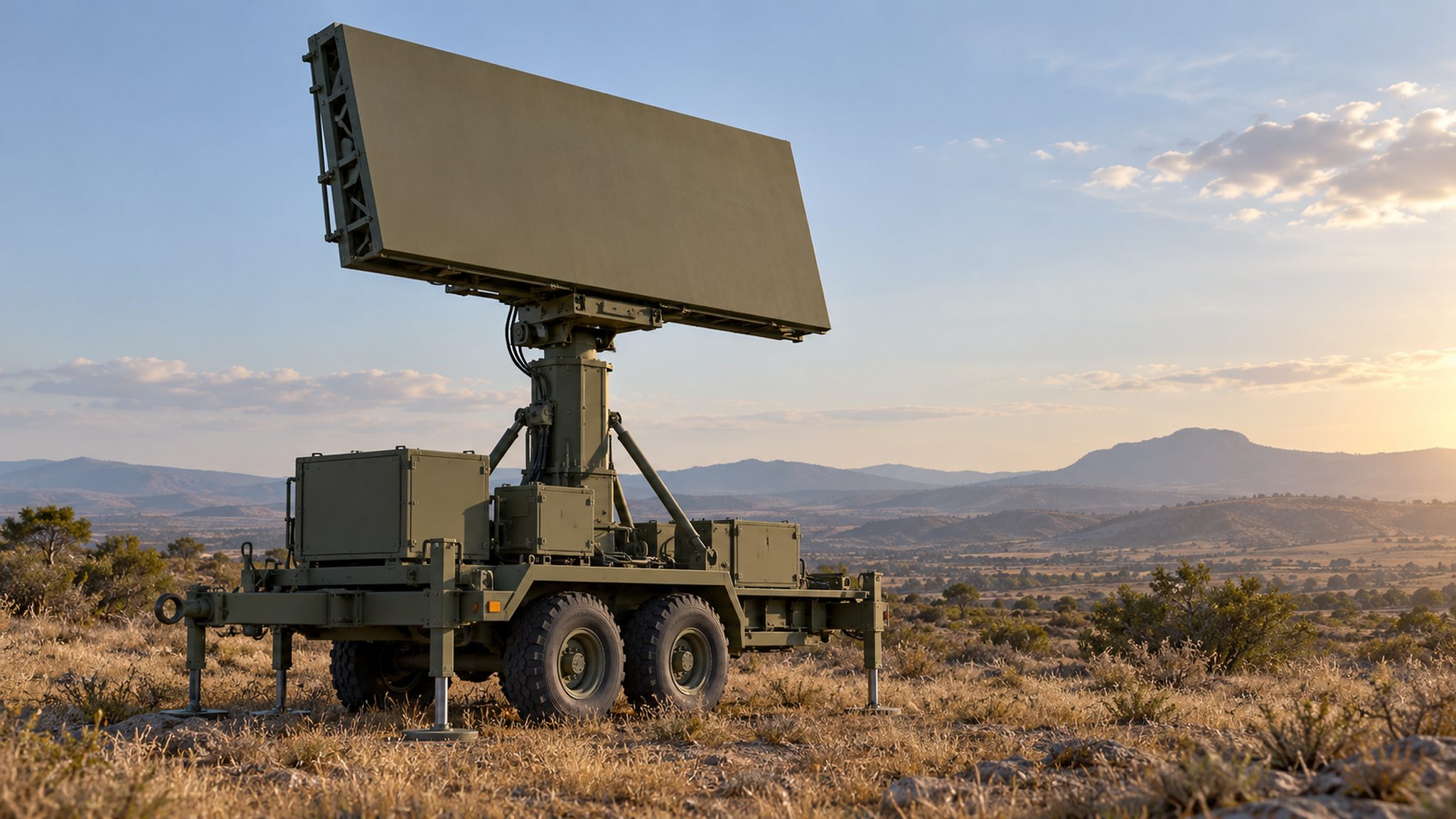
On 21 October 2026, the Ministry of Defence signed a contract with Bharat Electronics Limited to procure Improved Low Level Light Weight Radars for the Indian Army.
- The procurement contract concerns an improved low-level, lightweight radar system for Army air defence.
- According to the Ministry of Defence, the system can detect and track fighter-sized targets and mini or micro drones.
- The release also identifies aerial-target prioritisation as a capability, supporting decisions about which detected objects need attention first.
- A signed contract establishes a procurement commitment; the release does not establish completed delivery or operational deployment.
- Small, low-flying aerial targets create a surveillance challenge because useful echoes must be distinguished from surrounding returns.
- Air defence connects sensors, decision-making and response systems; improving one component does not independently prove the effectiveness of the entire chain.
UPSC Relevance
Prelims Relevance
- Radar uses radio-wave echoes to obtain information about objects.
- Detection, tracking and target prioritisation perform different functions.
- Mini and micro drones are among the target categories mentioned in the official announcement.
- Terrain masking and ground clutter affect the detection environment.
- A radar sensor is distinct from an interceptor or other response system.
Mains Relevance
GS Paper 3
- Link indigenous defence procurement to reliable surveillance, integration and maintenance.
- Explain how low-altitude surveillance strengthens, but cannot independently complete, counter-drone defence.
Essay
- Technological capability depends on the institutions and systems that turn information into action.
Background and Context
What the Radar Contract Establishes
The announcement describes a sensor acquisition and its stated functions; it does not report a completed operational deployment.
- The official announcement identifies Bharat Electronics Limited as the supplier and the Indian Army as the intended user. This makes the development a procurement decision, rather than evidence of a newly demonstrated battlefield result.
- The stated target categories include fighter-sized aircraft and mini or micro drones. These categories describe the intended surveillance task; they do not provide a measured detection probability against every possible aircraft or drone under all conditions.
- The release lists detection and tracking alongside prioritisation. Read these as related information functions: locating a potential target, following its movement and helping organise attention, rather than treating each as a separate weapon or interception capability.
- The procurement is presented as supporting indigenisation of air-defence platforms. The policy question is whether domestic production can support reliable equipment, maintenance and integration over time, rather than whether signing a contract itself completes technological self-reliance.
- The announcement does not disclose detection range, operating bands or quantities. Retain that uncertainty instead of importing specifications from similarly named radars, earlier variants or unrelated systems with different roles.
From a Radio Echo to a Useful Track
The following sequence explains general radar principles, rather than undisclosed technical specifications of the newly contracted system.
- A radar transmits radio waves and receives energy reflected by objects. Echo timing helps estimate distance, while the direction in which the antenna observes the return helps locate the object relative to the radar itself.
- Detection means recognising a return as a possible target amid other signals. A single observation does not automatically establish what the object is, whether it is hostile or whether a reliable continuing track can be maintained.
- Tracking associates successive observations with the same moving object. This produces information about movement over time, making the target more useful to decision-makers than an isolated echo that supplies no dependable history of its changing position.
- Prioritisation organises attention among aerial targets when several require assessment. It is distinct from detection: finding an object and deciding its relative importance answer different questions, and the release does not specify the system’s prioritisation rules.
- A useful track can cue a response through the wider air-defence system. The radar supplies information; interception requires a separate response capability and decision process, so detection alone should never be described as a successful shootdown.
Why Low-Flying Targets Remain Difficult
The surveillance problem depends on geometry, reflected signals and the surrounding environment, not simply the presence of a radar.
- Line of sight limits ground-based radar observations. Earth’s curvature and intervening terrain can hide low-flying objects, so a ground radar does not guarantee an unobstructed view in every direction or at every distance.
- Ground clutter consists of unwanted returns from surrounding surfaces and objects. Detecting a low-altitude target requires separating useful information from this background; a bright or numerous set of returns is not automatically evidence of multiple threats.
- A target’s radar return depends on shape, materials, orientation and radar characteristics. Small drones can be challenging, but physical size alone cannot establish how easily an object will be detected in every situation.
- Sensor integration connects information to units assessing threats. A useful detection can lose operational value if communication, identification or response arrangements fail to connect the observation to appropriate action.
- Purpose distinguishes radar applications: air-defence radar follows aerial targets, while atmospheric research radar investigates environmental processes. A shared sensing principle does not make their equipment, measurements or operational claims interchangeable.
Way Forward
Assess the Complete Surveillance Chain
- Evaluate delivery and acceptance separately from the contract announcement, using documented milestones before claiming operational induction.
- Prioritise integration and maintenance so useful tracks reach decision-makers and equipment remains available under demanding conditions.
- Assess performance against representative target and terrain conditions, while avoiding unsupported public claims of perfect detection or automatic interception.
Conclusion
- Low-level radar strengthens the information side of air defence by detecting, tracking and helping prioritise aerial targets. Its contribution should be explained through this sequence, without confusing a sensor’s output with a weapon’s effect.
- The contract is a procurement development, with delivery and deployment still requiring separate evidence. A sound answer connects domestic manufacturing with reliable sensing, system integration and an appropriate response, while recognising the limits of the published announcement.
UPSC Practice Questions
Prelims MCQ 1
With reference to radar-based air surveillance, consider the following statements:
- Tracking associates successive observations with a moving object.
- Target prioritisation is identical to physically intercepting a target.
- Ground clutter can complicate the detection of low-flying targets.
How many of the above statements are correct?
(a) Only one (b) Only two (c) All three (d) None
Answer: (b) Only two
Explanation:
Statements 1 and 3 are correct. Tracking follows movement across observations, and clutter can obscure useful returns. Prioritisation helps organise attention; it does not itself intercept a target.
Prelims MCQ 2
Which conclusion is supported by the Ministry of Defence’s 21 October 2026 low-level radar announcement?
(a) All contracted radars have completed operational deployment. (b) The radar independently destroys every detected drone. (c) A procurement contract covers radars with detection, tracking and target-prioritisation capabilities. (d) The release confirms a universal detection range for every target.
Answer: (c) A procurement contract covers radars with detection, tracking and target-prioritisation capabilities.
Explanation:
The announcement establishes the procurement and stated capabilities. It does not establish completed deployment, universal range or an independent shootdown function.
UPSC Mains Questions
- Explain the roles of detection, tracking and target prioritisation in counter-drone air defence. Why should these functions be distinguished from interception? (150 words)
- Discuss how indigenous radar procurement can strengthen defence capability. Identify the importance of integration, maintenance and evidence-based performance assessment. (250 words)
Source: PIB, Ministry of Defence.
Frequently Asked Questions
What is the new low-level radar development?
The Ministry of Defence signed a contract with Bharat Electronics Limited on 21 October 2026 for improved low-level lightweight radars for the Indian Army. The announcement concerns procurement, rather than completed deployment.
How is tracking different from detection?
Detection recognises a possible target in received signals. Tracking links successive observations to follow its movement over time. A detected object does not automatically have a reliable track or a confirmed hostile identity.
Can radar alone intercept a drone?
A radar supplies information about aerial targets. Interception requires a separate response capability and decision process within the wider defence system. Detecting or prioritising a drone does not itself mean destroying it.
Why are low-flying targets difficult to detect?
Terrain and Earth’s curvature can obstruct radar line of sight, while returns from surrounding objects create clutter. Target shape, material and orientation also affect the echo, so performance depends on operating conditions.
Tell Google you want more of this.
Add Anantam IAS as a preferred sourceOne tap, and this site shows up more often in your own Top Stories, AI Overviews and AI Mode. Remove it any time.