Why in News?
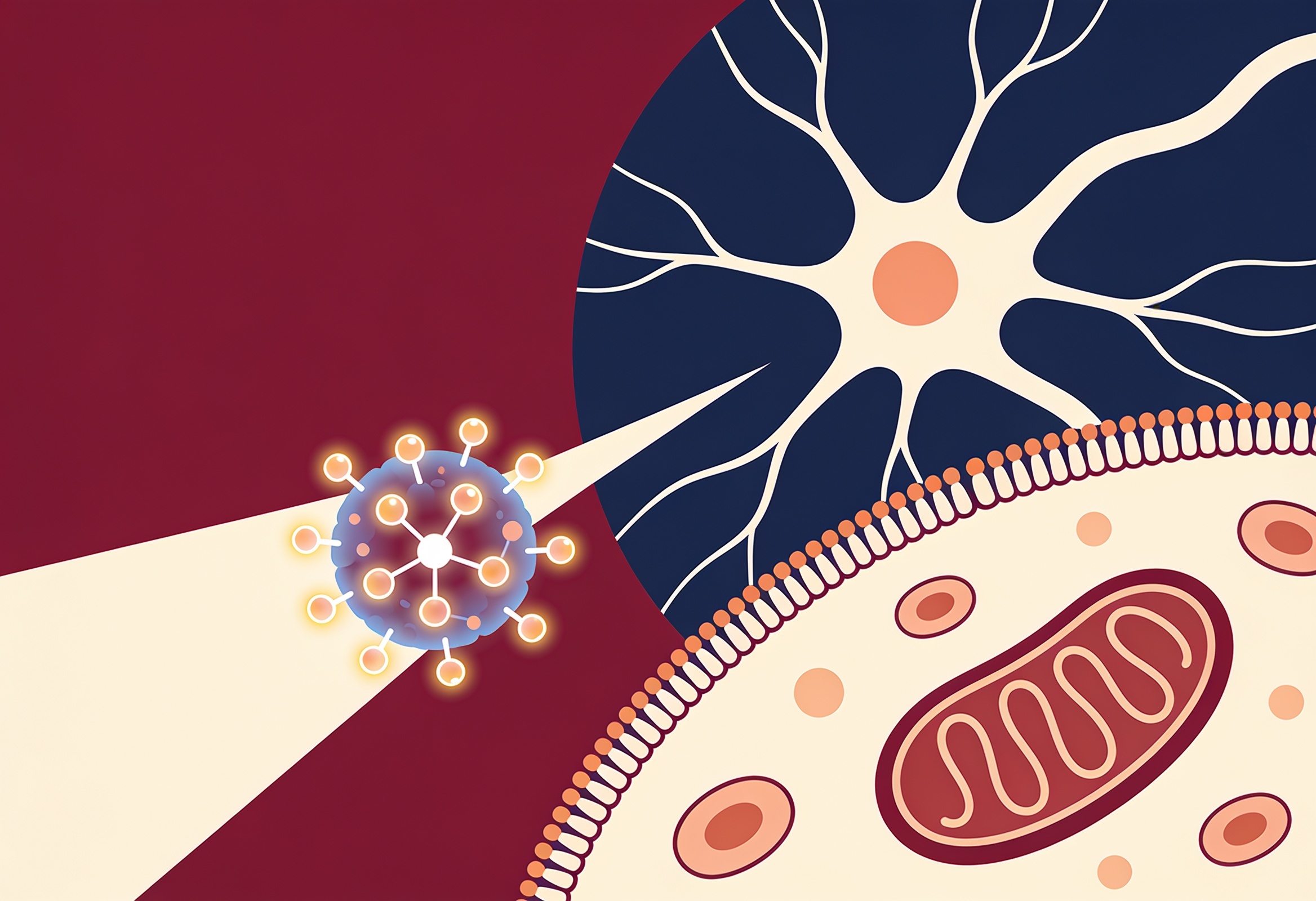
A DST-INST Mohali study demonstrated that a human serum albumin nano-formulation of melatonin (nano-melatonin) enhances brain delivery, bioavailability and neuroprotective effects, including induction of mitophagy through BMI1 upregulation, reducing oxidative stress in Parkinson’s disease models.
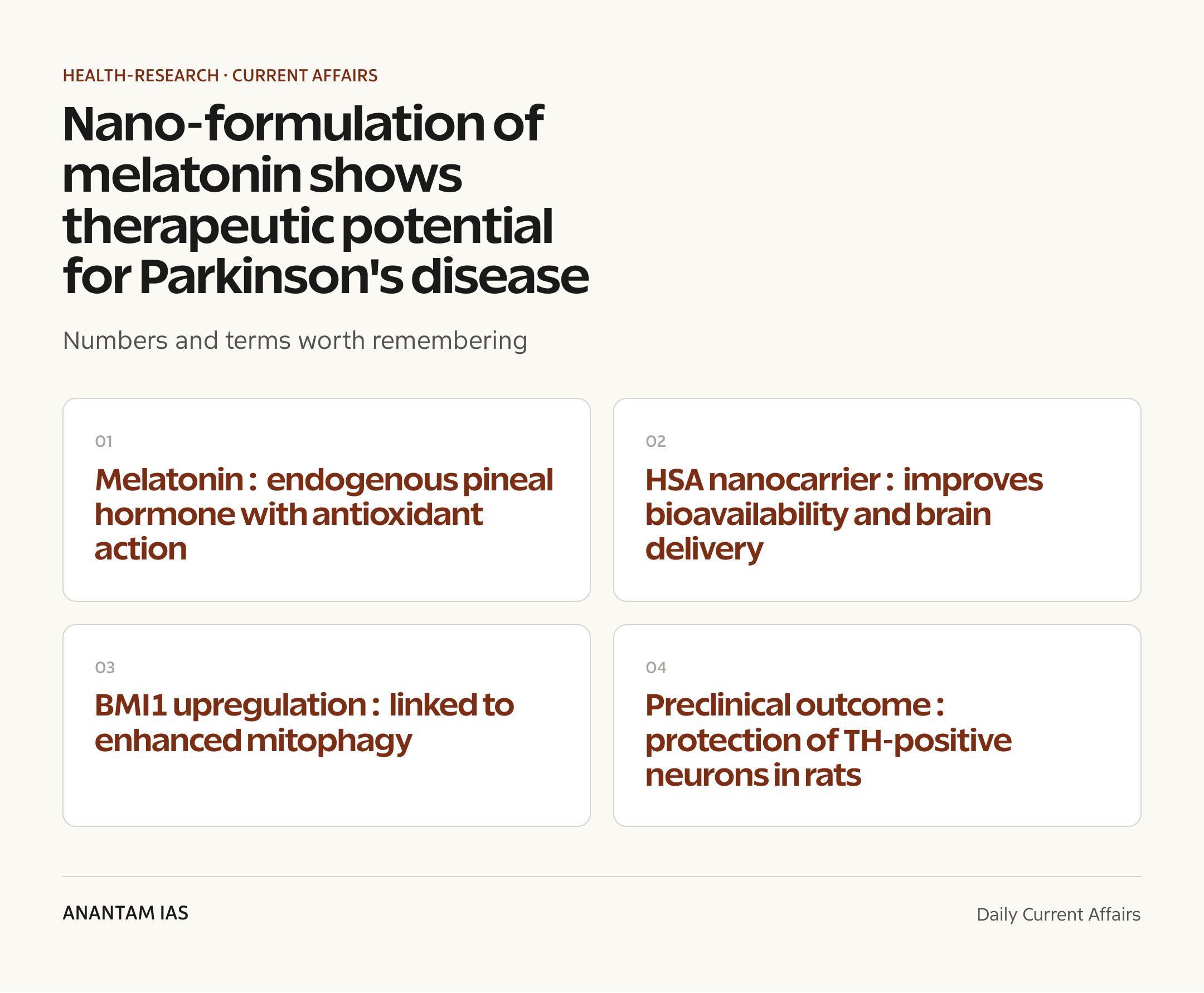
- Novel delivery: Use of human serum albumin (HSA) as a nanocarrier enabled targeted brain delivery and sustained release of melatonin.
- Mechanistic insight: Study links nano-melatonin to upregulation of BMI1 and induction of mitophagy, clarifying a molecular pathway for neuroprotection.
- Preclinical efficacy: Nano-melatonin reduced rotenone-induced toxicity in vitro and protected TH-positive neurons in rat models.
- Translational potential: Work points to repurposing a safe neurohormone, enhanced by nanotech, as a therapeutic candidate for Parkinson’s and other mitophagy-related disorders.
The development matters in the context of:
- Parkinson’s disease burden: PD is a progressive neurodegenerative disorder driven by loss of dopaminergic neurons and alpha-synuclein aggregation; current drugs treat symptoms but do not alter disease progression.
- Therapeutic gap: No disease-modifying therapy is widely available; strategies that reduce oxidative stress and clear dysfunctional mitochondria are of high research priority.
- Melatonin as candidate: Melatonin is an antioxidant neurohormone known for sleep regulation and clinical safety as a supplement, but it has low bioavailability and is prone to premature oxidation.
- Mitophagy in PD: Quality control of mitochondria via mitophagy is central to neuronal health; several PD-associated genes modulate mitophagy.
- Nanocarriers for CNS: HSA and other protein-based nanocarriers can improve brain delivery by enhancing stability, circulation time and possibly crossing the blood brain barrier.
- Policy angle: Indian institutes developing translational neurotherapeutics align with national priorities for indigenous biotech innovation and public health preparedness.
UPSC Relevance
Prelims Relevance
- Focus on basic facts and mechanisms: melatonin properties, HSA nanocarrier, mitophagy definition, BMI1 role and rotenone as a PD toxin. Useful for factual MCQs on science and health.
Mains Relevance
GS3 Science & Tech
- Topics for GS3 answers: neurodegenerative disease biology, biotechnology for drug delivery, translational research pathways, public health implications of neurotherapeutics and research policy support mechanisms.
Essay
- Material for essays on ‘Science, Technology and Society’, ‘Biotechnology and Healthcare’, or ‘Innovation and Public Health’ with examples of nanotech-enabled drug repurposing and ethical/regulatory considerations.
Background and Context
Parkinson's disease: pathophysiology and unmet need
Key disease mechanisms and why new therapeutics are required.
- Neuronal loss: PD is characterized by progressive loss of dopaminergic neurons in the substantia nigra and consequent motor and non-motor symptoms.
- Protein aggregation: Aggregation of alpha-synuclein into Lewy bodies is a pathological hallmark linked to neuronal dysfunction.
- Oxidative stress and mitochondria: Mitochondrial dysfunction and elevated oxidative stress are central contributors to neuronal death in PD.
- Current treatment limits: Levodopa and dopamine agonists relieve symptoms but do not stop neurodegeneration or restore lost neurons.
- Disease-modifying need: Interventions that clear dysfunctional mitochondria or reduce oxidative damage are candidates for slowing progression.
Melatonin: biology and therapeutic profile
Why melatonin is considered for neuroprotection and its pharmacological limits.
- Physiology: Melatonin is a pineal gland hormone that regulates the sleep-wake cycle and has antioxidant properties.
- Neuroprotective effects: Demonstrated antioxidant, anti-inflammatory and mitochondrial stabilizing effects in several preclinical models.
- Clinical safety: Widely used as a supplement for sleep disorders with an established safety profile at common doses.
- Pharmacokinetic constraints: Low oral bioavailability, rapid metabolism and susceptibility to oxidation reduce central nervous system exposure.
- Need for delivery tech: Enhancing stability and brain delivery could unlock melatonin’s therapeutic potential in neurodegeneration.
Mitophagy and its relevance to neurodegeneration
Role of mitochondrial quality control in neuronal survival.
- Definition: Mitophagy is selective autophagic removal of damaged or dysfunctional mitochondria to maintain cellular health.
- PD genes: Several PD-related genes, including PINK1 and Parkin, regulate mitophagy; failure of this process contributes to PD pathology.
- Oxidative stress link: Accumulation of damaged mitochondria increases reactive oxygen species and promotes cell death.
- Therapeutic target: Agents that enhance mitophagy may reduce neuronal loss and slow disease progression.
- Biomarker potential: Changes in mitophagy regulators could serve as pharmacodynamic markers in trials.
BMI1: an epigenetic regulator in neuroprotection
Emerging role of BMI1 in mitophagy regulation as reported in the study.
- BMI1 identity: Member of Polycomb Repressive Complex 1 involved in chromatin regulation and gene expression control.
- Study finding: Nano-melatonin upregulated BMI1, which correlated with increased mitophagy in PD models.
- Functional implication: BMI1 may influence expression of genes governing mitochondrial quality control pathways.
- Broader links: Epigenetic modulation is an emerging axis to regulate neuronal stress responses and survival.
- Research gap: Need to map precise BMI1 targets and confirm causality in varied PD models.
Nanocarriers for CNS drug delivery
Rationale and mechanisms by which nanoparticles assist brain-targeted therapies.
- Barrier challenge: Blood brain barrier restricts passage of many therapeutic molecules into the CNS.
- HSA advantages: Human serum albumin is biocompatible, prolongs circulation and can be engineered for controlled release.
- Sustained release: Nano-formulations can protect labile drugs from premature oxidation and ensure steady brain exposure.
- Targeting potential: Surface modifications can improve uptake by endothelial or neuronal cells and reduce peripheral toxicity.
- Regulatory aspects: Nanomedicines face specific safety and manufacturing challenges that require early planning for translation.
Preclinical evidence: rotenone models and outcome measures
Experimental systems used to test neuroprotective effects of nano-melatonin.
- Rotenone model: A pesticide-based model that induces mitochondrial dysfunction and dopaminergic neuron loss resembling PD pathology.
- In vitro assays: Measure oxidative stress, mitophagy markers, cell viability and mitochondrial biogenesis after toxin exposure.
- In vivo readouts: Protection of TH-positive neurons, behavioral endpoints and biochemical markers of oxidative stress and mitophagy.
- Comparative outcomes: Study reports nano-melatonin outperformed bare melatonin on antioxidative and neuroprotective metrics.
- Limitations: Preclinical models do not fully recapitulate human PD complexity; translational steps are required.
Way Forward
Preclinical to clinical translation
- Rigorous toxicology: Conduct GLP-compliant safety studies for HSA-based nano-melatonin focusing on repeated-dose CNS and systemic toxicity.
- Pharmacokinetics and biodistribution: Establish brain/plasma ratios, metabolic fate and sustained-release profile in larger animal models.
- Dose finding: Identify minimally effective doses and therapeutic window with behavioral and biomarker endpoints.
- Regulatory engagement: Initiate early dialogue with drug regulatory authorities for pathway clarification and clinical trial design.
Mechanistic and biomarker research
- BMI1 causality: Use genetic modulation of BMI1 to confirm its role in melatonin-mediated mitophagy and neuroprotection.
- Pathway mapping: Define downstream gene networks and proteins influenced by BMI1 that mediate mitophagy induction.
- Biomarkers: Develop peripheral or imaging biomarkers for mitophagy activation and oxidative stress to monitor response.
- Disease models: Test nano-melatonin across genetic and toxin-based PD models to evaluate generalizability.
Formulation and manufacturing
- Scale-up studies: Optimize reproducible HSA nanoformulation processes suitable for GMP manufacturing.
- Stability testing: Demonstrate formulation stability, shelf-life and resistance to oxidation during storage and handling.
- Quality attributes: Establish critical quality attributes like particle size, drug loading and release kinetics.
- Cost considerations: Assess cost-effectiveness relative to other emerging neurotherapeutics to inform accessibility.
Policy and clinical adoption
- Clinical trial support: Leverage national funding and public research infrastructure for first-in-human studies.
- Ethical review: Ensure informed consent frameworks address repurposed compounds and nanomedicine-specific risks.
- Access planning: Integrate early discussions on pricing, local manufacturing and patient access in India.
- Multi-stakeholder partnerships: Engage academia, industry and patient groups for trial recruitment and post-market surveillance.
Conclusion
The INST Mohali study provides a convincing preclinical case that HSA nano-formulation significantly enhances melatonin delivery to the brain, upregulates BMI1, induces mitophagy and reduces oxidative damage in Parkinson’s disease models. These findings justify accelerated translational work spanning safety testing, formulation scale-up and clinical trials to evaluate whether nano-melatonin can become a disease-modifying therapy for PD or other conditions with mitophagy impairment.
UPSC Practice Questions
Prelims MCQ 1
Which of the following statements about melatonin is/are correct? 1. It is secreted by the pineal gland and regulates the sleep-wake cycle. 2. It is inherently a highly brain-penetrant molecule with excellent oral bioavailability. 3. It has antioxidant properties that may be neuroprotective. Select the correct answer using the code: A. 1 and 2 only; B. 1 and 3 only; C. 2 and 3 only; D. 1, 2 and 3.
Answer: B
Explanation:
Statement 1 and 3 are correct: melatonin is produced by the pineal gland and regulates sleep, and it has antioxidant properties. Statement 2 is incorrect because melatonin has limited oral bioavailability and is prone to rapid metabolism and oxidation.
Prelims MCQ 2
In the context of Parkinson’s disease research, ‘mitophagy’ refers to: A. The generation of new mitochondria in neurons. B. The selective removal of damaged mitochondria by autophagy. C. The aggregation of mitochondrial proteins into Lewy bodies. D. A type of synaptic pruning that removes unused synapses.
Answer: B
Explanation:
Mitophagy is the process of selective autophagic removal of dysfunctional mitochondria, which helps maintain cellular health. It is distinct from mitochondrial biogenesis, which is generation of new mitochondria.
UPSC Mains Questions
- {‘question’: ‘Explain how nanoparticle-based drug delivery can change the prospects of repurposing established molecules like melatonin for neurodegenerative diseases. Discuss scientific and regulatory challenges.’, ‘model_answer’: ‘Nanoparticle delivery can address pharmacokinetic and delivery limitations of repurposed molecules by improving stability, prolonging circulation, and enhancing CNS uptake through controlled release and possible BBB transcytosis. For melatonin, an HSA nanocarrier protects against premature oxidation, increases bioavailability and enables sustained brain exposure, which can reveal disease-modifying effects such as mitophagy induction. Scientific challenges include demonstrating reproducible brain targeting, understanding long-term biodistribution and off-target accumulation, and validating mechanistic biomarkers of efficacy. Regulatory challenges involve meeting safety data requirements specific to nanomaterials, establishing GMP-compliant manufacturing, and defining comparability and quality attributes. Early regulatory interaction and comprehensive toxicology, pharmacokinetic and immunogenicity studies are essential to move from preclinical promise to clinical testing.’}
- {‘question’: “Discuss the role of mitophagy in Parkinson’s disease pathogenesis and evaluate therapeutic strategies that target mitophagy pathways.”, ‘model_answer’: ‘Mitophagy maintains mitochondrial quality by clearing damaged mitochondria; dysfunction in mitophagy leads to accumulation of defective mitochondria, increased reactive oxygen species and neuronal death, contributing to PD pathogenesis. Genetic evidence from PD-linked genes (PINK1, Parkin) supports this link. Therapeutic strategies include small molecules that activate mitophagy, gene therapies restoring PINK1/Parkin function, antioxidants that reduce mitochondrial damage and nanoparticle-mediated delivery of mitophagy inducers like nano-melatonin. Each approach must be evaluated for specificity, risk of excessive mitochondrial clearance, impact on cellular metabolism and translational feasibility. Combination therapies and validated biomarkers to monitor mitophagy in patients will be required for clinical success.’}
Source: PIB, Ministry of Science & Technology.
Frequently Asked Questions
q
a
q
a
q
a
q
a
q
a
q
a
Tell Google you want more of this.
Add Anantam IAS as a preferred sourceOne tap, and this site shows up more often in your own Top Stories, AI Overviews and AI Mode. Remove it any time.