Why in News?
The Ministry of Power reported on November 29 that states had agreed to revise resource adequacy plans and coordinate storage, transmission and distribution reforms after the Power Ministers’ Conference.
- States agreed to submit revised Resource Adequacy Plans within one month, incorporating realistic demand projections and verified transmission connectivity, with quarterly tracking of capacity additions and supply arrangements.
- The conference prioritised battery and pumped storage procurement to support electricity supply across solar and non-solar hours and reduce excessive reliance on expensive short-term purchases.
- States also agreed to finalise transmission roadmaps with line and substation targets. The announcement records commitments whose delivery depends on subsequent planning, procurement and execution.
- Electricity demand changes through the day, while the availability of different generators also varies. Planning must align the two.
- Network constraints and payment delays can weaken supply reliability even when generating capacity exists.
UPSC Relevance
Prelims Relevance
- Resource adequacy and firm capacity
- Power capacity versus stored energy
- Battery storage and pumped storage
- Transmission connectivity and substations
- Central and State Electricity Regulatory Commissions
Mains Relevance
GS Paper 3
- Matching renewable generation with demand through storage and procurement.
- Coordinating generation, transmission and financially viable distribution.
GS Paper 2
- Centre-state coordination and accountability for electricity service delivery.
Background and Context
Matching Resources to Demand
Resource adequacy planning asks whether available supplies can meet expected electricity demand across the periods when consumers need it.
- Installed capacity describes the rated output of generating equipment. Its contribution during a particular demand peak depends on availability, operating conditions and the timing of generation, which planners must assess together.
- Firm capacity concerns the supply that can be relied upon under the relevant planning conditions. Maintenance, fuel availability and resource variability affect how much of a generator’s rated capacity can support demand.
- A demand forecast must capture when consumption occurs, as well as its overall growth. Several consumers drawing electricity simultaneously create a different planning requirement from the same consumption spread across the day.
- The conference’s emphasis on realistic projections connects investment decisions with expected needs. Overestimating requirements can burden consumers with avoidable costs, while underestimating them can increase shortages and dependence on short-term procurement.
- Long-term supply arrangements give distribution companies a basis for securing capacity in advance. Quarterly review of additions and resource tie-ups helps reveal delays that could leave a forecast demand period insufficiently covered.
Storage and Transmission Make Supply Deliverable
The ability to shift energy across time and transport it across locations determines how generating resources serve consumers.
- Storage takes in electricity and releases it later, helping connect periods of available generation with periods of demand. Its usefulness depends on charging opportunities and the timing of the expected supply gap.
- Power rating and energy capacity answer separate questions. Power indicates the rate of discharge, while stored energy affects how long that output can continue, making duration important when evaluating a storage requirement.
- Battery systems and pumped storage provide different engineering options for shifting energy. Procurement must consider the required service, site conditions and delivery schedule, alongside the cost and expected performance of the chosen technology.
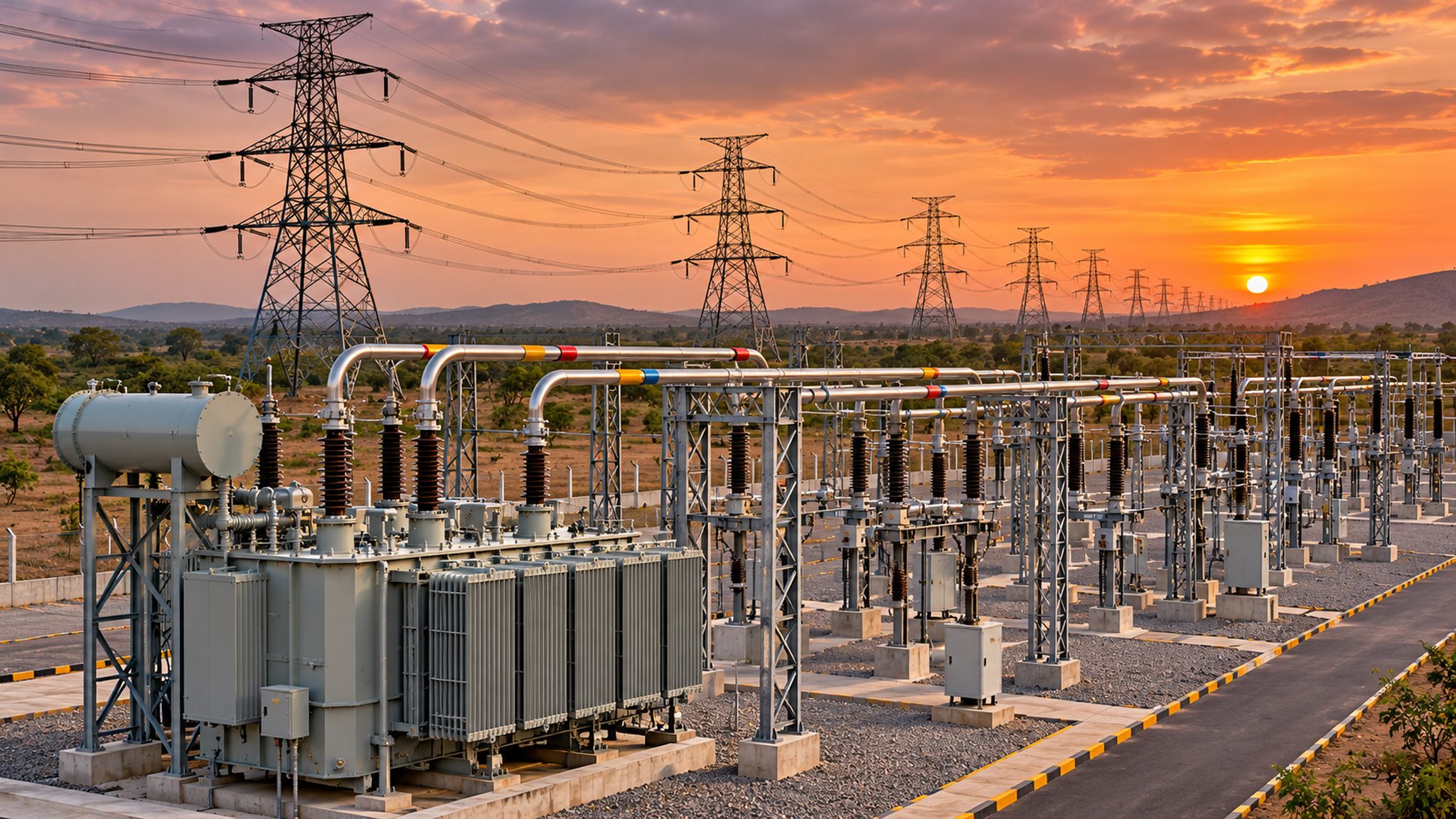
- Transmission connectivity links a generating or storage resource to the network serving demand. A completed plant can contribute less than expected if the connecting line or receiving substation is delayed or constrained.
- The proposed transmission roadmaps bring line and substation execution into the same planning exercise as generation. Verifying access before counting a resource helps make supply commitments consistent with the network’s ability to deliver electricity.
Distribution Finance and Implementation Accountability
Resource planning also depends on distribution companies maintaining payment discipline and turning commitments into functioning services.
- Government electricity arrears tie up money owed to distribution companies. States agreed to clear pending government dues within a quarter, connecting public-sector payment discipline with the financial position of electricity suppliers.
- Prepaid smart meters for government connections would require advance recharge. This arrangement aims to improve the timing of payments and reduce dependence on waiting for later budgetary releases to settle electricity bills.
- Consumer trust affects the acceptance of metering changes. The announcement includes check meters for billing complaints and senior-level reviews of unresolved grievances, making complaint handling part of implementation rather than a separate afterthought.
- Regulatory predictability supports procurement and investment decisions. The joint session with electricity regulators discussed timely tariff decisions and consultation, while individual regulatory decisions still require their applicable processes and scrutiny.
- The official conference account establishes agreed actions. Evidence of delivery would come from submitted plans, awarded procurement, completed network assets and improved service, with progress assessed against the recorded commitments.
Way Forward
Track Deliverable Capacity
- Link each planned resource to its availability, demand period and verified network connection before relying on it in supply planning.
- Evaluate storage tenders against power, duration and charging requirements, supported by realistic commissioning schedules.
- Publish progress on plan submissions, network completion and payment arrears, allowing regulators and consumers to assess implementation.
Conclusion
- Reliable electricity supply requires resources available at the right time, sufficient storage where needed and a network able to deliver their output.
- The conference creates a set of implementation commitments. Their significance will depend on coordinated execution by states, utilities and regulators.
UPSC Practice Questions
Prelims MCQ 1
With reference to power resource adequacy, consider the following statements:
- A storage system’s power rating and energy capacity describe different characteristics.
- Transmission constraints can limit the usefulness of available generation.
- Installed generating capacity alone guarantees adequate supply during every demand peak.
How many of the above statements are correct?
(a) Only one (b) Only two (c) All three (d) None
Answer: (b) Only two
Explanation:
Statements 1 and 2 are correct. Supply adequacy also depends on availability, demand timing and network access, so rated generating capacity alone provides no such guarantee.
Prelims MCQ 2
Which action did states agree to undertake following the Power Ministers’ Conference?
(a) Submit revised Resource Adequacy Plans within one month (b) Replace all storage procurement with short-term market purchases (c) Remove transmission connectivity from capacity planning (d) Abolish state electricity regulatory commissions
Answer: (a) Submit revised Resource Adequacy Plans within one month
Explanation:
The Ministry of Power recorded a one-month commitment for revised plans incorporating realistic demand projections and verified transmission connectivity.
UPSC Mains Questions
- Explain why installed generating capacity alone cannot establish power resource adequacy. Discuss the roles of demand forecasting, storage and transmission.
- How can distribution-company payment discipline and consumer grievance mechanisms support reliable electricity supply? Examine the implementation challenges.
Source: PIB, Ministry of Power.
Frequently Asked Questions
What is resource adequacy in the power sector?
It concerns whether available resources can meet expected electricity demand across relevant periods. Planning considers demand timing, resource availability, storage and network access alongside the quantity of installed generating capacity.
Why does storage duration matter?
A storage system must sustain its discharge for the period when electricity is needed. Its power rating describes the discharge rate, while its energy capacity helps determine the duration of that support.
Why verify transmission connectivity before counting a resource?
A generator or storage plant needs a usable network connection to serve demand. Delayed lines, substations or constrained transfer capacity can reduce the electricity that reaches consumers despite the resource being available.
Have the conference commitments already been implemented?
The release records agreements on plans, procurement and reforms. Assessing implementation requires subsequent evidence such as submitted plans, commissioned network assets, cleared dues and functioning consumer grievance arrangements.
Tell Google you want more of this.
Add Anantam IAS as a preferred sourceOne tap, and this site shows up more often in your own Top Stories, AI Overviews and AI Mode. Remove it any time.