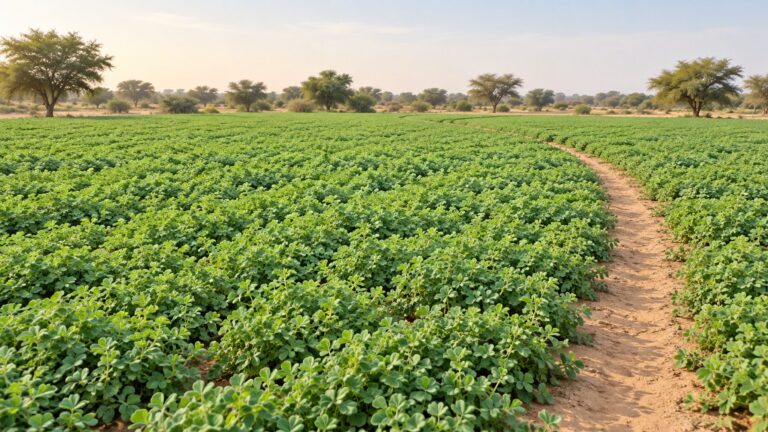
Saranda Forest to be declared a Wildlife Sanctuary

- The Supreme Court (SC) directed the Jharkhand government to declare 31,468.25 hectares (approximately 314 sq. km.) of the Saranda forest area as a wildlife sanctuary.
- The directive aims to balance biodiversity protection with sustainable iron ore mining.
- The Jharkhand government initially suggested a smaller area (24,941.64 hectares) for the sanctuary, citing “vital public infrastructure” that would need demolition. The State later clarified that the mandated 31,468.25 hectares did not host mining activities or non-forest use.
- The SC reminded Jharkhand of its “positive obligation and a mandate to provide statutory protection to forests and wildlife.”
- The Bench ordered the Jharkhand government to widely publicize that the judgment will not adversely affect the individual or community rights of tribals and forest dwellers in the area.
Saranda Forest Area and Mines in Jharkhand
- It is renowned as the finest and one of the world’s most pristine and largest Sal forests (Shorea robusta), often called the “Kingdom of Sal trees.”
- “Saranda” (or Serengda in the local language) literally means the “Land of Seven Hundred Hills.”
- Area: It covers a core area of approximately 820 square kilometers, making it one of the largest continuous dense forest blocks in Asia.
- Rivers: The perennial rivers Koina and Karo pass through the forest, serving as vital water sources for wildlife.
- The region is characterized by hilly uplands, dense forest valleys, and elevation ranging up to 927 meters (Kiriburu peak).
- Saranda forms the core area of the Singhbhum Elephant Reserve.
- It is home to critically endangered species, including the endemic sal forest tortoise, four-horned antelope, Asian palm civet, and wild elephants.
- The area has been inhabited for centuries by the Ho, Munda, Uraon, and allied Adivasi communities, whose traditions are intrinsically tied to forest produce.
- The Saranda forest division accounts for 26% of India’s iron ore reserves.
- Steel plants belonging to SAIL and Tata are critically dependent on mining activities in this region. The court noted submissions that declaring the entire area a wildlife sanctuary would halt mining and negatively affect employment opportunities.
Wildlife Sanctuary
| Feature | Description | Key Statutory Provisions (as per WLPA, 1972) |
| What is a Wildlife Sanctuary? | A protected area established for the conservation of wildlife (animals and plants) and their environment/habitats. The main objective is to protect species from hunting, poaching, and habitat destruction. It is an in-situ conservation method. | Declared under Section 18(1) of the Wild Life (Protection) Act, 1972 (WLPA). An area must have adequate ecological, faunal, floral, geomorphological, natural, or zoological significance. |
| Who Notifies It? | The State Government is primarily responsible for declaring a Wildlife Sanctuary by official notification. The Central Government can also declare a sanctuary in an area transferred to it by the State Government. | State Government: Section 18(1) (Initial Notification of Intent) and Section 26A (Final Notification). Central Government: Section 38. |
| Restrictions on Human Activities | Human activities are strictly controlled but generally less restrictive than in a National Park. Some activities may be permitted under strict regulation to balance conservation with local livelihoods. | Prohibited Activities (Without Permit): * Hunting any wild animal. * Destroying, removing, or exploiting any wildlife or forest produce. * Damaging or altering the natural habitat. * Diverting, stopping, or enhancing the flow of water. * Causing fire or leaving fire burning. Permitted Activities (With Permit from Chief Wildlife Warden): * Scientific research and studies. * Photography and Tourism. * Lawful business with residents. * Grazing by local communities (in some cases, after rights settlement). |
| Who Manages It? | The sanctuary is managed, controlled, and maintained by the respective State Government’s Forest/Wildlife Department. The Chief Wildlife Warden (CWLW) of the State is the primary statutory authority responsible for its day-to-day management. | The Chief Wildlife Warden is appointed under the WLPA and is the statutory head of the management. |
| How is it Denotified? | A Wildlife Sanctuary can be denotified (its protected status withdrawn) only if the State Government is satisfied that the area is no longer ecologically significant for wildlife conservation. | The proposal for denotification must be recommended by the National Board for Wild Life (NBWL). Furthermore, in practice, a denotification often requires approval from the Supreme Court of India, following various judicial orders that have imposed a ban on dereservation/denotification. |
Export Promotion Mission & Credit Guarantee Scheme
- The Union Cabinet approved the Export Promotion Mission (EPM) and the Credit Guarantee Scheme for Exporters (CGSE) on 12 November.
Credit Guarantee Scheme for Exporters (CGSE)
| Aspect | Explanation |
| Functioning/Mechanism | The CGSE aims to provide collateral-free or easier access to additional credit for exporters by protecting lenders from default risk. |
| Credit Guarantee | The National Credit Guarantee Trustee Company (NCGTC) provides 100% credit guarantee coverage to Member Lending Institutions (MLIs) on the loans they extend under the scheme. |
| Loan Details | MLIs will extend additional credit facilities (working capital or term loans) to eligible exporters. The maximum loan amount is typically capped (e.g., at ₹50 crore per borrower in the compact version). |
| Duration / Limit | The scheme will remain in force until:March 31, 2026; ORUntil guarantees amounting to ₹20,000 crore (the maximum credit coverage limit) are issued, |
| Affordability | Lending institutions are required to offer loans at a lower interest rate (e.g., 1% lower than the existing rate applicable to the borrower). No guarantee fee is charged to the exporter, and no additional collateral is required. |
| Scheme Goal | To strengthen liquidity, ensure smooth business operations, and enhance the global competitiveness of Indian exporters by easing working capital constraints. |
| Eligible Exporters | All eligible exporters, including both Micro, Small, and Medium Enterprises (MSMEs) and non-MSME exporters. |
| Scheme Operator/Implementer | National Credit Guarantee Trustee Company Limited (NCGTC), which is an institution under the Department of Financial Services (DFS). |
| Oversight | A Management Committee chaired by the Secretary of the Department of Financial Services (DFS) oversees the progress and implementation of the scheme. |
| WTO Compliance | Likely to be compliant. While older, direct export subsidy schemes (like MEIS, EOU, EPCG) were ruled non-compliant by the WTO panel because India’s per capita GNI crossed the limit, a credit guarantee scheme that addresses liquidity constraints is a financial mechanism designed to improve the export ecosystem. The new CGSE/EPM are part of a shift towards WTO-compliant support measures. |
| Note | CGSE is a new scheme. Please do not mistake it for the already existing Credit Guarantee Scheme for MSMEs. |
Features and Structure of Export Promotion Mission, 2025
- The EPM is a flagship initiative announced in Budget 2025 to strengthen India’s export competitiveness, especially for MSMEs, first-time exporters, and labour-intensive sectors.
- The total outlay for the EPM is ₹25,060 crore covering the period FY 2025-26 to FY 2030-31.
- It is anchored in a digitally driven collaborative framework involving the Department of Commerce, Ministry of MSME, Ministry of Finance, financial institutions, export promotion councils, and state governments.
- The Directorate General of Foreign Trade (DGFT) will be the implementing agency through a dedicated digital platform.
- The Mission will operate through 2 integrated sub-schemes:
- NIRYAT PROTSAHAN: Focuses on improving access to affordable trade finance for MSMEs (e.g., interest subvention, export factoring, credit enhancement).
- NIRYAT DISHA: Focuses on non-financial enablers that enhance market readiness and competitiveness (e.g., export quality support, international branding, participation in trade fairs, logistics).
- EPM consolidates key support schemes like the Interest Equalisation Scheme (IES) and Market Access Initiative (MAI).
- The Mission is designed to address structural challenges in Indian exports, including:
- Limited and expensive trade finance access.
- High cost of compliance with international standards.
- Inadequate export branding and fragmented market access.
- Logistical disadvantages for exporters in interior regions.
- Priority support will be extended to sectors impacted by recent global tariff escalations, such as textiles, leather, gems & jewellery, engineering goods, and marine products.
Global Carbon Project : Findings on CO2 Emissions

- Significant Deceleration: India’s Carbon Dioxide (CO2) emissions from fossil fuel sources are expected to increase by 1.4% in 2025, which is a significant slowdown from the 4% growth registered in 2024.
- Emissions Volume: India’s fossil fuel-related (CO2) emissions are estimated to increase from 3.19 billion tonnes (2024) to 3.22 billion tonnes (2025).
- Reason for Slowdown: The relatively modest growth is attributed to:
- An early monsoon, which reduced cooling requirements during the hottest months.
- Strong growth in renewables, leading to very low growth in coal consumption.
- Decadal Trend: India’s average annual emissions growth has slowed over the decade: 3.6% (2015-2024 average) versus 6.4% (2005-2014 average), possibly due to an expanding base effect and continuous improvements in the carbon intensity of the economy.
- Global (CO2) emissions from fossil fuels are expected to rise by about 1.1% in 2025, reaching a record 38.1 billion tonnes, indicating that overall emissions are still not declining.
- China’s emissions growth is projected at 0.4% in 2025.
- India’s projected 1.4% growth in 2025 is lower than the United States’ expected 1.9% increase.
- Fossil Fuel (CO2): These emissions (from electricity, transport, industry, etc.) account for about 90% of all (CO2) emissions globally, and (CO2) itself accounts for about 75% of global greenhouse gas emissions.
- The data comes from the annual Global Carbon Budget study carried out by the Global Carbon Project (GCP), an international collaborative program established in 2001, that tracks global carbon cycles.
- Timing and Reliability: The study is published annually in the Nature journal, timed to coincide with the UN climate conference (COP30 this year). It is considered one of the most reliable and keenly tracked estimates (not official data) of global emissions.
Belem Action Plan for Health and Climate Adaptation

- The Belem Action Plan for Health and Climate Adaptation was launched at COP30 in Belem, Brazil, with the participation of approximately 80 countries and organizations.
- The most recent Global Conference on Climate and Health which was held in Brasília, Brazil, from July 29-31, 2025 had resulted in the Belém Health Action Plan that has now been launched at COP 30.
- It was hosted by the Government of Brazil, the World Health Organization (WHO), and the Pan American Health Organization (PAHO).
- Primary Goal: To strengthen global health systems so they can better cope with the growing impacts of climate change.
- Initial Funding: A coalition of about 35 philanthropies, under the Climate and Health Funders Coalition, committed an initial US $300 million.
- Funding Use: This money is earmarked for integrated action to address both the causes and consequences of climate change on human health, and will support the implementation of the Belem Plan.
- Basis of the Plan: The plan is based on the findings of the 2025 Lancet Countdown Report on Health and Climate Change, which documents the massive global health impact of climate change. The report highlights that:
- Climate-change-related deaths are in the millions.
- Millions more are affected by extreme heat, flooding, vicious storms, and desertification.
- Over half a million lives are lost annually due to heat, and over 150,000 deaths are linked to wildfire smoke exposure.
- Health System Strain: Health systems are described as already “stretched and underfunded,” struggling to cope and “unprepared for what is coming.”
- Global Adaptation Finance Gap : The event highlighted an acute finance gap for adaptation, with an even smaller amount available for health-focused adaptation plans.
- The latest Adaptation Gap Report released by UNEP estimated that developing countries will require US $310-$365 billion a year by 2035 for adaptation.
- The international community is struggling to mobilize the US $40 billion in annual flows that were promised at COP26 in Glasgow (2021).
- India’s Context: India’s 2023 national communication to the UNFCCC states the country will require$643 billion between now and 2030 for climate adaptation.
- India’s spending on adaptation in 2021-2022 was $146 billion (5.6% of GDP), a significant rise from 3.7% of GDP spent in 2015-2016.
Tell Google you want more of this.
Add Anantam IAS as a preferred sourceOne tap, and this site shows up more often in your own Top Stories, AI Overviews and AI Mode. Remove it any time.