Why in News?
The Defence Minister of India paid tribute to Rani Avantibai Lodhi by unveiling her statue, lauding her courage, patriotism, and supreme sacrifice during the 1857 War of Independence, which marked a glorious chapter in India’s history.
| UPSC Relevance: GS-1 History and Culture: Personalities in News; Women freedom fighters Prelims: Rani Avantibai Lodhi, Battle of Khairi Mains: Regional and women leaders in India’s freedom struggle; Modern Indian history and the Revolt of 1857 |
About Rani Avantibai Lodhi:
- Rani Avantibai was born in 1831 in the present-day Seoni district of Madhya Pradesh.
- She married Vikramaditya Singh Lodhi, the ruler of the small princely State of Ramgarh, located in present-day Dindori district.
- When her husband became incapable of administering the State and their sons were minors, Avantibai assumed responsibility for governance.
- The British placed Ramgarh under the Court of Wards and appointed an administrator, thereby undermining the ruling family’s authority. This intervention, rather than a straightforward application of the Doctrine of Lapse, became the immediate source of conflict.
Role in the Revolt of 1857:
- When the uprising spread to Central India, Avantibai expelled the British-appointed officials and reclaimed control over Ramgarh.
- She mobilised local rulers, zamindars, malguzars, peasants and soldiers against colonial rule.
- According to popular tradition, she sent letters and bangles to neighbouring chiefs, asking them either to join the struggle or accept submission.
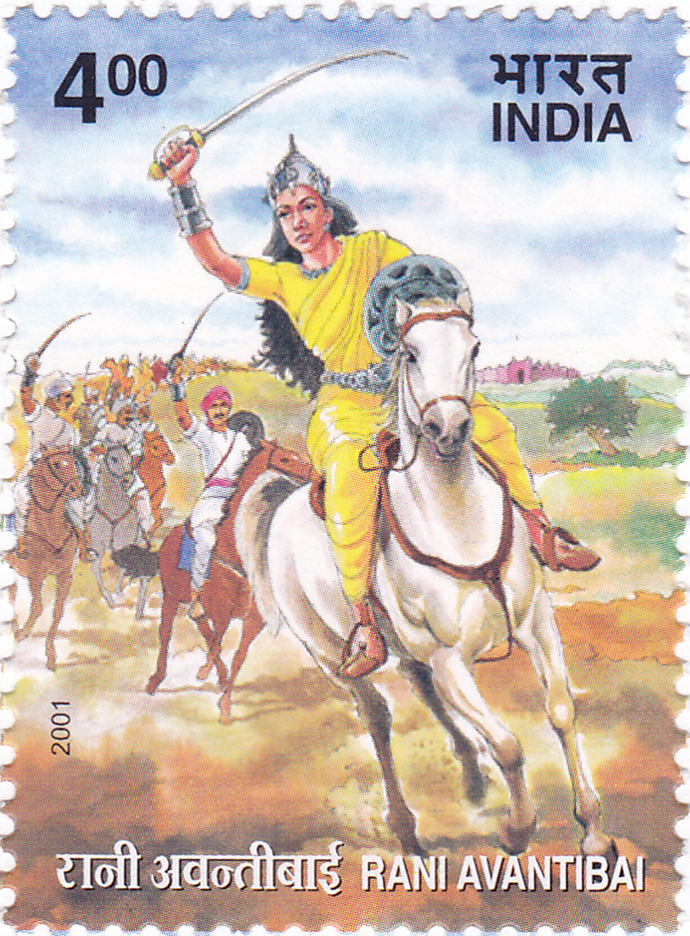
- She reportedly raised an army of around 4000 soldiers and confronted the British near Mandla.
- At the Battle of Khairi in November 1857, her forces compelled the troops of Mandla’s Deputy Commissioner, Captain Waddington, to retreat.
- The British subsequently attacked and burnt Ramgarh. Avantibai continued resistance from the forests and hills around Devharigarh.
- Surrounded by British forces, she took her own life with her sword on March 20, 1858, rather than face capture.
Historical Significance:
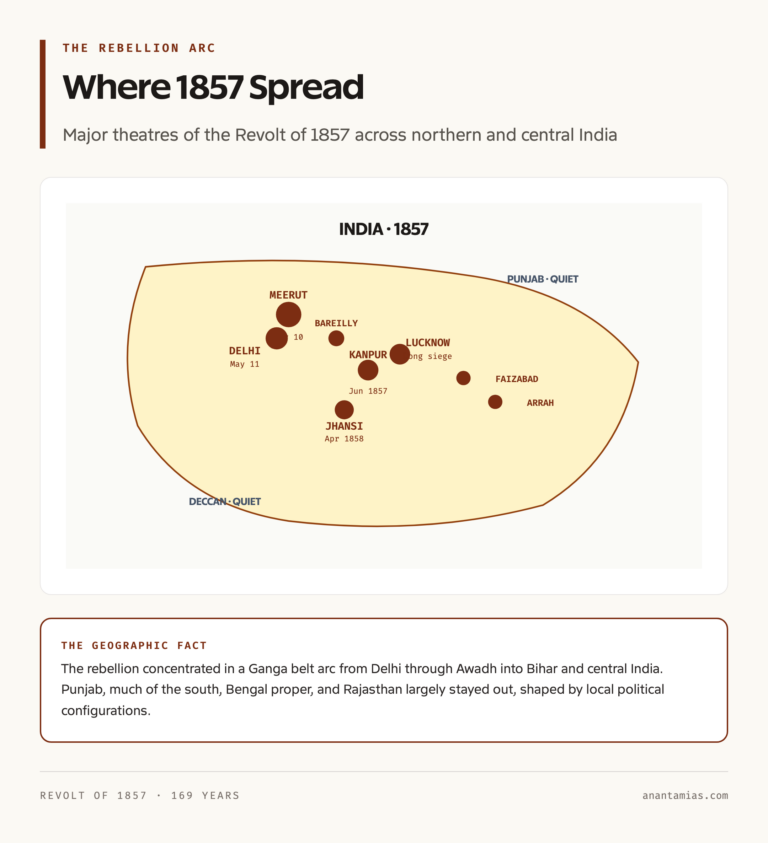
- Regional character of 1857: Her role shows that the uprising was not confined to sepoys or north Indian centres such as Delhi, Kanpur and Lucknow. It spread into the forested and rural regions of Central India.
- Broad social participation: Her mobilisation of chiefs, landlords, peasants and local communities illustrates the diverse social coalition behind the revolt.
- Resistance to indirect annexation: The struggle reflected resentment against colonial devices such as the Court of Wards, political interference and erosion of indigenous sovereignty.
- Women’s leadership: Alongside Rani Lakshmibai, Begum Hazrat Mahal, Jhalkari Bai and Uda Devi, Avantibai challenged both colonial rule and prevailing assumptions about women’s political and military capabilities.
- Popular memory: Much of her story survives through folklore and regional traditions. This underlines the importance of oral history in recovering freedom fighters who received limited attention in colonial records.
Legacy:
- An all-woman Provincial Armed Constabulary battalion in Badaun has also been named after her.
- India Post issued commemorative stamps in her honour.
- A part of the Bargi Dam project has been named Rani Avantibai Sagar.
- Institutions and women’s security battalions bearing her name reflect her continuing association with courage and women’s empowerment.
Rani Avantibai Lodhi’s resistance represents the regional depth, social diversity and women-led character of the Revolt of 1857, making her an important figure in India’s transition from scattered anti-colonial resistance to a broader national consciousness.
Tell Google you want more of this.
Add Anantam IAS as a preferred sourceOne tap, and this site shows up more often in your own Top Stories, AI Overviews and AI Mode. Remove it any time.