Why in News?
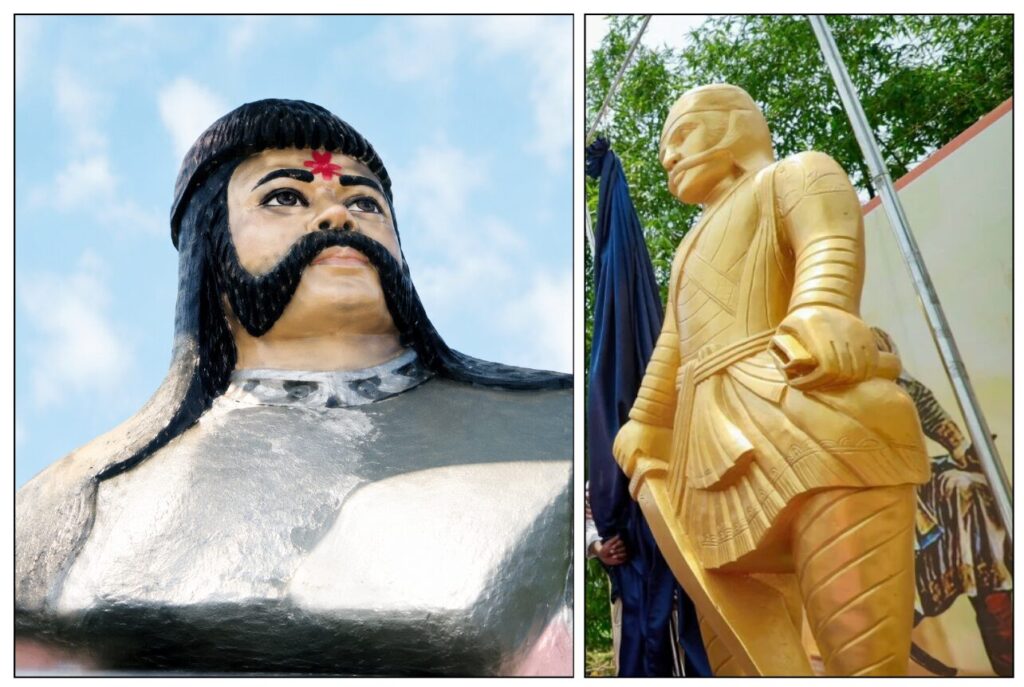
The Leader of Opposition in the Lok Sabha unveiled a statue of Veera Pasi, described as a “forgotten hero” of the 1857 revolt, in Raebareli, Uttar Pradesh.
The move is politically significant as it comes ahead of the Uttar Pradesh Assembly Election (2027). The Pasi community is the second-largest Scheduled Caste sub-group in UP.
| UPSC Relevance: GS-1 Indian History: Modern India Prelims: Veera Pasi, Subaltern Resistance |
Who is Veera Pasi?
- Veera Pasi was born in 1835 in Lodhwari village, Raebareli district, Uttar Pradesh, into an impoverished family belonging to the Pasi caste, a Dalit (Scheduled Caste) community of North India. His original name was Shivdeen Pasi.
- Veera Pasi came to serve Rana Beni Madhav Baksh Singh, the ruler of the Shankarpur Estate in present-day Raebareli. According to oral tradition, he was recruited after demonstrating extraordinary physical strength, after which the Rana appointed him as his personal bodyguard and later as one of his most trusted commanders.
Role in the Revolt of 1857:
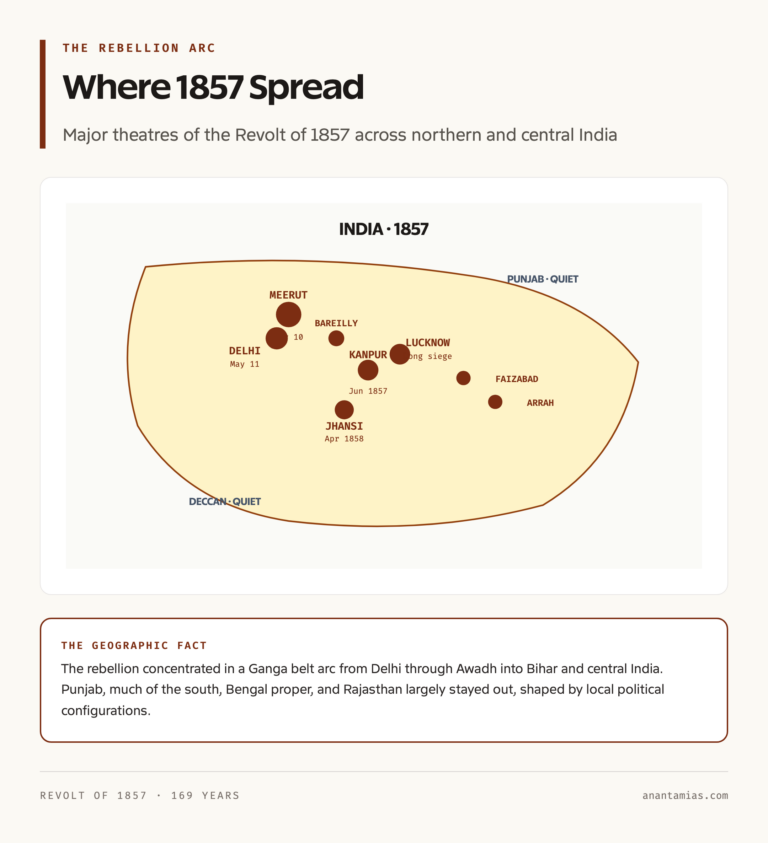
- When the Revolt of 1857 spread to Awadh, Rana Beni Madhav Singh joined the rebellion along with his father, Raja Ram Narayan Singh.
- The British forces eventually captured Rana Beni Madhav Singh and imprisoned him.
- Veera Pasi, displaying remarkable courage, infiltrated the prison with a small band of supporters and successfully rescued Rana Beni Madhav Singh from British captivity.
- This act of daring so alarmed the colonial administration that the British government announced a reward of ₹50,000 for information leading to Pasi’s capture.
- Local folklore records that he was ultimately killed while protecting the Rana from British forces, dying in the service of both his master and his nation.
Veera Pasi’s role, rescuing a rebel chieftain from British captivity and conducting prolonged guerrilla resistance in the Raebareli-Awadh region, exemplifies the Dalit fighter who served not as a passive follower but as a military strategist and commander in his own right.
Notable Dalit and Marginalised Fighters of 1857: The Subaltern Resistance
- Matadin Bhangi, from the Valmiki caste, is credited by Subaltern historians with alerting Mangal Pandey to the fact that the greased cartridges violated Hindu religious sentiments, arguably sowing the first seed of the revolt.
- Uda Devi Pasi was a Dalit woman warrior from Awadh who served in the guard of Begum Hazrat Mahal. She is credited with fighting in the Battle of Sikandar Bagh on 16 November 1857, where she is said to have climbed a banyan tree disguised as a man and killed approximately 32 British soldiers before being killed herself. Her story has become one of the most powerful symbols of Dalit resistance in Awadh.
- Jhalkari Bai, from the Koli caste, served in Rani Lakshmibai’s women’s army and is said to have fought so valiantly that she impersonated the queen herself, allowing Lakshmibai to escape.
- Banke Chamar and Chetram Jatav, both of whom took part in the rebellion in Uttar Pradesh.
Over the last few years, political parties have worked to invoke Dalit icons from the past and their contributions to the freedom struggle.
Tell Google you want more of this.
Add Anantam IAS as a preferred sourceOne tap, and this site shows up more often in your own Top Stories, AI Overviews and AI Mode. Remove it any time.