Why in News?
The Indian Navy began coordinating the fifth Sea Vigil coastal defence exercise on November 11, opening with a nationwide readiness evaluation.
- The first phase is the Coastal Defence and Security Readiness Evaluation, scheduled for November 11–17.
- The ministry scheduled the sea phase for November 18–19. Its opening announcement describes the plan for that phase.
- The exercise includes coastal states and Union Territories, central maritime agencies and coastal communities.
- A national exercise gives different levels of government a shared occasion to review how their respective duties fit together.
- The exercise grew from coastal security measures introduced after the 2008 Mumbai attacks.
UPSC Relevance
Prelims Relevance
- Indian Navy leads coordination of Sea Vigil.
- CDSRE expands to Coastal Defence and Security Readiness Evaluation.
- Indian Coast Guard, Coastal Security Police and Customs are participating agencies.
- TROPEX is the Navy’s biennial Theatre Level Readiness Operational Exercise.
Mains Relevance
GS Paper 3
- Explain why coastal security involves civilian institutions alongside maritime forces.
- Distinguish participation in an exercise from evidence of improved preparedness.
GS Paper 2
- Use Centre–state coordination to illustrate how different public authorities can work toward a shared objective.
Essay
- Institutional cooperation depends on understanding who is responsible for each public function.
Background and Context
Who Coordinates Sea Vigil?
The Ministry of Defence names the Indian Navy as lead agency and identifies the public authorities and communities taking part.
- The lead agency brings the participants into a common exercise. Its coordinating role explains who connects their work for Sea Vigil while the participating institutions retain their regular responsibilities.
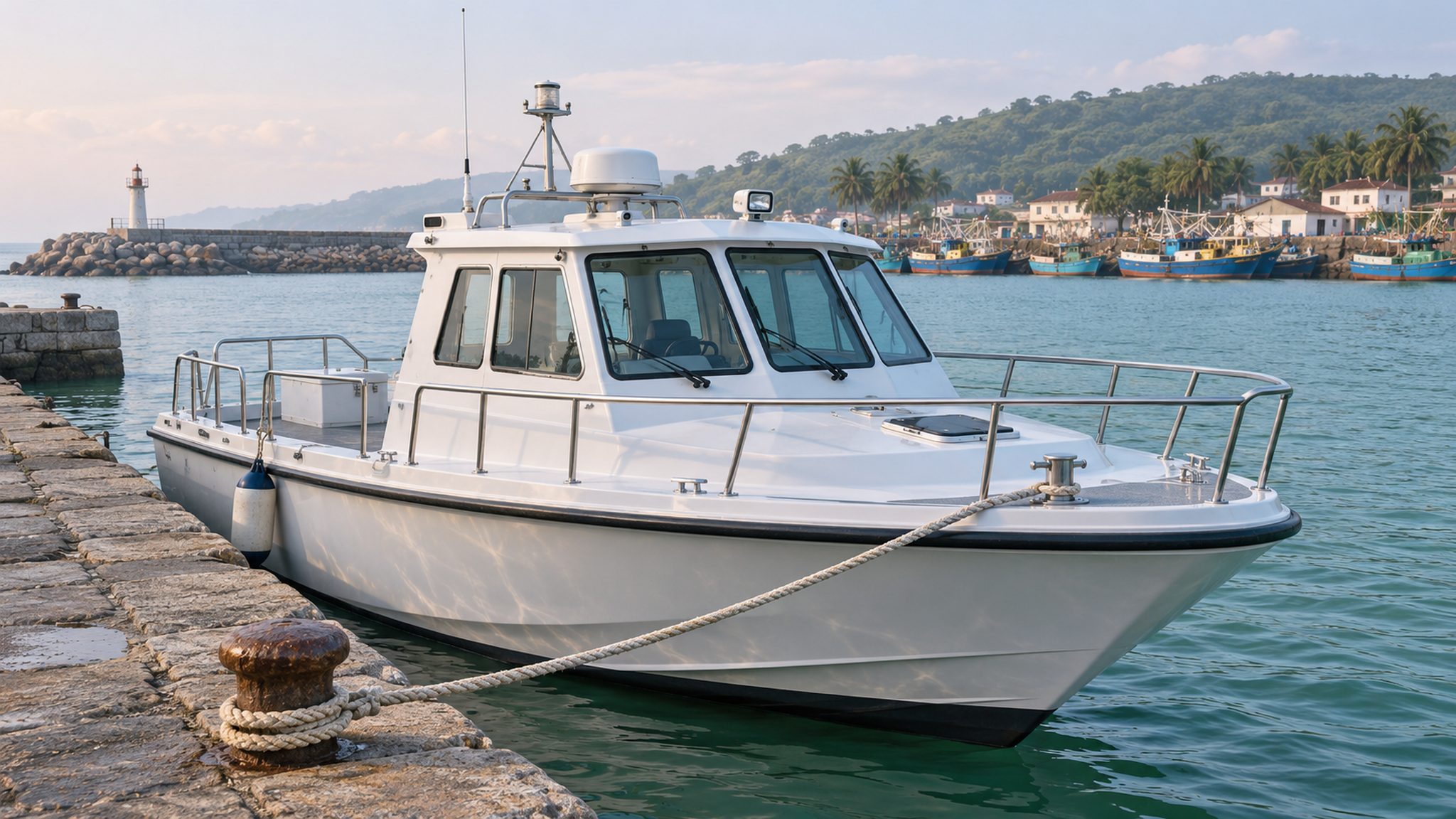
- The Indian Coast Guard and Coastal Security Police participate alongside the Navy. A patrol launch at a harbour illustrates the kind of maritime asset that civil authorities can contribute to a shared exercise.
- Customs adds another civil function to the exercise. Goods cross national borders through ports, so a discussion of security at the coast also involves officials who oversee the movement of goods.
- Coastal states and Union Territories connect the national exercise to local administration. The announcement also includes fishing and coastal communities, whose daily work gives them experience of the shoreline.
- The participating Union ministries reflect different uses of the coast. Ports support trade, fisheries sustain livelihoods, and petroleum facilities serve energy supply. These uses bring several departments into a coastal preparedness review.
What Do the Two Phases Establish?
The November 11 announcement sets out a sequence. The date matters when assessing what the government could report about the exercise.
- The first phase is a readiness evaluation. Its purpose is to examine preparedness across institutions. The title tells the reader what authorities intend to assess, while findings require evidence from the assessment itself.
- The sea phase follows the evaluation. On the opening day its dates were in the future, so the official release supports a statement about scheduled participation and the sequence of activities.
- The announced geographic scope covers India’s coastline and Exclusive Economic Zone. Geographic reach describes the area relevant to the exercise. It cannot by itself tell an evaluator how effectively different agencies worked together.
- Consider the difference between a participant list and an assessment result. A list can establish that state police and a central agency were included. A result needs evidence about their work during the exercise.
How Does Sea Vigil Fit the Wider Maritime Framework?
The history and purpose of the exercise explain why both coastal communities and national maritime institutions appear in the same announcement.
- India conceived Sea Vigil in 2018 to assess measures introduced after the Mumbai attacks. Its recurring purpose is to review preparedness across an institutional system whose responsibilities extend from the shore into surrounding waters.
- The Ministry of Defence describes Sea Vigil as a build-up to TROPEX. The relationship links a nationwide assessment centred on the coast with the Navy’s wider theatre-level readiness exercise.
- For an internal security answer, begin with the public function under discussion. Policing, customs administration and management of ports involve different authorities even where they share an interest in the same stretch of coast.
- For a federalism answer, explain why the design includes states and Union Territories. A national coordinator can convene the exercise, while local agencies and communities contribute knowledge of the places where they work.
Way Forward
Assess Coordination Against Its Purpose
- Identify the participating authority and its ordinary function before drawing conclusions about how the exercise was organised.
- Read subsequent assessment findings alongside the announced objectives when judging the exercise’s results.
- Include the perspectives of coastal communities when discussing how public administration engages with people who use the coast.
Conclusion
- Sea Vigil gives the Centre, coastal administrations and maritime institutions a shared setting for assessing preparedness. The Navy coordinates the exercise, and the participant list reflects the range of public functions involved.
- An answer written from the November 11 release can establish the opening of the evaluation, the planned sea phase and the institutions involved. Claims about effectiveness require findings from the exercise.
UPSC Practice Questions
Prelims MCQ 1
With reference to Sea Vigil-26, consider the following statements.
- The Indian Navy coordinates the exercise.
- The Coastal Defence and Security Readiness Evaluation precedes the sea phase.
- Coastal states and Union Territories are among the participants.
How many of the above statements are correct?
(a) Only one (b) Only two (c) All three (d) None
Answer: (c) All three
Explanation:
The ministry identified the Navy as the coordinator, announced the evaluation as the first phase and included all coastal states and Union Territories.
Prelims MCQ 2
Which conclusion follows directly from the November 11 announcement?
(a) The sea phase had already produced a final assessment (b) The Navy would coordinate several institutions in a national exercise (c) TROPEX had replaced Sea Vigil (d) Participation was limited to central armed forces
Answer: (b) The Navy would coordinate several institutions in a national exercise
Explanation:
The announcement describes the roles and schedule. It includes state and civilian participants and places the sea phase later in November.
UPSC Mains Questions
- Explain how Sea Vigil illustrates Centre–state cooperation in coastal security.
- What evidence would help distinguish the scale of a coastal preparedness exercise from the quality of inter-agency coordination?
Source: Press Information Bureau, Ministry of Defence.
Frequently Asked Questions
Who leads Sea Vigil?
The Indian Navy coordinates the national exercise. The Ministry of Defence lists the Coast Guard, Coastal Security Police, Customs and other maritime stakeholders among the participants.
What began on November 11?
The Coastal Defence and Security Readiness Evaluation began as the first phase. The ministry scheduled the subsequent sea phase for November 18 and 19 in its opening announcement.
Why are coastal communities included?
Fishing and coastal communities use the shoreline regularly. Their inclusion connects a national exercise with people whose livelihoods depend on coastal activity and who have first-hand knowledge of local conditions.
How is Sea Vigil related to TROPEX?
The Ministry of Defence describes Sea Vigil as a build-up to the Navy’s biennial Theatre Level Readiness Operational Exercise. The two exercises together cover coastal defence and the wider maritime setting.
Tell Google you want more of this.
Add Anantam IAS as a preferred sourceOne tap, and this site shows up more often in your own Top Stories, AI Overviews and AI Mode. Remove it any time.