Why in News?
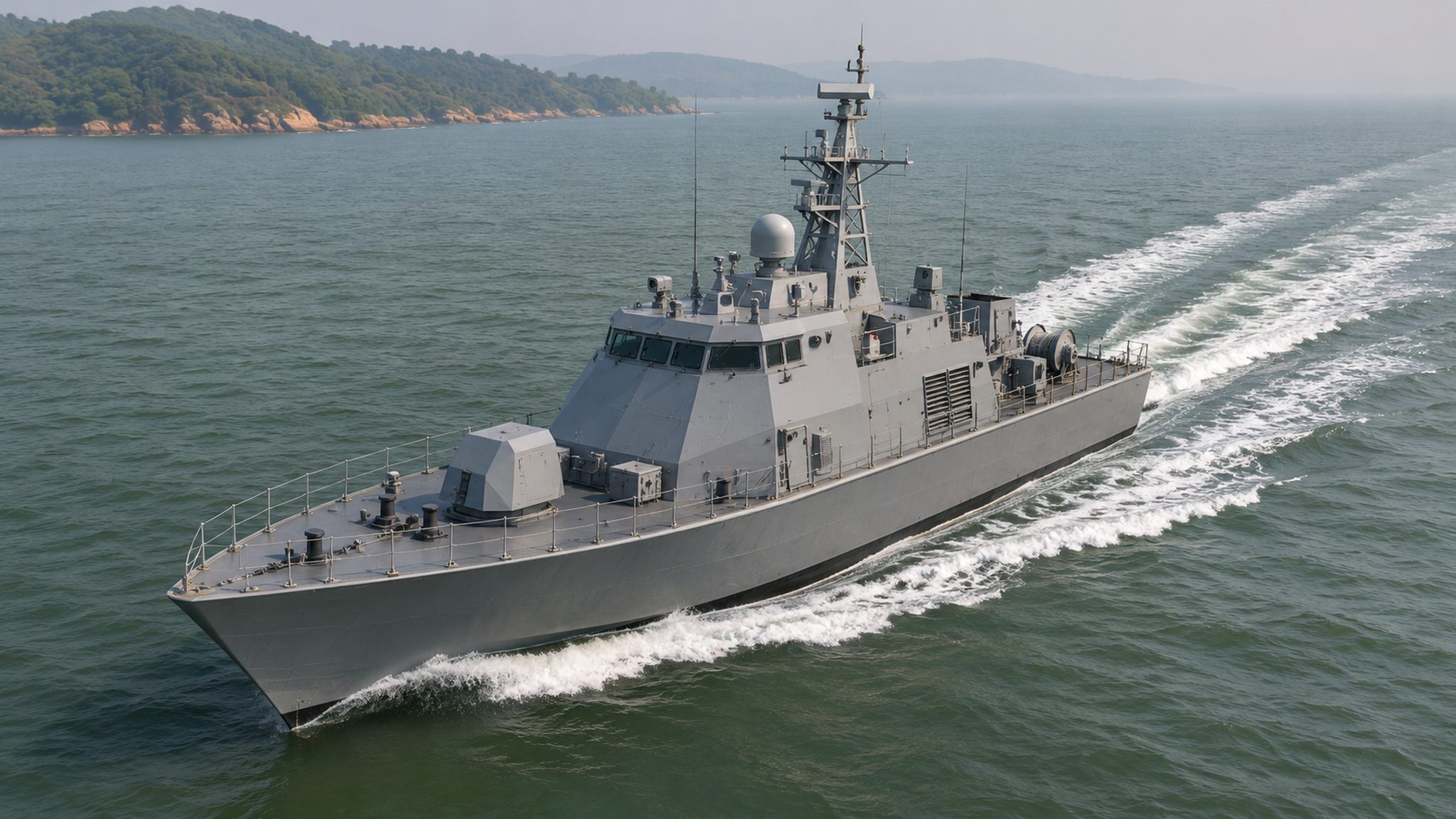
Garden Reach Shipbuilders and Engineers (GRSE) delivered Amini, a shallow-water anti-submarine craft, to the Indian Navy on November 5, 2026.
- The Defence Ministry reported the delivery on November 6.
- GRSE designed and built the craft in Kolkata to Indian Register of Shipping classification rules.
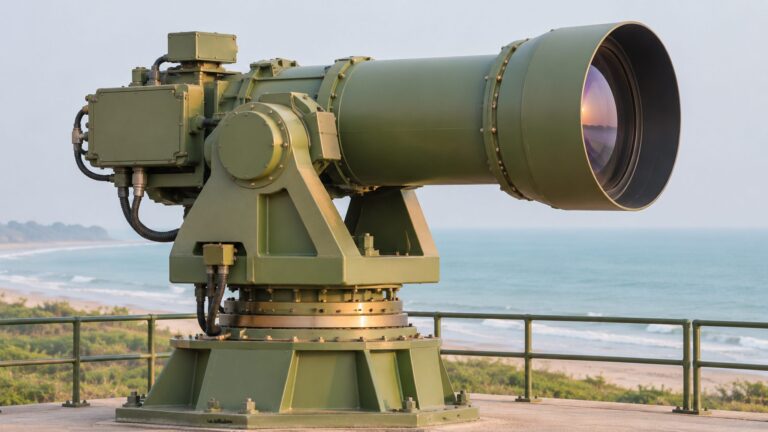
- Amini combines waterjet propulsion with sonar, lightweight torpedoes and indigenous rocket launchers.
- Shallow coastal waters return echoes from the seabed as well as objects in the water column.
- A sonar contact is evidence to interpret before assigning an identity to its source.
UPSC Relevance
Prelims Relevance
- Amini Island is in Lakshadweep.
- GRSE designed and built the craft.
- ASW SWC stands for Anti-Submarine Warfare Shallow Water Craft.
- Sonar uses sound to sense underwater objects.
Mains Relevance
GS Paper 3
- Relate the coastal acoustic environment to maritime security.
- Assess what a shipyard delivery establishes about domestic defence production.
Background and Context
What the Navy Received
The Ministry of Defence identified the builder, the recipient and the equipment aboard the craft in its delivery announcement.
- Delivery records the transfer from the shipbuilder to the Navy. Commissioning is a separate service milestone. An answer citing the November 5 handover should use the status the ministry actually announced.
- The name comes from Amini Island in Lakshadweep. It also preserves the name of an earlier Indian anti-submarine corvette, so distinguish the newly delivered craft from its predecessor when discussing naval history.
- GRSE built the ship under the classification rules of the Indian Register of Shipping. These rules concern ship construction. Claims about success in detecting a particular target require different evidence.
- The ministry also identifies coastal surveillance and mine laying among the capabilities the craft supports. These are separate tasks, even though the same vessel can contribute to each one.
How Sonar Works in Coastal Water
In littoral waters close to shore, a sonar receiver can pick up sound from several sources within a small area.
- Active sonar transmits a sound pulse and receives an echo. The time taken for the outward and return journey helps estimate distance to the surface or object that reflected the pulse.
- The seabed itself reflects sound. In shallow water it lies close to the objects being investigated, so a return from the bottom can complicate interpretation of an echo from the water column.
- Passive sonar listens to sound already present. A receiver can pick up ships or marine animals as well as a submarine. The sound it records still needs to be identified.
- Detection means noticing a possible contact. Classification asks what produced it. A receiver that registers an echo has supplied evidence of a reflector, while its identity remains a separate question.
Propulsion, Sensing and Engagement
Three pieces of equipment on the same ship answer three different questions about what the vessel can do.
- The waterjets propel Amini by directing water astern. They explain how the surface craft moves, whereas air-independent propulsion addresses how long a submarine can operate underwater before it needs outside air.
- The ministry places sonar among the craft’s sensors. Its description supports the underwater detection role. Estimating how far a crew could detect a particular submarine would require conditions and equipment details beyond that announcement.
- The lightweight torpedoes and rocket launchers belong to the engagement side of the design. Listing those weapons identifies a capability. A report of an actual encounter would need evidence of a specific contact and response.
- In a piracy rescue, surveillance helps establish what is happening aboard a surface vessel. Underwater surveillance poses a different identification problem because a crew must interpret acoustic information about a submerged object.
Way Forward
Assess Each Milestone Separately
- Use the delivery announcement to establish the builder, recipient and equipment.
- Use a separate commissioning announcement when recording entry into commissioned service.
- Assess operational performance against evidence from trials or operations under specified conditions.
Conclusion
- Amini links domestic shipbuilding to a specific maritime requirement. A coastal surveillance craft needs a means of propulsion, a way to sense underwater contacts and equipment suited to its assigned missions.
- For an answer on anti-submarine warfare, explain the uncertainty between hearing a return and knowing what produced it. That uncertainty gives shallow-water acoustics a direct bearing on coastal security.
UPSC Practice Questions
Prelims MCQ 1
With reference to Amini, consider the following statements:
- GRSE designed and built the craft.
- Its name comes from an island in Lakshadweep.
- Its lightweight torpedoes provide its main propulsion.
How many of the above statements are correct?
(a) Only one (b) Only two (c) All three (d) None
Answer: (b) Only two
Explanation:
Statements 1 and 2 are correct. Waterjets propel the craft, while lightweight torpedoes are weapons.
Prelims MCQ 2
Which observation best explains why a coastal sonar contact needs classification?
(a) A passive sonar always transmits a pulse. (b) The seabed and other objects can also return echoes. (c) A waterjet identifies the source of each echo. (d) Only submarines reflect underwater sound.
Answer: (b) The seabed and other objects can also return echoes.
Explanation:
An active sonar pulse can reflect from different surfaces. Detecting a return alone does not identify the reflector.
UPSC Mains Questions
- Explain how shallow coastal waters affect the interpretation of underwater contacts. Illustrate with Amini.
- What does the delivery of an indigenous naval craft establish about defence production? Distinguish this milestone from evidence of operational performance.
Sources: PIB, Ministry of Defence and NOAA Ocean Exploration.
Frequently Asked Questions
Who built Amini for the Indian Navy?
Garden Reach Shipbuilders and Engineers designed and built Amini in Kolkata under Indian Register of Shipping classification rules. The shipbuilder delivered it to the Navy on November 5, 2026.
Why does Amini carry the name of an island?
The name refers to Amini Island in Lakshadweep. It also continues the name of an earlier Indian anti-submarine corvette that served before the newly delivered craft.
Why can a sonar echo be difficult to classify?
The seabed and objects in the water can both reflect sound. A return establishes that a transmitted pulse encountered a reflector, but its source still needs interpretation.
What is the difference between Amini’s waterjets and torpedoes?
Waterjets supply propulsion for the surface craft. Lightweight torpedoes belong to its underwater weapon systems. Sonar has a third role, helping the crew detect and assess contacts.
Tell Google you want more of this.
Add Anantam IAS as a preferred sourceOne tap, and this site shows up more often in your own Top Stories, AI Overviews and AI Mode. Remove it any time.