Why in news:
As part of an animal exchange programme a pair of smooth-coated otters from Surat Zoo have been transported on a 1,200 km journey to the National Zoological Park (Delhi). This marks the first time in nearly two decades that Delhi Zoo will have otters, the last one having died in 2004.
UPSC CSE Relevance:
UPSC CSE in prelims examination has focused on Species in news. Every year UPSC had asked at least one question related to species. A case in point is a following PYQ.
UPSC Prelims PYQ 2024
Q. Consider the following statements:
- Lions do not have a particular breeding season.
- Unlike most other big cats, cheetahs do not roar.
- Unlike male lions, male leopards do not proclaim their territory by scent marking.
Which of the statements given above are correct?
(a) 1 and 2 only
(b) 2 and 3 only
(c) 1 and 3 only
(d) 1, 2 and 3
About Smooth Coated Otter:
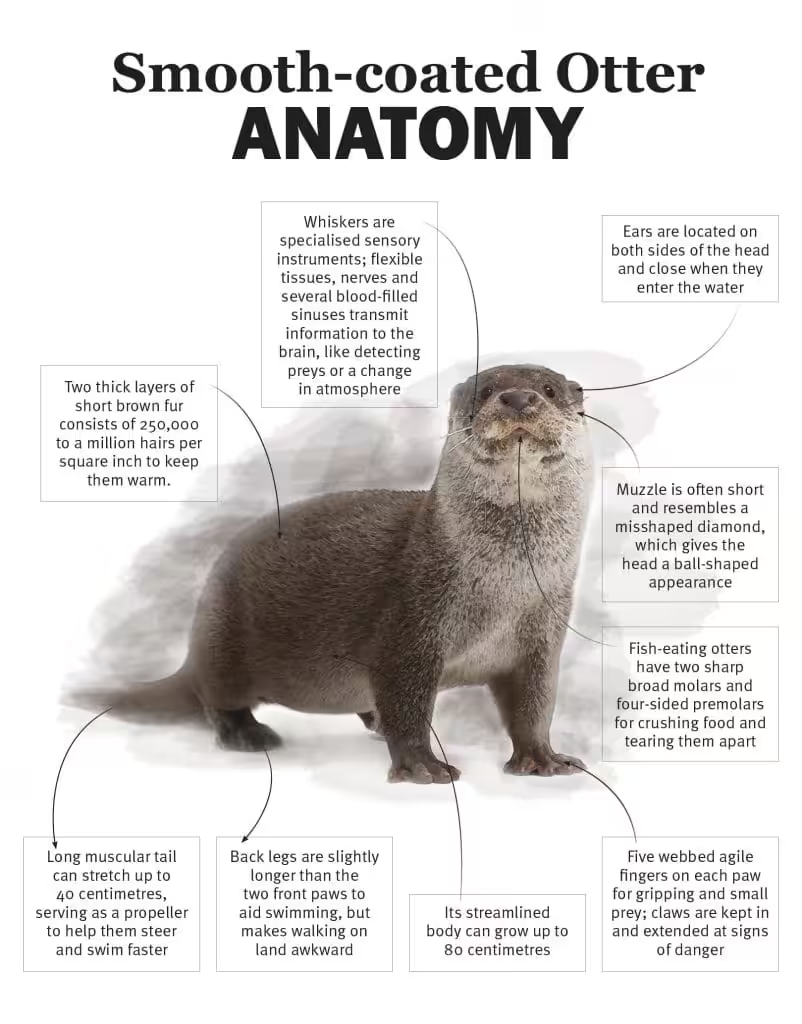
- Scientific Name: (Lutrogale perspicillata)
- RED LIST status: Vulnerable
Characteristics:
- Smooth-coated otter is characterized by a very smooth, sleek pelage. Their eyes and ears are small, the tail is flattened, limbs are short, strong, and the fore and hind paws are large and well-webbed.
- They are strong swimmers and hunt in groups.
- Males are polygamous, mating with up to four females.
- These otters are mainly nocturnal, although they can be diurnal when unmolested.
- Smooth-coated otters form large, vocal, family groups, preying together on fish, shrimps, frogs, crabs, insects, birds.
- Males are larger, it is females that dominate the pair.
Habitat:
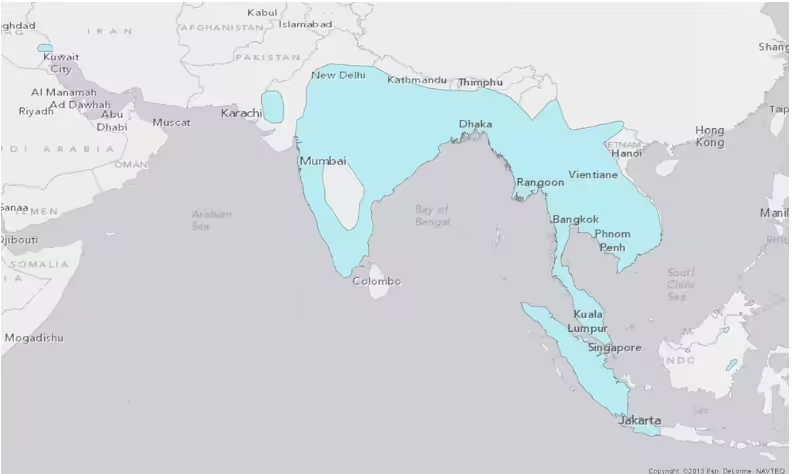
- Smooth-coated otter is distributed throughout the country from the Himalayas and to the south in India. It is sympatric with other otter species in the Western Ghats and the northeast India.
- Smooth-coated otters are found in areas where freshwater is plentiful, preferring shallow and placid waters— wetlands and seasonal swamps, rivers, lakes, and rice paddies.
- Although they are often found in saltwater near the coast, especially on smaller islands, they require a nearby source of freshwater.
Threats:
Poaching, habitat loss, accidental trapping, pet trade, pollution.
Facts:
- The gestation period is 61-65 days.
- The oldest known smooth-coated otter in captivity died at 20 years and five months. The typical lifespan in the wild is between 4 and 10 years.
Other Otter species:
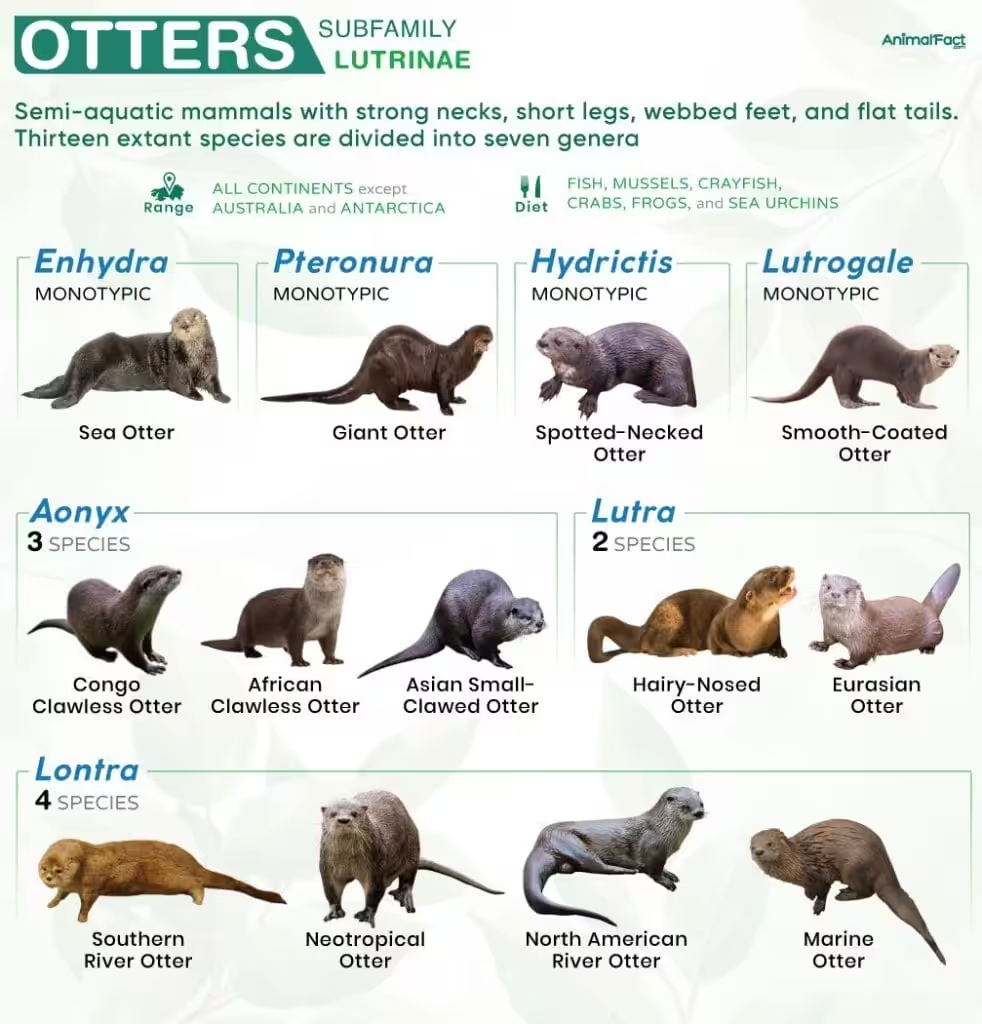
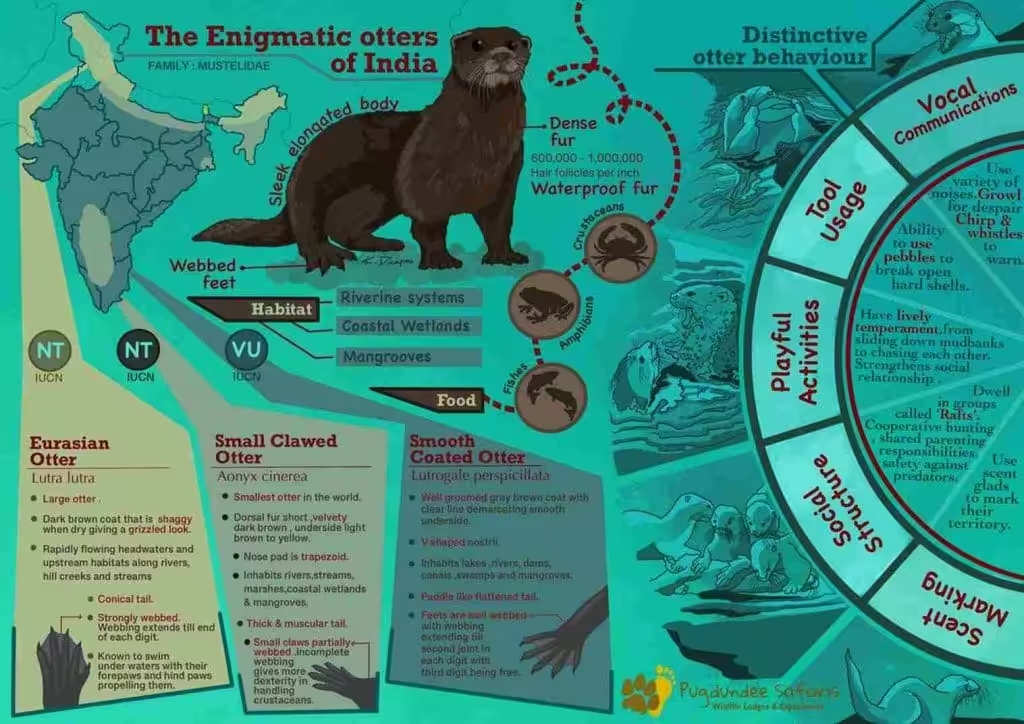
Note: Eurasian Otter, Small Clawed Otter and Smooth coated otter found in India.
Protected Areas:
Corbett and Dudhwa Tiger Reserves and Katerniaghat Wildlife Sanctuary in the north, Kaziranga National Park in the northeast, Sunderbans, Bhitarkanika and Coringa in the eastern coast; and Periyar Tiger Reserve and the Nagarhole National Park in the south.
Practice Question:
Q. Consider the following statements:
- Otters are mainly nocturnal.
- Otters strong swimmers and hunt in groups.
- Out of the 13 species of otters, five species are found in India.
Which of the statements given above are correct?
(a) 1 and 2 only
(b) 2 and 3 only
(c) 1 and 3 only
(d) 1, 2 and 3
Tell Google you want more of this.
Add Anantam IAS as a preferred sourceOne tap, and this site shows up more often in your own Top Stories, AI Overviews and AI Mode. Remove it any time.