Why in News?
Through December 2025 the Election Commission of India (ECI) continued its phased, pan-India Special Intensive Revision (SIR) of electoral rolls, extending to several states the door-to-door verification model it first ran in Bihar earlier in the year.
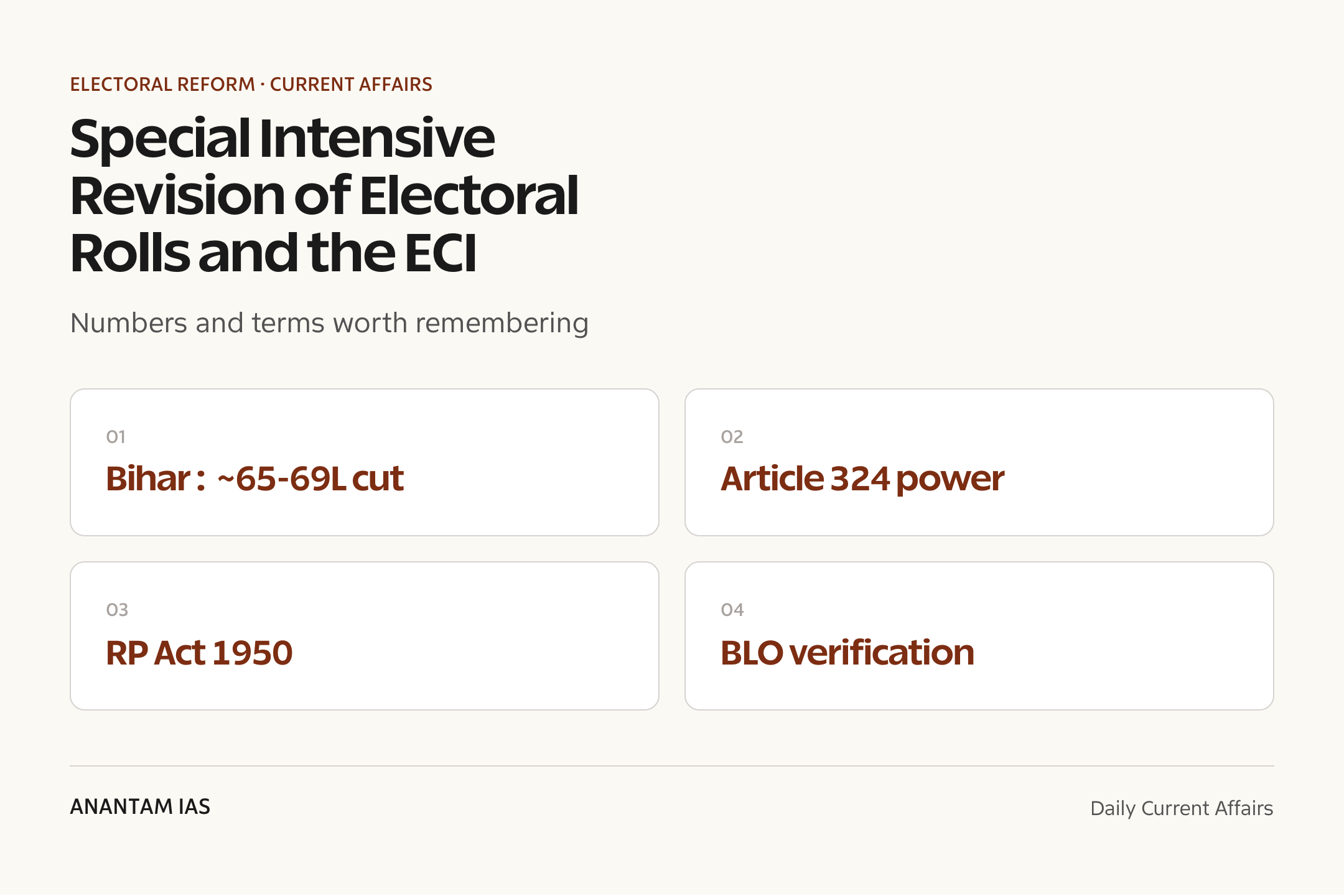
The exercise has been politically charged. In Bihar, the SIR led to the deletion of about 65-69 lakh names from the draft rolls, prompting questions about disenfranchisement and documentation burdens. A clutch of petitions challenging the SIR, led by the Association for Democratic Reforms (ADR), remained pending before the Supreme Court, which was still hearing the matter.
- The ECI is conducting a Special Intensive Revision (SIR) of electoral rolls in phases across states.
- The pilot in Bihar saw roughly 65-69 lakh names removed from the draft roll as deceased, shifted, duplicate or untraceable.
- Enumeration uses Booth Level Officers (BLOs), enumeration forms, and an earlier ‘intensive’ roll as the reference base.
- Petitioners argued the process risks excluding poor, migrant and marginalised voters; the ECI defended it as roll purification.
- The challenge in ADR v. ECI was being heard by the Supreme Court, with the matter pending.
The development matters in the context of:
- Accurate electoral rolls are the foundation of free and fair elections — both wrongful inclusion and wrongful exclusion damage the franchise.
- The ECI’s superintendence of rolls draws on a constitutional power that the courts can review for legality and fairness.
UPSC Relevance
Prelims Relevance
- Article 324: superintendence, direction and control of elections and electoral rolls vests in the ECI.
- Article 325: no person to be excluded from rolls on grounds of religion, race, caste or sex.
- Article 326: elections to Lok Sabha and State Assemblies on the basis of universal adult suffrage (voting age 18).
- Representation of the People Act, 1950 governs the preparation and revision of electoral rolls.
- Registration of Electors Rules, 1960 lay down the procedure for enrolment and revision.
- Roll revisions are of two kinds — intensive, summary, or a combination; SIR is an intensive house-to-house exercise.
- Booth Level Officers (BLOs) conduct field verification; the relevant authority is the Electoral Registration Officer (ERO).
- The ECI is a multi-member body (Chief Election Commissioner + Election Commissioners).
Mains Relevance
GS Paper 2
- Powers of the ECI under Article 324 and the limits of judicial review over the conduct of elections.
- Balancing the integrity of electoral rolls against the risk of disenfranchising vulnerable citizens.
GS Paper 2 (Social Justice)
- How documentation requirements can disproportionately affect the poor, migrants and the marginalised.
Essay
- Every name on the roll is a citizen’s voice: the quiet politics of who gets to vote.
Background and Context
What a Special Intensive Revision is
SIR is the most thorough form of roll revision the ECI runs.
- Electoral rolls are revised either by a summary revision (updates on the existing roll) or an intensive revision (fresh house-to-house enumeration).
- A Special Intensive Revision (SIR) rebuilds the roll through field verification, typically against an earlier baseline roll.
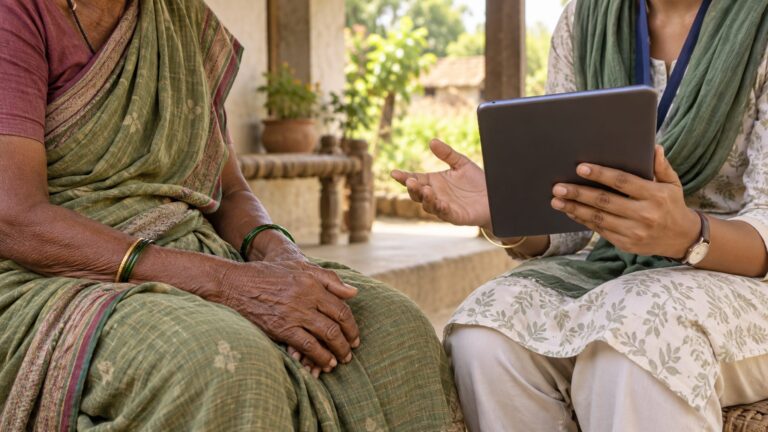
- Booth Level Officers (BLOs) distribute and collect enumeration forms, verifying each elector’s existence and ordinary residence.
- The draft roll is published, claims and objections are invited, and a final roll is issued.
The constitutional and legal basis
The ECI’s authority over rolls is broad but not unbounded.
- Article 324 vests the superintendence, direction and control of rolls and elections in the ECI.
- The Representation of the People Act, 1950 governs roll preparation; the Registration of Electors Rules, 1960 set the procedure.
- Article 326 guarantees the vote to every citizen of 18 or above, subject to disqualifications such as non-residence or unsound mind.
- Courts can review whether the ECI’s exercise of power is lawful, reasonable and non-arbitrary.
The Bihar experience
Bihar was the first large SIR and set the template — and the controversy.
- The Bihar SIR led to the deletion of about 65-69 lakh names from the draft roll.
- The ECI said deletions covered the deceased, permanently shifted, duplicate and untraceable electors.
- Critics argued that documentation requirements and tight timelines risked dropping genuine voters, especially migrants and the poor.
- The exercise fed directly into the litigation now before the Supreme Court.
The legal challenge — pending
The matter was before the Supreme Court and undecided.
- Petitions led by the Association for Democratic Reforms (ADR) challenged the SIR’s legality and feasibility.
- Petitioners raised concerns about the burden of proof on voters and the risk of mass exclusion.
- The ECI defended the SIR as necessary roll purification to keep the electorate accurate.
- As of late December 2025 the Court was still hearing the matter; no final verdict had been delivered.
Why this is a high-stakes balance
Both errors of inclusion and exclusion threaten the franchise.
- Bogus or duplicate entries undermine the integrity of the roll and invite fraud.
- Wrongful deletions silently strip eligible citizens of the vote — a denial that is hard to reverse before polling.
- The poor, internal migrants and those lacking paperwork are most exposed to exclusion.
- Public transparency — published lists, easy claims and objections, and grievance redress — is the safeguard.
Way Forward
Protect the genuine voter
- Keep documentation requirements reasonable and accept widely held identity proofs to avoid exclusion.
- Give adequate time and an accessible claims-and-objections window, with active grievance redress.
Strengthen transparency
- Publish deletion lists with reasons and share machine-readable rolls with recognised parties.
- Audit a sample of deletions independently to catch errors.
Institutional trust
- Engage all stakeholders early and communicate the process clearly to sustain confidence in the ECI.
Conclusion
The Special Intensive Revision goes to the heart of electoral democracy: a roll that is accurate enough to prevent fraud, yet inclusive enough that no genuine voter is silently dropped. Bihar showed both the scale of correction possible and the risk of exclusion that comes with it.
With the constitutional challenge still pending before the Supreme Court, the durable lessons for the aspirant lie in the framework — the ECI’s powers under Article 324, the statutory basis in the Representation of the People Act 1950, and the perennial tension between roll purification and the right to vote.
UPSC Practice Questions
Prelims MCQ 1
With reference to electoral rolls in India, consider the following statements:
- The superintendence, direction and control of the preparation of electoral rolls is vested in the Election Commission of India.
- The preparation and revision of electoral rolls is governed by the Representation of the People Act, 1950.
- Article 326 provides for elections on the basis of universal adult suffrage.
How many of the above statements are correct?
(a) Only one (b) Only two (c) All three (d) None
Answer: (c) All three
Explanation:
All three are correct. Article 324 vests roll superintendence in the ECI; the RP Act 1950 governs roll preparation and revision; and Article 326 provides for universal adult suffrage with the voting age of 18.
Prelims MCQ 2
A ‘Special Intensive Revision (SIR)’ of electoral rolls is best described as:
(a) A house-to-house intensive re-verification of electors to rebuild the roll (b) A one-time deletion of all voters above a certain age (c) The linking of every voter ID to a bank account (d) An online-only self-registration drive with no field verification
Answer: (a) A house-to-house intensive re-verification of electors to rebuild the roll
Explanation:
An intensive revision involves fresh, door-to-door field verification by Booth Level Officers, as opposed to a summary revision that only updates the existing roll.
UPSC Mains Questions
- The Special Intensive Revision of electoral rolls highlights the tension between roll integrity and the risk of disenfranchisement. Examine the powers of the Election Commission under Article 324 and the safeguards needed to protect genuine voters.
- ‘An electoral roll must be both clean and inclusive.’ Discuss the challenges of revising electoral rolls in India and the role of judicial review in this domain.
Sources: Election Commission of India and Supreme Court Observer.
Frequently Asked Questions
What is the Special Intensive Revision (SIR) of electoral rolls?
It is an intensive, house-to-house re-verification of voters conducted by the Election Commission to rebuild the electoral roll, as opposed to a summary revision that only updates the existing list. Booth Level Officers distribute and collect enumeration forms to confirm each elector’s existence and residence.
Why was the SIR controversial in Bihar?
The Bihar SIR led to the deletion of roughly 65-69 lakh names from the draft roll. The Commission attributed these to deceased, shifted, duplicate or untraceable electors, but critics argued that tight timelines and documentation requirements risked dropping genuine voters, especially the poor and migrants.
Under what authority does the ECI revise electoral rolls?
The Election Commission acts under Article 324, which vests in it the superintendence, direction and control of elections and electoral rolls. The detailed process is governed by the Representation of the People Act, 1950 and the Registration of Electors Rules, 1960.
Was the SIR upheld or struck down by the courts?
As of late December 2025 the matter was still being heard by the Supreme Court in petitions led by the Association for Democratic Reforms. No final verdict had been delivered, and the challenge remained pending.
Who actually verifies voters during the SIR?
Field verification is carried out by Booth Level Officers (BLOs) under the Electoral Registration Officer for each constituency. They collect enumeration forms, check residence, and feed corrections into the draft roll, which is then opened to claims and objections.
Why does an accurate electoral roll matter so much?
The roll decides who can vote. Bogus or duplicate entries enable fraud, while wrongful deletions silently strip eligible citizens of the franchise. A roll that is both clean and inclusive is essential to free and fair elections.
Tell Google you want more of this.
Add Anantam IAS as a preferred sourceOne tap, and this site shows up more often in your own Top Stories, AI Overviews and AI Mode. Remove it any time.