Why in News?
Indian Express reported that the Railway Board on October 24 directed railway zones to extend optional travel insurance to reserved counter-ticket bookings by October 27, following an earlier Supreme Court order.
- The direction extends an existing optional insurance facility from online reserved bookings to reservation counters; the implementation deadline remains ahead of this note’s publication.
- The report requires digital collection of the premium and accurate capture of a mandatory mobile number so that passenger details can reach the insurer for policy issuance.
- The existing IRCTC terms specify 45 paise per passenger, including taxes. If insurance is selected, the option applies to eligible passengers booked under the same PNR.
- The insurance company issues the policy and settles claims under its terms. The extension does not make insurance automatic or establish coverage for every railway passenger.
- A benefit available only through an online booking channel can exclude passengers who depend on staffed reservation counters, even when their journey is otherwise eligible.
- Practical access requires more than a policy announcement: the passenger must understand the choice, complete payment and receive usable policy information.
UPSC Relevance
Prelims Relevance
- Optional insurance: coverage selected by the passenger rather than attached automatically to every ticket.
- PNR: the booking record to which the insurance selection applies for the passengers included in it.
- Premium: the amount paid for insurance coverage under the policy’s terms.
- Insurer: the company responsible for issuing the policy and assessing insurance claims.
- Reserved and unreserved travel: a relevant eligibility distinction; booking channel and class label should not be confused.
Mains Relevance
GS Paper 2
- Inclusive delivery of public services across online and assisted channels.
- Informed consent, grievance redressal and implementation accountability.
GS Paper 3
- Financial protection, insurance literacy and barriers created by digital payment requirements.
Essay
- Equal entitlement becomes meaningful when people can actually use the service.
Background and Context
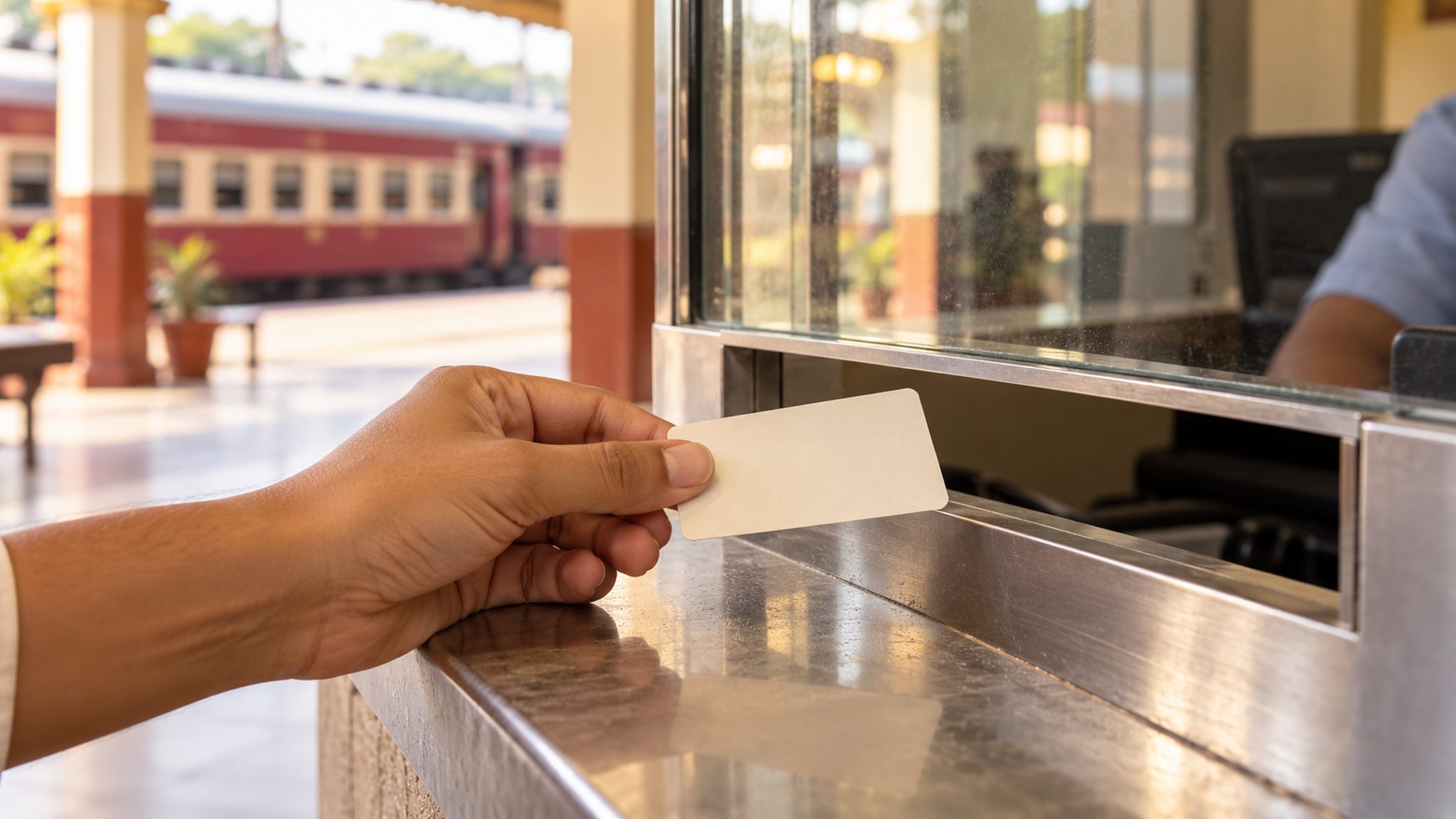
What Changes at the Reservation Counter
The policy change concerns the route through which eligible passengers can choose insurance, while the existing policy conditions continue to matter.
- Previously, the facility was available with online reserved bookings. The new direction adds reservation counters, addressing a difference created by the booking channel rather than announcing an entirely separate insurance product for offline passengers.
- The report links the Board’s instruction to an earlier Supreme Court order. The immediate administrative task is to make the option available by the stated deadline and inform counter staff how it should operate.
- An implementation instruction establishes what railway zones have been directed to do. It does not, by itself, prove that every counter already offers the facility or that every eligible passenger has received a policy.
- The reported extension retains the existing terms for eligible reserved tickets, including confirmed, partly confirmed and RAC bookings. It should not be read as a universal cover for unreserved travel or all people entering stations.
- The relevant comparison is online versus counter access within the eligible booking category. Describing all second-class passengers as excluded would obscure the distinction between reserved and unreserved travel that matters to the reported extension.
Why an Offline Counter Can Still Have Digital Barriers
A staffed booking counter can widen access, but the payment and communication requirements still determine whether the passenger can complete the insurance choice.
- The scheme remains optional, requiring an understandable choice at booking. Counter assistance should explain the premium, covered events and policy conditions so that an eligible traveller can make an informed decision about purchasing protection.
- Under the official terms, selecting insurance applies to eligible passengers under one PNR. The choice and its cost should be explained for the whole booking, rather than presented as an unexplained addition to the fare.
- The Board’s reported instruction requires digital premium collection. A passenger may reach a physical counter yet still face a payment obstacle; assisted access must address the practical transaction, alongside the availability of the option.
- A correct mobile number connects the booking to policy communication. An incorrectly entered number can obstruct receipt of information, making careful data capture and a way to resolve errors important parts of effective service delivery.
- As with measuring financial inclusion, access should be assessed through completed service use. Counting equipped counters alone cannot reveal whether eligible passengers understood the choice, paid successfully and obtained their insurance details.
Coverage, Claims and the Limits of the Extension
Insurance creates a defined contractual relationship; its scope and claim process must remain clear when the booking channel expands.
- The official policy terms place issuance and claims settlement with the insurer. IRCTC provides the connection for purchasing cover; passengers need to know which company issued their policy and where a claim should be addressed.
- The policy covers specified consequences of rail accidents or untoward incidents, subject to its conditions. It is not an unrestricted health policy, and paying a premium does not guarantee acceptance of every claim.
- A policy claim and statutory railway compensation are distinct routes. The report describes insurance as additional protection; extending its availability should not be interpreted as replacing legal remedies or automatically deciding entitlement under railway law.
- The policy provides for nomination and claim documentation, including evidence relevant to the insured event. Clear instructions after purchase matter because a low premium alone does not make the later process understandable to every household.
- The distinction between eligibility and delivery also applies here: wider availability does not erase exclusions. Authorities should explain who can opt in, while evaluating whether the delivery process actually reaches those passengers.
Way Forward
Make the Insurance Choice Usable
- Give counter staff short, clear explanations of consent, booking eligibility and the insurer’s role, supported by assistance for passengers who cannot complete the digital transaction independently.
- Provide a practical route to check policy receipt and correct communication errors, while directing policy and claim queries to the responsible insurer.
- Review completed purchases and unresolved access problems, alongside counter readiness, so that implementation assessment reflects passengers’ ability to use the facility.
Conclusion
- Extending insurance to reservation counters addresses a gap between booking channels. Its value depends on informed consent, workable payment arrangements and reliable policy delivery, while retaining the coverage conditions that define the product.
- Inclusive implementation must distinguish an announced option from completed access. The October 27 deadline is still prospective, and neither the extension nor premium payment establishes universal coverage or guarantees the outcome of a later claim.
UPSC Practice Questions
Prelims MCQ 1
With reference to the optional railway travel insurance scheme, consider the following statements:
- Insurance becomes compulsory for every passenger merely because a reserved ticket is purchased.
- If the insurance option is selected, the official terms apply it to passengers booked under the same PNR.
- The insurance company is responsible for policy issuance and claims settlement.
How many of the above statements are correct?
(a) Only one (b) Only two (c) All three (d) None
Answer: (b) Only two
Explanation:
Statements 2 and 3 are correct under the official IRCTC terms. Insurance remains optional; purchasing a reserved ticket alone does not automatically enrol the passenger.
Prelims MCQ 2
Which indicator would best assess whether extending optional insurance to reservation counters has improved practical access?
(a) The number of counters displaying a notice, without checking completed transactions. (b) The share of eligible passengers who can make an informed choice, complete payment and receive policy details. (c) The assumption that every ticket holder is now insured. (d) The total number of unreserved passengers travelling on the network.
Answer: (b) The share of eligible passengers who can make an informed choice, complete payment and receive policy details.
Explanation:
Effective access requires the passenger to complete the service process. Infrastructure or publicity counts alone cannot establish that consent, payment and policy communication work for eligible travellers.
UPSC Mains Questions
- Extending a public service to an offline channel does not necessarily remove digital exclusion. Discuss with reference to optional rail travel insurance at reservation counters.
- Explain why informed consent, clear institutional responsibility and usable claims information are necessary for inclusive delivery of low-premium insurance products.
Sources: Indian Express and IRCTC, Optional Travel Insurance terms.
Frequently Asked Questions
What is changing for railway counter bookings?
The Railway Board has directed zones to offer optional travel insurance with eligible reserved counter bookings by October 27. The report extends the existing facility’s booking channel, while retaining the applicable policy terms.
Does every passenger automatically receive insurance?
No. The scheme is optional and subject to eligibility conditions. The official terms state that, once the option is selected, it applies to passengers booked under the same PNR. Unreserved travel is not covered by this extension.
Why are digital payment and mobile details important?
The reported counter instructions require digital collection of the premium and a mandatory mobile number for policy communication. These requirements can remain practical barriers even when the ticket itself is purchased at a staffed counter.
Who handles an insurance claim?
The insurance company issues the policy and settles claims under its conditions. Passengers should use the insurer’s details in the policy document. A claim under this product is distinct from statutory railway compensation.
Tell Google you want more of this.
Add Anantam IAS as a preferred sourceOne tap, and this site shows up more often in your own Top Stories, AI Overviews and AI Mode. Remove it any time.