Why in News?
The revised Anaemia Mukt Bharat (AMB) Abhiyaan operational guidelines (released in June 2026) transitioned India’s flagship anti-anaemia strategy from a 6×6×6 mechanism to an intensive 7×7×7 framework. This structural shift focuses on scaling up testing, therapeutic coverage, and digital tracking.
Against this backdrop, expanding the distribution of Double Fortified Salt (DFS) serves as a critical, low-cost population-level preventive tool to address the structural drivers of iron-deficiency anaemia.
| UPSC Relevance: GS-2 Social Justice: Health; GS-3 Science and Technology: Diseases Prelims: Micronutrients (Iron, Iodine, Folate, B12), Anaemia Mukt Bharat 7×7×7 matrix, National Family Health Survey (NFHS-5) indicators. |
Anaemia & Double Fortified Salt:
(i) About Anaemia:
- Definition: A clinical condition characterised by a decrease in the total quantity of red blood cells (RBCs) or haemoglobin concentration, which systematically compromises the blood’s oxygen-carrying capacity.
- Nutritional Drivers: Deficiencies in essential micronutrients, primarily Iron, Folate (Vitamin B9), Vitamin B12, and Vitamin A.
- Non-Nutritional Drivers: Pathogenic infections (e.g., hookworm infestations, malaria), genetic hemoglobinopathies (Sickle Cell Disease, Thalassemia), and chronic systemic inflammation.
(ii) Double Fortified Salt (DFS):
- Composition: Edible common salt (NaCl) fortified simultaneously with Iron (typically as microencapsulated Ferrous Fumarate or Ferrous Sulfate) and Iodine (as Potassium Iodate).
- Dual Health Targets:
- Iron: Catalyses haemoglobin synthesis to counter Iron Deficiency Anaemia (IDA).
- Iodine: Prevents Iodine Deficiency Disorders (IDDs), protecting cognitive development and thyroid function.
- Regulatory Oversight: Governed by FSSAI’s Food Safety and Standards (Fortification of Foods) Regulations, mandated to carry the blue-colored +F logo for consumer identification.
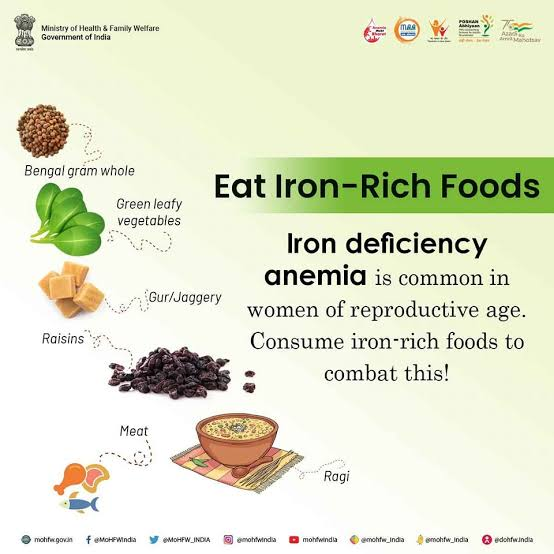
India’s Anaemia Burden:
Data from the National Family Health Survey (NFHS-5) highlights a systemic public health challenge across vulnerable demographics:
- Infants & Toddlers (6-59 months): 67.1% (a sharp increase from 58.6% in NFHS-4).
- Women of Reproductive Age (15-49 years): 57.0%.
- Pregnant Women: 52.2% (directly linking maternal health to birth weights).
- Adolescents (15-19 years): Significant gender divergence with 59.1% of girls and 31.1% of boys affected.
Socio-Economic Ramifications:
- Erosion of Human Capital: Impairs cognitive and motor development in early childhood, leading to lifelong learning deficits.
- Demographic Dividend at Risk: Induces chronic fatigue, lowering labour productivity and physical capacity in the adult workforce.
- Intergenerational Cycle: Anaemic mothers give birth to low-birth-weight, micronutrient-deficient infants, perpetuating a systemic cycle of deprivation.
Strategic Advantages of DFS as a Public Health Tool:
- Universal Penetration: Salt is an inelastic dietary staple consumed across all socio-economic strata, geography, and cultural divides.
- Zero Adherence Burden: Delivers micronutrients passively through daily meals, eliminating compliance challenges associated with daily pill consumption.
- Infrastructure Synergy: Leverages existing salt iodisation supply chains and large-scale public distribution channels (PDS, PM-POSHAN, ICDS/Anganwadi centres).
- Proven Efficacy: Global evidence, including a 2022 Cochrane Review, indicates that DFS provides an approximate 21% relative reduction in anaemia prevalence compared to standard iodised salt.
- High Cost-Benefit Ratio: Relies on existing baseline distribution networks, offering an affordable intervention for large-scale economic returns.
Key Government Initiatives:
1. The Revised Anaemia Mukt Bharat (AMB) 7×7×7 Framework:
The updated 2026 guidelines scale up the original 2018 strategy to build an interconnected ecosystem:
- 7 Beneficiary Groups:
- Children (6-59 months)
- Children (5-9 years)
- Adolescents (10-19 years)
- Pregnant women
- Lactating mothers
- Women of reproductive age (20-49 years)
- Low-birth-weight infants (0-6 months)
- 7 Interventions: Prophylactic Iron-Folic Acid (IFA) supplementation; point-of-care digital testing; therapeutic management; deworming & delayed cord clamping; mandatory food fortification (DFS/Rice); intensive behavior change communication (BCC); tracking non-nutritional causes.
- 7 Institutional Mechanisms: Inter-ministerial convergence; National Centre of Excellence; robust supply chain automation; the centralised AMB digital portal; localised tracking dashboards.
- The Core Operational Strategy: Driven by the T4 Approach (Test, Treat, Talk, and Track).
2. Mission Saksham Anganwadi and Poshan 2.0:
- Converges supplementary nutrition programs with early childhood care.
- Utilises Poshan Maah and Poshan Pakhwada to drive community-led behaviour change and remove social taboos around micronutrient interventions.
3. Mandatory Rice Fortification Scale-Up:
- Supplies customised rice grains enriched with Iron, Folic Acid, and Vitamin B12 through safety-net programs. The Union Cabinet extended this universal coverage across PMGKAY and all food welfare schemes up to December 2028.
Way Forward:
- Phased and Targeted Expansion: Prioritise high-burden districts mapped under the Aspirational Districts Programme before initiating a universal rollout.
- Strict Quality Assurance (QA/QC): Establish independent third-party lab testing at production hubs to check stability, iodine retention, and uniform iron distribution.
- Enforcing Dietary Diversification: Fortification must complement, not replace, natural diets. Promote localised Nutri-gardens, pulses, green leafy vegetables, and Vitamin C intake to maximise iron bioavailability.
- Differentiated Screening Protocols: Utilise the AMB digital framework to isolate genetic hemoglobinopathies, preventing iron overload complications in endemic pockets.
- Real-time Bio-Surveillance: Move beyond measuring distribution volumes. Establish periodic biometric tracking of serum ferritin, haemoglobin levels, and urinary iodine excretion to evaluate true clinical outcomes.
Double Fortified Salt represents a highly scalable, economically viable instrument in India’s public health toolkit. However, its success cannot be achieved in isolation.
To transition from food security to nutritional security, DFS must be deployed alongside robust clinical diagnostics, clean sanitation, and comprehensive dietary diversification. This approach is essential to safeguard the country’s human capital and protect its long-term demographic dividend.
Prelims Practice MCQ:
Q. Consider the following statements regarding the Food Safety and Standards (Fortification of Foods) Regulations and India’s anti-anaemia strategies:
1. Under FSSAI regulations, commercial fortification of open-market retail staple foods is voluntary for food business operators, but any such fortified product must mandatorily display the ‘+F’ logo.
2. The revised Anaemia Mukt Bharat 7×7×7 framework prescribes Weekly Iron and Folic Acid Supplementation uniformly across all seven target beneficiary cohorts to maintain operational simplicity.
Which of the statements given above are correct?
(a) 1 only
(b) 2 only
(c) Both 1 and 2
(d) Neither 1 nor 2
Answer: (a) 1 only
Explanation: Statement 2 is incorrect: While the revised AMB strategy does operate on a 7×7×7 framework (7 beneficiaries, 7 interventions, 7 institutional mechanisms), the frequency of iron supplementation is not uniform. Weekly Iron and Folic Acid Supplementation (WIFS) is specifically designed for school-going and out-of-school adolescents (10-19 years) and children aged 5-9 years.
Tell Google you want more of this.
Add Anantam IAS as a preferred sourceOne tap, and this site shows up more often in your own Top Stories, AI Overviews and AI Mode. Remove it any time.