Why in News?
On 11 November, the Cabinet Committee on Economic Affairs approved the development of the Yuge Yugeen Bharat Museum in New Delhi’s North and South Block complex.
- The relocation of government offices made the historic buildings available for a new public use. Their architectural character and heritage significance are to be preserved.
- The approved scope includes collection storage and conservation facilities as well as thematic galleries, visitor amenities and building services.
- The government expects an initial Adornment gallery in North Block in the latter part of 2027. The announcement describes a phased opening.
- A former administrative complex presents a practical heritage conservation question. How can buildings designed for office work accommodate public visits and safeguard vulnerable objects?
- The museum provides an example of how tangible and intangible heritage can be interpreted together. A displayed object can introduce visitors to skills that people still practise.
UPSC Relevance
Prelims Relevance
- Location: North and South Block complex, New Delhi.
- Approval: Cabinet Committee on Economic Affairs.
- Appraisal: Public Investment Board examined the proposal.
- Adaptive reuse: a new function for an existing building that retains its heritage significance.
Mains Relevance
GS Paper 1
- Assess how conservation choices affect the experience of historic architecture.
- Use adornment to explain how museums can interpret material objects and living craft traditions together.
Essay
- How do public institutions change the meaning of inherited spaces?
Background and Context
What Does Adaptive Reuse Preserve?
An old office and a public museum make different demands on the same rooms. Adaptive reuse starts by identifying which parts of the building carry historical meaning.
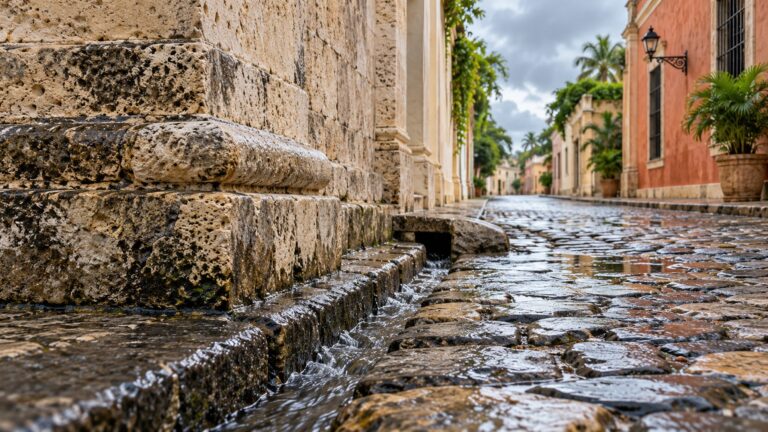
- A stone arcade can tell visitors how rooms connect and how daylight enters the building. Keeping its spatial character involves more than retaining a strip of stone across a new exterior.
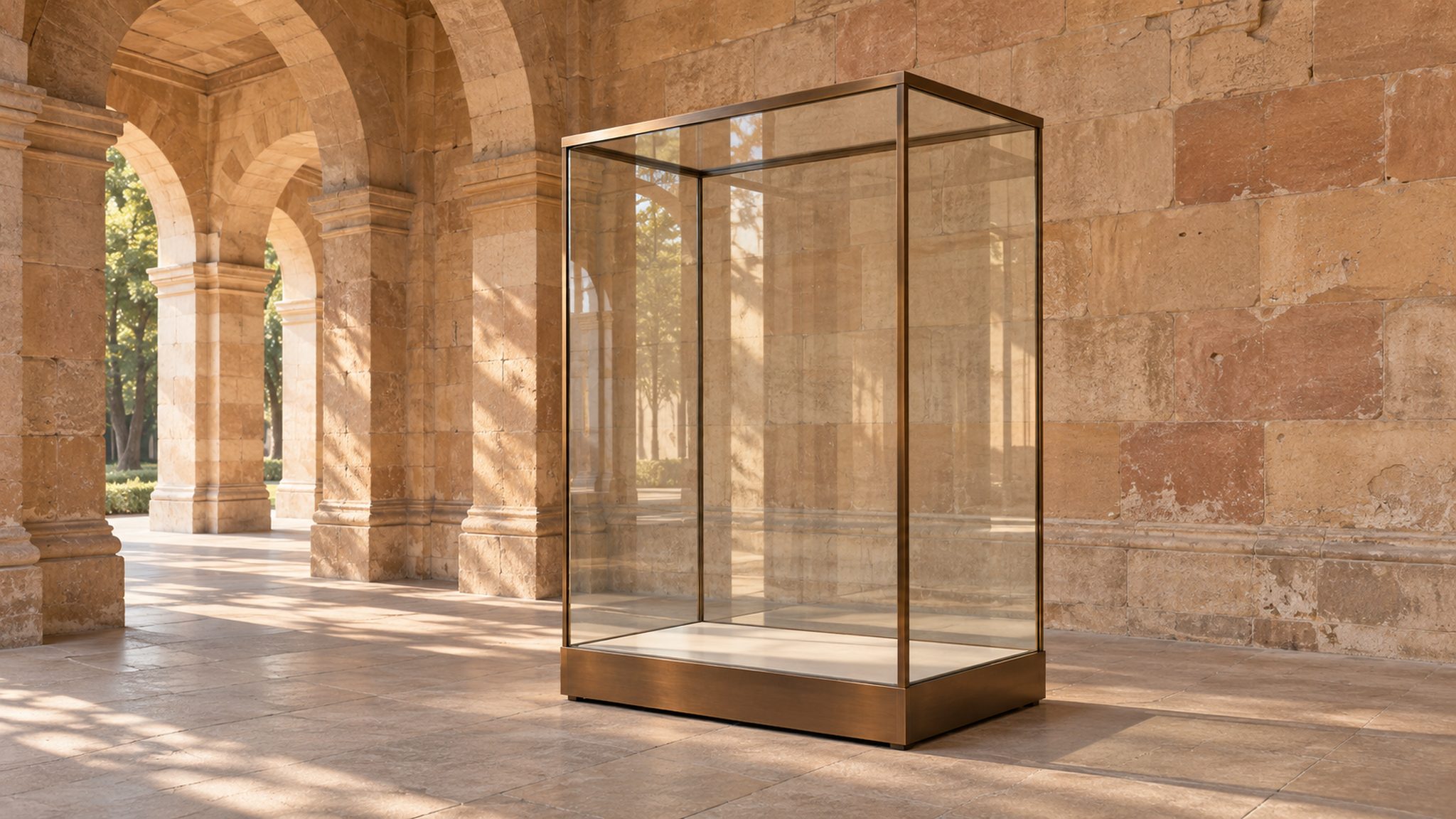
- A designer could place a freestanding display case clear of the arcade wall. Visitors could examine an object and still see the masonry, while staff could change the display without cutting into the stone.
- Other changes deserve closer scrutiny. A new doorway may ease movement between galleries but remove historic material. A different visitor route might provide the same access through an existing opening.
- The government has identified retention of architectural character as a project objective. An illustration of a design choice can explain the principle, while the executed design will determine how well the buildings retain that character.
How Does a Museum Care for Its Collections?
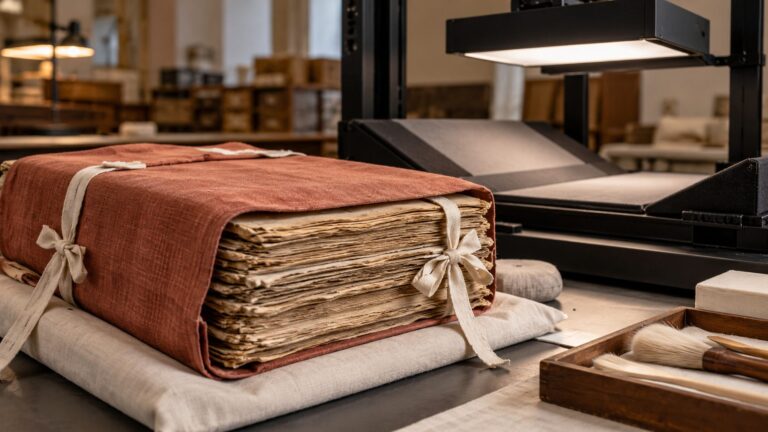
A display case is the part visitors see. The approved project also provides for the places where staff receive, examine, conserve and store collections.
- An incoming piece of jewellery needs a collection record that distinguishes it from similar pieces. Recording its condition before movement helps staff recognise any subsequent change.
- Preventive conservation reduces exposure to conditions that can damage an object. For a fragile textile, the choice of lighting and the length of time on display both matter.
- Objects spend time in storage between exhibitions. Staff need to find an individual item, handle it safely and return it to a recorded location when its display ends.
- A route that works well for visitors may be awkward for staff carrying a delicate object. Planning collection movement alongside visitor access connects the museum’s public rooms with its less visible work.
How Can an Object Explain a Living Tradition?
The proposed inaugural theme, Adornment, illustrates how a gallery can connect a physical object with the knowledge of the people who made and wore it.
- A necklace is tangible heritage. Its shape, material and construction can be studied directly. A description of those features gives a visitor a starting point for asking where and how it was made.
- The skill to string beads in a particular pattern is intangible heritage when a community practises and transmits it. A finished necklace alone cannot show the sequence of movements a learner must master.
- A craft demonstration could help a visitor connect the visible pattern to a maker’s decisions. It could also explain why two communities use similar materials for ornaments with different meanings.
- The same distinction matters for interpretation across a national collection. Identifying the community, place and use of an object lets visitors compare traditions without treating one example as representative of an entire region.
Way Forward
Assess Each Proposed Alteration
- Record the historic fabric affected by each proposed change and examine whether another location would serve the same purpose.
- Test visitor access and collection handling routes before fixing permanent installations in historic rooms.
- Invite practising craftspeople to help interpret objects whose techniques still survive, and identify contributors in the exhibition.
Conclusion
- The Cabinet decision gives the museum project approval to proceed. The first gallery remains a planned opening, and the transition from offices to public cultural use will take place in stages.
- Assess adaptive reuse through a specific choice. A display case, accessible route or collection store can meet a museum need while allowing the older building to remain legible to visitors.
UPSC Practice Questions
Prelims MCQ 1
With reference to the Yuge Yugeen Bharat Museum, consider the following statements:
- The approved site includes both North and South Block in New Delhi.
- The proposal includes facilities for storing and conserving objects.
- Cabinet approval marked the public opening of the Adornment gallery.
How many of the above statements are correct?
(a) Only one (b) Only two (c) All three (d) None
Answer: (b) Only two
Explanation:
The first two statements describe the approved project. The government expects the first gallery to open in North Block in the latter part of 2027.
Prelims MCQ 2
Which of the following best illustrates intangible heritage associated with an ornament?
(a) The silver used in the ornament (b) The case containing the ornament (c) The metalworking skill transmitted between makers (d) The room where the ornament is exhibited
Answer: (c) The metalworking skill transmitted between makers
Explanation:
Intangible heritage includes knowledge and skills that communities transmit. The silver ornament is a material expression of a maker’s skill.
UPSC Mains Questions
- How can adaptive reuse reconcile the conservation of historic buildings with the needs of a public museum? Illustrate with the North and South Block project.
- Explain how a museum can interpret both tangible and intangible heritage through the example of adornment.
Source: Press Information Bureau, Cabinet Committee on Economic Affairs.
Frequently Asked Questions
Where will the Yuge Yugeen Bharat Museum be developed?
The approved site is the North and South Block complex in New Delhi. The government proposes to give the former offices a public cultural use while retaining their architectural character.
What did the Cabinet approve in November?
The Cabinet Committee on Economic Affairs approved development of the museum. The project will proceed in phases, with the first gallery on Adornment expected in North Block in the latter part of 2027.
Why does a museum need storage as well as galleries?
Many objects spend time between exhibitions. Storage allows staff to keep each object in suitable conditions, track its location and prepare it for research, conservation or a later display.
How can a gallery represent intangible heritage?
A gallery can connect a physical object with a community’s skills and practices. A maker demonstrating how to form an ornament, for example, can explain decisions visitors cannot observe in the finished piece.
Tell Google you want more of this.
Add Anantam IAS as a preferred sourceOne tap, and this site shows up more often in your own Top Stories, AI Overviews and AI Mode. Remove it any time.