3 current affairs published on Monday, 24 November 2025
24 November 2025 Current Affairs for UPSC — every
Why-in-News article AnantamIAS published on Monday, 24 November 2025, broken down with
Why in News?, the exact GS paper it feeds, sub-topic mapping, MCQ-ready facts and a
UPSC-style practice question. 3 articles in total, covering Polity, Economy, Environment, S&T, IR, Geography, History, Society and Internal
Security — the same Why-in-News + GS-paper-mapping + practice-question format the Compass uses across
every daily digest on the site.
Daily current affairs for UPSC is where new material enters your prep stream. Read this
24 November 2025 digest end-to-end in 25–35 minutes, attempt the practice question
at the foot of each article (it's MCQ for some, 10/15-marker for others), then bookmark the entries
that fall inside your active revision window. Everything stays cross-linked: tap any subject pill to jump
to that subject's hub, or use the table of contents above to skip straight to a specific story.
Why we publish daily current affairs separately from the monthly compilation: daily is learning,
monthly is revision. Use the daily page to add fresh material to your notes the day it breaks;
come back to the November 2025 compilation 60 days before Prelims when the
noise has settled and only the lasting takeaway is worth re-reading.
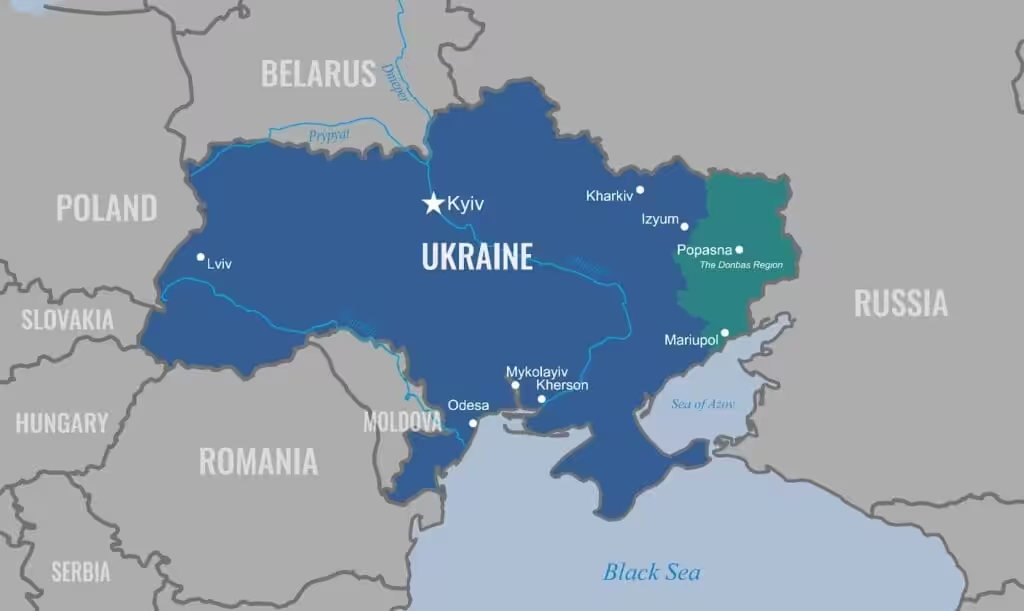
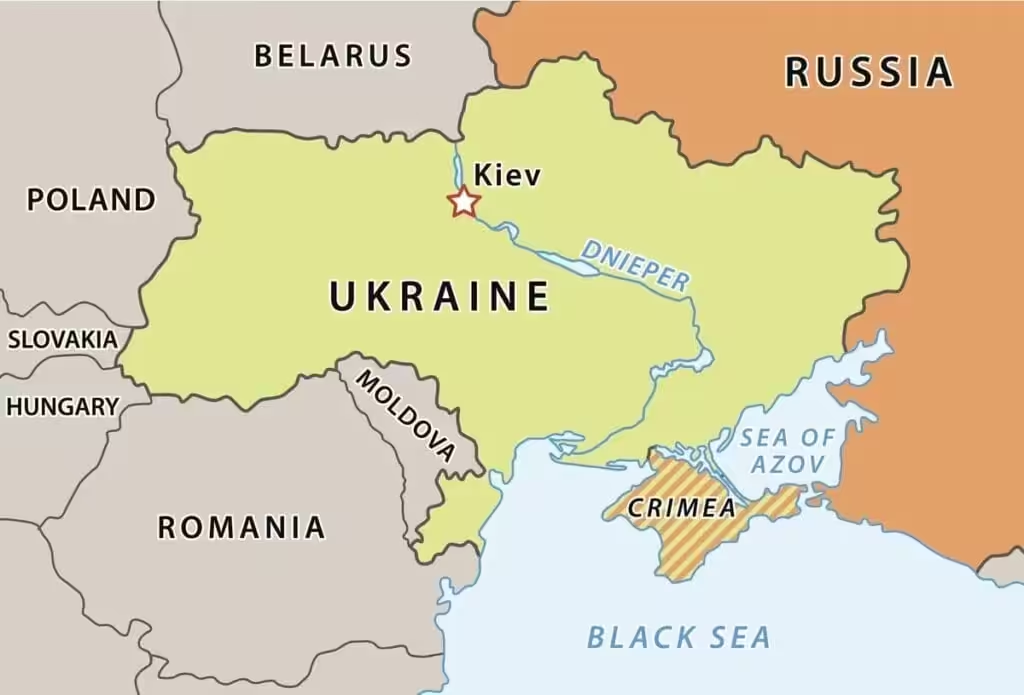
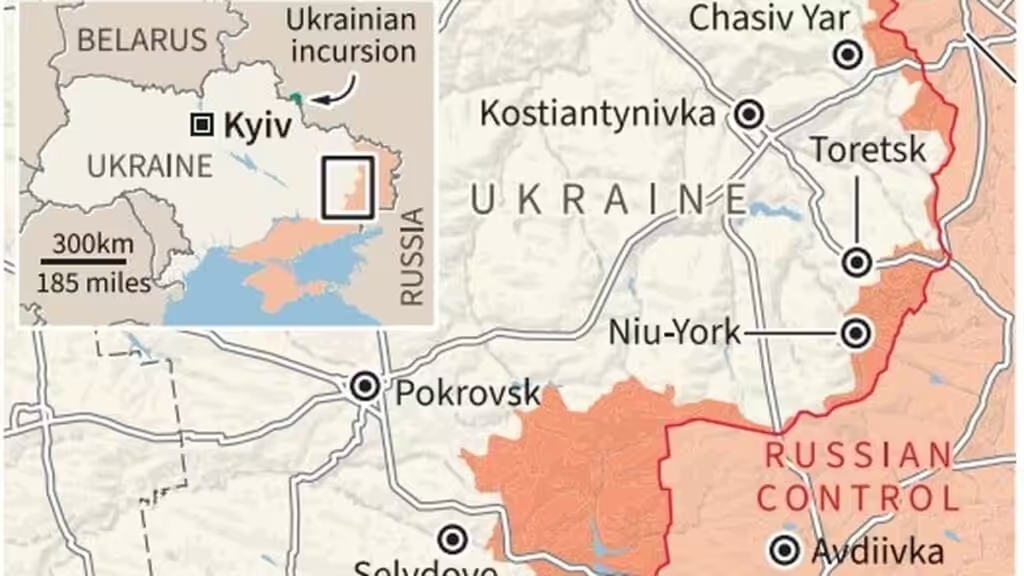
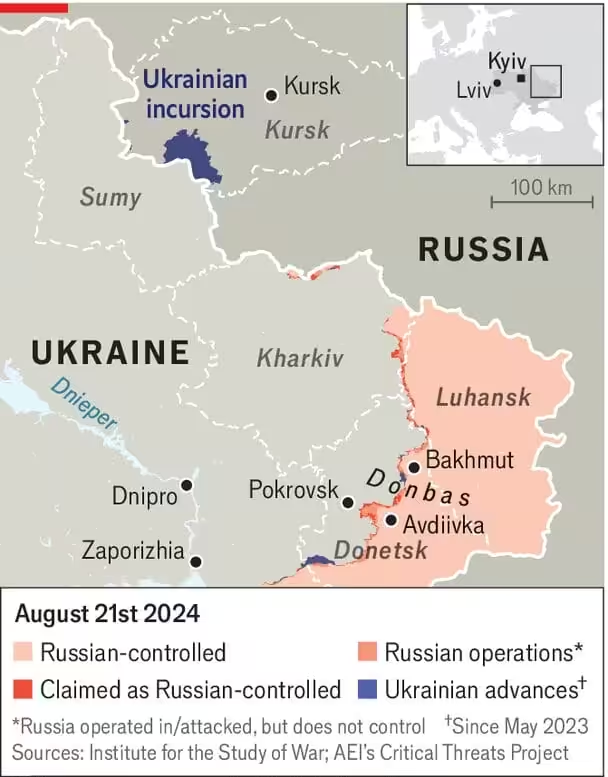
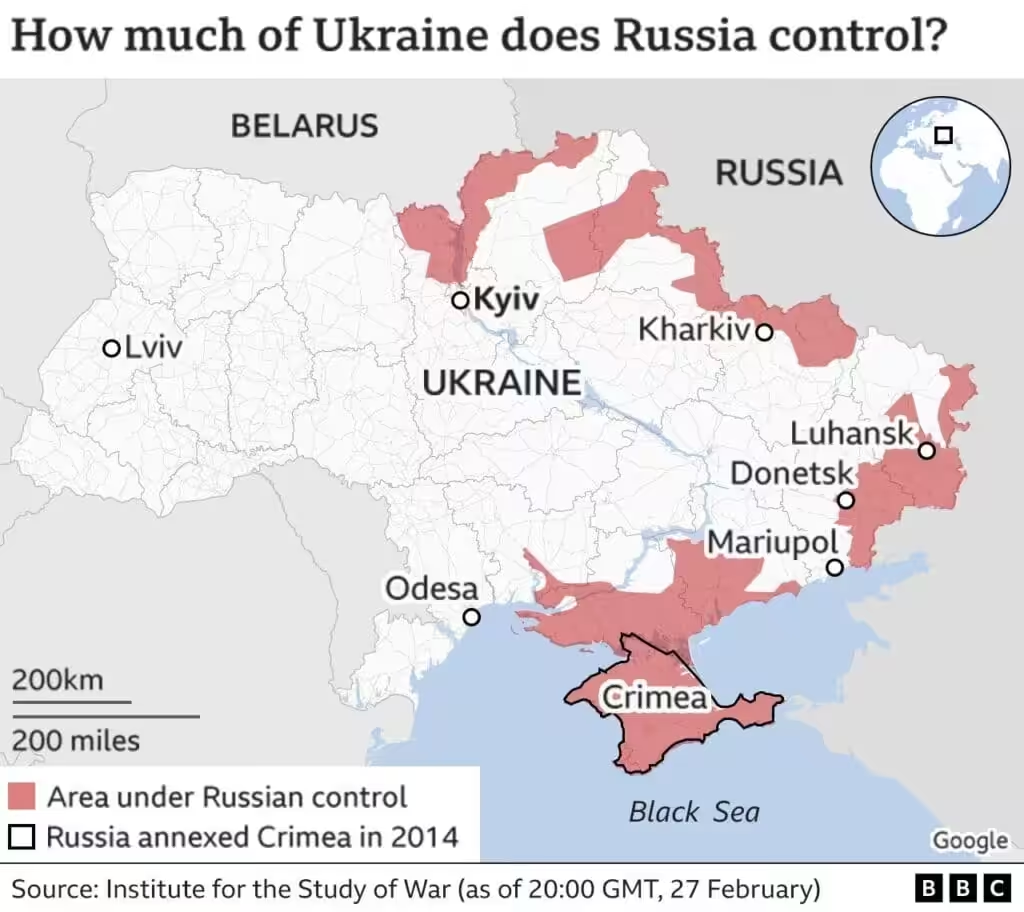
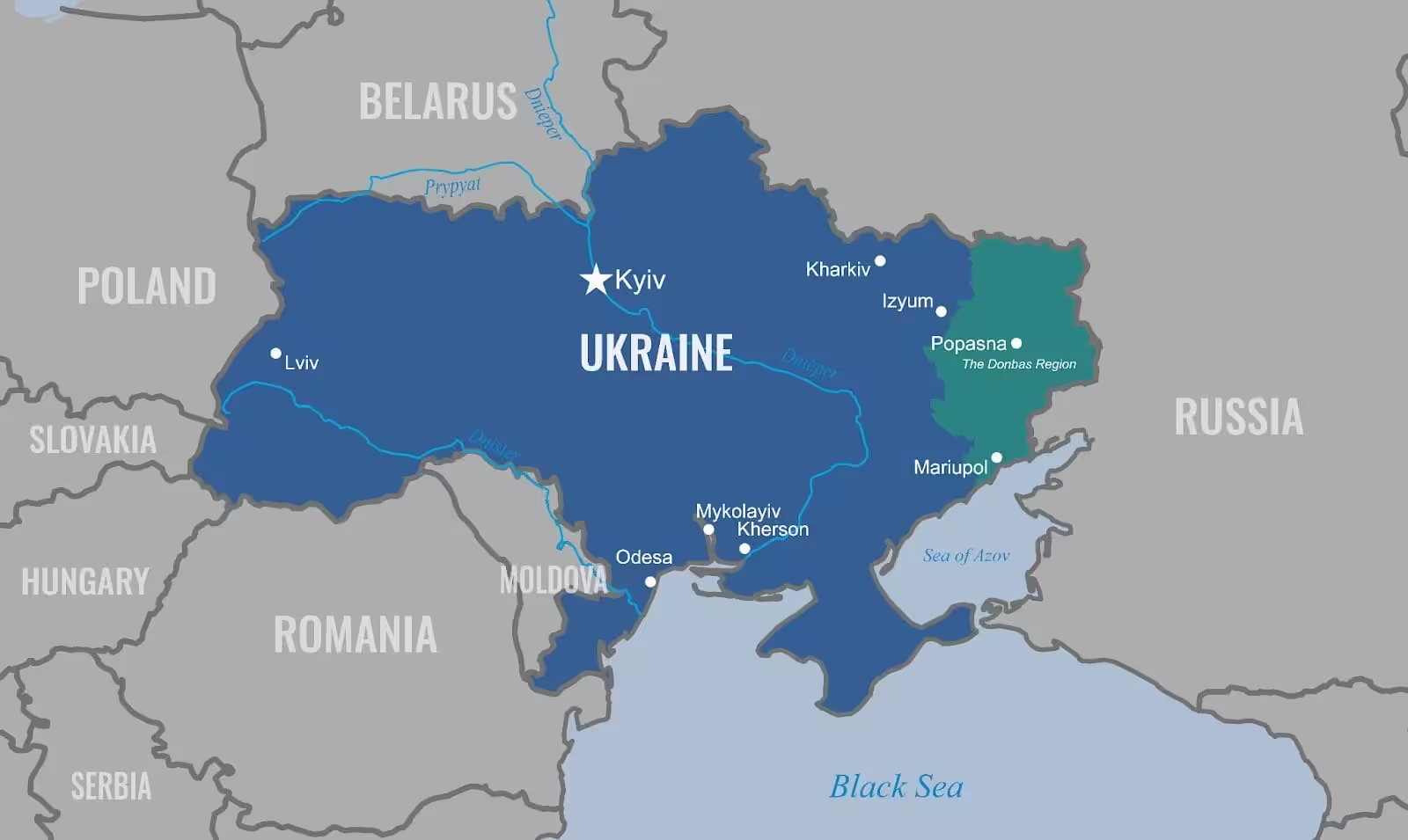
Russia claims control of more than 75% of Pokrovsk, a major road-and-rail junction in eastern Ukraine’s Donetsk region. The move is part of Russia’s continued offensive to capture the remaining Ukrainian-held areas of Donbas, which includes Donetsk and Luhansk.
UPSC Relevance:
Location
UPSC PYQ:
Regions often mentioned in news — Reason for being in news
North Kivu and Ituri : War between Armenia and Azerbaijan
Nagorno-Karabakh: Insurgency in Mozambique
Kherson and Zaporizhzhia: Dispute between Israel and Lebanon
How many of the above pairs are correctly matched?
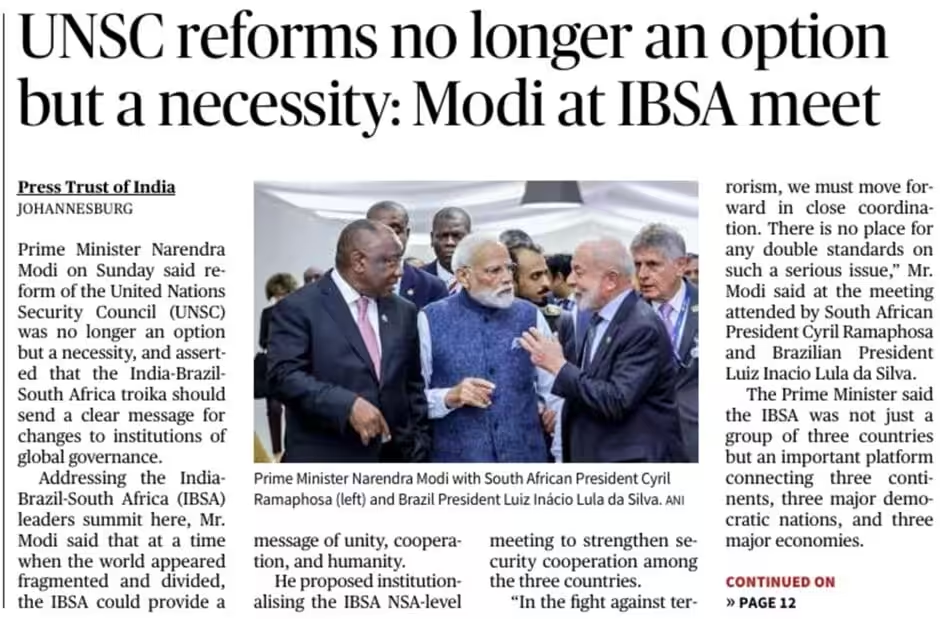
Addressing the India-Brazil-South Africa leaders’ summit in Johannesburg, Indian Prime Minister reiterated the necessity of UNSC reforms.
UPSC Relevance:
Important international groupings.
PYQ:
Q. In which one of the following groups are all the four countries members of G20? (2020)
(a) Argentina, Mexico, South Africa and Turkey
(b) Australia, Canada, Malaysia and New Zealand
(c) Brazil, Iran, Saudi Arabia and Vietnam
(d) Indonesia, Japan, Singapore and South Korea
About IBSA Forum:
The grouping was formalised and named the IBSA Dialogue Forum when the foreign ministers of India, Brazil and South Africa met in Brasilia on June 6, 2003 and issued the Brasilia Declaration.
It promotes closer coordination on global issues between 3 large emerging multicultural, multiracial democracies, spread over 3 continents.
Cooperation in IBSA is on three fronts:
As a forum for consultation and coordination on global and regional political issues, such as, the reform of global institutions, WTO/Doha Development Agenda, climate change, etc.;
Trilateral collaboration on concrete areas/projects, through fourteen working groups and six People-to-People Forums, for the common benefit of three countries; and
Assisting other developing countries by taking up projects in the latter through IBSA Fund.
IBSA does not have a headquarters or a permanent executive secretariat.
At the highest level, it holds the Summits of Heads of State and Government.
Additionally, the Foreign Ministers meet about once a year to preside over the Trilateral Ministerial Commission meetings of the Forum.
IBSA Fund:
Recognition: The fund was honoured with the UN South-South Partnership Award in 2006 and UN’s MDG award in 2010 for utilising innovative approaches for eradicating poverty and hunger in the world.
IBSA Fund was established in 2004 and became operational in 2006.
It is a unique initiative to enhance South-South cooperation for the benefit of nations of the South.
IBSA Fund-supported projects help partner countries in the Global South to achieve their national priorities, as well as all other internationally agreed development goals.
Each country contributes US$ 1 million annually to this fund.
The United Nations Office for South-South Cooperation act as the secretariat and fund manager of the IBSA Fund.
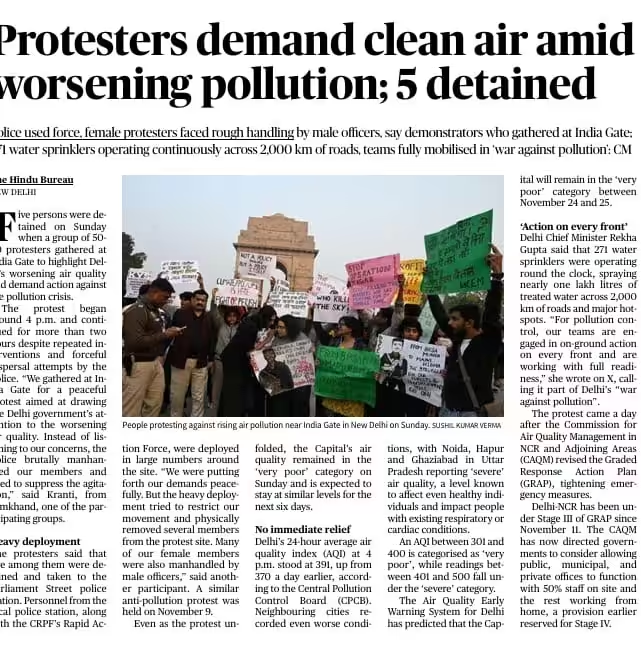
Public frustration with severe air pollution in Delhi. A group of citizens gathered at India Gate to demand immediate government action regarding deteriorating air quality. The protest was met with police intervention, leading to the detention of five individuals.
UPSC Relevance:
Fundamental Right
UPSC PYQ:
Q. India is home to lakhs of persons with disabilities. What are the benefits available to them under the law? (2011)
Free schooling till the age of 18 years in government run schools.
Preferential allotment of land for setting up business.
Ramps in public buildings.
Which of the statements given above is/are correct?
(a) 1 only (b) 2 and 3 only (c) 1 and 3 only (d) 1, 2 and 3
Article 21 in Constitution of India:
Subhash Kumar v. State of Bihar (1991), established that the right to life includes the right to a pollution-free environment to live with dignity.
The interpretation and scope of Article 21 have evolved through various landmark judgments of the Supreme Court, expanding its ambit to include protection against torture, custodial violence, and the right to a clean and healthy environment.
Landmark Judgments:
Case
Year
Key Contribution
Subhash Kumar vs State of Bihar
1991
First recognition that right to pollution-free air and water is part of Article 21.
M.C. Mehta cases (Series)
1986–
Led to major environmental doctrines (Polluter Pays, Precautionary Principle), closure of polluting industries near Taj Mahal, Ganga pollution control.
Indian Council for Enviro-Legal Action vs Union of India
1996
Strengthened Polluter Pays principle — offenders liable to restore environment.
Vellore Citizens Welfare Forum vs Union of India
1996
Recognized Sustainable Development as a constitutional requirement.
A.P. Pollution Control Board vs Prof. M.V. Nayudu
1999
Emphasized need for scientific expertise in environmental adjudication.
T.N. Godavarman Case
1995–ongoing
Expanded definition of forest, led to forest conservation framework and CAMPA fund.
M.C. Mehta vs Union of India (Vehicular Pollution Case)
1998–2002
Ordered introduction of CNG in Delhi buses and stricter vehicle emission norms.
Oleum Gas Leak Case (Delhi)
1986
Introduced Absolute Liability doctrine (stricter than strict liability).
Lafarge Umiam Mining Case
2011
Introduced Green Clearance Review and balancing development with environment.
Sterlite Copper Plant Closure Case (Tamil Nadu)
2018
Court upheld State’s decision to shut plant due to pollution affecting public health.
Delhi Firecrackers Case
2020–23
Court restricted sale of traditional crackers and promoted green crackers.