Eri silk and OEKO-TEX certification together mark an important step for India’s North-East textile economy. Eri silk — produced from the cocoons of the Samia ricini moth, primarily in Assam, Meghalaya and Nagaland — is one of the world’s only commercial silks that is harvested after the moth has naturally emerged from the cocoon, making it a “non-violent” or ahimsa silk. In recent years multiple Eri silk products from the North-East, including yarn and fabric from Assam-based producers, have received OEKO-TEX Standard 100 certification — the world’s best-known label for textiles tested free of harmful substances. The combination of ahimsa production and chemical-free certification is positioning Eri silk for the global premium and sustainable-fashion markets.
For UPSC, the Eri silk and OEKO-TEX certification story belongs to economy (textiles, sericulture, exports), society (livelihood of tribal communities in the North-East), and current affairs. The story tests two specific facts that both turn out to be correct in typical prelims items: Eri silk is genuinely ahimsa, and OEKO-TEX certification confirms chemical-free testing.
Quick Facts at a Glance
| Parameter | Detail |
|---|---|
| Silkworm species | Samia ricini (Eri / endi silkworm) |
| Host plants | Castor, kesseru, tapioca |
| Main producing states | Assam, Meghalaya, Nagaland (North-East India) |
| Why “ahimsa” (peace) silk | Moth emerges naturally; no chrysalis is killed |
| Certification | OEKO-TEX Standard 100 — tested free of 300+ harmful substances |
| OEKO-TEX run by | International association of 17 test institutes, based in Zurich |
| Promoting agency | Central Silk Board (Ministry of Textiles); NERTPS; Silk Samagra |
| Why it matters | Unlocks premium EU/UK/Japan sustainable-fashion export markets |
What Eri Silk Is
The silkworm species Samia ricini is reared on the leaves of castor (Ricinus communis), kesseru (Heteropanax fragrans) and tapioca. Unlike the more famous mulberry silk produced by Bombyx mori, the Eri cocoon is open at one end. When the moth completes pupation it crawls out of the cocoon through the natural opening, leaving the empty cocoon behind to be spun into yarn. This natural emergence is what makes Eri an ahimsa (non-violent) silk — no chrysalis is killed in the cocoon-stifling process that classical mulberry, tasar and muga silk require.
India’s silk family
India is the only country that produces all four commercial varieties of silk:
- Mulberry silk — from Bombyx mori, the dominant variety, produced largely in Karnataka, Andhra Pradesh, Tamil Nadu and West Bengal.
- Tasar silk — wild silk from Antheraea mylitta, produced in Jharkhand, Chhattisgarh and Odisha.
- Muga silk — golden-yellow silk from Antheraea assamensis, GI-tagged to Assam, the rarest variety.
- Eri silk — from Samia ricini, also called endi or peace silk.
The North-East alone produces all four except mulberry in significant quantities.
Why OEKO-TEX Standard 100 Matters
OEKO-TEX is an independent testing and certification system for the textile industry, run by an international association of seventeen research and test institutes headquartered in Zurich. Its flagship label — OEKO-TEX Standard 100 — confirms that every component of a textile product, from the thread and fabric to buttons and zips, has been tested against a list of more than three hundred regulated harmful substances and found to be below permissible limits.
Substances tested
OEKO-TEX Standard 100 tests for:
- regulated and banned azo dyes,
- formaldehyde,
- pesticides,
- heavy metals such as lead, cadmium, mercury, chromium VI,
- pentachlorophenol and tetrachlorophenols,
- chlorinated phenols and benzenes,
- phthalates and plasticisers,
- and other substances of concern under REACH and similar regulatory regimes.
A product carrying the Standard 100 label is therefore certified to be safe for human contact, suitable even for baby garments and intimate textiles in the most stringent product class.
Why this is important for Indian silk
Most global premium fashion buyers — particularly in the European Union, the United Kingdom and Japan — require independent third-party chemical certification before placing repeat orders. Without OEKO-TEX or an equivalent (Bluesign, GOTS), Indian silk producers cannot access the higher price points and longer purchase orders of the premium and luxury markets. The recent OEKO-TEX Standard 100 certifications for Eri silk products from the North-East therefore unlock a market access that was previously out of reach.
The Production Chain
The Eri silk and OEKO-TEX certification story begins with a small-holder rearing household.
Rearing
A household typically plants castor or kesseru, rears successive silkworm crops on the leaves, and harvests cocoons after natural emergence. Each crop runs about 25 to 30 days. Multiple crops are possible per year because the species is multivoltine — not restricted to a single annual generation, unlike univoltine European silk.
Spinning and weaving
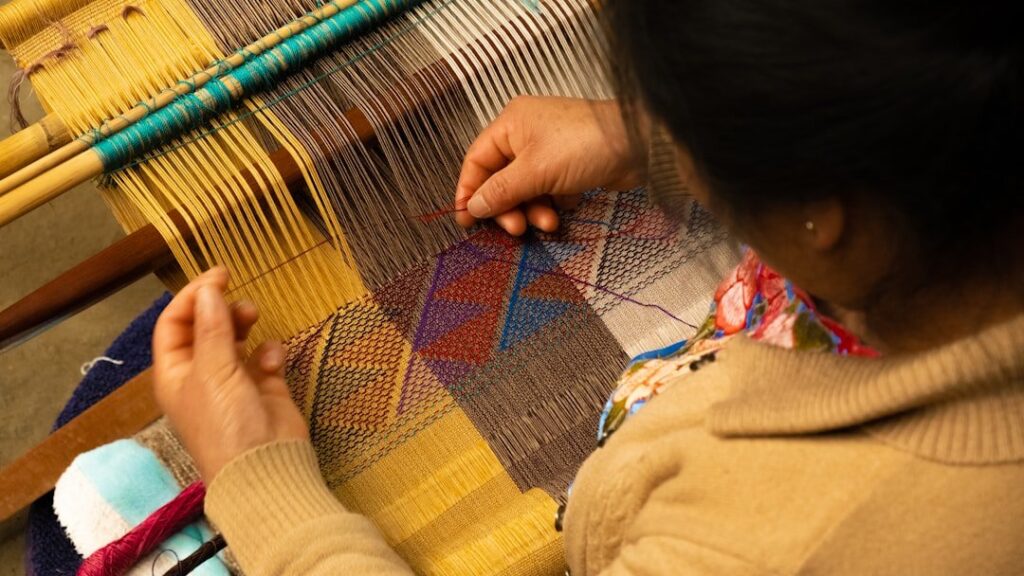
Because Eri cocoons are open-ended, they cannot be reeled like mulberry. They are spun into yarn either by hand on the takli or charkha or on small motorised spinning units. The yarn is then woven on traditional loin-looms (in tribal Nagaland and Mizoram) or on frame looms in Assam and Meghalaya. Eri fabric is matte, warm, drapes like linen, and is naturally creased.
Dyeing
Conventional silk dyeing uses a long list of chemicals; passing OEKO-TEX requires natural or low-impact dyes and clean processing water. Several North-Eastern clusters now use natural dyes (turmeric, indigo, lac, walnut bark) and low-temperature dyeing techniques to retain the OEKO-TEX certification.
Livelihood and Economic Impact
Sericulture is one of the most labour-intensive agro-industries in India. Each hectare of mulberry employs roughly six adult workers in cultivation and post-cocoon work; Eri silk, distributed across thousands of small holdings, employs several lakh people in the North-East. The Eri silk and OEKO-TEX certification combination raises the realisation per kilogram of yarn substantially — by 30 to 50 per cent depending on the market — and unlocks export credit and fashion partnerships that the unbranded product never had.
Government support flows through the Central Silk Board, the North Eastern Region Textile Promotion Scheme (NERTPS), the Silk Samagra programme, and various state-level handloom and handicraft missions.
Sustainability Credentials
Eri silk’s environmental footprint compares favourably with most fibres.
- Castor and kesseru plants tolerate marginal soils and require little irrigation.
- The non-killing harvest avoids the chrysalis mortality of classical silk.
- Natural dyeing reduces effluent load.
- Hand-spun and hand-woven products use minimal mechanical energy.
When combined with OEKO-TEX certification of chemical safety, Eri silk fits the growing premium for genuinely sustainable and ethically sourced fibres.
GI Tags and Brand Architecture
While Eri silk itself does not yet have a unified GI tag, several allied products — Assam Muga, Sualkuchi silk weaving, and specific tribal weaves — are GI tagged. The combination of GI branding plus OEKO-TEX certification gives Indian silk an effective dual signal of geographic authenticity and chemical safety in international markets.
For deeper context, see also our explainers on the Muga silk of Assam and India’s textile and handloom policy.
Frequently Asked Questions
Why is Eri silk called ahimsa silk?
Because the Eri cocoon is open at one end and the moth emerges naturally before the empty cocoon is spun into yarn. No chrysalis is killed in the boiling or stifling stage that other commercial silks require.
Where is Eri silk produced in India?
Mainly in Assam, Meghalaya, Nagaland, Mizoru and other northeastern states. Smaller pockets exist in Bihar, Odisha and West Bengal.
What is OEKO-TEX Standard 100?
OEKO-TEX Standard 100 is an international certification that confirms a textile product has been tested for over three hundred harmful substances and found to be below the regulated permissible limits, making it safe for human contact.
Why does OEKO-TEX certification matter for Indian silk?
Because premium global buyers — especially in the EU, UK and Japan — require independent third-party chemical certification. OEKO-TEX unlocks higher-value, repeat orders that an uncertified product cannot access.
What is the silkworm species behind Eri silk?
Samia ricini, also known as the Eri silkworm, reared chiefly on castor and kesseru leaves.
Is Eri silk the same as Muga silk?
No. Muga silk comes from Antheraea assamensis and produces a natural golden-yellow fibre exclusive to Assam, while Eri silk comes from Samia ricini and produces a matte, off-white to brown fibre. Both are northeastern silks but biologically and texturally distinct.
Which agency promotes sericulture in India?
The Central Silk Board under the Ministry of Textiles, working alongside state sericulture departments and the North Eastern Region Textile Promotion Scheme (NERTPS).
Does Eri silk have a GI tag?
A unified national GI tag for Eri silk is still under development; allied products and weaving styles from the North-East carry their own GI tags, while Eri silk itself is recognised through Central Silk Board branding and emerging community-led labels.
Tell Google you want more of this.
Add Anantam IAS as a preferred sourceOne tap, and this site shows up more often in your own Top Stories, AI Overviews and AI Mode. Remove it any time.