The Hasdeo Aranya forest — often called the “Lungs of Chhattisgarh” — is a contiguous stretch of dense sal and mixed deciduous forest spread across the Korba, Sarguja and Surajpur districts of northern Chhattisgarh. Covering roughly 1,70,000 hectares (1,700 sq km), Hasdeo is one of the largest intact forest blocks in central India, a vital elephant corridor, catchment for the Hasdeo-Bango Dam, and home to Gond, Oraon and Lohra tribal communities.
For UPSC aspirants, Hasdeo Aranya sits at the intersection of GS Paper 3 (Environment and Biodiversity) and GS Paper 2 (Tribal Rights, FRA 2006, PESA). It is a live case study on development versus ecology, coal security versus forest rights, and the implementation of the Forest Rights Act, 2006 and Gram Sabha consent under PESA.
Location and Geography
| Attribute | Details |
|---|---|
| State | Chhattisgarh |
| Districts | Korba, Sarguja (Surguja), Surajpur |
| Area | ~1,70,000 hectares (1,700 sq km) |
| River | Hasdeo (tributary of Mahanadi) |
| Major dam | Hasdeo-Bango Dam (Minimata Bango Bandh) — Korba |
| Forest type | Tropical moist deciduous (sal-dominated) |
| Biodiversity | Elephants, sloth bears, leopards, 82+ flora species |
| Tribal groups | Gond, Oraon, Lohra, Korwa (PVTG) |
Hasdeo is drained by the Hasdeo river, a major tributary of the Mahanadi, and feeds the Hasdeo-Bango reservoir — the largest irrigation dam in Chhattisgarh, crucial for thermal power cooling at Korba.
Ecological Significance
1. Lungs of Chhattisgarh
Hasdeo Aranya is one of the largest contiguous dense-forest blocks in central India, acting as a carbon sink and regional climate moderator.
2. Elephant Corridor
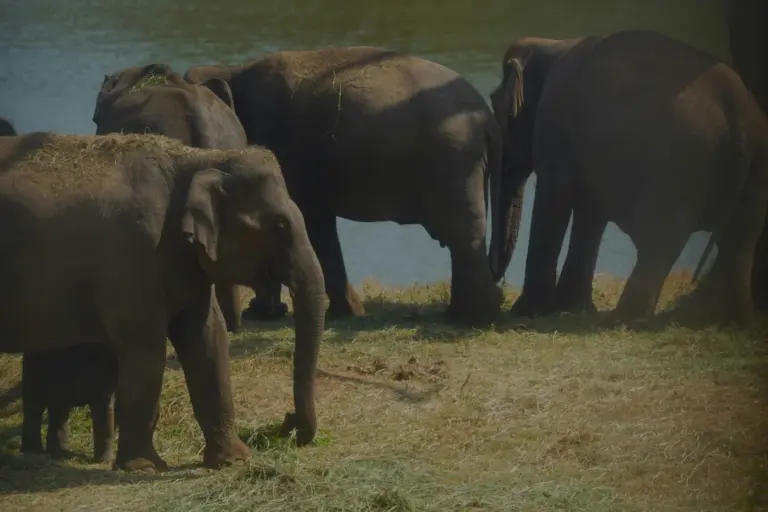
Hasdeo forms the central link in the Chhota Nagpur–Chhattisgarh elephant landscape, connecting Jharkhand and Odisha herds to Madhya Pradesh. The Lemru Elephant Reserve, notified in 2020 over 1,995 sq km, was carved out to reduce man-elephant conflict — Chhattisgarh records 60–80 elephant deaths and ~300 human deaths annually.
3. Biodiversity
- Mammals: Asian elephant, sloth bear, leopard, sambar, chital, gaur, wild boar.
- Flora: 82+ species including sal (Shorea robusta), mahua, tendu, bamboo.
- Tiger movement: Corridor linking Achanakmar, Bandhavgarh and Palamau tiger reserves.
4. Catchment Role
Hasdeo forests protect the watershed of the Hasdeo-Bango dam, which irrigates ~6 lakh hectares and supplies cooling water to NTPC Korba, CSEB thermal plants, and downstream paddy belts.
The Coal Reserves Under Hasdeo
Hasdeo sits atop an estimated 5.6 billion tonnes of coal reserves spread across 23 coal blocks. Key blocks:
| Coal Block | Allottee | Mine Developer & Operator (MDO) |
|---|---|---|
| Parsa East Kete Basan (PEKB) | Rajasthan Rajya Vidyut Utpadan Nigam (RRVUNL) | Adani Enterprises |
| Parsa | RRVUNL | Adani Enterprises |
| Kete Extension | RRVUNL | Adani Enterprises |
| Madanpur South | Various PSUs | Multiple |
PEKB supplies coal to Rajasthan's thermal power plants under a captive coal block arrangement.
The "No-Go" Zone Saga
2010 No-Go Declaration
In 2010, the UPA-era Ministry of Environment, Forest and Climate Change (MoEFCC) under Jairam Ramesh, along with the Coal Ministry, classified Hasdeo as a “No-Go” zone — forests too dense and biodiverse for coal mining.
Reversal
The No-Go policy was diluted in subsequent years. PEKB received forest clearance in 2011 (Stage-I) and began operations; Parsa and Kete Extension clearances followed between 2019 and 2022 amid controversy.
2022 Forest Clearances
Despite Gram Sabha resolutions against mining and a 2015 resolution of the Chhattisgarh Legislative Assembly opposing coal auctions in Hasdeo, the Parsa coal block received final forest clearance in April 2022. Tree felling began but was paused after protests.
Hasdeo Bachao Andolan
The Hasdeo Bachao Andolan ("Save Hasdeo movement") is a sustained tribal-led resistance led by the Hasdeo Aranya Bachao Sangharsh Samiti. Key moments:
- 2011–2015: Local Adivasi protests against PEKB mine expansion.
- 2019: Chhattisgarh Assembly passes a unanimous resolution against coal mining in Hasdeo.
- 2021: 300-km padyatra by ~350 Adivasis from Hasdeo to Raipur demanding cancellation of coal blocks.
- 2022: Gram Sabhas of affected villages (Ghatbarra, Salhi, Hariharpur) pass resolutions under PESA 1996 and FRA 2006 opposing mining; allegations of forged Gram Sabha consents emerge.
- 2023–24: Protests and sit-ins at Hariharpur; tree felling operations face resistance.
The movement unites Gond and Oraon communities, environmental groups (Chhattisgarh Bachao Andolan), and national civil society.
Legal Framework Invoked
1. Forest Rights Act, 2006 (FRA)
- Community Forest Rights (CFR) and Individual Forest Rights (IFR) vest traditional forest-dweller rights in Gram Sabhas.
- Section 3(1)(i) recognises the right to protect, regenerate and manage community forest resources — diversion requires Gram Sabha consent.
2. PESA Act, 1996
- Mandatory Gram Sabha consultation in Scheduled Areas (Fifth Schedule) before land acquisition or project clearance.
- Hasdeo districts fall under the Fifth Schedule.
3. Forest (Conservation) Act, 1980
- Requires Stage-I and Stage-II central approvals for diversion of forest land.
4. Supreme Court PILs
- Multiple PILs filed since 2014 challenging forest clearances.
- The Supreme Court ordered in 2014 cancellation of 214 coal blocks (Manohar Lal Sharma v. UoI) — reallocation followed.
- Pending cases question the legality of clearances despite Gram Sabha objections.
Key Events Timeline
| Year | Event |
|---|---|
| 2010 | Hasdeo declared "No-Go" zone for coal mining |
| 2011 | PEKB receives Stage-I forest clearance |
| 2013 | PEKB operations begin |
| 2015 | Chhattisgarh Assembly resolution against coal auctions in Hasdeo |
| 2019 | Lemru Elephant Reserve proposed (notified 2020) |
| 2021 | 300-km padyatra by Adivasis to Raipur |
| 2022 | Parsa coal block clears forest approval; tree felling sparks protests |
| 2023 | Supreme Court hearings continue; NGT scrutiny |
| 2024 | PEKB Phase-II operations ongoing; Hariharpur resistance |
The Core Conflict
| Argument For Mining | Argument Against Mining |
|---|---|
| India's energy security needs domestic coal | Loss of dense biodiversity-rich forest |
| Rajasthan thermal plants rely on PEKB supply | Disruption of elephant corridor and Hasdeo-Bango catchment |
| Royalties and employment for Chhattisgarh | Violation of Gram Sabha consent under FRA/PESA |
| Coal block already partially mined (PEKB) | 2010 No-Go classification validated ecological value |
| Decline of imports and BOP savings | Displacement of Gond, Oraon tribal communities |
UPSC Relevance
GS Paper 3 (Environment and Ecology):
- Forest diversion and biodiversity loss.
- Elephant corridors and man-wildlife conflict.
- Catchment protection and thermal-coal trade-offs.
- India's Net Zero 2070 commitment vs coal dependence.
GS Paper 2 (Polity and Governance):
- Forest Rights Act 2006 implementation gaps.
- PESA 1996 and Gram Sabha primacy in Fifth Schedule areas.
- Federal tensions — state assembly resolutions vs central clearances.
GS Paper 1 (Society):
- Tribal rights and displacement.
- Role of social movements (Hasdeo Bachao Andolan).
Key Prelims Facts:
- State: Chhattisgarh (Korba, Sarguja, Surajpur districts)
- Area: ~1,70,000 hectares
- River: Hasdeo (tributary of Mahanadi)
- Dam: Hasdeo-Bango (Minimata Bango Bandh)
- Major coal block: Parsa East Kete Basan (PEKB) — allotted to RRVUNL (Rajasthan), MDO Adani Enterprises
- Elephant reserve: Lemru Elephant Reserve (notified 2020, 1,995 sq km)
- "No-Go" zone classification: 2010 (MoEFCC + Coal Ministry)
- State Assembly resolution: 2015 — against coal auctions in Hasdeo
- Legal framework: FRA 2006, PESA 1996, Forest Conservation Act 1980
- Tribal communities: Gond, Oraon, Lohra, Korwa (PVTG)
Mains Angle: Analyse the Hasdeo Aranya case through the lens of the development-environment-tribal rights trilemma. Evaluate whether India's coal mining policy adequately respects Gram Sabha consent under FRA and PESA, and suggest reforms to institutionalise Free, Prior and Informed Consent (FPIC) in Scheduled Area projects.
Tell Google you want more of this.
Add Anantam IAS as a preferred sourceOne tap, and this site shows up more often in your own Top Stories, AI Overviews and AI Mode. Remove it any time.