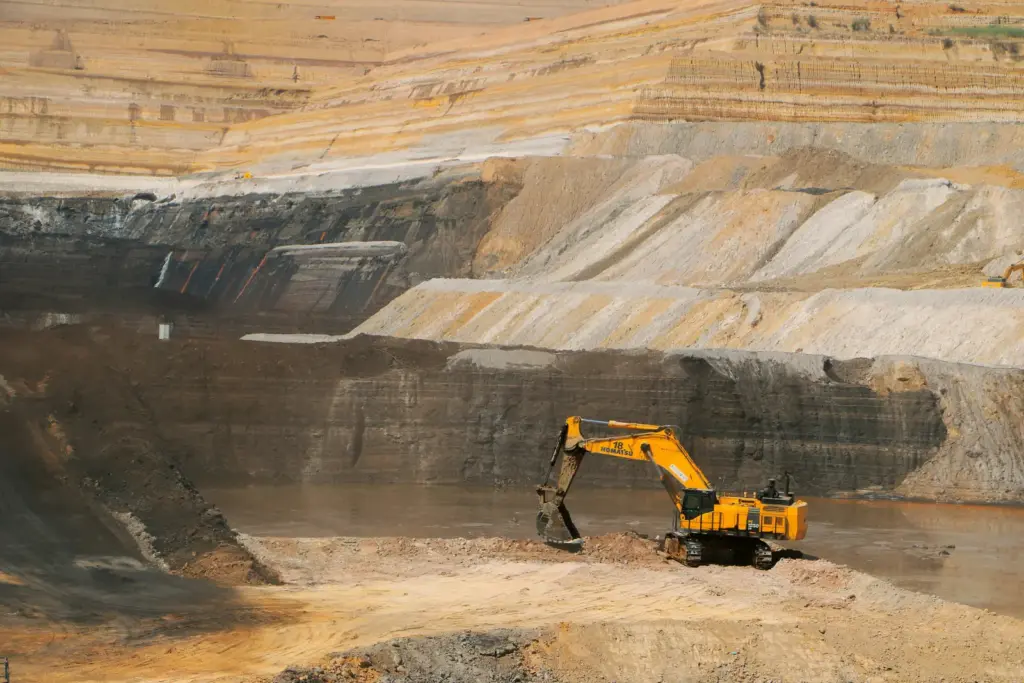
भारत 500 GW non-fossil capacity, domestic battery industry या semiconductor supply chain बिना mining के नहीं बना सकता। mining और environmental sustainabilityपर हर बातचीत के पीछे यही असहज सच है: clean-energy transition में minerals बहुत लगते हैं और minerals ecosystems से निकलते हैं।
इसलिए सही सवाल यह नहीं है कि mining करनी चाहिए या नहीं। सही सवाल है: कौन-सी mining, कहाँ, किन conditions में और restoration की क्या ज़िम्मेदारी के साथ?
Mining environment के साथ क्या करती है
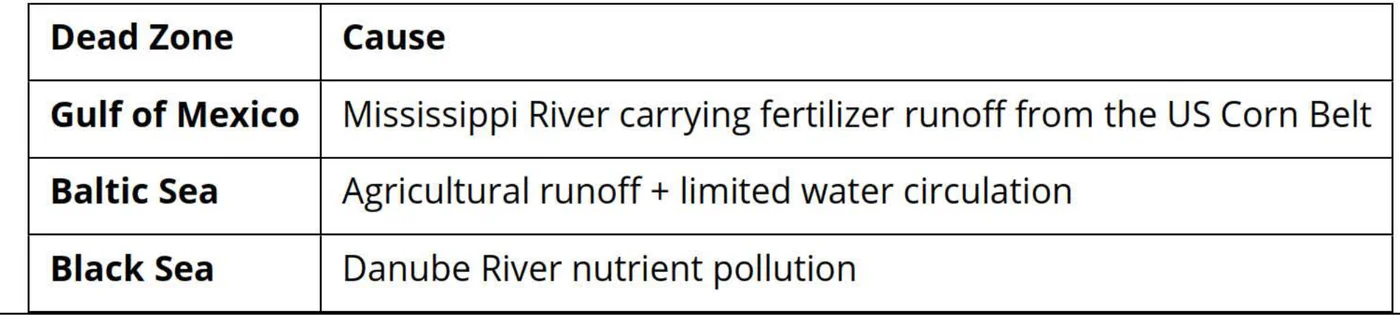
Mineral कोई भी हो, impact के सात रास्ते बार-बार दिखते हैं।
- Geomorphological change। Soil, rock और sediment हटाने से landforms बदलते हैं, slopes अस्थिर होती हैं, erosion तेज़ होता है और sediment transport बदलता है। River incision, coastal erosion और land subsidence इसके बाद आते हैं।
- Hydrological disturbance। Mining surface और groundwater systems में दखल देती है, drainage networks बदलती है, recharge घटाती है और aquatic ecosystems में pollutants पहुँचाती है।
- Biodiversity loss। Habitats टूटते हैं, vegetation हटती है और breeding grounds disturb होते हैं।
- Pollution। हवा में dust और particulate matter, पानी में suspended sediment, sediment plumes और समुद्र में oil leakage इसके examples हैं।
- Climate linkages। Mining operations में बहुत energy लगती है। Deforestation direct emissions के ऊपर natural carbon sinks को भी नष्ट करती है।
- Disaster risk। Unstable slopes, तेज़ coastal erosion और mangroves तथा coral reefs जैसे natural barriers को नुकसान exposure बढ़ाते हैं।
- Livelihood और social impact। अधूरी rehabilitation, displacement और unequal benefit sharing local inequality को और गहरा करते हैं।
आख़िरी impact ही technical problem को political problem बनाता है। ज़्यादातर projects असल में यहीं fail होते हैं।
Mining के चार types, चार अलग problems
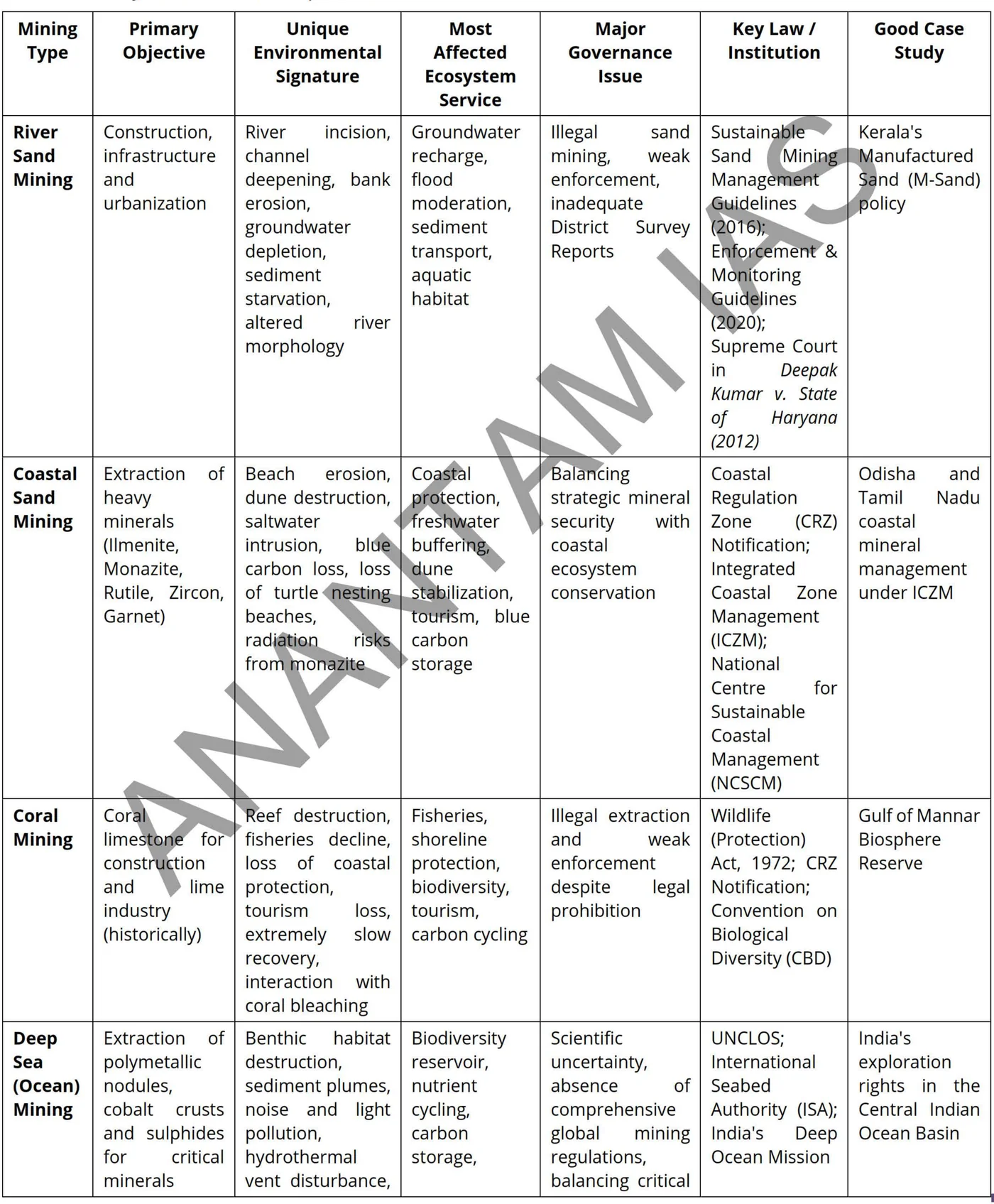
Mining को एक ही activity मानने से analysis कमज़ोर हो जाता है। हर type की environmental signature, affected ecosystem service और governing law अलग है।
River sand mining
Construction और urbanisation से चलती है। इसकी signature है channel deepening, bank erosion, groundwater depletion, sediment starvation और river morphology में बदलाव। इससे groundwater recharge, flood moderation, sediment transport और aquatic habitat जैसी ecosystem services खोती हैं।
Governance issue illegal extraction और weak enforcement का है। Framework sustainable sand mining guidelines, District Survey Reports और Deepak Kumar v. State of Haryana (2012) में Supreme Court के ruling पर टिका है। इस ruling ने minor minerals के लिए भी environmental clearance ज़रूरी की।
Kerala की manufactured sand policy इसका उपयोगी जवाब है। River sand की जगह crushed-rock M-Sand लेने से demand source पर घटती है। सिर्फ़ enforcement यह काम कभी नहीं कर पाई।
Coastal sand mining
इसमें heavy minerals, ilmenite, monazite, rutile, zircon और garnet निकाले जाते हैं। इसका असर beach erosion, dune destruction, saltwater intrusion, blue carbon loss और turtle nesting beaches को नुकसान के रूप में दिखता है। जहाँ monazite मौजूद हो, वहाँ radiation handling की चिंता भी रहती है।
यहाँ conflict साफ़ है: ये strategic minerals हैं और coastline एक protective ecosystem है। Governance Coastal Regulation Zone notification, Integrated Coastal Zone Management और National Centre for Sustainable Coastal Management के ज़रिए होती है। Odisha और Tamil Nadu इसके reference cases हैं।
Coral mining
Historically इसका इस्तेमाल lime, construction और industry के लिए हुआ। Reef destruction fisheries घटाता है, shoreline protection हटाता है, tourism को नुकसान पहुँचाता है और carbon cycling बिगाड़ता है। Recovery बेहद धीमी होती है। Coral bleaching के साथ इसका damage और बढ़ जाता है।
यह Wildlife (Protection) Act, 1972 और Coastal Regulation Zone notification के तहत prohibited है। भारत Convention on Biological Diversity का party भी है। फिर भी illegal extraction जारी है। Gulf of Mannar Biosphere Reserve इसका standard case study है।
Deep-sea mining
Critical minerals के लिए polymetallic nodules, cobalt crusts और sulphides निकाले जाते हैं। Environmental signature में benthic habitat destruction, sediment plumes, noise और light pollution तथा hydrothermal vents का disturbance शामिल है।
इन चारों में इसका governance problem सबसे कठिन है: recovery को लेकर scientific uncertainty है और comprehensive commercial mining regulations अभी नहीं हैं। UNCLOS और International Seabed Authority इसका framework देते हैं। Deep Ocean Mission के ज़रिए भारत Central Indian Ocean Basin में exploration rights रखता है।
ईमानदार सीमाएँ
तीन बातें साफ़-साफ़ कहनी चाहिए।
पहली, कोई restoration standard mined ecosystem को उसकी पुरानी हालत में वापस नहीं ला सकता। Reclamation damage घटाती है, उसे उलटती नहीं। जो policy language इसके उलट संकेत देती है, वह misleading है।
दूसरी, project-by-project clearance नुकसान को systematically कम करके दिखाती है। एक river reach पर दस अलग-अलग acceptable sand leases, मिलकर acceptable नहीं हो जाते। Basin scale पर cumulative assessment के बिना appraisal system गलत चीज़ नाप रहा है।
तीसरी, deep-sea mining science से तेज़ आगे बढ़ रही है। Nodule removal के बाद benthic communities को recover होने में कितना समय लगेगा, हमें नहीं पता। इसलिए sustainable mining हो सकती है या नहीं, इसका ईमानदार जवाब है कि अभी कोई नहीं जानता।
आगे का रास्ता
- Extraction से पहले substitution कीजिए। River sand के लिए M-Sand, virgin ore के लिए recycled metal, और tailings, fly ash तथा red mud से recovery।
- Cumulative assessment कीजिए। Clearance को project से हटाकर river basin या coastal stretch के स्तर पर ले जाइए।
- Closure को money से जोड़िए। Restoration bonds तब तक held रहें जब तक closure obligations पूरे न हों। Management plan में लिखे promises काफ़ी नहीं हैं।
- Benefit sharing ठीक कीजिए। District mineral funds तभी काम करेंगे जब affected communities spending को देख और direct कर सकें।
- Deep sea को mine करने से पहले regulate कीजिए। भारत की exploration position rules बनाने का argument है, rules छोड़ देने का नहीं।
Mineral demand घटने वाली नहीं है, बढ़ेगी। सवाल यह है कि भारत ऐसा extraction system बनाएगा जो ecological cost की ईमानदार कीमत लगाए, या ऐसा system जो bill उन districts पर डाल दे जहाँ mines मौजूद हैं।
सामान्य प्रश्न
Mining के मुख्य environmental impacts क्या हैं?
Mining में सात impacts बार-बार दिखते हैं: river incision और land subsidence जैसे geomorphological changes; surface और groundwater का hydrological disturbance; habitat fragmentation से biodiversity loss; air और water pollution; energy-intensive operations और carbon sinks के नुकसान से climate impacts; unstable slopes से disaster risk; और displacement तथा inadequate rehabilitation से social impacts।
River sand mining इतना नुकसानदेह क्यों है?
Sand river channel को equilibrium में रखने वाला sediment है। इसे निकालने से river incision और channel deepening, bank erosion, water table के नीचे जाने से groundwater depletion, downstream sediment starvation और river morphology में बदलाव होता है। Groundwater recharge, flood moderation, sediment transport और aquatic habitat जैसी ecosystem services प्रभावित होती हैं।
Deepak Kumar v. State of Haryana में Supreme Court ने क्या कहा?
2012 के judgment में minor mineral mining, जिसमें sand भी शामिल है, के लिए पहले के area threshold से नीचे भी environmental clearance ज़रूरी की गई। इसके बाद sustainable sand mining guidelines और District Survey Reports का framework आया।
Manufactured sand क्या है और इसका महत्व क्या है?
Manufactured sand या M-Sand, rock को sand-sized particles में crush करके बनाई जाती है और river sand का substitute है। Kerala की M-Sand policy इसका standard example है। Demand-side substitution river beds पर pressure घटाती है, जो सिर्फ़ enforcement से ज़्यादा असरदार है।
Coastal sand mining से कौन-से minerals निकाले जाते हैं?
Beach sands से मुख्यतः ilmenite, monazite, rutile, zircon और garnet जैसे heavy minerals निकाले जाते हैं। Environmental impacts में beach erosion, dune destruction, saltwater intrusion, blue carbon loss और turtle nesting beaches को नुकसान शामिल हैं। Monazite-bearing sands में radiation handling की चिंता भी रहती है।
Coral mining इतना गंभीर क्यों है?
Coral reefs shorelines की रक्षा करते हैं, fisheries को support करते हैं, tourism चलाते हैं और carbon cycling में हिस्सा लेते हैं। वे बहुत धीरे recover करते हैं। Extraction और coral bleaching साथ आकर damage बढ़ाते हैं। Wildlife (Protection) Act, 1972 और Coastal Regulation Zone notification के तहत यह prohibited है, फिर भी illegal extraction होती है।
Deep-sea mining को कौन govern करता है?
National jurisdiction से बाहर की activity United Nations Convention on the Law of the Sea और International Seabed Authority के framework में आती है। भारत Central Indian Ocean Basin में exploration rights रखता है और Deep Ocean Mission चला रहा है। Comprehensive commercial mining regulations अभी नहीं हैं और benthic recovery को लेकर scientific uncertainty काफ़ी है।
भारत mineral demand और ecological limits में balance कैसे बनाए?
पहले substitution और recycling, फिर strict sequencing अपनानी चाहिए: M-Sand जैसे demand-side substitutes; tailings और e-waste से recovery; project-by-project clearance के बजाय District Survey Reports और cumulative-impact assessment; closure plans से जुड़े restoration bonds; और affected communities के साथ benefit sharing।
अभ्यास प्रश्न
प्रीलिम्स MCQ
- River incision और sediment starvation किस activity की characteristic environmental signature हैं?
(a) Coastal sand mining
(b) River sand mining
(c) Coral mining
(d) Deep-sea mining
उत्तर: (b) Bed sediment हटाने से channel गहरा होता है, banks erode होते हैं, water table नीचे जाता है और downstream reaches में sediment की कमी हो जाती है। - Ilmenite, monazite, rutile, zircon और garnet किससे जुड़े हैं?
(a) Deep-sea polymetallic nodules
(b) Beach और coastal heavy mineral sands
(c) Coral reef formations
(d) Ganga की alluvial river beds
उत्तर: (b) ये coastal beach sands से मिलने वाले heavy minerals हैं, ख़ासकर Odisha, Tamil Nadu और Kerala में। - International Seabed Authority को अपना mandate किससे मिलता है?
(a) Convention on Biological Diversity
(b) UNCLOS
(c) Ramsar Convention
(d) Basel Convention
उत्तर: (b) International Seabed Authority को United Nations Convention on the Law of the Sea के तहत international seabed area में mineral activity regulate करने के लिए बनाया गया था। - Deepak Kumar v. State of Haryana (2012) किसलिए महत्वपूर्ण है?
(a) Tribal areas में सभी mining पर ban लगाने के लिए
(b) Sand समेत minor mineral mining के लिए environmental clearance ज़रूरी करने के लिए
(c) Construction के लिए coral extraction की अनुमति देने के लिए
(d) Licence के बिना deep-sea mining की अनुमति देने के लिए
उत्तर: (b) इस judgment ने minor minerals पर environmental clearance की requirement बढ़ाई। इसके बाद sustainable sand mining guidelines और District Survey Reports आए। - Polymetallic nodules के लिए भारत के exploration rights कहाँ हैं?
(a) Bay of Bengal shelf
(b) Central Indian Ocean Basin
(c) Arabian Sea coastal zone
(d) Andaman back-arc basin
उत्तर: (b) भारत के exploration rights Central Indian Ocean Basin में हैं और यह काम Deep Ocean Mission के साथ आगे बढ़ रहा है।
मुख्य परीक्षा प्रश्न
- Clean-energy transition के लिए mining ज़रूरी है, लेकिन उसी transition को बचाने वाले ecosystems के लिए mining destructive है। भारत की critical mineral strategy के संदर्भ में इस paradox की जाँच कीजिए। (250 शब्द)
- River sand mining enforcement failure और substitution failure, दोनों है। Demand-side alternatives के संदर्भ में चर्चा कीजिए। (250 शब्द)
- Coastal mineral sand mining strategic mineral security और coastal ecosystem conservation के बीच conflict पैदा करती है। भारत के regulatory framework की पर्याप्तता का मूल्यांकन कीजिए। (250 शब्द)
- Deep-sea mining regulation और scientific understanding, दोनों से आगे बढ़ रही है। भारत की position पर आलोचनात्मक टिप्पणी कीजिए। (150 शब्द)
- River-basin scale पर mining के cumulative environmental impact assessment के लिए institutional framework सुझाइए। (150 शब्द)